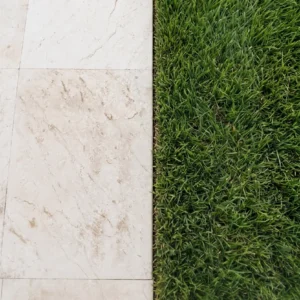
What Travertine Pavers Ivory Actually Delivers
Travertine pavers ivory carry a porosity range of 8–12%, which sounds like a liability until you understand how that open-pore structure actively moderates surface temperature — keeping barefoot comfort well below what dense granite or concrete would register under the same sun exposure. The calcium carbonate matrix that defines ivory travertine also gives it a compressive strength between 8,500 and 10,500 PSI, enough to handle vehicular load on properly prepared bases without the brittleness that catches specifiers off guard with softer sedimentary materials. What most buyers miss in their initial selection process is how finish choice interacts with that porosity — and that interaction determines sealing frequency, slip resistance, and long-term maintenance commitment more than the stone’s raw hardness ever will.
Sizing, Thickness, and Structural Requirements
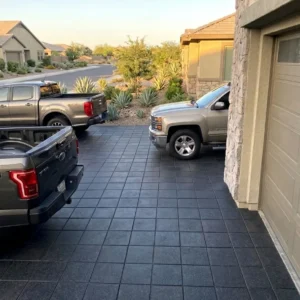
Standard travertine ivory pavers ship in 12×12, 16×16, 18×18, and 24×24 formats, with 12×24 rectangles gaining ground in contemporary patio layouts. Thickness matters more than most buyers appreciate: 1.25-inch (30mm) pavers handle pedestrian loads comfortably on a compacted aggregate base, while 2-inch (50mm) nominal thickness is the minimum you should spec for any vehicular application. The paver-to-base thickness ratio should run approximately 1:4 — so a 2-inch paver needs at least 8 inches of compacted base for adequate load distribution, not the 4–6 inches that shows up in generic installation guides.
- 12×12 pavers suit pool decks and compact patios — easier to work around curved edges and radius cuts
- 16×16 and 18×18 formats balance visual scale with manageable weight per piece during installation
- 24×24 large-format pavers require a flatter subgrade — deflection tolerance drops significantly at this size, so your base prep needs to be more precise
- Rectangular 12×24 formats create a running bond that visually elongates narrow spaces but demand tighter calibration tolerances at joints
- 2-inch thickness for driveways or heavy outdoor furniture zones — 1.25-inch pavers will crack under concentrated point loads if the base isn’t perfectly uniform
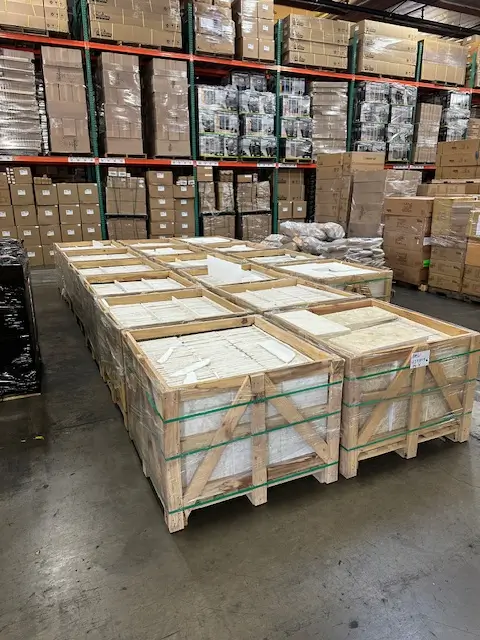
Calibration consistency across your order matters as much as individual piece dimensions. Thickness variation beyond 1.5mm between pavers in the same batch creates lippage that no amount of adhesive adjustment fully corrects. At Citadel Stone, we pull representative samples from every warehouse pallet during receiving inspection — calibration variance above tolerance gets flagged before material ships to your project.
Base Preparation: The Variable That Decides Longevity
Your base is doing the structural work — the travertine is just the wearing surface. A properly engineered base under ivory travertine pavers starts with subgrade compaction to at least 95% Proctor density, which most residential projects skip because it adds time and equipment cost. Skip it, and you’re looking at differential settlement within three to five years, regardless of how well the stone itself performs. The aggregate base layer should be crusher-run or Class II base rock in the 3⁄4-inch minus gradation — angular particles that interlock and resist lateral movement better than round gravel ever will.
- Minimum 6 inches of compacted aggregate base for pedestrian applications in stable soil conditions
- 8–10 inches for vehicular use or any project site with clay-dominant soils prone to seasonal heaving
- Geotextile fabric between subgrade and base aggregate prevents fines migration that causes long-term base softening
- Sand setting bed: 1 inch of coarse, angular bedding sand — never play sand, which compacts unevenly and allows lateral paver movement
- Verify drainage slope at 1–2% minimum before setting any stone — pooling water under travertine accelerates efflorescence and freeze-thaw damage in colder regions
The Natural Stone Institute provides technical guidance confirming that base preparation failures account for the majority of natural stone paver installation callbacks — not material defects. According to NSI travertine outdoor suitability data, travertine’s absorption characteristics make drainage engineering more critical than it is for denser stone types. Factor that into your base design before the first travertine ivory paver is set.
Sealing Protocols for Ivory Travertine
Travertine ivory is not a self-maintaining material — it needs a penetrating impregnator sealer applied before the surface sees foot traffic or outdoor exposure. The porosity range of 8–12% means moisture, pool chemicals, and organic staining can penetrate within minutes on an unsealed surface. A silane-siloxane impregnator is the correct specification for exterior travertine pavers ivory: it penetrates 3–5mm into the stone matrix, repels water and oil while allowing vapor transmission, and doesn’t alter the surface finish or color the way topical acrylic sealers do.
Application timing matters. Seal after the grout or joint sand has fully cured — typically 72 hours minimum after installation — but before any rainfall or morning dew exposure. Two coats of impregnator applied 20–30 minutes apart give better coverage than one heavy coat, which can pool at the surface and create a hazy residue that’s difficult to remove without chemical strippers. Resealing frequency for exterior ivory travertine tiles in high-UV or freeze-thaw regions runs every 18–24 months, not the 5-year intervals some product labels suggest for interior applications.
Seasonal Installation Timing for Travertine Pavers
Adhesive and mortar performance under ivory travertine pavers is directly tied to ambient temperature at time of placement — and this is where scheduling decisions determine whether your installation bonds correctly or develops hollow spots within the first winter cycle. Polymer-modified thinset performs optimally between 50°F and 90°F ambient. Below 50°F, hydration slows dramatically and you risk incomplete cure; above 95°F, the setting bed loses moisture before the adhesive can develop adequate bond strength.
- Spring installation windows — typically when overnight temperatures hold above 45°F consistently — offer the most forgiving conditions for full mortar hydration
- Fall installations are equally viable where overnight lows stay above 40°F, and cooler days actually slow the open time enough to work larger sections without adhesive skinning
- Summer installations in hot climates require early morning starts — lay pavers before 10 AM when possible, because adhesive open time can drop from 20 minutes to under 8 minutes on a slab that’s been in direct sun since dawn
- Avoid installations when rain is forecast within 24 hours of joint filling — premature wetting before grout cure compromises joint integrity
- In freeze-thaw regions, never install within 6 weeks of the first expected frost — insufficient cure time before freeze cycles creates bond failures that look like material defects but trace back entirely to scheduling
Morning work sessions also reduce efflorescence risk during the curing period. Slower moisture evaporation in morning air allows salts to migrate out gradually rather than wicking to the surface rapidly — the latter is what creates the white bloom that takes months of weathering to fully clear. Planning your installation schedule around these temperature windows isn’t overcautious; it’s the difference between a clean, stable surface and one that requires remediation before the first season ends.
Color Variation and Batch Consistency
Ivory travertine’s color range runs from warm cream through soft gold to pale walnut, with vein patterns that shift from tight hairline structures in denser cuts to broader, more open veining in material from certain quarry faces. That variation is the material’s character — but unmanaged batch variation across a large patio layout creates a patchwork effect that most clients didn’t sign up for. The specification solution is to confirm batch lot consistency before placing your full order, which means requesting samples from the specific warehouse stock you’ll be drawing from, not generic showroom samples that may come from a different production run.
Explore our ivory travertine paver range to review current stock options and confirm batch availability for your project scope — knowing what’s on the warehouse floor before you finalize quantities prevents the mid-project scramble that happens when a batch runs short and a reorder ships from a different quarry lot. Color-sorting pavers across the installation area — pulling from multiple boxes simultaneously and dry-laying before final setting — distributes natural variation evenly and avoids clustering similar tones in one zone.
Grout and Joint Filling Specifications
Joint specification for travertine pavers ivory depends on whether you’re working with a mortared installation or a sand-set system, and the two have very different failure modes. Mortared joints on exterior travertine should use a non-sanded polymer grout in widths up to 1⁄8 inch, or sanded grout for joints between 1⁄8 and 1⁄2 inch. Going wider than 1⁄2 inch with standard grout in an exterior application invites cracking — thermal cycling expands and contracts the stone at roughly 4.6 × 10⁻⁶ per °F, and rigid grout in wide joints can’t accommodate that movement without fracturing at the grout-stone interface.
- Epoxy grout delivers stain resistance and bond strength superior to cement-based options — worth the added cost for pool surrounds or kitchen outdoor areas
- Sand-set installations with polymeric joint sand perform well for pedestrian loads — the sand flexes with seasonal movement rather than cracking
- Expansion joints every 10–12 feet in mortared exterior installations — not the 20-foot intervals in generic specs written for concrete tile
- Keep joints at minimum 1⁄16 inch — attempting butt joints with travertine creates hollow spots at edges where the stone’s natural surface relief prevents full contact
- Grout color selection: buff and cream tones integrate with ivory travertine’s warm base; charcoal grout creates high contrast that emphasizes layout geometry but shows calcium deposits from efflorescence more visibly
Ordering, Logistics, and Lead-Time Planning
Your project timeline should build in a 10–15% material overage for cuts, waste, and future repairs — a number that rises to 20% for diagonal or herringbone layouts where cut waste increases significantly. Truck delivery logistics matter more than most clients anticipate at the specification stage: travertine pavers ship on pallets weighing 2,500–3,500 lbs depending on stone size and quantity, and standard flatbed truck delivery requires a staging area accessible to a forklift or pallet jack. Projects without ground-level access or adequate driveway clearance need to arrange crane-off or hand-carry logistics in advance, both of which add labor cost and schedule time.
Because each order is cut to specification at our selected quarries, lead times are confirmed when the order is placed rather than estimated in advance. Verify current warehouse stock levels before committing your installation contractor to a start date, because confirmed material availability is the upstream dependency that every subsequent scheduling decision rests on. According to USGS data on limestone and travertine mineral formation, travertine is classified as a sedimentary carbonate rock — its quarrying regions are geographically concentrated, which is why domestic warehouse inventory is a meaningful lead-time advantage over project-by-project importing.
Long-Term Maintenance: Realistic Expectations
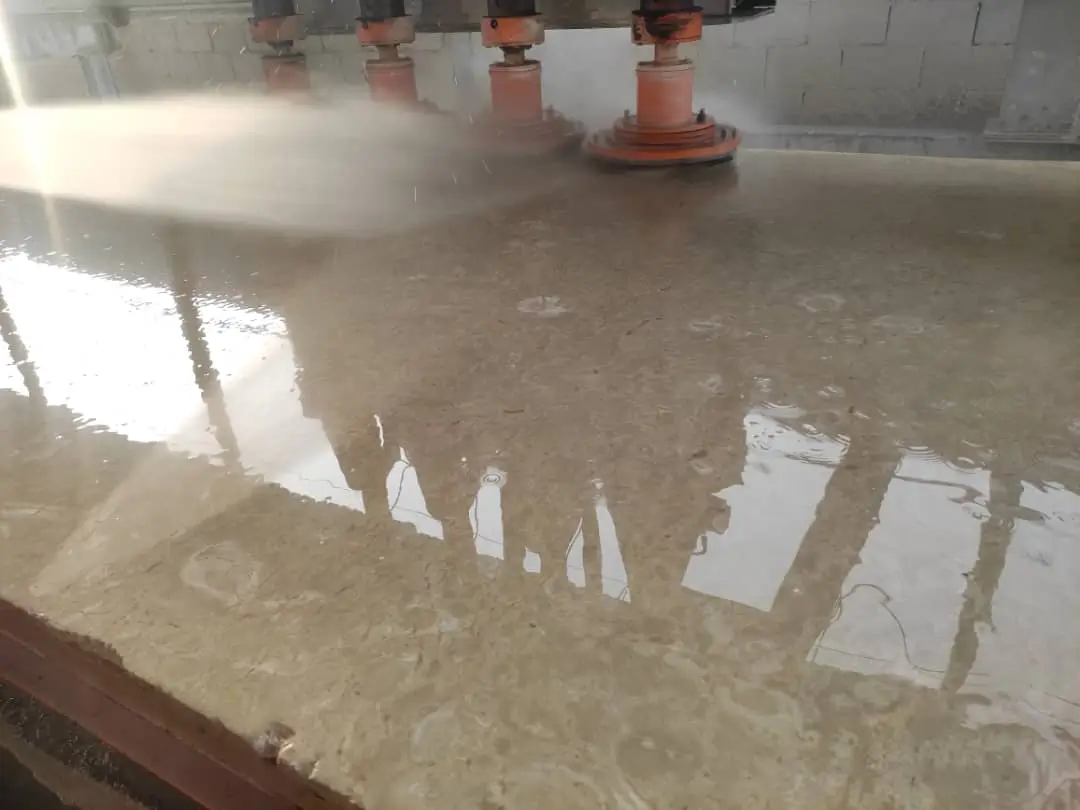
Travertine ivory pavers maintained correctly — biennial resealing, pH-neutral cleaning, prompt attention to organic staining — reliably perform for 25–35 years in exterior applications. That performance window assumes the base was built correctly and drainage was engineered into the design, not treated as an afterthought. The stone itself doesn’t fail; installations fail because the systems supporting the stone were under-specified or the maintenance schedule slipped past the two-year resealing window and moisture intrusion began working on the setting bed.
- pH-neutral cleaners only — acid-based products dissolve the calcium carbonate matrix and permanently etch the surface, removing both the finish and the impregnator in one application
- Efflorescence in the first 6–12 months is normal mineral migration, not a defect — diluted white vinegar (5% acidity) applied carefully and rinsed thoroughly handles most early-stage bloom
- Organic staining from leaves, iron-rich water, or pool chemicals requires a poultice treatment rather than surface scrubbing — drawing the stain out rather than pushing it deeper
- Inspect grout joints annually — hairline cracks allow water infiltration that accelerates base erosion; repoint promptly with matching grout before the void expands
- Power washing at pressures above 1,200 PSI damages tumbled and honed surfaces — use a wide-fan tip at low pressure for routine cleaning
Maintaining the surface isn’t complicated, but it does require consistency. The buyers who get the most life from ivory travertine tiles are the ones who treat resealing as a routine maintenance task rather than a problem-triggered response. For a closer look at keeping this material at its best over the long term, cleaning and maintaining ivory travertine covers the practical methods and product choices that protect both the finish and the structural integrity of your installation.
Getting Travertine Paver Specifications Right
Specifying travertine pavers ivory correctly means making four decisions well before a single stone is set: finish selection matched to application and safety requirements, base depth engineered to actual soil and load conditions, installation timing aligned to temperature windows that allow full adhesive cure, and sealing scheduled before the surface sees any exposure. Get those four right and the material delivers on its reputation — warm, durable, and visually distinctive across decades of service. Rush any of them and the failure mode you encounter will look like a material problem when it’s actually a specification or installation problem.
The ivory color family sits in a particularly competitive market position because it reads as neutral without being cold, and it ages toward a richer patina rather than a tired grey — which is why architects keep coming back to it for pool decks, courtyard patios, and entrance terraces. Your selection within that family comes down to finish, format, and batch consistency, all of which are decisions worth verifying with your supplier before the truck rolls. Pavers from Citadel Stone arrive in calibrated batches, keeping ivory travertine joints consistent across large patio layouts.
Related reading: ivory vein cut travertine guide · ivory travertine vs porcelain tile · porcelain pool tile vs travertine.