How Blockchain Ensures Unbroken Provenance
Immutable Ledger Principles
Blockchain records every quarry extraction, processing step, and delivery transaction in an immutable ledger. Once a stone lot’s data is written, it cannot be altered—ensuring quarry origin verification without trust gaps.
Smart Contracts for Quality & Compliance
Smart contracts automate quality gates: when a batch passes compressive strength or water absorption tests, the ledger advances to the next stage. Non-compliance triggers alerts, enforcing standards before shipping.
Real-Time Verification & Stakeholder Access
Architects, specifiers, and sustainability leads access the blockchain network via dashboards. Real-time verification of ESG credentials, test reports, and chain-of-custody logs eliminates manual audits and speeds approvals.
Benefits for Architects & Project Teams
Certifiable Ethical Sourcing
With blockchain proof, you demonstrate transparent sourcing from quarries that adhere to fair-labor and environmental standards, supporting ethical stone sourcing proof for client presentations.
Risk Mitigation & Liability Protection
Immutable records reduce dispute risk by pinpointing responsibility for defects—supplier versus transport—bolstering audit-ready stone traceability and legal defensibility.
Integrated Data for LEED, WELL, & BREEAM Credits
Traceability data aligns with MRc1, MRc2, and EQ credits in green rating systems, providing documented evidence for recycled content, regional sourcing, and material transparency.
Implementing Quarry-to-Site Traceability
Onboarding Suppliers into the Blockchain Network
Audit supplier readiness: confirm digital infrastructure and willingness.
Define data standards: establish required fields (GPS quarry coordinates, batch numbers, test results).
Grant permissions: configure role-based access for architects, contractors, and auditors.
Tagging & Tracking Stone Lots (RFID, QR)
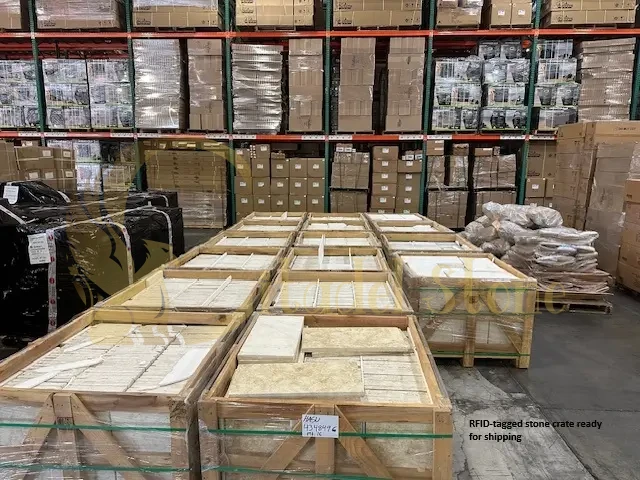
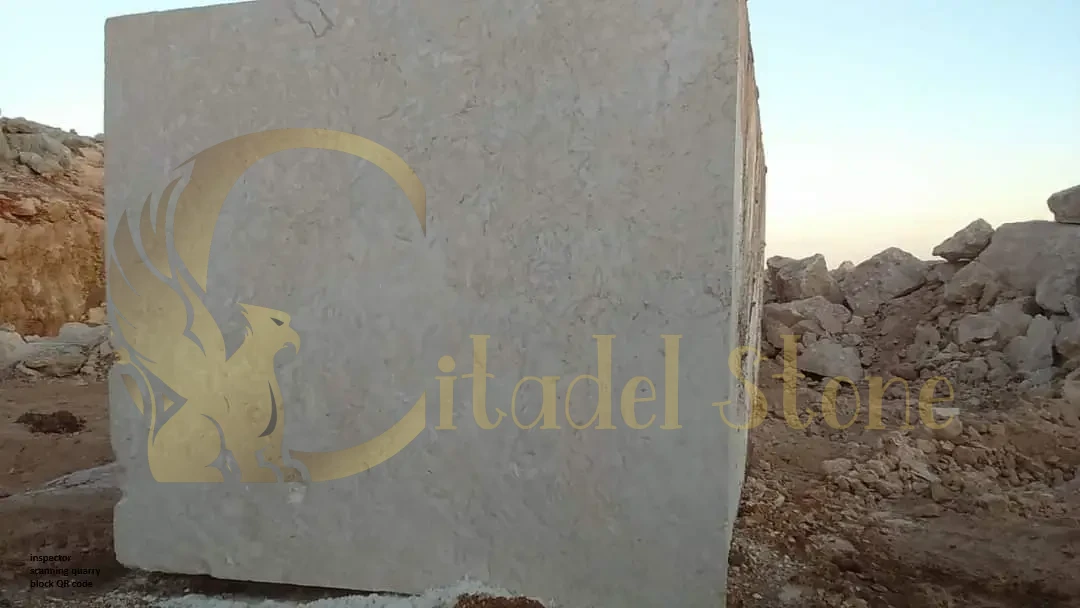
Stone bundles receive QR codes or RFID tags linked to blockchain entries. Scanning at each handoff updates location and status—ensuring blockchain stone supply visibility from quarry to slab yard to site.
Get in touch to discuss your stone project details with your stone supplier.
Platform Integration with BIM & Procurement Systems
Connecting traceability platforms to BIM models and procurement software enables:
Automated material assignment in construction schedules.
Verification of installed stone matches approved blockchain lot IDs.
Case Example: A Landmark Project Using Blockchain-Verified Stone
Project: GreenTech Museum, Vancouver
Scope: 1,500 m² of ethically sourced limestone cladding.
Steps: Partnered with traceable supplier; onboarded to blockchain network; tagged 50 blocks with RFID; integrated BIM verification.
Outcomes: Achieved 4 LEED points under MRc2; zero supply disputes; expedited client audits by 60%.
Architect Feedback: “Blockchain traceability saved weeks of manual verification and strengthened our ESG narrative.”
Overcoming Adoption Challenges
Data Integrity & Supplier Training
Ensure stone suppliers understand data-entry protocols; offer training sessions and standardized templates to maintain sustainable stone transparency.
Cost & Tech Infrastructure
While initial integration can require investment, audit-ready stone traceability reduces audit fees and non-compliance penalties, delivering ROI within project lifespan.
Scaling Across Multiple Quarries
Use a unified consortium blockchain or interoperable ledgers so stones from different quarries share the same traceability framework, streamlining procurement.
Follow us on social media for daily inspiration from your natural stone supplier!
Future of Traceable Stone Supply
AI-Enhanced Analytics for Quality Prediction
AI models trained on blockchain data can predict risks—e.g., likely quarry microfracture zones—enabling proactive quality management.
Extended Use into End-of-Life Recycling & Circularity
Traceability supports stone decommissioning by logging end-of-life conditions and facilitating circular stone reclamation or upcycling.
Industry Standards & Consortium Initiatives
Consortia like the Global Stone Traceability Alliance are developing universal protocols, driving wider adoption and interoperability.
Real Orders, Real Deliveries
We only publish projects we have actually supplied. See our Las Vegas white limestone delivery — two containers, 6,884 sq ft, 32 crates, shipped door to door — and how we supplied Creative Environments in Arizona with 21 containers across a 70,000+ sq ft installation: white limestone pavers and tiles, shellstone and Ocean Reef pavers.
Had Citadel Stone material installed on your project? Send us your photos and we will feature the work here, with your permission.
Conclusion & Strategic Recommendations
Implement blockchain traceability in your stone sourcing with these 10 steps:
☑️ Audit supplier digital readiness and alignment with your ESG goals.
☑️ Define blockchain data standards (GPS, batch ID, test metrics).
☑️ Deploy RFID/QR tagging at the quarry to track lots.
☑️ Integrate with BIM & procurement tools for automated verification.
☑️ Configure role-based access for stakeholders and auditors.
☑️ Train suppliers on data entry, tag scanning, and reporting.
☑️ Monitor ledger entries in real-time and alert on anomalies.
☑️ Use analytics to identify quality trends and predict issues.
☑️ Plan for end-of-life tracking to support circular economy goals.
☑️ Engage in industry consortia to adopt emerging standards.
Ready to enhance your stone sourcing with blockchain traceability? Learn about our blockchain traceability or Partner with our blockchain-verified suppliers at Citadel Stone for unmatched transparency and project integrity. Learn how to choose the right materials from your best stone supplier.