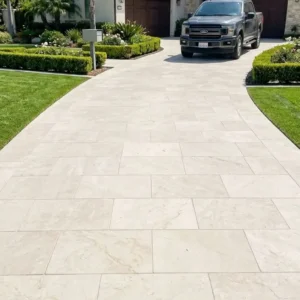
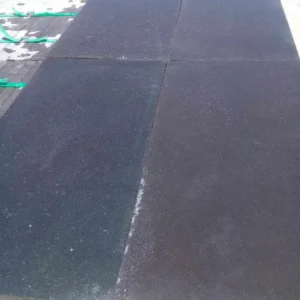
What humidity really does to a floor
Grenada runs a dry season through roughly January to May and a wet season from June to December, and the two halves of the year make quite different demands on a floor. Indoors, that means a floor is rarely bone dry for long. Water arrives as splash at the door, as damp feet from the pool, as condensation off a cold glass and as mopping water that never quite evaporates in still air. None of that harms good limestone. What it does is expose any finish chosen for a showroom rather than for a house. The contrast between the seasons is sharper than visitors expect. The coastal belt takes around sixty inches of rain a year while the central highlands take well over twice that, and the heaviest months run from June to November. Carriacou and Petite Martinique sit drier again, with genuine drought in the dry months.
The finishes worth comparing
Five surface treatments cover almost every interior job on the island, and they behave very differently once wet:
- Honed, a flat matte surface with even reflectance, calm underfoot and easy to wipe.
- Brushed, where the softer grains are worked away to leave a fine texture you can feel.
- Sandblasted, a uniform open texture with more bite and slightly more to clean.
- Tumbled, with softened arrises and a broken face that suits smaller formats and older houses.
- Split or riven faces, best kept for thresholds and outdoor steps rather than living rooms.
Finishes are applied before the crates are packed, not on site, so this is a decision to make at order stage. Ask for the two you are undecided between as small hand samples and keep them; they become your reference when a later phase of the house is tiled.
Wet feet and the paths they take
Draw the wet lines through the house before you choose anything. In most Grenadian homes they run from the pool or the yard to the shower, from the shower to the bedroom, and from the kitchen door to the sink. Those routes carry water every day. Everywhere else takes water occasionally. A house tiled entirely in the grippiest finish available is harder to clean than it needs to be, and a house tiled entirely in the smoothest one puts the risk exactly where the traffic is. Mark those routes on the plan and count how much floor they really cover. In most houses it is a surprisingly small share, which is why the Grenada limestone tile range is usually specified in two finishes rather than one. The rest of the plan can then be chosen for looks with a clear conscience.
Gloss is the wrong target
Polished stone photographs beautifully and is the wrong instinct for a tropical house. It bounces hard daylight back into your eyes, shows every drip from a swimsuit and offers the least grip of anything you can buy. Low sheen is the target instead, and the practical difference between honed and brushed is felt with a bare foot rather than seen in a picture. Compare them properly and check which finish grips when wet rather than deciding from an image on a phone. The camera is the real problem: a screen adds contrast, hides texture and flatters shine. Nothing on a screen tells you what a surface does to a wet heel at speed.
How a finish ages through the wet season
Seven months of rain will test any specification. Over a couple of seasons you should expect the following, and none of it is a defect:
- Textured surfaces hold a little more dust and cleaner residue in the low points.
- Honed floors polish very slightly along the busiest walking lines, which reads as sheen.
- Grout and joints darken faster than the stone in rooms with poor ventilation.
- Near open doors on the Atlantic side, fine grit acts as an abrasive and dulls a smooth finish.
None of this is failure. Natural stone is expected to record use, and a floor walked on for five years should look walked on. What matters is that the change stays even, which comes from cleaning the whole room rather than only the visible half.
Matching the finish to the room
A sensible island house uses two or three finishes in one tone rather than one finish everywhere:
- Living rooms and bedrooms: honed, for calm light and simple cleaning.
- Kitchens: honed or lightly brushed, so spills wipe up but the floor is not slick.
- Bathroom floors and shower bases: brushed or sandblasted, in smaller formats.
- Entrance halls and gallery thresholds: brushed, where sand and water arrive together.
- Steps and outside edges: the most textured option you are willing to sweep.
Order every finish from the same production run, since natural stone shifts slightly in shade between runs.
Proving it before the container is loaded
Order small hand samples of the two finishes you are torn between, wet them, and stand on both in bare feet on the tile of the room they are meant for. That five-minute test settles more arguments than any specification sheet. Stone for Grenada, Carriacou and Petite Martinique arrives through the Port of St George’s, and finishes are applied before shipping, so this is a decision to make early rather than on site. Duty follows the CARICOM Common External Tariff on the CIF value and VAT is charged at fifteen percent on top, so late changes are expensive. The right finish is the one that still feels safe when the floor is wet and the light is flat.