The most expensive mistake you can make when evaluating suppliers of granite isn’t overpaying on price — it’s underestimating how much the supply chain itself shapes your finished project. Slab consistency, thickness tolerance, and surface finish uniformity all trace back to decisions made long before material reaches your site. What experienced installers know is that vetting your source is a technical process, not a purchasing conversation.
What Separates Reliable Granite Suppliers from the Rest
The difference between a supplier who ships consistent product and one who doesn’t usually comes down to quarry relationships. Suppliers who source directly from our established selected quarries — rather than buying spot inventory through brokers — control the variables that matter: block selection, gang-saw calibration tolerances, and surface finishing consistency across a full order. You’ll notice this immediately when you unload slabs and compare edge-to-edge thickness variation. Reputable suppliers of granite hold tolerances within ±1/16 inch; broker-sourced material can swing ±3/16 inch across the same nominal thickness, which creates a cascading problem for setting bed depth.
According to NSI granite durability and application data, dimensional consistency is one of the most critical performance variables in natural granite specification — not just an aesthetic concern. Experienced installers treat inconsistent slab thickness as a red flag about the supplier’s quality management, not a field problem to solve with extra mortar.
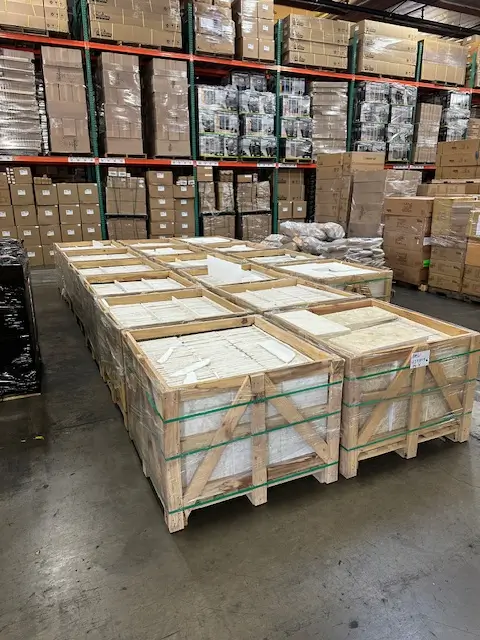
You should also ask about warehouse stock levels before committing to a project timeline. A supplier with live warehouse inventory can confirm available lot quantities and provide slab images before you place an order — this isn’t a convenience, it’s a verification step that protects your project from mid-run substitutions.
Reading Technical Documentation Like an Installer
Most suppliers can produce a product data sheet. The real test is whether their documentation references ASTM standards with actual test results, or just lists generic performance claims. For granite dimension stone, ASTM C615 granite dimension stone quality standards define minimum requirements for compressive strength, modulus of rupture, flexural strength, and absorption. Reputable granite slab suppliers will provide third-party test certificates that match the specific material in their warehouse — not just category-level data that could apply to any granite quarry worldwide.
Here’s what most specifiers miss: absorption rates vary significantly even within commercial granite grades. A granite with 0.1% absorption performs entirely differently under freeze-thaw cycling than one testing at 0.4%, even if both technically pass the ASTM C615 threshold. For projects in regions with significant precipitation variability or heavy rain seasons, that distinction matters — waterlogged subgrades combined with even marginal stone absorption accelerate joint deterioration faster than thermal stress alone.
- Request lot-specific test certificates, not generic product data sheets
- Confirm that absorption and compressive strength values match the specific quarry source
- Verify that surface finish (honed, flamed, bush-hammered) is consistent across the available lot
- Ask whether the supplier tests incoming shipments at their warehouse or relies solely on exporter documentation
Slab Grading and Lot Consistency: The Hidden Variable
Granite slab suppliers grade material differently, and the terminology isn’t standardized across the industry. What one supplier calls “commercial grade” another calls “standard,” and neither label tells you whether the lot was cut from the same quarry block or assembled from multiple production runs. The practical issue: color variation within a lot purchased from mixed quarry blocks creates a visible patching effect in large-format installations that no amount of layout planning can fully disguise.
Your specification should require lot-matched material confirmed in writing, particularly for projects exceeding 500 square feet. Request a representative slab bundle from the warehouse before full delivery — most experienced suppliers can pull and photograph the specific slabs reserved for your order. If a supplier can’t do this, they’re either drop-shipping from an overseas source without pre-inspection capacity, or their warehouse management system doesn’t support lot tracking. Neither situation protects your installation.
- Specify lot-matched material in your purchase order, not just in conversation
- Request bundle-level photography showing all slabs reserved for your project
- Confirm whether the supplier holds the material in their own warehouse or uses a third-party logistics facility
- Ask about typical lead times from warehouse confirmation to truck dispatch — gaps longer than five business days on stocked material can indicate inventory visibility problems
How Drainage Design Affects Your Granite Selection
Granite’s near-zero absorption rate — typically below 0.4% for quality commercial grades — makes it one of the strongest performers in high-moisture environments. But the stone’s performance is only half the equation. Your base preparation and drainage geometry determine whether that low absorption is an asset or a liability. In projects exposed to heavy rainfall cycles, monsoon seasons, or coastal storm events, hydrostatic pressure beneath an improperly drained granite installation will destabilize even a correctly mortared slab in two to three seasons.
The drainage detail that gets overlooked most often in granite slab work is the relationship between base permeability and surface slope. A 1% fall-to-drain is the minimum for outdoor granite — 1.5% is preferable for areas prone to sustained rainfall. Below that threshold, standing water migrates into joints regardless of how well the surface material performs. You’re looking at a combination of a properly graded compacted aggregate base, a minimum 4-inch depth for pedestrian applications, and cross-falls designed into the layout before a single slab is set.
- Design surface drainage at 1–1.5% minimum fall for outdoor granite installations
- Use a free-draining aggregate base (angular crushed stone, not pea gravel) to prevent hydrostatic pressure buildup
- In flood-risk or high-rainfall zones, extend base depth to 6 inches and include a perforated sub-drain at the low point
- Verify that your granite slab suppliers offer material in thicknesses appropriate for your base depth — 3/4-inch slabs demand significantly different base stiffness than 1.25-inch material
For projects where you’re working on exterior hardscape, specifying a flamed or bush-hammered finish also reduces surface runoff velocity compared to polished granite — a practical consideration for sloped terraces or pool surrounds where water management and slip resistance intersect.
Evaluating Lead Times and Logistics Capability
Your project’s truck access constraints affect more than scheduling — they affect which suppliers of granite can realistically serve your job site. Full-size flatbed deliveries require a minimum 40-foot straight approach for most carriers, and granite slabs stacked on A-frames add significant height clearance requirements. Suppliers who operate their own truck fleet have more flexibility to accommodate constrained site access than those using third-party freight brokers, who won’t negotiate delivery windows or off-loading assistance.
Delivery timing is also a material protection issue. Granite slabs delivered ahead of schedule and stored improperly on site — leaning unsupported, exposed to repeated freeze-thaw cycles, or stacked flat without adequate dunnage — arrive at installation with micro-fractures along the edges that only become visible after cutting. Confirm with your supplier that their warehouse packing protocols include edge protection foam and that their truck loading procedure maintains A-frame angle within 10–15 degrees of vertical.
At Citadel Stone, we ship granite directly from warehouse stock, which allows us to confirm slab counts and provide delivery documentation before your truck leaves. This step eliminates the quantity discrepancies that create field delays when installers discover a short-count delivery mid-project.
Verifying Quarry Origin and Supply Chain Transparency
Country of origin matters less than you might expect — what matters is whether the supplier can trace a specific lot back to a specific quarry and provide documentation to that effect. Granite from well-managed quarries in Brazil, India, or Norway can significantly outperform material from lesser-known sources in the same country, because individual quarry management practices — block sizing, extraction methodology, and on-site processing standards — vary as much as the geology.
According to USGS granite production and construction use data, the United States imports dimension granite from over 30 countries, with quality, pricing, and processing standards that vary considerably by source region. A supplier who can name the quarry, provide the quarry’s third-party certifications, and show you the production facility’s processing equipment gives you a level of traceability that protects your specification in ways a competitive price cannot.
- Ask for the quarry name and country of origin on every lot — not just the country
- Request the supplier’s quarry audit process or certification documentation
- Confirm whether the material is processed (cut-to-size, finished) at the quarry or at an intermediary facility — each processing step adds a potential quality control variable
- Verify that your supplier has been working with the same selected quarries consistently — long-term quarry relationships produce more predictable material batches
Matching Your Project Scope to Available Inventory
One of the most common sourcing failures on large-scale granite projects is committing to a material before confirming full lot availability. You need to know whether the warehouse holds enough from the same production run to cover your entire square footage — including a 10% overage for cuts and breakage — before your project schedule becomes dependent on that material. Partial delivery from a first lot, followed by a second shipment from a different quarry run, is the leading cause of color-match failures on granite installations.
Browsing our granite slab inventory gives you a direct view of current lot availability and thickness options, which is the practical starting point for aligning material selection with your confirmed project scope. Verifying availability before finalizing your layout prevents the mid-project substitutions that compromise installation quality.
Finish Selection and the Performance Trade-Offs Installers Navigate
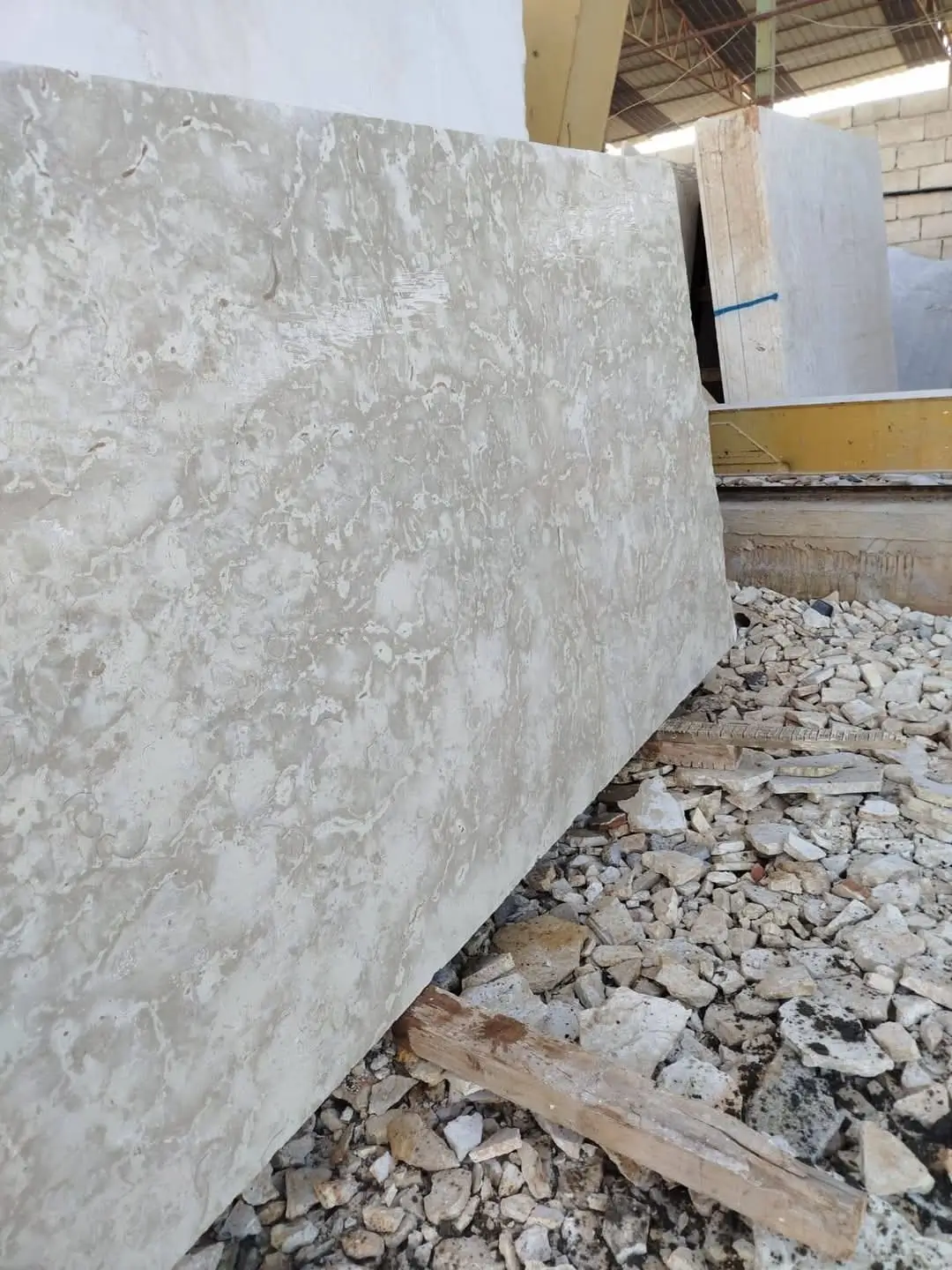
Polished granite delivers the densest surface and the lowest absorption, but it’s also the most unforgiving in terms of flatness requirements — any variation in your setting bed telegraphs directly through the reflective surface. Honed finishes offer slightly higher friction coefficients (critical for wet zones) and tolerate minor lippage variations better than polished, making them the more practical choice for exterior installations where foot traffic safety intersects with aesthetic requirements.
Flamed and bush-hammered textures open the surface profile slightly, which increases micro-roughness for slip resistance but demands more attention to sealing in environments with high-intensity rainfall or freeze-thaw exposure. The surface texture created by thermal flaming micro-fractures the outermost crystal layer — this doesn’t affect structural performance, but it does increase the surface area available for moisture penetration, so sealing protocol matters more with textured finishes than with polished or honed material.
- Polished: lowest absorption, highest reflectivity, requires flat setting bed within ±1/16 inch
- Honed: moderate friction, tolerates minor substrate variation, preferred for exterior wet zones
- Flamed: high friction coefficient, thermally altered surface layer, requires penetrating sealer in high-moisture applications
- Bush-hammered: maximum texture, appropriate for heavy-use commercial exteriors, highest maintenance demand for joint sealing
Selecting the Right Suppliers of Granite for Your Specification
Vetting suppliers of granite comes down to a straightforward question: can your supplier document the quality of the specific material they’re selling you, and can they deliver it consistently at the volume your project requires? The technical details — lot traceability, ASTM test compliance, warehouse management, and drainage-appropriate thickness options — are the criteria that separate supply relationships that protect your installation from those that create field problems you’ll be managing for years. Your specification is only as strong as the supply chain behind it, and that supply chain starts with the choices you make before a single slab is cut.
As you finalize your granite material selections, the visual characteristics of individual varieties — particularly veining pattern and tone distribution — are equally critical to long-term project satisfaction. Exploring white granite selection by veining and tone provides a closer look at how those aesthetic variables interact with technical performance criteria. Sourced from our selected premium quarries across multiple continents, Citadel Stone granite arrives in wide color and thickness options.
Related reading: decomposed vs crushed granite · how to choose decomposed granite · what type of rock is granite.