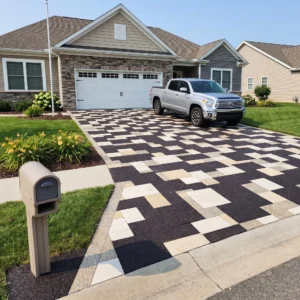
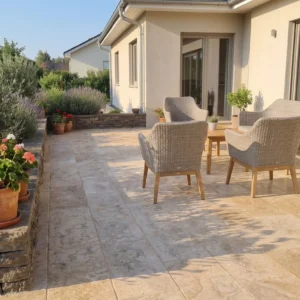
The financial stakes are enormous. Moisture-related stone failures typically cost between $147-$623 per square foot to remediate, with total project impacts often exceeding $2.8 million when factoring in business interruption, legal fees, and consequential damages. These costs fall directly on contractors and building owners when supplier insurance policies fail to provide expected coverage.
Traditional general liability policies were designed for conventional construction materials and never anticipated the unique risks associated with natural stone installations. Modern stone applications involve complex moisture management challenges that require specialized insurance coverage reflecting actual risk exposures rather than outdated policy templates developed for simpler building materials.
The insurance industry’s slow adaptation to stone-specific risks has created a dangerous coverage gap that threatens every project stakeholder. Contractors who assume their suppliers carry adequate protection often discover their vulnerability only after catastrophic failures occur, when legal remedies become expensive and time-consuming rather than providing immediate financial relief.
Understanding and addressing these coverage gaps requires proactive risk management that goes far beyond reviewing certificates of insurance. Contractor protection demands sophisticated analysis of policy language, exclusions, and endorsements that most construction professionals aren’t equipped to evaluate without specialized expertise. Access project management resources that include tips from your stone supplier.
The Insurance Coverage Gap Explained
Typical Policy Language & Exclusions
Standard commercial general liability policies issued to stone suppliers typically include broad exclusions for “property damage arising from defective materials” that encompass moisture-related failures. These exclusions use deliberately vague language that insurance companies interpret broadly to deny claims related to stone performance issues.
Professional liability exclusions eliminate coverage for design defects, specification errors, or failure to warn about material limitations. When stone suppliers fail to disclose moisture sensitivity or provide adequate installation guidance, resulting damages fall outside policy coverage even though the supplier’s negligence directly contributed to project failures.
Workmanship exclusions deny coverage for improper installation, handling, or storage that contributes to moisture damage. Since moisture problems often result from multiple contributing factors including supplier practices, these exclusions create legal arguments that shift liability away from insured suppliers toward unprotected contractors.
Natural stone supplier coverage gaps become apparent when examining specific policy language rather than relying on general coverage descriptions. Terms like “inherent vice,” “gradual deterioration,” and “expected or intended damage” provide insurers with multiple avenues to deny moisture-related claims.
Why Moisture Damage Is Often Excluded
Insurance underwriters view moisture damage as “foreseeable and preventable” rather than the sudden and accidental occurrences that traditional liability policies are designed to cover. This perspective ignores the reality that moisture problems often result from supplier negligence in testing, handling, or disclosure of material characteristics.
Predictive modeling challenges prevent insurers from accurately pricing moisture-related risks due to limited historical data and complex causation factors. Rather than developing appropriate pricing models, most insurers simply exclude moisture damage entirely to avoid potential losses they cannot quantify.
Loss frequency concerns drive exclusions as insurers recognize that moisture problems affect a significant percentage of stone installations. High claim frequency combined with potentially large individual losses creates unfavorable risk profiles that insurers prefer to avoid rather than price appropriately.
Claim complexity issues arise because moisture damage often involves multiple parties, gradual manifestation, and disputed causation. Insurers exclude these risks to avoid expensive investigation and litigation costs that can exceed actual property damage awards.
Real Orders, Real Deliveries
We only publish projects we have actually supplied. See our Las Vegas white limestone delivery — two containers, 6,884 sq ft, 32 crates, shipped door to door — and how we supplied Creative Environments in Arizona with 21 containers across a 70,000+ sq ft installation: white limestone pavers and tiles, shellstone and Ocean Reef pavers.
Had Citadel Stone material installed on your project? Send us your photos and we will feature the work here, with your permission.
Assessing Your Supplier’s Policy
Key Clauses to Review
Coverage trigger language determines whether policies respond to “occurrence” or “claims-made” events. Occurrence policies provide broader protection for moisture damage that develops gradually, while claims-made policies may deny coverage if damage manifestation spans multiple policy periods.
Definition sections require careful analysis as terms like “property damage,” “occurrence,” and “sudden and accidental” are defined differently across policies. Narrow definitions can exclude moisture damage even when the policy appears to provide comprehensive coverage based on general language.
Exclusion sections contain the most critical language for moisture damage evaluation. Look for specific exclusions covering “water damage,” “deterioration,” “inherent vice,” “faulty workmanship,” and “professional services” that could eliminate coverage for moisture-related stone failures.
Defense obligation clauses specify whether insurers must provide legal defense for excluded claims or can deny both coverage and defense assistance. Broad defense obligations provide value even when ultimate coverage may be denied, while narrow defense clauses leave suppliers exposed to legal costs from day one.
Questions to Ask Your Risk Manager
What specific moisture-related perils are covered under current policies? This question forces detailed examination of policy language rather than accepting general coverage representations that may not reflect actual protection levels.
How do exclusions for “gradual deterioration” or “inherent vice” apply to stone installations? These common exclusions often eliminate moisture damage coverage, but their application varies significantly across different policy forms and insurance companies.
What endorsements or riders are available to address moisture damage exposures? Many insurers offer specialized endorsements that can restore coverage for moisture-related losses, but these additions require specific requests and additional premiums.
How does the policy address disputes over causation when multiple factors contribute to moisture damage? Mixed causation scenarios are common in stone failures, and policy language governing these situations significantly impacts coverage availability.
Identifying Hidden Exclusions
Pollution exclusions may apply to moisture damage when water infiltration is characterized as a “contaminant” that causes property damage. These exclusions were originally designed for environmental contamination but are increasingly applied to water-related building failures.
Professional services exclusions can eliminate coverage when stone suppliers provide technical advice, installation guidance, or design assistance that contributes to moisture problems. The scope of “professional services” varies widely across policies and insurance companies.
Product defect exclusions may deny coverage for moisture damage attributed to inherent material characteristics rather than supplier negligence. These exclusions require careful analysis to determine whether moisture sensitivity constitutes a “defect” under specific policy language.
Expected or intended damage exclusions allow insurers to deny coverage by arguing that moisture damage was foreseeable based on material characteristics, installation conditions, or environmental factors known to the supplier.
Discover various textures available through your trusted stone supplier near me.
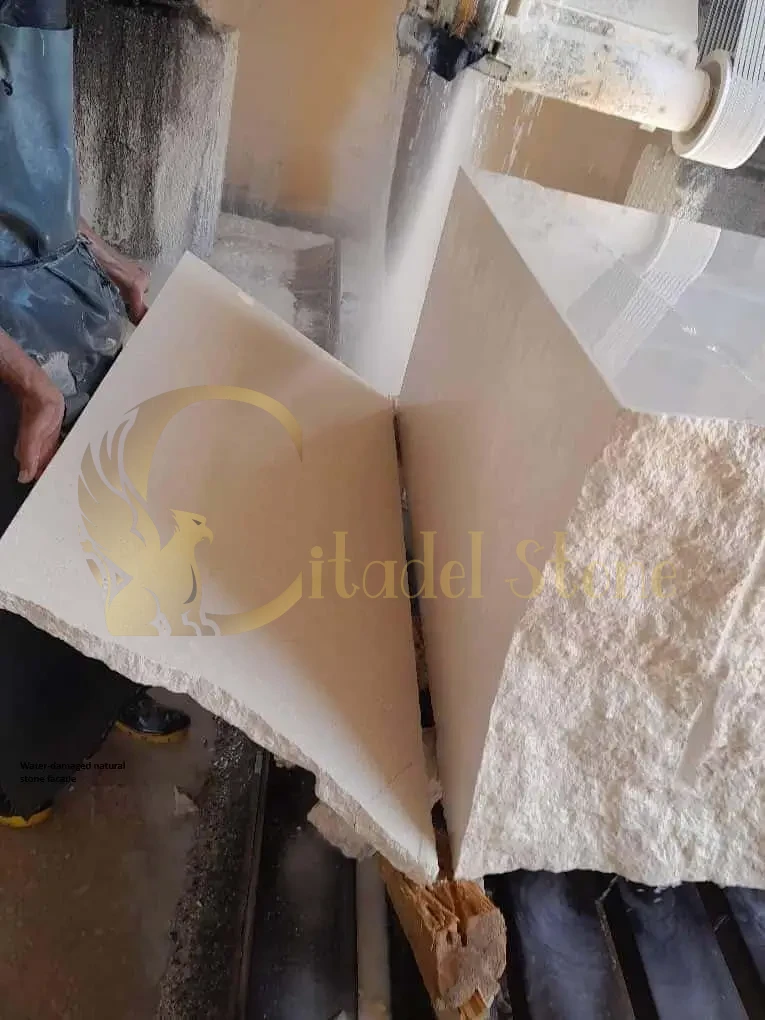
How to Secure Comprehensive Coverage
Endorsements & Riders for Moisture Damage
Broad form property damage endorsements can restore coverage for gradual damage that develops over time, including moisture-related deterioration that standard policies exclude. These endorsements typically require higher premiums but provide essential protection for stone suppliers serving high-risk applications.
Professional liability endorsements add coverage for advice, recommendations, and technical guidance that contribute to moisture damage. This protection becomes critical when suppliers provide installation specifications, material handling guidance, or environmental suitability recommendations.
Product recall endorsements provide coverage for expenses associated with removing and replacing stone materials when moisture-related defects create safety hazards or performance failures. This coverage can prevent catastrophic losses when widespread remediation becomes necessary.
Extended reporting period endorsements ensure that claims-made policies continue providing protection for moisture damage that manifests after policy expiration. Without these endorsements, coverage gaps can develop when switching insurers or allowing policies to lapse.
Partnering with Insurers Specializing in Stone Projects
Specialty construction insurers understand stone-specific risks and offer policies tailored to address moisture damage exposures that standard insurers exclude. These companies typically charge higher premiums but provide comprehensive protection that justifies additional costs.
Captive insurance programs allow large stone suppliers to retain risks and customize coverage terms to address specific moisture damage exposures. Captive arrangements provide greater control over claims handling and coverage decisions than traditional insurance markets.
Risk retention groups enable stone suppliers to pool resources and share risks through industry-specific insurance entities. These arrangements often provide more favorable coverage terms for moisture damage than individual policies available in standard markets.
International specialty markets including Lloyd’s of London syndicates offer sophisticated coverage for complex risks that domestic insurers avoid. These markets charge substantial premiums but provide coverage breadth that can protect against catastrophic moisture damage claims.
Contractual Requirements & Hold-Harmless Agreements
Additional insured endorsements require suppliers to name contractors and building owners as additional insureds on liability policies, providing direct coverage access when moisture damage occurs. These endorsements should specifically address moisture-related exposures rather than relying on standard additional insured language.
Primary and non-contributory clauses ensure that supplier insurance responds first to moisture damage claims without seeking contribution from contractor insurance. This protection prevents coverage disputes and delays when multiple insurance policies could potentially apply.
Waiver of subrogation endorsements prevent supplier insurers from pursuing recovery against contractors for moisture damage losses, eliminating potential legal disputes over fault allocation. These waivers provide certainty about ultimate financial responsibility when losses occur.
Hold-harmless agreements transfer moisture damage liability from contractors to suppliers through contractual indemnification rather than relying solely on insurance coverage. These agreements provide protection even when insurance exclusions deny coverage, though they depend on supplier financial stability.
Find answers about stones with FAQs provided by the stone suppliers.
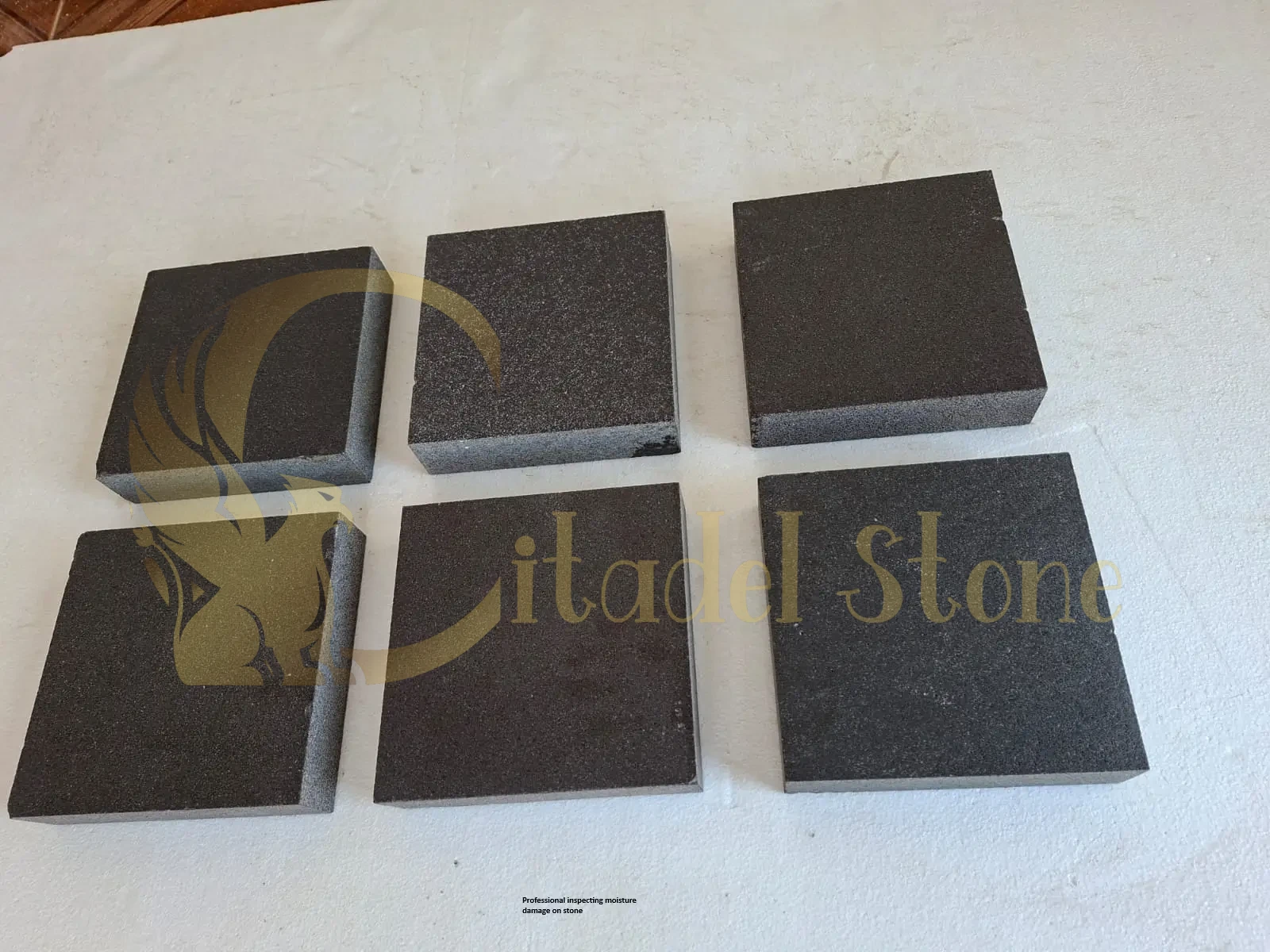
Step-by-Step Insurance Checklist (Link Magnet)
Essential Policy Review Components
- Examine coverage trigger definitions including “occurrence,” “claims-made,” and “property damage” to understand when policies respond to moisture-related losses
- Analyze exclusion sections thoroughly focusing on water damage, gradual deterioration, inherent vice, and professional services exclusions that commonly eliminate moisture coverage
- Review additional insured provisions ensuring contractors and building owners receive direct coverage access for moisture damage claims without gaps or limitations
- Evaluate defense obligation clauses confirming insurers must provide legal representation for moisture damage disputes regardless of ultimate coverage determinations
- Assess endorsement availability for moisture damage, professional liability, product recall, and extended reporting periods that address stone-specific risk exposures
- Verify policy limits adequacy considering typical moisture damage costs ranging from $147-$623 per square foot plus consequential damages and legal expenses
- Confirm primary and non-contributory status ensuring supplier insurance responds first without seeking contribution from other potentially applicable coverage
- Document waiver of subrogation agreements preventing insurer recovery actions that could create disputes between project stakeholders after loss events
Download our comprehensive Insurance Checklist PDF containing detailed policy review templates, sample endorsement language, and risk assessment tools specifically designed for natural stone projects.
Create beautiful pathways with assistance from your best stone supplier.
Best Practices for Contractual Risk Transfer
Incorporating Insurance Requirements into Supplier Contracts
Minimum coverage limits should reflect realistic moisture damage exposure rather than arbitrary amounts that may prove inadequate when claims occur. Consider requiring limits of $2-5 million per occurrence for suppliers serving high-value projects with significant moisture damage potential.
Specific endorsement requirements must be detailed in contract language rather than accepting general “comprehensive coverage” representations. Specify required endorsements for moisture damage, professional liability, and any other stone-specific exposures relevant to the project.
Certificate of insurance timing should require delivery before material delivery begins rather than accepting promises to provide documentation later. Delays in certificate delivery often indicate coverage problems that become expensive to resolve during active construction phases.
Policy renewal notifications ensure continuous coverage throughout project completion and warranty periods. Require suppliers to provide updated certificates at each policy renewal and notify contractors immediately if coverage changes or lapses occur.
Verifying Certificates of Insurance
Certificate authenticity verification requires direct contact with insurance companies rather than accepting certificates without independent confirmation. Fraudulent certificates are surprisingly common and provide no protection when claims arise.
Coverage confirmation beyond certificate summaries demands review of actual policy language to verify that certificates accurately reflect available protection. Certificates often oversimplify complex coverage terms that significantly impact claim outcomes.
Endorsement verification ensures that certificates reflect all required endorsements rather than base policy coverage alone. Many certificates fail to indicate endorsements that provide essential protection for moisture damage and other stone-specific risks.
Financial strength ratings of insurance companies should meet minimum standards appropriate for project risk exposure. Weak insurers may deny claims or become insolvent, leaving contractors without practical recourse when coverage is needed most.
Ongoing Monitoring & Renewal Protocols
Annual policy reviews should evaluate changing risk exposures and coverage adequacy as projects evolve and claims experience develops. What appears adequate initially may prove insufficient as understanding of stone-specific risks improves over time.
Claims reporting protocols must ensure immediate notification of potential moisture damage to prevent coverage denials based on late reporting. Establish clear procedures for identifying and reporting moisture-related issues before they develop into major claims.
Coverage modification procedures enable rapid response when project conditions change or new risk exposures emerge. Maintain relationships with insurance professionals who understand stone-specific risks and can facilitate coverage adjustments quickly.
Documentation maintenance systems preserve policy information, certificates, and correspondence that may become critical during claim investigations years after project completion. Poor documentation often compromises otherwise valid claims when insurers challenge coverage availability.
Explore locally sourced stones offered by your community-focused stone suppliers near me.
Conclusion & Urgent Next Steps
The construction industry’s supplier insurance gaps create hidden liabilities that threaten every stone installation project. With 89% of stone suppliers carrying inadequate moisture damage coverage, contractors and building owners face potential catastrophic losses that traditional risk management approaches simply cannot address.
Critical Action Items:
- Immediately audit current supplier insurance certificates focusing on moisture damage exclusions and coverage gaps that could create liability exposure exceeding project insurance limits
- Demand comprehensive policy reviews rather than accepting certificate summaries that mask critical exclusions and limitations affecting moisture-related stone failures
- Require specialized endorsements addressing moisture damage, professional liability, and stone-specific risks that standard commercial general liability policies systematically exclude
- Implement contractual risk transfer mechanisms including additional insured status, primary and non-contributory clauses, and hold-harmless agreements that provide protection beyond insurance coverage alone
- Establish ongoing monitoring protocols for policy renewals, coverage modifications, and claims reporting that maintain protection throughout project lifecycles and warranty periods
The financial consequences of inadequate natural stone supplier coverage extend far beyond immediate remediation costs to encompass legal fees, business interruption, and reputation damage that can destroy established construction businesses. Proactive risk management requires understanding these exposures and implementing comprehensive protection strategies before problems emerge.
Insurance market evolution toward stone-specific coverage products provides opportunities for sophisticated risk management, but accessing these solutions requires expertise that most construction professionals lack. Professional risk management consultation becomes essential for navigating complex coverage options and ensuring adequate protection.
The choice is stark: invest in comprehensive insurance coverage analysis and enhancement, or gamble with potential catastrophic losses that could bankrupt projects and destroy careers. Moisture damage insurance gaps represent ticking time bombs that explode without warning, making prevention the only practical risk management strategy.
Protect your project now with our risk-proof checklist—download our comprehensive Insurance Checklist PDF containing detailed policy review templates and sample endorsement language. Contact our insurance specialists today to audit your current supplier coverage and implement bulletproof protection strategies before your next stone installation begins.