Ordering stone from overseas sounds complicated until you have done it once. This guide walks through how a natural stone order actually reaches Barbados — from samples to a container at Bridgetown — including the cost drivers, the container mathematics, and the mistakes that catch first-time importers.
Step 1: samples before anything else
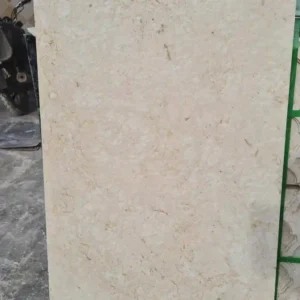
Never commit to imported stone from photographs. Request samples of the exact stone and finish you are considering — ours arrive within 3 working days — and judge them outdoors, wet and dry, in Barbados light. Colors that look right on a screen read completely differently against island vegetation and strong tropical sun, and a finish that feels right in a showroom can feel wrong under a wet bare foot. The sample stage costs you a few days and prevents nearly every expensive mistake that happens in cross-border stone buying.
Step 2: specification and quote
Once the stone is right, your quote is built from your exact quantities, sizes, thicknesses and finishes. Cut-to-order means you are not forced into warehouse formats: coping profiles, large-format slabs, step treads and custom thicknesses are all normal requests, and mixing finishes across one order — textured outside, honed inside — is standard practice. The quote states material and freight terms clearly so your customs broker can calculate landed cost before anything sails.
What actually drives the cost
Sea freight for stone is priced by weight and volume, which means three decisions control most of your landed cost:
- Thickness is the big one — dense limestone weighs roughly 80 kg per square meter at 3 cm, so stepping to 5 cm adds about two-thirds more weight for the same coverage. Specify what the application needs, not more
- Format matters, because large slabs need more protective packing per piece
- Completeness matters most of all — one consolidated shipment beats two part-loads on every line of the invoice
Pallet or container: the honest math
A palletized shipment suits a patio, a pool surround or a single room — anything up to roughly 30–40 square meters depending on thickness. Above that, container economics take over: a standard container carries on the order of 24–26 metric tons, which at 3 cm thickness translates to roughly 280–320 square meters of stone. For a villa build or a development phase, a full or shared container is by far the cheapest way to move stone across water, and it arrives as one inspected, sequenced delivery instead of a series of partial shipments.
The import side is more open than most people expect. Official commercial guidance states that almost all goods can be imported into Barbados, with licenses required for a defined list that is largely agricultural — the country guidance sets out the exceptions. Dimension stone does not appear on that restricted list.
Packing that survives the Atlantic
Stone that crosses an ocean is packed for it:
- Crated with edge protection, faces separated
- Weight distributed for forklift handling at both ports
- Every piece hand-inspected after manufacturing and before crating — the time to find a flawed tile is in the factory, not on a Bridgetown dock
- Crates labeled against the packing list, so your installer can sequence work without opening everything at once
Documents and duties at Bridgetown
The paperwork splits cleanly between us and your broker:
- We prepare the export documentation and a clean commercial invoice
- Duties, VAT and local port charges in Barbados are settled by your customs broker on arrival
- You ask that broker for the landed-cost calculation up front — with complete paperwork it is a routine job
If you do not yet have a broker, ask us: island orders are our routine work, and we can point you at the information your chosen broker will need.
Timelines: what is honest and what is not
Any supplier who quotes a precise delivery day before knowing your specification is guessing. Real lead time is production time (in-stock versus cut-to-order) plus vessel scheduling to Bridgetown, and both are confirmed with your quote — then tracked and communicated once the order is on the water. Build stone delivery into your construction program the way you build in any long-lead item: order at design freeze, not when the paving crew is standing idle.
Step 5: payment security
New clients can pay through escrow, so funds are released only after the order is verified. For a first cross-border order, that removes the leap of faith entirely: you approve samples first, and your payment is protected until what you approved is what shipped.
Clearance itself runs through the Customs and Excise Department, which sits under the Ministry of Finance and processes entries electronically — the department is listed in the government directory. Your broker files the entry, but you should still know whose name goes on it and who answers if a query lands.
The three mistakes that cost importers real money
Three mistakes cost importers real money:
- Guessing quantities — measure, add a margin for cuts and breakage, and ship once
- Specifying by photo — approve physical samples in your own light
- Ignoring the broker until arrival — involve your customs broker at quote stage so landed cost is known before the order sails, not discovered after
Full details on materials, finishes and how we work with Bajan projects are in our Barbados stone supplier guide. For how an island delivery comes together in practice, see the Bahamas beachfront villa case study.
Choosing an incoterm without a trade degree
Quotes for exported stone reference shipping terms, and two cover most cases. Under FOB-style terms the price carries the goods to the departure port and aboard; freight and onward risk ride with you, usually via a forwarder your broker recommends. Under CIF-style terms freight to Bridgetown (and basic cover) is bundled into the quoted price, and you take over at arrival. Neither is universally better: bundled terms are simpler for a first order; separated terms give repeat importers freight control. What matters is that the quote names its terms plainly — ours do — so your broker prices the remainder without guessing.
The five costs beyond the stone
Landed cost is the stone plus five knowable lines:
- Ocean freight, mode-dependent on the pallet or container decision above
- Insurance — a small percentage, worth every cent
- Barbados duties and taxes as assessed on the invoice, which is your broker’s daily bread
- Port and handling charges at Bridgetown
- Inland delivery to site
First-time importers sometimes see only line one and get surprised; professionals get all five as numbers before committing.
Absorption is the number that separates one limestone from another. The Natural Stone Institute records a range running from under one percent to over ten across the family, and notes that dolomitic stones generally carry higher density, lower absorption and better abrasion resistance — the industry variety data sets this out. That spread is why two stones sold under the same broad name can behave nothing alike underfoot.
Container loading, done properly
How stone is placed in the box decides how it arrives. Good practice looks like this:
- Crates loaded to distribute weight across the floor, heavier crates low and central
- Dunnage and bracing, so nothing shifts in a seaway
- A loading sequence that matches your unloading plan — first-needed crates accessible, not buried
We photograph loaded containers before sealing, and the photos travel with the file.
Small-order strategies that still make sense
Not every Barbados project fills pallets. For genuinely small needs — a coping run, a repair batch, a sample-scale trial — strategies exist: consolidate with your own future order (buy the terrace now, the pool surround in the same crate), piggyback timing with another island shipment when schedules align, or accept that groupage freight on a single pallet costs proportionally more and price the convenience honestly. What we counsel against is compromising the stone to shrink the freight — the cheap-stone-expensive-shipping combination satisfies nobody twice.
Where shipping stone to Barbados is won or lost
Put the whole guide in one paragraph: request samples (3 working days) → approve in your own light → send quantities and drawings for a quoted cutting list with named terms → introduce your broker for the landed-cost figure → confirm; production and sailing dates land in writing → escrow if it is our first dance → crates load, photos taken, documents sent → vessel to Bridgetown → broker clears → truck delivers → fifteen-minute inspection → installation. Eleven arrows, no mysteries — which is the entire point of doing imports the documented way.