

Why Sizing Precision Defines the Whole Layout
Rectangle stone pavers demand more dimensional discipline than most specifiers anticipate — not because the material is difficult, but because the geometry compounds. A 2mm variance across a single piece is negligible; that same variance repeated across 400 pieces in a running bond creates a visible drift that no amount of joint grouting corrects after the fact. Your tolerance window for natural stone rectangles sits tighter than most manufacturers print on the spec sheet, and verifying warehouse stock for consistent batch dimensions before your project begins is one of the most important pre-installation steps you can take.
Standard Rectangle Sizes and What They Actually Mean On-Site
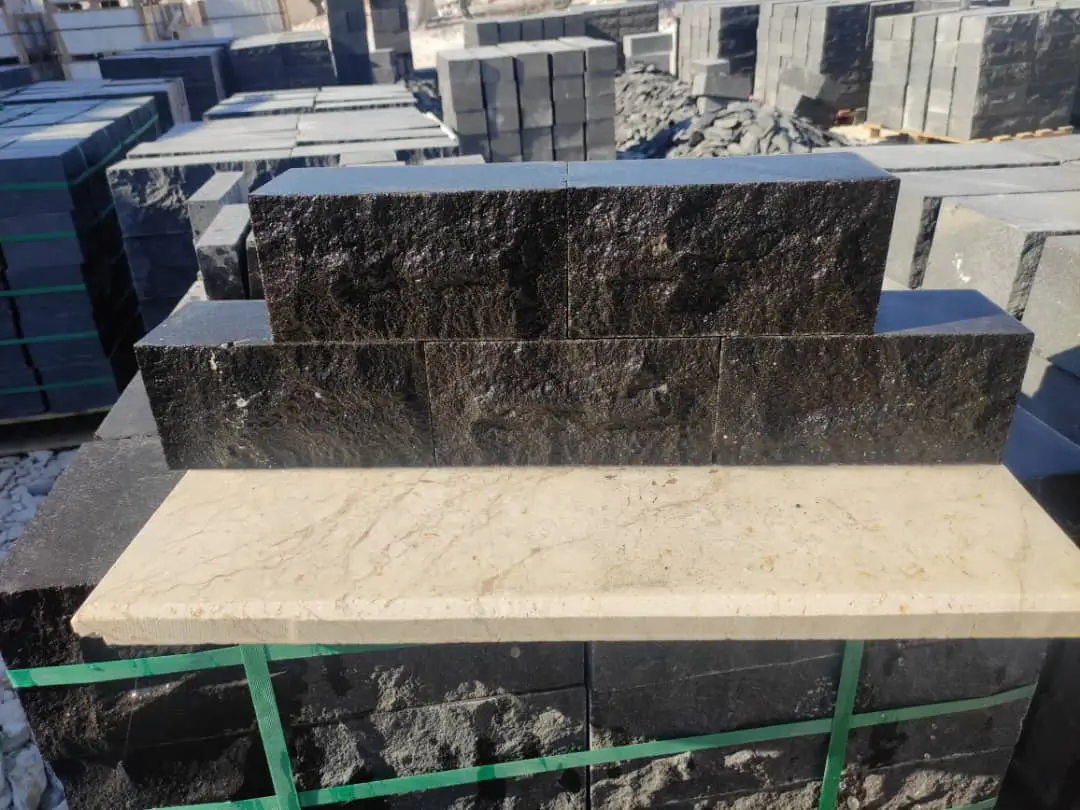
The term “standard sizes” in the natural stone industry covers a wider range than you might expect. Rectangle stone pavers commonly ship in formats ranging from 12×6 inches up to 24×12 inches, with 16×8 and 24×12 being the workhorse formats for exterior applications. Thickness runs from 1.25 inches (30mm nominal) for pedestrian loads to 2 inches (50mm) for vehicle access areas.
Here’s what most specifiers miss when reading size charts: nominal dimensions and actual dimensions diverge. A 24×12 piece will typically measure 23.5×11.5 inches after saw-cutting tolerances, and your joint spacing needs to account for that gap at the design stage — not during installation. According to Natural Stone Institute stone specifications, dimensional tolerances for natural stone pavers can vary by up to ±1/8 inch depending on material and finish, which directly affects joint planning across large field areas.
Your layout calculations should build in a standard 3/16-inch to 1/4-inch joint width to absorb dimensional variation without creating visible irregularity. Tighter joints look cleaner in the showroom but punish you in the field when batch consistency isn’t perfect.
Layout Patterns That Work for Rectangle Stone Pavers
The rectangular format opens up more pattern variety than a square tile ever could, and choosing the right one depends on your site geometry, traffic direction, and the visual effect you want to achieve.
- Running bond: The default for good reason — offset joints by 50% and you get strong visual directionality, excellent structural load transfer, and forgiving installation tolerance
- Third-offset bond: Shift each row by 33% instead of 50% for a subtler pattern that reads as more formal and suits wider, uninterrupted field areas
- Herringbone at 90°: Rectangles laid perpendicular create a classic interlocking geometry that distributes point loads exceptionally well — the right choice for high-traffic entries and driveways
- Herringbone at 45°: The same structural benefit with a diagonal energy that draws the eye down the length of a pathway or driveway — requires more cut pieces at borders
- Stacked bond: All joints align — delivers a contemporary grid aesthetic but requires near-perfect dimensional consistency across every piece in the field
Stacked bond is the pattern that separates confident specifiers from cautious ones. It looks exceptional when the material is dimensionally consistent, and it exposes every tolerance problem when it isn’t. Reserve it for premium projects where you can inspect batch consistency before installation begins.
Working With Paver Patterns Using 3 Different Sizes
Paver patterns using 3 different sizes — typically a large rectangle paired with a medium and small piece — create the kind of organic, hand-laid aesthetic that’s difficult to replicate with a single format. The challenge is getting the module to work mathematically.
A reliable three-size combination uses pieces where each dimension is a multiple of a common module. If your small unit is 6×6 inches, your medium might be 12×6, and your large 12×12 — all divisible by a 6-inch module. This lets you mix the three sizes without cutting, which dramatically reduces waste and installation time. USGS dimension stone production data confirms that modular coordination in natural stone specification has grown as a project efficiency standard across commercial and residential hardscape applications.
Sketching the repeat pattern before ordering is essential — a typical three-size field pattern has a repeat unit of roughly 24×24 inches, and quantities for each size must be calculated independently. Over-ordering on the small pieces is the most common mistake; they consume more linear footage of joint than the large pieces do and run out faster than your cut sheet predicts. Paver patterns using 3 different sizes also require closer attention to batch color consistency across all three formats, since mismatched lots become obvious where sizes meet.
Paver Basket Weave Patterns With Rectangle Stone
The paver basket weave pattern is one of the most recognizable layouts in residential hardscape, and rectangle stone pavers are the format it was designed for. Two rectangles laid side by side perpendicular to the next pair — the geometry creates a woven textile effect that reads beautifully in both formal and informal settings.
For a true basket weave, your rectangle’s length must equal exactly twice its width. A 12×6 inch piece satisfies this ratio perfectly. A 16×8 inch piece does as well. Pieces that don’t maintain the 2:1 ratio will create joints that don’t align — you’ll end up with a pattern that looks almost right but never quite settles, and it will bother every installer on the job.
- Traditional basket weave: Two-piece pairs alternate direction by 90° — the most common version and the most forgiving to install
- Double basket weave: Four-piece groups create larger woven squares — suits wider surface areas where the pattern needs scale to read correctly
- Pinwheel basket weave: Pairs rotate around a central square unit — complex to set out but striking in entry courts and focal areas
Paver basket weave patterns also perform well structurally. The ASLA permeable paving guidance notes that interlocking patterns like basket weave provide superior load distribution compared to running bond for certain paving applications, making it a technically sound choice beyond its aesthetic appeal.
Holland Stone Pavers in a Rectangle Format
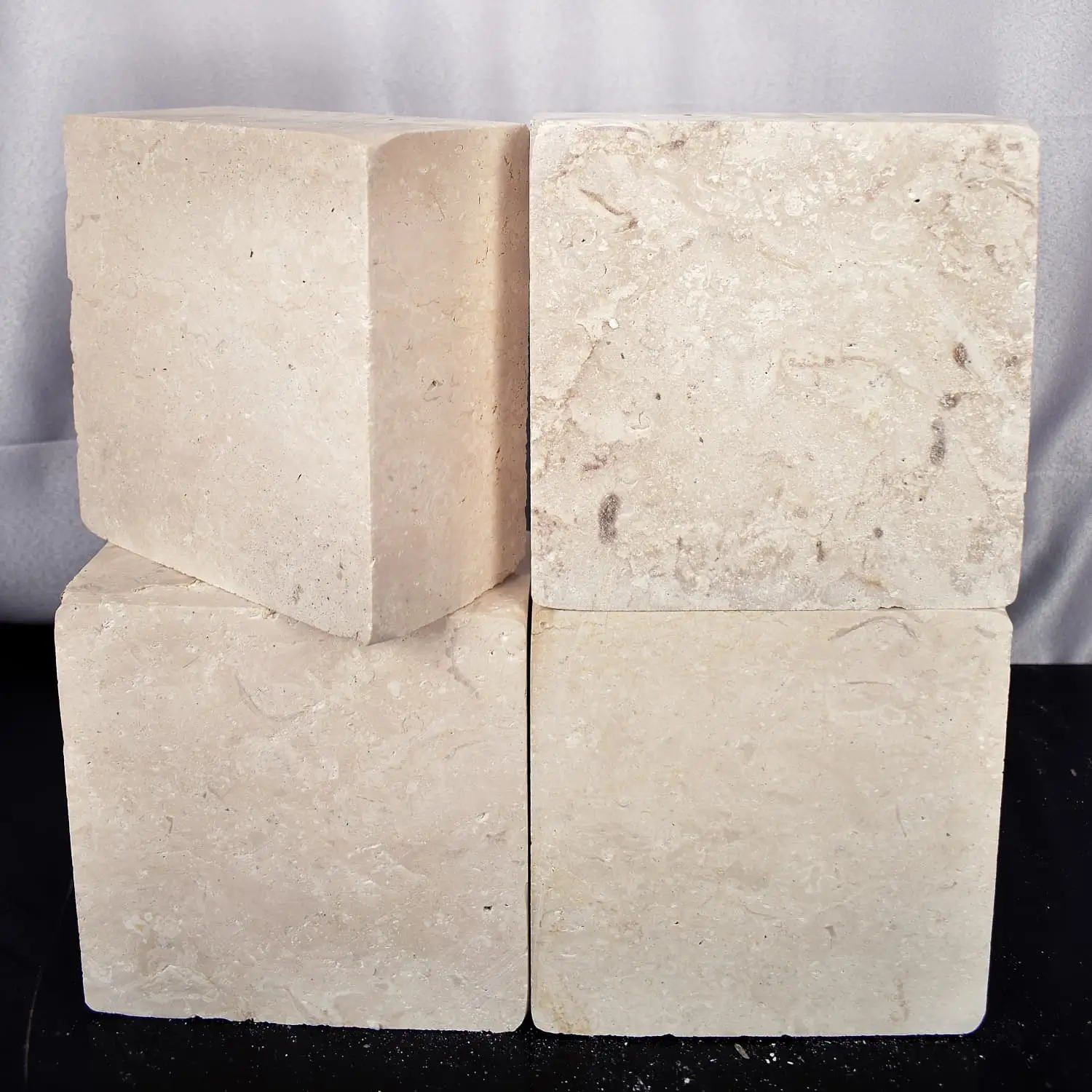
Holland stone pavers in rectangular formats bring a distinct character to the material palette — the tumbled finish and slightly irregular edges create a laid aesthetic that softens what would otherwise be a sharp geometric pattern. These aren’t the pavers you use when precision is everything; they’re the ones you use when authenticity matters more than clinical perfection.
The key specification difference with holland-style rectangular pieces is joint width. The tumbled edges demand a wider joint — typically 3/8 to 1/2 inch — to allow for edge variation without pieces touching and chipping each other under thermal movement. Tighter joints force the irregular edges into contact, and that contact point becomes a stress concentration when the paving field expands and contracts through temperature cycling.
For projects where you want the visual warmth of holland stone pavers alongside the structural clarity of a running bond, specify tumbled rectangular pieces in a 16×8 format with a 3/8-inch joint filled with polymeric sand. That combination delivers the aesthetic without compromising joint integrity over time. Holland stone pavers are also worth considering when the surrounding architecture calls for a more reclaimed or weathered material story — the tumbled profile reads as intentionally aged rather than accidentally worn. Explore the full Citadel Stone natural paver range to compare tumbled and sawn finishes side by side before committing to a specification.
Freeze-Thaw Cycling and Long-Term Joint Performance
Rectangle stone pavers experience thermal expansion and contraction as a field — the cumulative movement across a 20-foot run is significantly greater than the movement of any individual piece. In regions where day-night temperature swings exceed 40°F, or where freeze-thaw cycles occur repeatedly through the shoulder seasons, that cumulative movement becomes the dominant engineering variable in your specification.
Natural stone expands at roughly 3–5 × 10⁻⁶ per °F depending on the material. Across a 20-foot limestone field experiencing a 50°F swing between a cold night and a warm afternoon, you’re looking at approximately 1/8 inch of total field movement. That’s not catastrophic on its own — but it becomes a serious problem if your perimeter restraint system doesn’t accommodate it and your joints have been filled with rigid grout rather than a movement-capable product.
- Design expansion joints every 12–15 feet in both directions for large field installations in freeze-thaw regions
- Use polymeric sand or flexible joint filler in standard field joints — rigid grout will crack under repeated thermal cycling
- Specify a minimum 3/16-inch joint width to ensure the joint material has room to compress and recover through seasonal cycles
- Pay attention to the transition joint where the paved field meets a fixed structure — building walls, steps, or embedded edging — these are the first points to show stress damage
Absorption rate matters here too. Dense, low-absorption stone (below 0.5% water absorption) performs significantly better through freeze-thaw cycles because water intrusion into the stone body is minimal. Higher-absorption materials can spall at the face through repeated freeze-thaw action if surface sealing isn’t maintained biannually.
Base Preparation for Rectangle Stone Pavers
The base is where rectangle stone paver projects succeed or fail, and the rectangular format is less forgiving of base failure than irregular flagstone because the straight edges and consistent joints make any differential settlement immediately visible.
Your compacted aggregate base should be a minimum of 6 inches for pedestrian applications and 8–10 inches for vehicular use, compacted in 3-inch lifts to achieve 95% Proctor density. The bedding layer above the aggregate base — typically 1 inch of coarse concrete sand or stone dust — should be screeded level and never compacted before the pavers are set. Compacting the bedding layer before placement creates a false plane that deflects differently under load than uncompacted bedding does.
- For clay-heavy subgrades, consider geotextile fabric between native soil and aggregate base to prevent migration under freeze-thaw heave cycles
- Slope the entire base system a minimum of 1% (1/8 inch per foot) for positive drainage — flat bases create ponding that accelerates joint sand loss
- Verify truck access routes to the installation area before finalizing your material delivery schedule — heavy stone delivery requires adequate truck clearance that isn’t always obvious at the specification stage
At Citadel Stone, we recommend specifying base depth by soil bearing capacity rather than a fixed number — sandy, well-drained subgrades can work with 6 inches, but expansive clay soils may require 12 inches or more to prevent heave differential across a large field.
Rectangle Stone Paver Specification: Professional Summary
Rectangle stone pavers reward careful specification from the start — size selection, pattern choice, joint width, and base design all interact in ways that determine whether your installation looks sharp after 20 years or needs remediation after 5. The rectangular format gives you enormous design flexibility, from clean running bonds to complex three-size combinations and basket weave patterns, but that flexibility only pays off when the dimensional and structural groundwork is solid. Confirm warehouse stock levels and batch consistency before finalizing your order, and factor thermal movement calculations into joint width decisions for any project in a freeze-thaw environment. As you plan your broader hardscape specification, understanding how different stone types perform at the material level will sharpen your decision-making — pavers versus travertine performance differences is worth reviewing if you’re still weighing material options alongside rectangle stone pavers for your project. Sourced from quarries across the Mediterranean and Middle East, these pavers offer consistent dimensions for clean running-bond layouts.
Related reading: limestone cobblestone paving patterns · limestone paver base preparation · cobblestone paver cost guide.