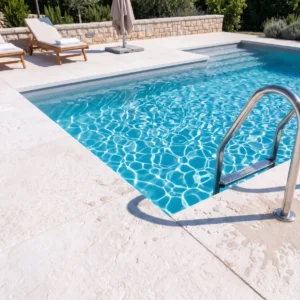
On most islands the pool is the day’s destination; on Bonaire it is the intermission. The island’s guests spend their mornings on the reef and their middays on the pool terrace – the surface interval, in divers’ language – which gives the Bonairean pool a job description no other market writes: recovery room, social hub and second shoreline for the hours between tanks. The stone specification follows that job, and this guide walks it from the coping inward.
The Surface-Interval Terrace
A dive villa’s pool terrace hosts wet people in intervals all day – out of the sea at ten, out of the pool at noon, back from the afternoon site at four. Design answers the rhythm: textured pale stone that grips dripping feet and dries between waves of use, generous shaded seating where logbooks and lunches happen, and a layout that keeps the circulation loop – gate, rinse, pool, loungers – flowing without pinch points. The terrace works more hours than any room in the villa, and its stone is specified like the workhorse it is.
The Calm-Belt Dividend
Outside the hurricane belt, a Bonaire pool terrace collects a quiet dividend:
- No annual storm strip-down – furniture, shade and potted planting stay out year-round.
- Works and repairs schedule on the owner’s calendar, not a storm season’s.
- Outdoor investments compound: a terrace specified once ages on its own schedule, uninterrupted.
- Insurance conversations run friendlier, which the dollar arithmetic notices.
The specification honesty stays – trade wind, salt haze and hard sun still set the rules – but the risk chapter of the pool file is the region’s thinnest.
The Specification Itself
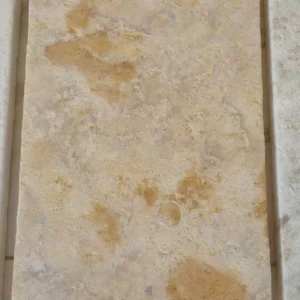
The Bonairean pool package follows the regional canon at dive-island strength: light-toned dense limestone against barefoot heat, honed-textured finishes rated for permanently wet traffic, low absorption against salt systems and sea air, and the whole waterline – coping, deck, steps, spares – cut single-batch. the infinity-standard playbook details the premium end of the same canon, and Bonaire’s dollar villas order from it with one local addition: everything must also survive the rinse-and-drip economy of a diving household.
Pool Versus House Reef
Bonaire’s shorefront villas face a design question few islands ask: with the Caribbean’s easiest sea entry a few steps away, what is the pool for? The market’s answer has settled: the pool serves the hours the reef cannot – the toddler’s splash, the night swim without gear, the surface interval itself – and its terrace serves as the property’s social center. Sizing follows honestly: Bonaire pools run modest, their terraces run generous, and the budget flows to the surface people actually occupy.
The Shade Map
A dry island with all-day sun makes shade the terrace’s second material. The shade map is drawn with the paving plan: a pergola line along the terrace’s inland edge, sail or roof shade over the dining moment, and the afternoon arc of each tree understood before the loungers are placed. Pale stone cooperates – reflecting rather than banking the heat shade cannot block – and conduit for future shade structures goes under the paving at build time, because the one certainty about a Bonairean terrace is that its owners will want more shade than year one provided.
Salt Water, Twice
Bonaire pools meet salt from two directions – most run saltwater chlorination, and the sea delivers its haze regardless – so the splash-zone rules apply at full strength: density first, textured finishes, fresh-water rinsing as routine, pH-neutral chemistry, and marine-grade fixings for every rail and ladder. None of it is exotic; all of it is written into the maintenance file so the standard survives changes of manager, tenant and season.
The Overnight Repair Rule
Dive villas book back-to-back through the winter, and the terrace repair that waits for a production run waits through lost bookings. The rule is the region’s, applied strictly: five percent same-batch attic stock with every order, stored flat in the plant room, turning a cracked coping between guest groups into an overnight fix. On an island whose repeat guests notice everything, the invisible repair is a hospitality feature.
The Dark-Sky Terrace
Bonaire’s interior and southern skies are genuinely dark, and the calm belt keeps them usable – no storm season strips the terrace furniture or the habit of ending the evening under the stars. The pool terrace doubles as the observatory: lighting on separate circuits so the deck can drop to darkness after dinner, warm low fittings that preserve night vision on the circulation routes, pale stone returning starlight enough to move safely with everything else off, and loungers positioned where the house blocks the town’s modest glow. Divers already keep night-adapted eyes as a professional habit; the terrace that respects them earns the evening’s second shift as gracefully as it earned the surface interval. Wire the dark-sky option at build time – one switch, planned early, costs nothing and sells the sky every clear night of the year.
The Intermission, Perfected
Bonaire’s pool terrace succeeds when the divers barely notice why it works: cool underfoot at noon, grippy under dripping feet, shaded where the logbook gets written, ready again by the afternoon interval. The rest of the island’s outdoor craft leans the same way – the island’s dive-first surfaces walks the whole system – and the pool is its social centrepiece. Specify the intermission as carefully as the show, and the terrace earns its keep every surface interval of the season.
The Wind Setting
The trade wind is the terrace’s thermostat, and Bonaire’s pool terraces are tuned to it deliberately. Full exposure keeps the deck cool but flutters every towel and menu; full shelter grows still and hot by mid-afternoon. The craft is the adjustable middle:
- A low stone wall on the windward edge lifts the flow over seated height while the standing breeze stays.
- Planting bands filter rather than block – the goal is a breeze, not a calm.
- The dining corner takes the most shelter; loungers take the most air; the pool itself stays open to the wind that keeps its surface alive.
- Screens and walls anchor into the paving structure at build time – the wind audits every fixing.
Owners learn their terrace’s wind map in the first month and adjust furniture forever after; the builds that got the walls and bands right on the drawing spend those adjustments on comfort rather than correction. On a trade-wind island, the wind setting is as much a part of the specification as the stone it blows across.
The surface interval is spent on this terrace
Dive planning gives this deck an unusual duty cycle. Guests come out of the water, sit for an hour or more waiting out a surface interval, then go back in. The terrace is therefore occupied wet, barefoot and repeatedly through the middle of the day, in full sun, by people who are not paying attention to where they are stepping. That is a different brief from a resort deck used twice a week.
- Shade planned into the terrace, not added as an afterthought
- Seating positioned where wet feet will not cross a walking line
- Rinse points drained clear of the route back to the house
- Somewhere solid and clean to set gear down between dives
Grip is the number worth proving
Wet, barefoot and unhurried is exactly the condition slip testing describes. The work behind frictional testing of natural stone walking surfaces sets out the ANSI A326.3 method, tested wet with a tribometer, and a benchmark dynamic coefficient of friction of at least 0.42 for level interior floors expected to be walked on wet. A tropical pool deck carrying salt, sunscreen and constant traffic sits beyond that reference case.
- Wet values requested on the exact finish and batch supplied
- Extra margin at steps, coping and the approach from the pool
- One texture held across deck, coping and surround
- The test record kept, because grip is the claim worth proving
Heat is the other half of the problem
Surface temperature decides whether a deck is usable at two in the afternoon. The Natural Stone Institute overview of limestone and travertine shows how widely density, absorption and finish range inside one commercial name, and those properties drive both how hot a pale stone gets and how it handles chlorinated water crossing it every day.
- Light tones on all open, unshaded areas
- Low absorption wherever splash-out is constant
- One source across deck and coping so the terrace weathers evenly
- Batch numbers recorded so later repairs can be matched
Choosing pool terrace stone for a diving household
Specify for water first, heat second and appearance third, restrain the coping mechanically, and keep a documented surplus on the property. Done that way the deck is still doing its job after a decade of surface intervals.
- Coping profile chosen for the swimmer before the elevation
- Mechanical restraint in addition to bedding at every unit
- Drainage sized for hoses as well as for rain
- Spare units stored on site from the first delivery
Our Bonaire stone supply guide sets out the formats, finishes and lead times that suit this island. This deck is used hardest by people who have just stopped concentrating.