Why Mixed-Material Design Works for Patio Stones with Pebbles
Patio stones with pebbles succeed as a design system because the two materials solve different problems simultaneously — the stone provides structural load-bearing surface area while the pebble infill manages drainage, thermal movement gaps, and visual texture. What most designers underestimate is the dimensional relationship between them: your main slab or stepping element should be at least 12 times thicker than the average pebble diameter to prevent rocking under foot traffic. Get that ratio wrong and the pebbles gradually migrate under load, creating an uneven surface within a single season.
Choosing Your Stone Elements for a Pebble Patio
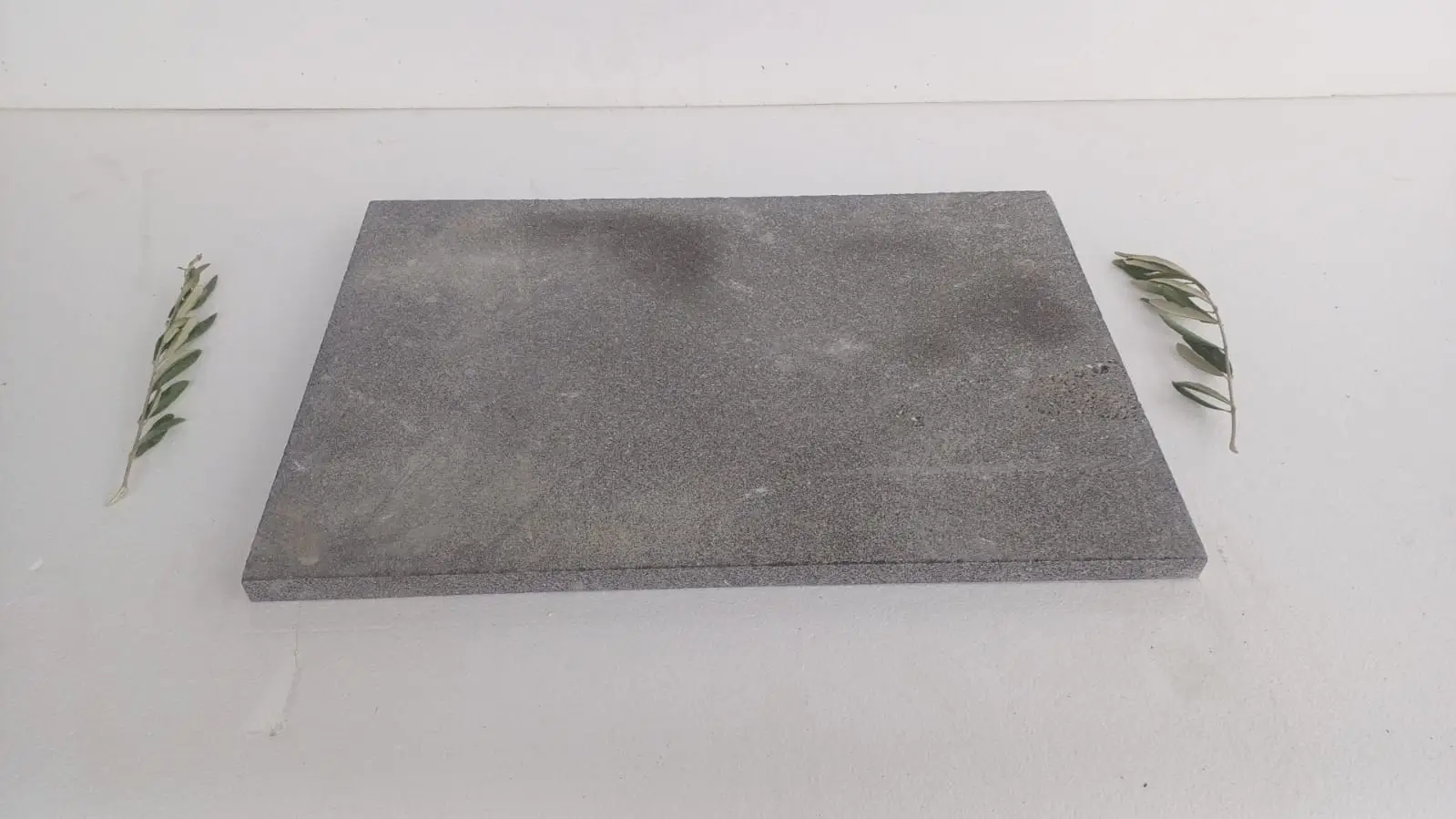
The pavers or slabs you select set the structural foundation of a patio with stones, so this decision carries more weight than finish or colour preference. Natural stone pavers in the 1.5- to 2-inch thickness range handle residential point loads comfortably, but you’ll want to step up to 2.5 inches for any area that sees wheeled garden equipment or furniture with narrow feet. Limestone and basalt both perform well in mixed patio applications, though their porosity profiles differ significantly — limestone typically absorbs 3–7% by weight depending on density, while dense basalt sits below 1%.
The surface finish you choose on your primary stone also interacts directly with UV exposure over time. A honed finish on lighter limestone will reveal UV-driven colour shift more gradually than a polished finish, because the micro-roughness scatters surface light and visually masks minor tonal changes. According to NSI stone variety guidance, finish selection for outdoor stone should account for both slip resistance and long-term surface appearance — two factors that pull in different directions when you’re choosing between honed, brushed, or sawn faces.
Selecting Pebble Infill Types and Sizes
Your pebble selection should be driven by the joint width you’re working with, not the other way around. For joints between 1.5 and 3 inches, a pebble graded at 0.5–1.0 inch works well — it packs tightly enough to resist displacement but leaves interstitial voids that allow surface water to drain at a reasonable rate. Larger joints of 3–5 inches open the door to 1.5-inch cobble-pebbles, which create a bolder visual contrast and a more tactile surface underfoot.
- River-washed pebbles offer smooth, rounded profiles that feel comfortable underfoot but can roll under load — reserve them for low-traffic decorative zones
- Crushed natural stone pebbles interlock more aggressively and resist migration better than rounded alternatives in high-traffic areas
- Angular quartzite chips provide sharp visual contrast against darker slab materials and resist UV-driven colour fade better than softer sedimentary pebble types
- Basalt pebbles in black or near-black tones maintain colour saturation under prolonged sun exposure, making them a reliable choice for sunny patio zones
For project planning purposes, check warehouse stock on your chosen pebble grade before finalising the design — specialty pebble grades can have 3–4 week lead times when warehouse inventory runs low on less common sizes.
Base Preparation for Mixed-Material Patios
The base is where most patio with stones projects either win or lose. A standard 4-inch compacted aggregate base handles moderate residential use, but when you’re combining heavy stone elements with pebble infill, you need to think about differential settlement. The pebbles will compact differently than the main slabs over the first winter, so your sub-base needs to be absolutely level and compacted to at least 98% Proctor density before any surface material goes down.
Drainage geometry matters more in a mixed-material design than in a solid-paved patio, because the pebble zones are your primary drainage channels. Build a cross-fall of at least 1.5% across the entire patio surface — 2% is better — and make sure that fall runs toward an open bed or drain rather than toward a structure. ASLA outdoor paving guidance consistently identifies positive drainage fall as the most critical long-term performance variable for natural stone patio installations.
Layout Patterns and Joint Spacing
The strongest visual layouts for patio stones with pebbles use an asymmetric placement rhythm rather than a regular grid. Staggered rectangular slabs with varying joint widths — alternating between 2-inch and 4-inch gaps — create a more naturalistic appearance and give you flexibility to work pebble zones into the design without the rigid formality of a tile-like grid. You’ll find this approach also simplifies the base preparation because irregular placement distributes load more evenly than a rigid pattern.
- Keep primary stone elements at least 18 inches apart in stepping configurations to maintain comfortable stride spacing for varied body types
- Avoid running pebble-filled joints in perfectly straight parallel lines — slight offsets read more naturally and reduce the visual weight of the grout-line effect
- Plan pebble zone widths in multiples of your chosen pebble diameter to ensure consistent visual density without gaps or overcrowding
- Allow for a minimum 3/8-inch tolerance on all stone placement dimensions — natural stone cut tolerances vary, and forcing precise joint widths leads to cracking as the material moves seasonally
UV Exposure and Finish Durability in Sun-Exposed Patios
Full-sun patio installations create specific challenges for both the stone slabs and the pebble infill. UV radiation drives colour oxidation in iron-bearing minerals, which means any stone with warm tan, gold, or rust tones will shift toward greyer, more washed-out hues over a 3–5 year period without protective sealing. This isn’t a material failure — it’s a predictable photochemical process — but you should factor it into your design intent before committing to a palette.
Your sealing schedule is the primary tool for managing UV-driven appearance change. A penetrating silane-siloxane sealer applied at installation and renewed every 18–24 months significantly slows surface oxidation by reducing the moisture cycling that accelerates pigment loss. Solvent-based sealers provide deeper penetration on denser stones, while water-based formulations are preferable on more porous limestone types where rapid absorption would cause solvent-based products to seal unevenly. The pebble infill zones need sealing attention too — they present a much higher surface area per square foot than the slab elements and will show UV weathering more quickly if left untreated.
For selecting pebble patio stones that hold their appearance in strong-sun environments, ASLA landscape material selection guidance identifies finish durability and long-term surface retention as primary criteria for outdoor hardscape specification. At Citadel Stone, we run incoming material batches through UV simulation checks as part of our quality review, which helps identify colour-stable lots before they ship to your project site.
Pebble Infill Setting and Stabilization Methods
Loose-set pebbles look clean at installation but migrate within weeks in areas that see regular foot traffic or surface water flow. The practical solution is a stabilized setting medium — either a resin-bound binder or a pozzolanic grout — applied to the pebble zones after the main slabs are bedded and levelled. Resin-bound systems lock the pebble matrix while maintaining permeability, whereas cementitious grouts fill the voids completely and create a harder, less flexible surface that can crack across pebble zones as seasonal movement occurs.
For making a patio with stones that holds its appearance over the long term, the resin-bound approach performs better in most situations because it accommodates the slight differential movement between your large stone elements and the surrounding pebble field. Apply the binder in sections no larger than 4 square feet at a time to avoid premature curing before you’ve fully settled the pebbles into their final positions. Refer to your pebble patio stones specification sheet for cure time adjustments based on ambient temperature at placement.
When specifying Citadel Stone infill materials for your mixed-material design, confirm the pebble grade and binder compatibility before ordering — some resin systems perform differently depending on the mineral surface chemistry of the stone, particularly with silica-rich quartzite versus calcium-carbonate-based limestone pebbles.
Ordering and Quantity Planning
Quantity estimation for pebble patio stones involves two separate calculations that most specifiers run incorrectly. Your primary slab coverage is straightforward — total area minus planned pebble zones, divided by individual slab area with a 10% overage for cuts. The pebble calculation is more nuanced because pebble volume depends on joint depth, not just surface area. A 2-inch-deep joint filled with 0.75-inch pebbles requires roughly 1.4 times the volume you’d estimate from surface area alone, because pebbles don’t pack at 100% density.
- Order a minimum 15% overage on pebbles — breakage, colour variation culls, and coverage miscalculations are common
- Verify warehouse availability for both your slab material and pebble grade at the same time — a staggered delivery between the two elements can delay installation by 2–3 weeks
- Request material samples from the same production batch for both the stone slabs and the pebbles before approving the order — visual consistency between batches is harder to guarantee than dimensional consistency
- Confirm truck access to your installation site before scheduling delivery — large natural stone slabs on pallets require a vehicle with a minimum 6-foot clearance on the approach path
Citadel Stone maintains consistent national warehouse stock across its pebble and slab ranges, which typically brings lead times to 1–2 weeks for in-stock grades rather than the 6–8 week import cycle that applies to custom or specialty orders.
Long-Term Maintenance for Mixed Stone and Pebble Patios
The maintenance rhythm for pebble patio stones is distinct from a standard paved surface. Your primary tasks are pebble redistribution, resealing, and joint integrity checks — in that order of frequency. Pebbles migrate toward the perimeter edges under normal use, particularly in zones adjacent to seating areas where chairs shift repeatedly. A quick redistribution with a stiff-bristled broom every 6–8 weeks keeps the infill even without requiring a full reset.
Resealing the full patio — both slabs and pebble zones — every 18–24 months is the most cost-effective way to maintain appearance and slow UV-driven colour change. Inspect joint edges between the stone slabs and pebble fields at the same interval. Hairline separation at these interfaces indicates minor differential movement and should be addressed with a compatible flexible filler before water infiltration begins degrading the base layer. According to USGS dimension stone production and use data, natural stone paving installed with proper base preparation and maintained with periodic sealing consistently achieves service lives exceeding 25 years in residential applications.
What Matters Most When Designing Patio Stones with Pebbles
Designing patio stones with pebbles comes down to three decisions that have an outsized impact on long-term performance: the dimensional relationship between your stone elements and infill grade, the drainage geometry of your base, and the sealing schedule you commit to from the start. Get those three right and the aesthetic details — colour, pattern, pebble type — are genuinely flexible. Shortcut any of those three and the visual choices won’t matter, because the installation will show stress within a few seasons regardless of how well it was designed on paper.
As you plan complementary elements for your outdoor space, natural stone walkway options are worth exploring alongside your patio specification — the two applications share base preparation principles and often use compatible materials that simplify your overall project logistics. Sourced from our selected premium quarries across multiple continents, our pebble and paver blends offer varied texture for decorative patio zones.
Related reading: types of patio stones · cost of patio stones · how to clean patio stones.