What Heat Actually Does to Stone Around a Fire Pit
Patio stones for fire pit installations face a specific stress that most general hardscape specs don’t account for — repeated thermal cycling at close range, not just ambient heat. Dense igneous materials like basalt and granite handle this well because their crystalline structure limits micro-fracture propagation even under rapid temperature swings. Porous sedimentary stones, by contrast, can trap moisture in their internal voids, and when that moisture flashes to steam under direct radiant heat, the pressure releases as surface spalling or delamination you won’t see coming until it’s already happened.
The failure pattern is almost always the same: stones placed within 18 inches of the flame edge show surface crazing within two to three seasons, while material set farther back performs for decades. That 18-inch boundary is your practical specification threshold for material selection, and it should drive every decision you make about what goes where in the layout.
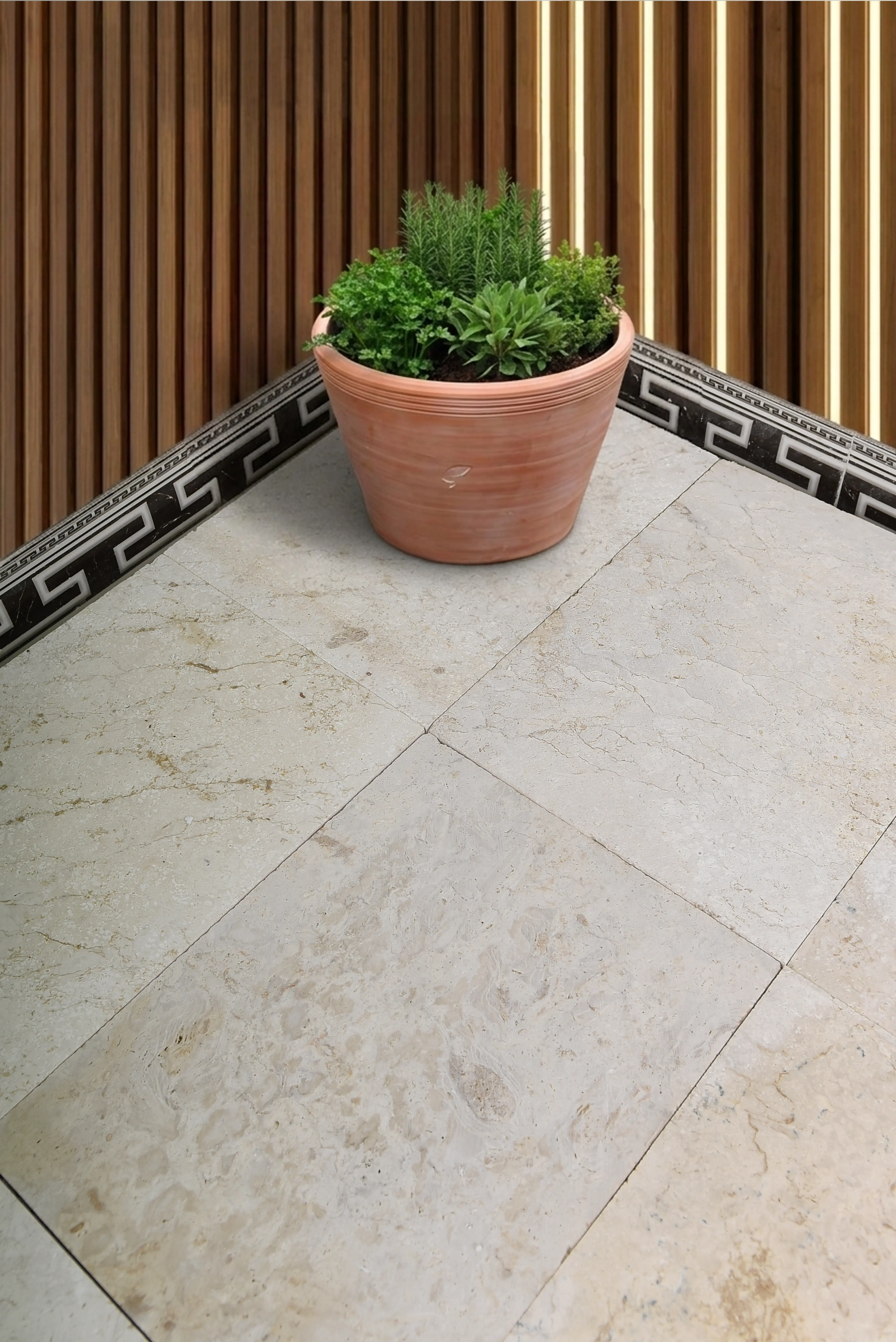
Best Material Choices for Patio Stones Near a Fire Pit
Your material selection for the fire pit patio stone zone breaks down cleanly by proximity. The immediate surround — roughly 12 to 24 inches from the pit wall — demands the highest density and lowest absorption rate you can source. The transition zone, from 24 inches out to about 5 feet, gives you more flexibility but still favors low-porosity options. Beyond that, your full palette of natural stone opens up.
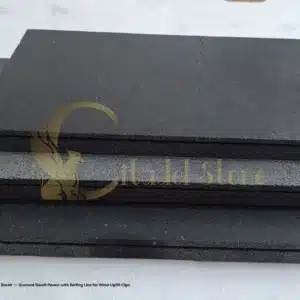
- Basalt: density typically above 2,900 kg/m³, water absorption under 0.5%, excellent thermal stability — the strongest performer in the immediate fire zone
- Granite: compressive strength exceeding 19,000 PSI, near-zero porosity when honed or polished, handles radiant heat without surface degradation
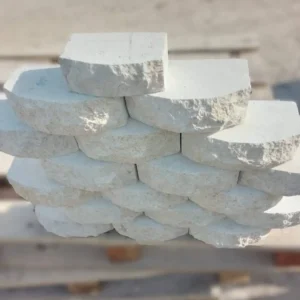
- Bluestone: a reliable mid-range option for the transition zone, but verify your specific slab’s absorption rate before placing it close to the flame edge
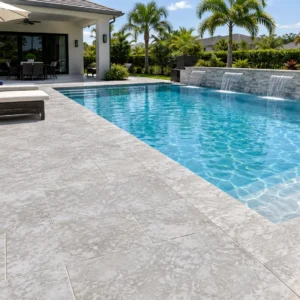
- Limestone: appropriate for the outer patio area where direct heat is not a factor — porosity varies significantly by quarry source, so always request absorption test data
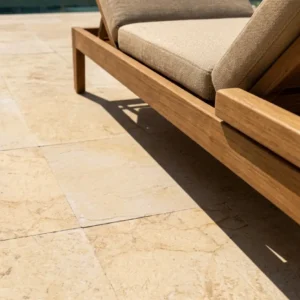
- Travertine: well-suited to the broader patio context but should be kept well outside the immediate heat zone, as its characteristic void structure makes it vulnerable to thermal spalling
According to NSI natural stone variety data, absorption rate is one of the primary performance indicators for outdoor stone selection, and it becomes doubly critical when heat exposure is a design factor. Low-absorption igneous stones consistently outperform porous sedimentary options in radiant heat environments.
How to Lay Stones for a Patio Fire Pit Area
Understanding how to lay stones for patio areas adjacent to a fire pit starts with base preparation that accounts for both load and thermal movement. A standard 4-inch compacted aggregate base works for most patio applications, but when you’re building immediately around a fire structure, bump that to 6 inches. The extra depth gives you thermal buffer and prevents the base from destabilizing if surface heat conducts downward over time.
Joint spacing is where most installers underspecify. Standard joint width for natural stone patio work runs at about 3/8 inch, but around fire pit patio stones, open that to 1/2 inch minimum. Thermal expansion in basalt runs approximately 4.5 × 10⁻⁶ per °F — modest but real — and over a season of heating and cooling cycles, inadequate joint spacing transfers lateral stress into the stone faces themselves. You’ll see the result as edge chipping along the tightest joints first.
- Set your aggregate base to a minimum 6-inch depth in the immediate fire zone, compacted to 95% proctor density
- Use a polymeric sand rated for elevated temperatures in the fire zone joints — standard polymeric sand softens and erodes faster under repeated heat exposure
- Dry-set installation is preferable to mortar-bedded in the fire zone; mortar can crack and displace as the base shifts under thermal stress
- Pitch your patio stones away from the fire pit at a 2% grade minimum — drainage beneath the fire zone matters because standing water accelerates thermal spalling
Thickness and Sizing That Hold Up Over Time
Patio stones for fire pit surrounds should be specified at a minimum of 1.5 inches nominal thickness. Thinner slabs — even in dense basalt — concentrate thermal stress through their cross-section in a way that thicker material distributes across a wider mass. Field experience with 1-inch pavers in fire-adjacent positions consistently shows edge cracking within three to five seasons, while 2-inch material in the same position holds indefinitely when base prep is correct.
Sizing also matters more than most homeowners expect. Larger format slabs — 24 × 24 inches or bigger — reduce the number of joints in the fire zone, which limits the number of thermal expansion points you have to manage. The counterargument is that larger slabs are heavier and harder to relay if one piece does degrade, so there’s a practical trade-off between long-term joint performance and future serviceability. For most residential fire pit patio situations, a 16 × 16 or 18 × 18 format hits the right balance.
USGS dimension stone production data confirms that dimension stone used in outdoor construction is held to specific thickness and compressive strength standards that vary by application type — a useful reference point when evaluating supplier specifications against your project requirements.
Integrating Fire Pit Stone Into Your Landscape Design
The material performance conversation and the design conversation aren’t separate — they run in parallel, and your stone choice shapes both. Basalt’s near-black tonal range reads as a natural anchor in minimalist and contemporary landscape styles, especially when set against clean gravel fields or geometric planting beds. Granite brings more variation: buff, silver-grey, and warm rose tones integrate naturally into traditional or transitional garden designs where the fire pit functions as a focal point rather than a minimalist accent.
For landscape styles that emphasize organic layering — cottage gardens, naturalistic woodland edges, or desert xeriscaping — irregular-format flagstone in the outer transition zone pairs well with a tighter, denser fire-zone material at the center. The contrast between the structured inner surround and the informal outer field actually reinforces the design logic and draws the eye toward the fire feature itself. Choosing colors that complement your home’s exterior stone or masonry ties the fire pit patio into the broader property composition without requiring an exact match.
Browse our basalt and granite selections to compare tonal ranges and surface finishes that work across multiple landscape design styles — from high-contrast contemporary layouts to warmer, layered traditional settings.
Sourcing, Lead Times, and What to Verify Before You Order
Not all natural stone marketed for patio use is quarried and processed to the same standard, and the variation matters significantly when heat performance is in the picture. Dense basalt sourced from domestic quarries and from selected quarries from the Middle East consistently shows tighter absorption and compressive strength figures than lighter-weight volcanic alternatives from other regions. Always ask your supplier for the specific absorption rate (ASTM C97) and modulus of rupture (ASTM C99) for any patio stones for fire pit applications you’re specifying.
Citadel Stone sources fire pit patio stones from verified selected quarries and conducts warehouse quality checks on incoming material — including visual inspection for pre-existing micro-fractures that would indicate vulnerability to thermal stress. That’s the kind of pre-shipment check that prevents the most common field failure: a slab that looked fine on arrival but cracked within one season of fire use because it arrived with internal stress fractures from quarrying or transport.
- Request ASTM C97 absorption data — anything above 3% absorption should be kept out of the immediate fire zone
- Ask whether warehouse stock is available or whether your order requires an import lead time — domestic warehouse availability typically cuts lead times to 1–2 weeks versus 6–8 weeks for imported stock
- Verify that the supplier can provide material from the same quarry batch for your full order — color and density variation between batches is visible after installation and difficult to correct
- Confirm that your delivery truck can access the installation site before you finalize your order; heavy stone on a single pallet requires a truck with liftgate capability, and not every delivery route accommodates full-size freight vehicles
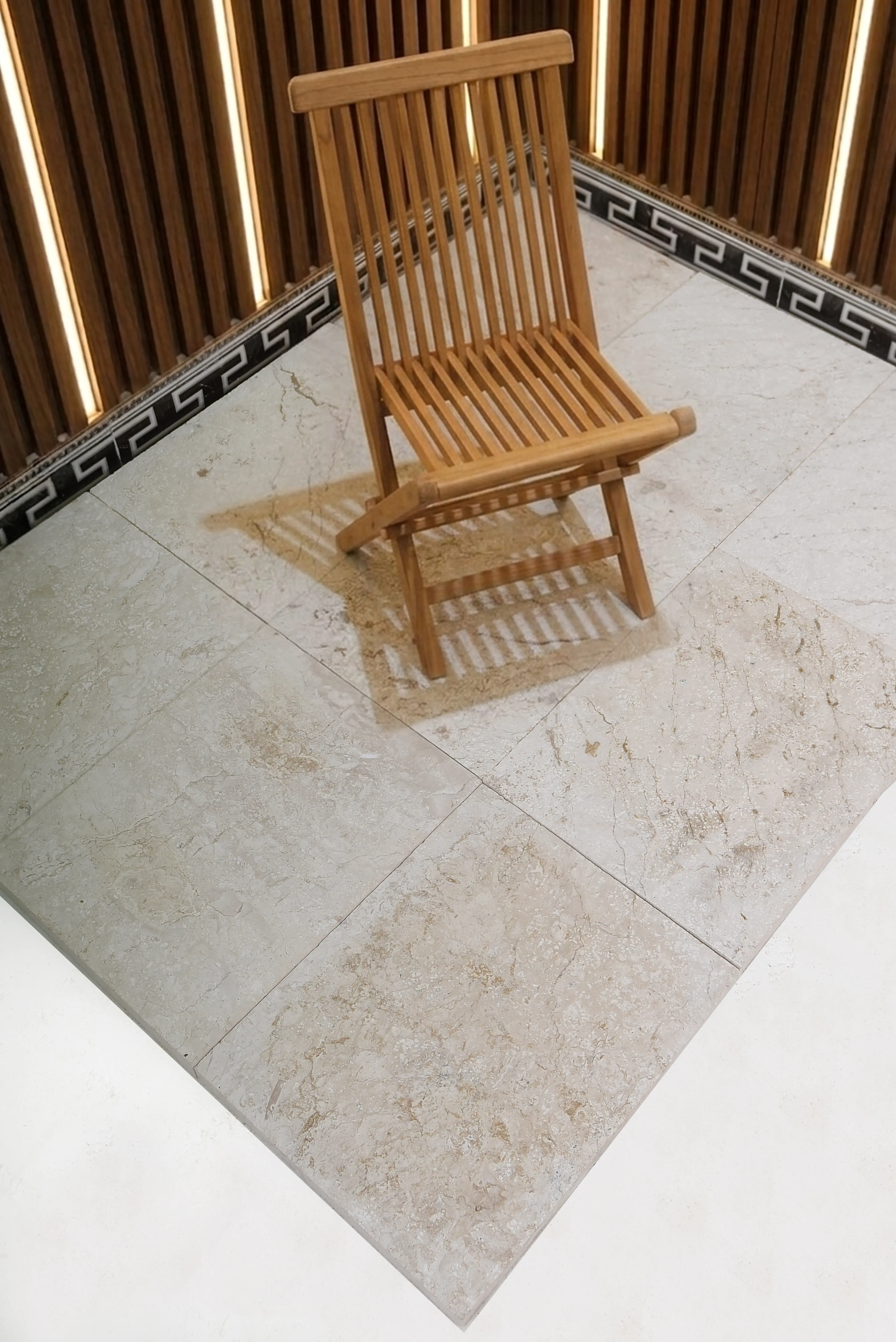
Sealing and Maintenance for Fire Pit Patio Stones
Sealing protocols for patio stones in fire pit areas differ from standard outdoor patio maintenance because the sealer itself faces thermal degradation. Most penetrating silane-siloxane sealers are rated to around 300°F — adequate for the transition zone but marginal for the inner ring of stones closest to the flame. In that immediate zone, many experienced installers leave the stone unsealed and rely instead on the material’s natural low absorption to manage moisture intrusion.
Outer patio stones should be sealed every 24 to 36 months with a breathable penetrating sealer rather than a film-forming topcoat. Film-forming sealers trap moisture beneath the surface, which becomes a spalling risk when heat exposure occurs — even at the moderate distances of the outer patio area during a large fire. According to the ASLA outdoor patio material guidance, breathable sealers that allow vapor transmission are the preferred specification for natural stone in outdoor environments subject to thermal and moisture variation.
- Test your sealer on an inconspicuous piece before applying it to fire-zone stones — heat can cause some sealers to discolor or blister in ways that aren’t visible at ambient temperature
- Reapply sealer at the first sign of water beading loss, not on a fixed annual schedule — frequency depends on UV exposure, foot traffic, and fire use intensity
- Clean fire pit patio stones annually with a pH-neutral cleaner; ash residue is mildly alkaline and can etch softer stone surfaces over multiple seasons if left to accumulate
Decision Points for Patio Stones Around a Fire Pit
Every specification for patio stones for fire pit use comes down to three decisions that need to be made before selecting a single material: where the heat boundary falls in your layout, what absorption rate you’ll accept for the inner ring, and how your material choice integrates with the broader landscape design you’ve already committed to. Getting the zone boundary right — that 18-inch threshold from the flame edge — drives every subsequent material and thickness decision. Dense basalt or granite in the immediate surround, lower-porosity flagstone or bluestone in the transition zone, and your preferred aesthetic choice for the outer patio field: that’s the specification logic that produces installations lasting across decades.
As you develop your fire pit patio plan, the outer patio area often connects to pathways and other hardscape elements that benefit from coordinated stone selection. For ideas on extending that material language through your landscape, stepping stone ideas for grass and gravel areas covers how natural stone carries through to informal pathway and garden applications. Travertine placed directly adjacent to open flame can experience spalling over time, which is why Citadel Stone advises denser options in that zone.
Related reading: circular patio paving ideas · types of patio stones · cost of patio stones.