Midday Is the Real Test
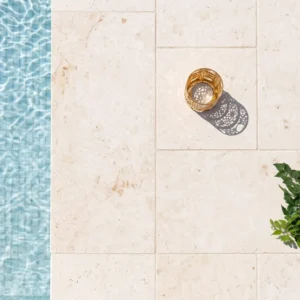
A paving sample looks its best indoors under even light. The moment that matters on Bonaire is different: early afternoon, no cloud, the surface has had hours of direct sun on it, and somebody is walking from a pool to a door with wet feet and nothing on them. If the floor cannot be crossed comfortably at that moment, no amount of good looks in the sample box will rescue the decision.
The climate makes the test unforgiving. Rainfall is low, cloud cover is not a reliable source of shade, and while the trade wind moves air across a deck all day, it does not undo the heat a surface has already stored.
What Tone Does With Sunlight
A pale surface reflects a larger share of the sunlight that lands on it, while a dark surface absorbs more of it and turns it into heat. That is the whole of the physics, and it is why light-toned paving is the sensible move for open decks in places with strong, direct sun. It does not make a floor cold. It makes the difference between uncomfortable and impossible on a cloudless afternoon.
There is a trade-off worth being honest about. Pale stone shows the things it also reflects: dust carried in on the wind, leaf litter, sunscreen, and the marks left by furniture feet. A tone that flatters at ten in the morning can look tired by the end of a dry season if the maintenance routine was never discussed.
Where Bare Feet Actually Go
Map the barefoot routes before choosing anything. On a villa or a small resort those routes are short, repeated and predictable, and they are not the whole site.
- Pool coping and the first strip of deck beyond it.
- The path from water back to a shaded door or outdoor shower.
- Steps and thresholds where a foot pauses rather than passes.
- Any open terrace used for lunch in the middle of the day.
Those areas justify the palest, most reflective material on the schedule. A service yard or a driveway does not, and specifying pale stone there simply moves the cleaning burden somewhere it earns nothing.
Texture and Tone Work Together
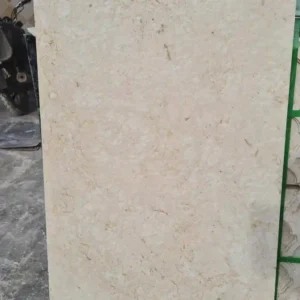
Finish changes both how a pale floor reads and how it behaves. A worked face scatters light instead of throwing it back in a sheet, which cuts glare without darkening the stone, and it gives a wet foot something to hold. The faces available across the white limestone paving we hold are worth reviewing alongside tone rather than after it.
- Sawn faces read flattest and reflect most directly.
- Honed surfaces stay smooth but soften the reflection.
- Brushed and tumbled faces break up light and hide dust better.
- Bush-hammered faces give the deepest texture for wet or sloping ground.
Glare Is the Other Half
Heat underfoot gets discussed. Glare rarely does, until somebody is sitting on a terrace squinting at the floor. A wide expanse of flat, pale, smooth stone under a high sun can be genuinely tiring to sit beside, and it makes an outdoor room feel harsher than the drawing suggested. Texture is the fix, and so is breaking the plane with planting, shade structures, and a change of module size or laying direction. None of that requires abandoning a light color; it only requires deciding how the surface handles the light rather than assuming the tone will do all the work.
Shade, Layout and the Northeast Wind
The trade wind arrives from the northeast and it is close to constant, averaging around 15 mph. That direction is worth knowing before the layout is fixed, because it decides which side of a structure collects salt and blown dust, and where a shade sail or pergola will actually be usable rather than ornamental.
- Set seating and barefoot routes where built shade already falls.
- Keep the palest paving for surfaces that take sun for long stretches.
- Let planting shade the paving, not only the people.
- Allow for wind-blown grit collecting on the leeward side of walls.
Keeping a Pale Floor Pale
Salt-laden air and low rainfall mean whatever lands on a surface tends to stay there. A pale floor needs a rinse routine more than a dark one does, and it rewards a cleaning product chosen for the stone rather than whatever was on the shelf. Acidic cleaners have no place on limestone, and neither does a pressure washer held close enough to open the surface.
- Rinse exposed paving with fresh water whenever a supply allows.
- Use a pH-neutral cleaner formulated for natural stone.
- Lift sunscreen and oil marks early rather than letting them set.
- Shift furniture feet occasionally so wear does not concentrate.
Where the palest units are laid matters as much as how they are cleaned, and the formats and depths in limestone sized for Bonaire terraces are chosen with that upkeep in mind.
Judge It Outdoors, Not on a Screen
Color on a monitor is a guess. Color under a Bonaire sun at one in the afternoon is a decision. Take a hand sample outside, put it in the position it will occupy, look at it dry and then wet, and stand on it with bare feet at the hottest part of the day. That takes an afternoon, and it settles an argument that otherwise runs until the paving is already down.
Choose the tone outdoors, at midday, standing on it.