The barefoot hour nobody designs for
Somewhere between eleven and three, a Jamaican terrace stops being a design and becomes a temperature. Guests cross it barefoot from the pool, staff cross it in thin soles a hundred times a shift, and children do not cross it at all if it hurts. Nobody writes that hour into a specification, yet it decides whether an outdoor space gets used the way the drawings imagined. Paving tone and finish are the two cheapest levers you hold over it, and both are chosen months before anybody stands on the result.
What actually makes a paving surface hot
Three properties do most of the work here, and none of them is the stone’s reputation.
- Reflectance: how much of the sun’s energy the face returns instead of absorbing it.
- Thermal mass: how much heat the unit can store once it has absorbed it.
- Conductivity: how quickly stored heat moves into the sole of a bare foot.
- Exposure time: a surface in full sun since nine behaves nothing like one shaded until noon.
Why pale limestone reads cooler underfoot
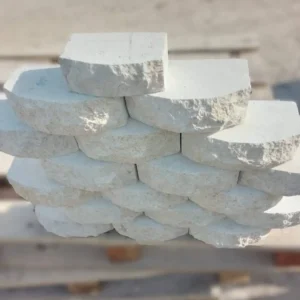
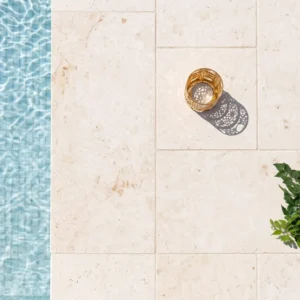
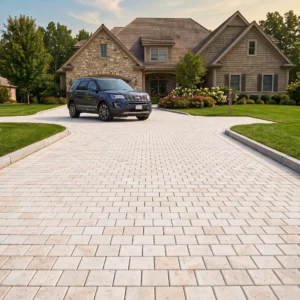
A pale face returns a far larger share of incoming sunlight than a dark one, so less energy ever becomes stored heat in the first place. Light-toned limestone also tends to be a moderate conductor, meaning the heat it does hold transfers gradually instead of as a shock. On the north-coast belt the practical result is a terrace that stays walkable through the middle of the day while an equivalent dark surface a few steps away is not. This is not a claim about quality, because a dark stone is often the tougher unit. It is a claim about temperature, and temperature is what bare feet measure. Most of our cool-toned limestone paving for yards is chosen on exactly that basis.
Finish moves the number as well
Two slabs cut from the same block can feel different because of what was done to the face.
- Bush-hammered and sandblasted faces scatter light and break contact area, so less foot touches hot stone at once.
- Brushed surfaces sit between smooth and heavily textured, useful where comfort and cleaning both matter.
- Honed faces read cooler than polished ones and behave far better once rain arrives.
- Polished stone throws glare at eye level rather than heat away from feet, and belongs indoors on this island.
Where heat actually hurts on a Jamaican project
The problem is concentrated rather than general. Pool surrounds at Rose Hall and Ocho Rios properties, roof terraces in Kingston, unshaded forecourts at commercial entrances, and the walk from a villa door to a plunge pool at Treasure Beach are where the complaints come from. Shaded courtyards and verandah floors almost never generate them.
- Pool surrounds and the barefoot walk between the water and the accommodation.
- Roof terraces and upper decks carrying no overhead shade at all.
- Unshaded commercial forecourts and entrance aprons in the capital.
- West-facing decks that absorb the full afternoon load of sun.
Map the sun path across the site before you split the paving schedule. The genuinely hot zones are usually a modest share of the total area, which makes them the cheapest place on the whole project to spend a material premium and the most obvious place to waste one.
Glare is the other half of the problem
Bright stone under a tropical sun can push reflected light back at seated guests, and a surface that is comfortable to walk on may still be unpleasant to sit beside. Texture solves it. A face with relief scatters light in many directions instead of throwing a sheet of it at eye level, which is why textured pale limestone outperforms smooth pale limestone on a west-facing deck at four in the afternoon. The same texture is doing double duty as slip resistance once the afternoon rain arrives.
Shade, layout and planting finish the job
Stone is one input. The site plan is the other, and adjusting it usually costs less.
- Run pergolas and sail shades over the paths people cross barefoot, not over the ones they sit on.
- Place planting beds so afternoon shadow falls across the hottest run of paving.
- Break large expanses with gravel, planted joints or timber decking near loungers.
- Use a cooler pale field and reserve darker stone for borders, bands and steps.
- Keep a rinse point near the pool, since wetting pale stone drops its surface temperature immediately.
Specifying pale stone that stays pale
Pale only helps while it stays pale. Salt film, algae in shaded corners and iron staining from planters all darken a surface over time, and a darker surface is a hotter surface. Ask about finish, cleaning regime and the sample’s behavior after a few weeks outdoors before you commit a whole deck. Samples travel long before a container does, and a small piece landed through Kingston or Montego Bay settles arguments that renderings cannot. Budget for the landed figure too, since General Consumption Tax at 15 percent and import duty apply on the CIF value, and confirm the current rates with your broker. Compare white limestone paving options against the darker ranges before committing. Choose the tone for the hours people are actually outside, and the terrace will earn its cost every single afternoon.