The barefoot test that comes first
Ask anyone living along Seven Mile Beach what spoiled their last terrace and heat comes up before durability does. A surface can be perfectly specified, correctly laid and completely unusable between noon and four, which on an island with this much sun is most of the day you wanted it for. Heat underfoot is not a comfort footnote here; it is the difference between a deck people cross quickly in shoes and a deck people actually stand on. That makes it a specification issue rather than a taste issue, and it deserves to be settled before anyone opens a sample box.
Tone does most of the cooling
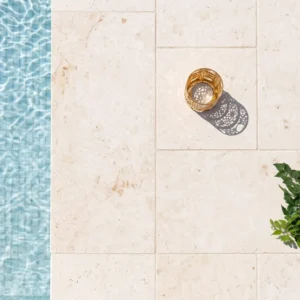
Surface temperature tracks how much sunlight a stone throws back rather than absorbs, and tone is the largest single lever available to you. Pale limestone returns a good share of what hits it; a dark stone in exactly the same position converts far more of it into heat your feet register within a second. Nothing else in the specification moves the peak as far.
- Pale creams and soft whites run coolest and stay comfortable longest into the afternoon.
- Warm beige and light grey sit a step behind, still barefoot-friendly in most open positions.
- Mid-tone browns and taupes climb quickly once shade leaves the deck around midday.
- Charcoal and near-black stone will be genuinely uncomfortable in full sun, however good the material is.
Thickness, mass and the afternoon lag
Tone sets the peak temperature, but mass sets the timing. A thicker unit takes longer to warm through and longer to give the heat back, which shaves the worst of a midday deck while keeping a terrace pleasantly warm into the evening. On a pool surround that trade lands well, because the hours that matter run from roughly two until five. Under a pergola or a deep overhang, thickness is being bought for load rather than comfort, so specify it on structural grounds alone and save the money elsewhere. It is worth being blunt about the limits of this lever, though. Thickness moderates, it does not cure. A dark unit at greater thickness is still a dark unit in full sun, and tone outranks mass every single time.
Finish changes what your feet feel
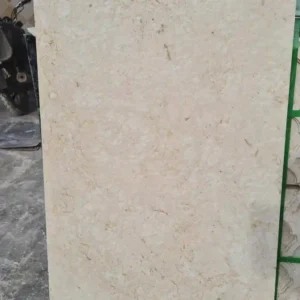
Two slabs cut from the same block can feel different underfoot purely because of how the top face was worked. Texture breaks up contact area, holds a thin film of moisture slightly longer after a rinse, and softens glare at the same time. Our cool pale limestone paving is normally supplied in one of the textures below for exterior Cayman work.
- Brushed surfaces feel softer underfoot and keep useful grip when a deck is wet.
- Sandblasted faces scatter light, which lowers glare and reads cooler to the eye.
- Bush-hammered stone gives the strongest grip and the most shade at micro scale.
- Honed and polished faces look superb indoors but belong nowhere on an open exterior deck here.
Glare is the other half of the problem
Pale stone solves heat and can create glare, and the two pull against each other if you think only about tone. The fix is texture, not a darker material. A brushed or sandblasted face scatters reflected light instead of bouncing it back in a single sheet, so the deck stays cool without turning into a light box at midday. Sealers matter here too. A high-gloss finish on an exterior terrace amplifies glare noticeably, and on these islands it also traps salt film rather than letting the routine freshwater rinse carry it away. Reflected light bounces upward into the rooms behind a terrace as well, which is charming in a cool climate and much less charming here at two in the afternoon.
Layout beats material every time
The best cooling decisions on a Cayman property are usually made on the site plan rather than in a stone yard, and they cost nothing at drawing stage.
- Put shade where people stand still, not where they merely walk through.
- Run circulation routes along the shaded side of a building rather than across open deck.
- Keep planting beds and water features next to the hottest stretch of paving.
- Break large open fields of stone with gravel, planting or timber to interrupt the heat mass.
Once the plan carries that load, the stone specification gets easier and usually cheaper. If you want the layout reviewed alongside the material, our Cayman Islands stone service starts at plan stage rather than at order stage.
What this looks like on a real deck
On a condo amenity deck the practical answer is usually a pale limestone in a thicker exterior format, brushed or sandblasted, laid with generous shade over the seating zones and a darker accent band only where feet do not linger. On a private villa the same logic applies at smaller scale, with pool coping specified first and the field stone matched to it afterwards. Two things are worth settling on the drawing rather than on site: where the shade structure lands relative to the seating, and where any darker banding stops. Both are cheap to move on paper and expensive to move once stone has been bedded. Order a small sample, put it on the ground where the terrace will go, and stand on it at three in the afternoon before you commit. Tone for heat, texture for glare and grip, thickness for load, in that order.