Low maintenance front yard rock landscaping performs best when you treat it as an engineered system rather than a decorative afterthought. The difference between a rock landscape that looks pristine a decade later and one that’s fighting weeds and shifting gravel within two years comes down to decisions made before a single stone is placed. Understanding how material density, weed barrier integration, and edge restraint interact is essential — because getting even one of those wrong creates compounding problems that no amount of maintenance can fully correct.
Why Rock Landscaping Outperforms Other Low-Maintenance Options
The case for front yard stone landscape design goes beyond aesthetics. Natural rock suppresses weeds mechanically — the weight and coverage deny light penetration far more effectively than mulch, which breaks down and thins over time. This is essentially a long-term solution that improves with age as the stones settle and compact, rather than a material that degrades and needs replacement every two to three years.
Rock also handles moisture cycles better than organic alternatives. Mulch retains moisture against plant stems and foundations, creating conditions that promote rot and fungal growth. Crushed stone and decorative rock drain freely, directing water away from structures and keeping soil conditions stable. According to ASLA guidance on permeable landscape surfaces, natural stone drainage systems significantly reduce runoff volume compared to impermeable alternatives, making rock landscaping a functional stormwater management choice as well.
For sloped front yards, the structural argument becomes even more compelling. Properly installed rock doesn’t erode the way mulch or exposed soil does during heavy rainfall events. The aggregate matrix interlocks and holds grade, which means less regrading work over time.
Choosing the Right Rock Type for Your Front Yard
Front yard landscaping ideas with rocks fall apart quickly when the wrong material gets specified for the application. There are meaningful performance differences between decorative rock options that directly affect how much work your yard demands long-term.
- Decomposed granite compacts into a semi-firm surface ideal for pathways and planting bed borders — it stays put under foot traffic but doesn’t shift freely like loose river rock
- River rock in the 2–4 inch range provides excellent drainage coverage and resists displacement better than smaller pea gravel, though it requires clean-edged borders to stay contained
- Crushed granite at 3/8 inch minus locks into a tight matrix when properly compacted, offering one of the most stable surfaces for front yard applications
- Boulders and accent stones in the 6–24 inch range anchor planting beds visually and add structural weight that prevents lighter rock from migrating
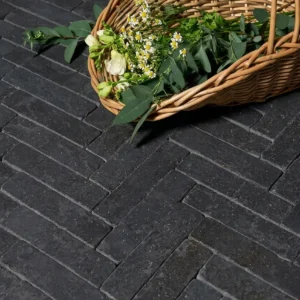
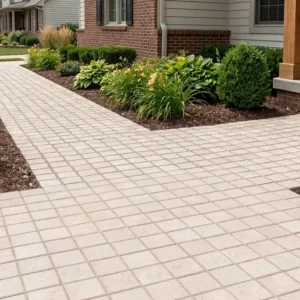
- Natural stone landscape pavers bridge the gap between decorative rock and hardscape, creating defined walkways within a rock-mulched front yard
The size relationship matters more than most guides acknowledge. Mixing rock sizes within a single bed area creates visual texture and reduces the tendency for uniform-sized material to roll or shift. A base layer of 1.5-inch crushed stone topped with 2–3 inches of decorative rock gives you drainage performance underneath and aesthetics on top.
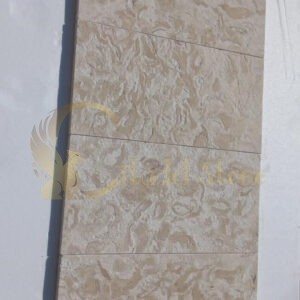
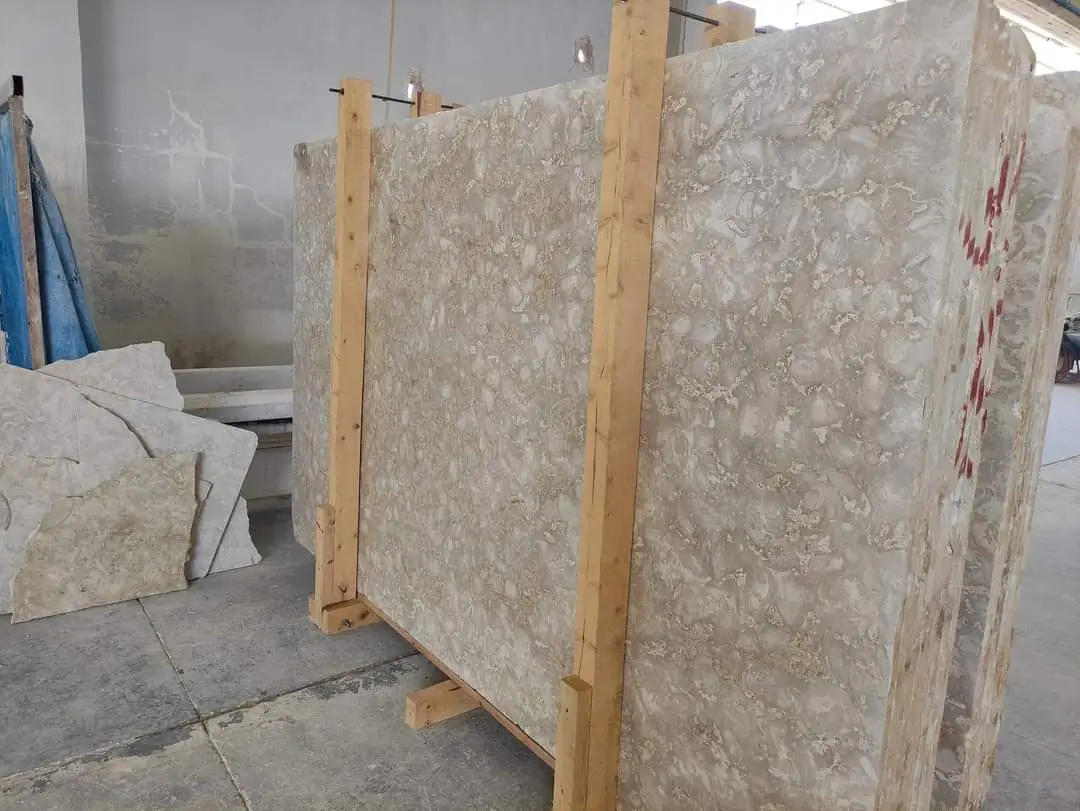
Stones for front yard applications also need to be evaluated for color stability. Some tumbled marble and lighter limestone varieties fade or discolor within a few years under UV exposure. Dense basalt and granite hold color indefinitely — worth specifying if you want the installation to look consistent without periodic refresh.
Weed Barrier Installation: The Step Most Homeowners Rush
Here’s what separates a genuinely low-maintenance installation from one that becomes a weekend chore every spring — the weed fabric specification and installation quality. Not all landscape fabric performs equally, and the difference in long-term weed suppression between a 3.2 oz woven polypropylene fabric and a thin non-woven sheeting is substantial.
- Specify minimum 3.0 oz per square yard woven geotextile fabric — lighter materials tear during installation and allow root penetration within two to three seasons
- Overlap seams by a minimum of 12 inches, not the 6 inches shown in most packaging instructions — wind-driven weed seeds find every gap
- Pin fabric every 18–24 inches across the entire surface, not just along edges — unsecured fabric migrates under rock and creates voids where weeds establish
- Cut planting holes slightly undersized and fold fabric edges down into the soil rather than leaving raw cut edges exposed
- Run fabric continuously up and over any edging before installing border material — this eliminates the primary entry point for grass runners
Even the best fabric won’t prevent airborne weed seeds from germinating in the rock layer itself. That’s why rock depth matters as much as the fabric beneath it. A minimum of 3 inches of rock cover denies enough light to prevent most surface germination. On south-facing slopes where weed pressure tends to be higher, 4 inches is worth the additional material cost in low maintenance front yard rock landscaping applications.
Edge Restraint and Storm Resilience: Keeping Rock Where You Put It
Wind and storm events are the primary mechanical forces working against your front yard rock landscaping over time. During severe weather, wind-driven rain can shift lightweight decorative rock, and sustained winds displace gravel from open bed areas without proper containment. The edge restraint system you install determines how well the design holds up through these events.
Plastic snap-together edging fails under mechanical stress — it flexes under soil pressure, cracks at connection points during freeze-thaw cycles, and provides minimal resistance to wind-pushed rock migration. Steel or aluminum landscape edging at 14-gauge minimum gives you the structural rigidity to contain rock during storm events. Drive stakes every 18 inches rather than the standard 24-inch spacing, particularly on corners and along the street-facing edge where wind loads are highest.
- Concrete mow strips at 4-inch depth provide the most permanent containment solution for high-exposure front yards
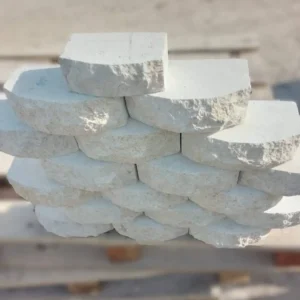
- Natural stone border edging — granite or basalt curbstones — adds weight-based resistance that no lightweight edging product can replicate
- For larger rock installations using 3-inch or greater material, the mass of the rock itself provides wind resistance, but edge restraint still prevents gradual outward creep
- Hail impact on smaller decorative rock can cause migration if the rock bed isn’t adequately deep — deeper installations absorb impact energy without displacing material
Joint integrity in flagstone or stepping stone sections also matters in storm contexts. Wind-driven rain infiltrates open joints and, over repeated wet-dry cycles, works mortar and sand loose. Polymeric sand in flagstone joints outperforms standard jointing sand specifically because it binds when activated with water and resists washout during subsequent rain events. For hardscape elements within your rock landscape, this detail is worth the small additional cost.
Front Yard Stone Landscape Design: Layout Principles That Work
Effective front yard stone landscape design starts with your traffic patterns and view lines, not with a rock type selection. Map out where foot traffic actually occurs, where drainage naturally flows, and where the eye travels from the street — those three factors should dictate your hardscape placement before you decide on materials.
The most successful front yard layouts use rock to define zones rather than to carpet everything uniformly. A planted area framed by natural stone landscape pavers, with a rock mulch bed between the pavers and the street-facing border, creates visual layers that read as intentional design rather than coverage. Explore our low-upkeep landscape stone selection to match rock color and texture to your existing hardscape and home exterior.
Scale is the variable most front yard designs underestimate. Large-format stepping stones at 24 inches square look proportionally correct in a 40-foot wide front yard but feel oversized in a 15-foot courtyard entry. The Natural Stone Institute variety selection guidance provides useful reference for matching stone characteristics to application scale and load requirements. Use that as a baseline and then adjust for your specific site proportions.
Rock Depth and Base Preparation for Lasting Results
Base preparation for low maintenance front yard rock landscaping follows the same logic as any hardscape specification — what’s underneath determines how long what’s on top performs. Skipping proper base prep is the primary reason rock landscapes develop drainage problems, uneven settling, and weed pressure within the first few years.
- Grade the subgrade with a minimum 1% slope away from structures before any rock or fabric installation — this is non-negotiable for drainage
- In areas where clay soil predominates, install a 4-inch compacted crushed aggregate base layer before the weed fabric to provide a drainage reservoir
- Sandy or loam soils with good natural drainage typically need only minor grading and fabric installation before decorative rock
- For natural stone landscape pavers set within rock beds, excavate to 6–8 inches and install a 4-inch compacted crushed base, then a 1-inch sand setting bed
- Compact your aggregate base with a plate compactor — hand tamping achieves roughly 40% of the compaction density that mechanical compaction provides
Soil stabilization before installation is worth doing on any slope greater than 5%. Erosion control blankets installed beneath the weed fabric on slopes prevent subgrade migration during the establishment period. Once rock cover is in place and compacted, the system stabilizes — but the window during and immediately after installation is when most slope failures occur.
Plant Selection for Rock Landscape Beds
Low maintenance front yard rock landscaping doesn’t mean zero planting — it means selecting plants that complement the rock system without undermining it. The right plant choices actually enhance the low-maintenance goal; the wrong ones create maintenance obligations that defeat the purpose.
Ornamental grasses, succulents, and xeric perennials are the workhorses of rock landscape planting. They’re adapted to the fast-draining conditions that rock mulch creates, they don’t require supplemental irrigation once established, and their root systems don’t aggressively spread under weed fabric the way some ground covers do. Avoid plants with vigorous rhizome systems — they’ll migrate under the fabric and create pressure points that lift rocks and tear the barrier over time.
- Agave, yucca, and ornamental aloes anchor large rock beds visually and require almost no care once established
- Russian sage, catmint, and lavender provide seasonal color without irrigation demands in most climate zones
- Ornamental grasses like blue oat grass or feather reed grass add movement and texture while tolerating dry, rocky conditions
- Dwarf conifers in the landscape offer year-round structure without leaf litter accumulating in the rock bed
Space planting holes thoughtfully — overcrowded plantings push rock material out of beds over time as root systems expand. Allow for mature plant spread when cutting fabric openings, and you’ll avoid the need to re-edge planting holes every few seasons. Front yard landscaping ideas with rocks work best when plant selection and spacing decisions are made at the design stage, before installation begins.
Ordering and Logistics: Getting Material to Your Project
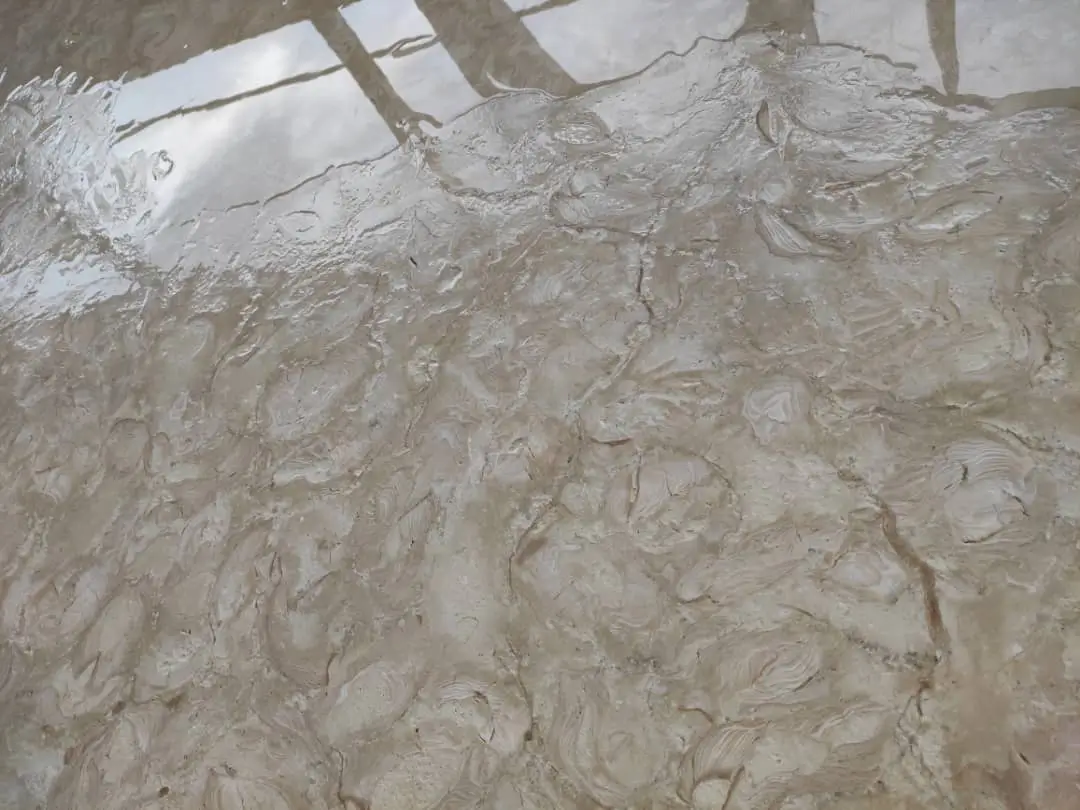
Material quantity calculation is where many front yard rock projects go wrong at the supply chain level. Underordering means a return trip to the supplier with the risk of a batch color mismatch — natural stone varies between production runs, and even the same quarry source can shift slightly in tone between warehouse lots. Overordering is expensive and leaves you with material you can’t return.
The reliable calculation for decorative rock coverage: multiply your square footage by the desired depth in inches, then divide by 324 to get cubic yards. Add a 10% overage for any slopes, uneven subgrade, or waste during edge cutting. For a 500 square foot front yard bed at 3-inch depth, you’re looking at approximately 4.6 cubic yards — call it 5 cubic yards to cover overage. Natural rock bulk density varies by material type, so confirm with your supplier whether they’re selling by the ton or cubic yard, as the conversion differs between lightweight pumice and dense granite.
Citadel Stone maintains national warehouse inventory across product categories, which typically means lead times of one to two weeks rather than the six to eight week cycles common with import orders. Confirm your truck access situation before ordering bulk material — delivery trucks typically require a clear 14-foot wide path and solid surface access to get within reasonable distance of your yard. If access is limited, factor in additional labor for wheelbarrow transfer from the street. According to USGS dimension stone production data, domestic natural stone supply chains offer substantially shorter lead times than imported alternatives, which matters for project scheduling.
Making Your Front Yard Rock Project Last
A well-executed low maintenance front yard rock landscaping project is genuinely low effort over the long term — but only when you invest the planning and installation quality upfront. The material selection, base preparation, fabric specification, and edge restraint decisions made before installation determine whether you’re doing annual touch-ups or quarterly repairs. Natural stone outperforms every synthetic alternative for permanence, drainage, and visual consistency, and the material investment pays back quickly in eliminated mulch replacement and irrigation costs. As you plan your front yard stone landscape design, it’s worth considering how natural stone performs across different applications — real vs. artificial rock for outdoor use covers another dimension of the natural stone decision worth reviewing before you finalize your material choices. Rock from Citadel Stone laid over fabric cuts watering to near zero, keeping front yards tidy through long summers.
Related reading: river rock vs volcanic rock · white vs black landscaping rock · landscaping rock bulk cost.