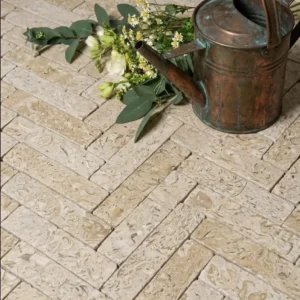
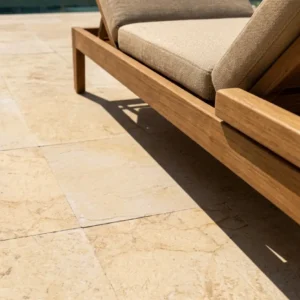
Two stones, one island, several exposures
Ask which is better and the honest answer is another question: better where. This island hands a paving material at least four different jobs within a single property line, and the material that suits the roof terrace may be wrong at the pool and wrong again on the driveway. Limestone is a sedimentary stone, generally paler, warmer in tone and easier to work. Basalt is volcanic, dense, dark and hard-wearing. The choice is a matching exercise, not a ranking, and the most useful thing a supplier can do is refuse to answer until the exposure is on the table. Sun, salt, shade, water and traffic are the five variables that actually decide it.
How they differ where it counts
Strip away the marketing and the practical differences come down to a short list you can hold in your head.
- Heat: pale limestone stays notably cooler underfoot; dark basalt absorbs and re-radiates through the evening.
- Glare: limestone can dazzle on a big open expanse; basalt almost never does.
- Density and wear: basalt is the tougher surface under vehicles and heavy traffic.
- Chemistry: limestone is sensitive to acids, so cleaning products and citrus need care.
- Look: limestone reads soft and Mediterranean, basalt reads graphic and contemporary.
The south coast glare case
Around Ponce and Guanica the light is hard and the dry season is long. A vast sheet of very pale paving here can be uncomfortable to look at, while a fully dark deck becomes unusable barefoot by late morning. This is the classic case for splitting the specification: pale, textured limestone on the walking routes and seating areas, darker basalt as banding, borders, step treads or vehicle zones. The eye gets relief, the feet stay comfortable, and the drawing gains a structure it did not have when it was one material end to end.
- Pale limestone on the routes people cross barefoot and on seating areas.
- Basalt as banding, borders or a frame that breaks up a large reflective field.
- Darker treads on steps, where a tonal change also marks the level for safety.
- Planting, gravel or timber in the zones nobody actually walks across.
The wet north and shaded courtyards
Below El Yunque and along the northern belt the problem inverts. Surfaces stay damp, shade is common, and biological growth is the maintenance story rather than heat.
- Both stones need a texture that stays secure wet, and both need drainage that actually moves water.
- Darker basalt hides organic staining between cleans more forgivingly than pale stone does.
- Pale limestone lifts a dim courtyard that never gets direct sun, which is a real amenity gain.
- Whichever you choose, keep joints sound, because water under the surface is the actual enemy.
Salt frontage and pool decks
On salt-facing frontage in Rincon or along the metro coast, both materials work if the absorption figure is right and rinsing is part of the routine. Pool decks tilt toward limestone for the simple reason that bare feet spend hours on them, and where a client wants the dark look regardless, the usual compromise is dark basalt units for traffic in the shaded zones with paler coping and treads at the water. Ask for the tested absorption result on both candidates rather than accepting a general claim about the rock type. Salt does its damage slowly and invisibly, working through the pore network over years rather than seasons, so the material data matters more here than anywhere else on the property. Build a fresh-water rinse into the maintenance routine whichever stone wins.
Traffic, driveways and entry aprons
Where cars run, density and thickness lead the decision and appearance follows.
- Basalt handles point loads, turning tires and oil spotting better than most pale stone.
- Thickness rises under vehicles regardless of material, which raises freight weight.
- Tighter joints and firm edge restraint at the conten matter more than the stone name.
- Mixing a basalt apron with a limestone forecourt is a common and durable arrangement.
Freight, thickness and the IVU line
Both stones ship the same way. Puerto Rico sits inside US customs territory, so mainland stone arrives as a domestic shipment with no federal duty line, while the Jones Act puts that carriage on US-flag, US-built and US-crewed vessels, raising the rate but keeping frequent scheduled sailings running from Jacksonville and Port Everglades into San Juan. IVU sales and use tax then applies at 11.5 percent, 10.5 percent state plus 1 percent municipal, on total landed cost including freight and insurance, filed through Hacienda and the SURI portal, with use tax due at filing unless bonded. Confirm the current rate with your accountant. Because basalt is dense and driveway units are thick, the specification decision and the freight decision are the same decision.
Deciding with samples, not renders
Request small pieces of both, in the finishes you are actually considering, and put them side by side in the real location. Look at them wet, look at them at midday, and stand on them barefoot. Cross-reference the sizes and finishes listed for graded limestone paving units against the basalt options, then let the site cast the deciding vote. Exposure decides the stone, and the island will tell you which exposure you are dealing with.