Start with exposure, not with the stone
The limestone or basalt question is usually asked the wrong way round. Neither material is the right answer everywhere on a Virgin Islands site, and the same villa often wants both. Map the exposure first. How close a surface sits to spray, how much sun it takes, what walks or rolls over it, and how steep the ground is beneath it. Once those four things are written down, the material choice for each zone follows almost by itself, and the argument stops being a matter of taste. It also stops the schedule being driven by whatever sample happened to arrive first.
The exposure bands on a typical site
Sites tend to break into four bands, and it helps to name them on the drawing before anyone talks about stone. Once a band has a name, the specification stops being a debate about taste and becomes a list of requirements that any supplier can answer:
- Salt front: frontage and boundary within reach of spray and wind driven water
- Pool and wash down: constantly wet, walked barefoot, chemically loaded
- Open terrace: hours of direct sun, foot traffic and furniture only
- Vehicle and service: driveway apron, turning ground and delivery access
The case for limestone
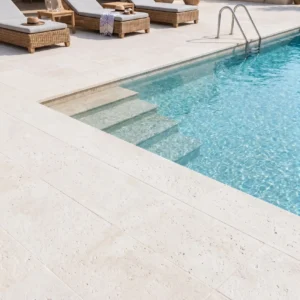
Pale limestone is the comfort material. It reflects more heat than a dark surface, which is why it suits open terraces and pool surrounds so well, and it takes honed, brushed and bush hammered faces cleanly so grip can be tuned band by band. Where salt exposure is high the specification tightens toward the densest units available with the lowest tested absorption, and the data sheet does the arguing rather than the sales pitch. It is also the easier material to detail around steps, thresholds and coping, because the same stone can carry several finishes without a change of tone. That is where limestone earns its place on a Virgin Islands project, on the surfaces people actually touch.
The case for basalt
Basalt is the harder working material: dense, dark and even in tone. It earns its keep wherever the surface takes punishment.
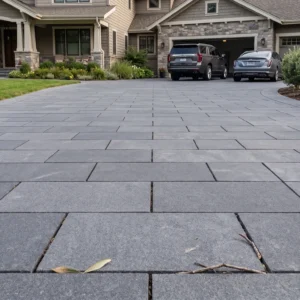
- Driveway aprons and turning grounds, where wheels concentrate load
- Service yards and bin stores that get hosed down regularly
- Steps and thresholds that need a hard, durable arris
- Boundary and frontage detail where a darker line frames paler paving
The cost is heat. A dark surface under full Caribbean sun is not a barefoot surface, so keep it off the pool surround and away from the terrace people cross at midday.
The local basalt context
Basalt is no foreign idea in this territory, and pretending otherwise would insult the reader. Aggregate Inc. runs the Ham’s Bluff Quarry on St. Croix, producing bluestone basalt construction aggregates from road base meeting DOT specifications to ASTM certified stone for asphalt and ready mixed concrete, and barging material out to Leeward islands in the region. That is a different product category from what we sell, and the distinction is worth stating plainly rather than blurring. Construction aggregate is graded stone sold by the ton for the layers below, while dimension-sawn basalt paving units are cut to a set thickness and face size and laid as the finished wearing course above them. A job of any size will often buy from both categories.
Depth and format by duty
Whichever stone takes a zone, the depth question is answered by what crosses it rather than by the material name on the schedule:
- Foot traffic terraces: thinner units in larger formats over a properly prepared base
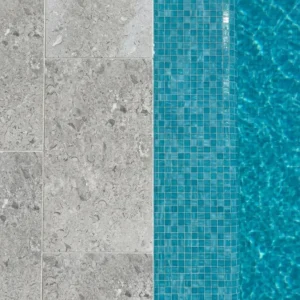
- Pool surrounds: mid depth units, with coping detailed as an item in its own right
- Driveway aprons: deeper units, smaller formats, tight joints and firm edge restraint
- Turning and reversing areas: the deepest section on the job, and remember the territory drives on the left
Storms, seismic and the build up
The design case here is not gentle. Irma crossed St. Thomas and St. John as a Category 5 on 6 September 2017, and Maria struck St. Croix as a Category 5 roughly two weeks later, with officials reporting that ninety percent of buildings in the Virgin Islands were damaged or destroyed. That pair of storms is recent memory for everyone reading a specification here, and it shapes what clients ask about. The islands also sit on an active plate boundary. Both facts argue for the same details:
- Edge restraint designed as a structural element rather than an afterthought
- Bedding able to take small movements without cracking the surface above
- Movement joints located on the drawing and honored on site
- Drainage sized for storm rain, since scour undermines paving faster than wear does
Landing the order
Both materials arrive under the same import rules. The Virgin Islands sit outside the US customs territory with their own customs law, duty and excise are assessed on the CIF value, and origin decides which line applies, so ask your broker to confirm the position before an order is placed. There is no sales tax to add on arrival, so that line does not belong in a budget here. Developers holding an Economic Development Commission benefit should also ask their advisers about the exemptions available on building materials, since they change the arithmetic on a large schedule. Send us the zone plan and we will split it into limestone and basalt for you, zone by zone.