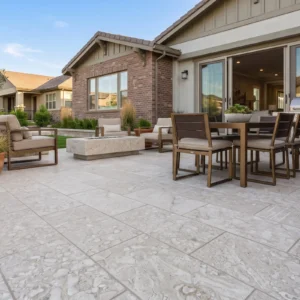
What Water Actually Does to Limestone
Limestone in water isn’t a passive relationship — the stone is actively responding to everything from dissolved minerals to pH levels, and the effects compound over time in ways most project specs don’t account for. Calcium carbonate, the primary mineral in limestone, reacts directly with carbonic acid formed when carbon dioxide dissolves in water. That reaction is slow under normal conditions, but around pools, fountains, and outdoor patios where water sits, migrates, and evaporates repeatedly, you’re accelerating a process that genuinely reshapes the stone’s surface over years. Understanding the mechanism tells you exactly where to intervene — and when.
The Chemistry Behind the Limestone-Water Interaction
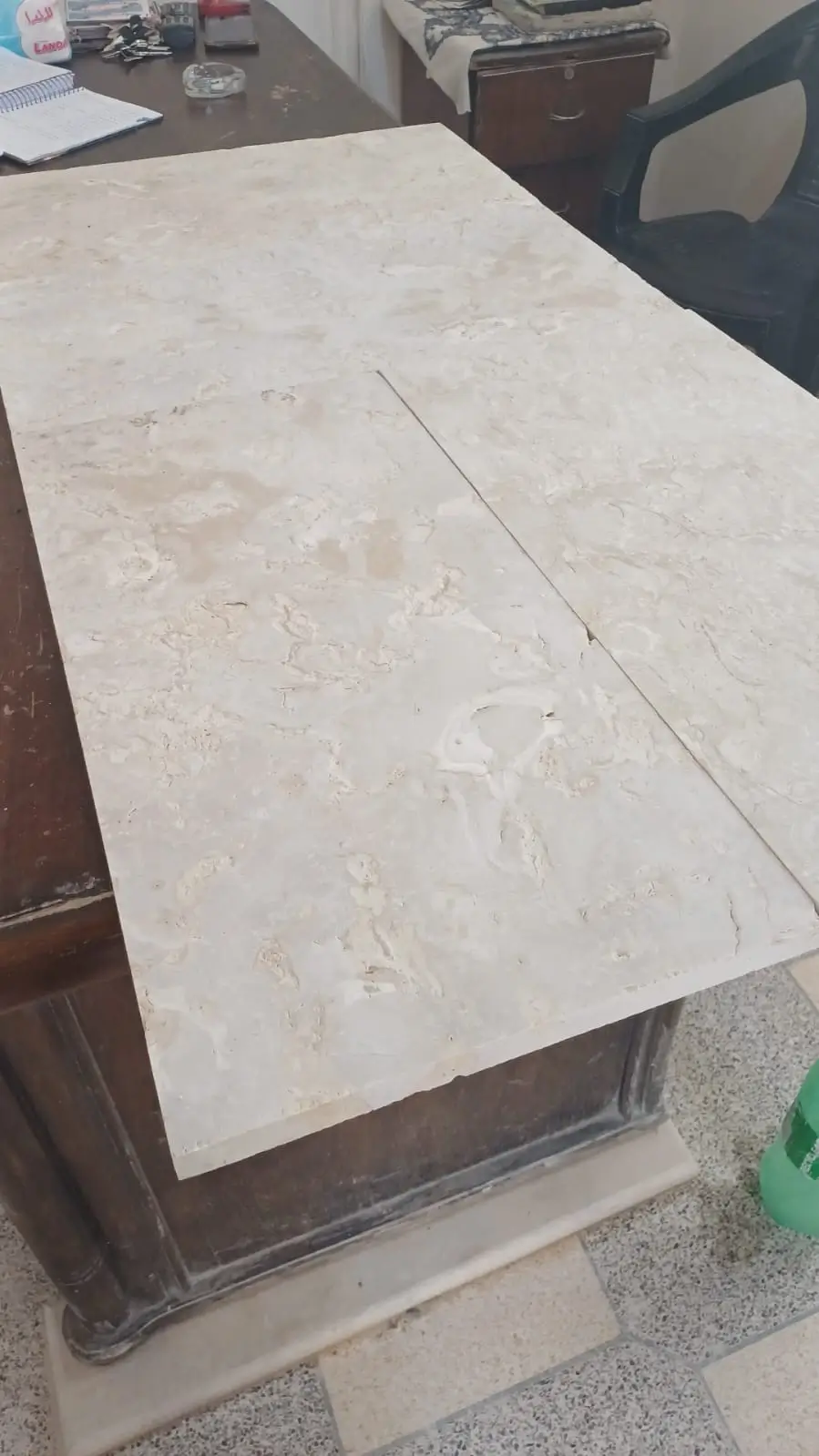
The reaction chain starts simply: water absorbs atmospheric CO₂ and becomes a mild acid. That acidic water contacts limestone’s calcium carbonate surface and begins dissolving it — a process called carbonation dissolution. You’ll recognize the symptom as a gradual rounding of sharp edges, a softening of honed finishes, and eventually a pitted or etched surface texture that no amount of cleaning will reverse.
Hardness matters here too. In regions with high mineral content in the supply water, you get the opposite problem: calcium-rich water deposits scale onto the stone rather than pulling material away. That white, crusty buildup around water line edges and fountain basins is calcite precipitation — the water is essentially depositing limestone back onto the stone in a form that bonds poorly and looks terrible. According to NSI limestone specifications, the stone’s absorption rate is one of the most critical performance variables governing how quickly either of these processes takes hold.
The pore structure of limestone is the real driver. Most commercial limestone runs between 2% and 15% absorption by weight — a range wide enough that two stones with identical visual finishes can behave completely differently around water. A tightly grained limestone near the lower end of that spectrum will resist both dissolution and scale deposition far longer than a more porous variety, simply because the reaction surface area is smaller.
Identifying the Three Main Water-Damage Patterns
Limestone in water-adjacent applications will show one of three primary damage signatures depending on water chemistry and exposure type. Knowing which pattern you’re dealing with determines the fix — and getting this wrong means you’ll treat the symptom without touching the cause.
- Etching: Dull, matte patches that appear where acidic water — including pool water that drifts below pH 7.0 — contacts a polished or honed finish; the surface is chemically dissolved and cannot be restored without re-honing
- Efflorescence: White powdery deposits rising from within the stone, caused by soluble salts carried to the surface by migrating water; common after rain events or where ground moisture moves upward through the slab
- Scale buildup: Hard, chalky crust forming on the surface, particularly around water features and pool edges; caused by mineral-rich water evaporating and leaving dissolved calcium behind
Efflorescence is the one that catches people off guard most often. The water source is usually below or behind the stone, not above it, which means the fix involves drainage correction or vapor barrier installation — not surface treatment. Cleaning outdoor limestone removes the visible deposit, but without addressing the moisture pathway, you’ll be cleaning the same stone again in six months.
Limestone Fossils and What They Mean for Water Resistance
Limestone fossils — the visible shell fragments, coral impressions, and organic inclusions you see in many natural slabs — are genuinely beautiful, but they create a structural variable that affects water performance directly. These fossil inclusions are often softer or harder than the surrounding matrix, and they weather at different rates when exposed to water. Around pools or in wet-zone applications, fossil-rich limestone can develop micro-relief as the matrix recedes around the harder shell material, or the shell material itself dissolves faster, leaving small voids.
This isn’t a reason to avoid fossil-rich limestone — it’s a reason to select your finish and sealer type carefully. A penetrating silane-siloxane sealer applied to fossil-rich limestone fills the micro-porosity around inclusions and slows the differential weathering significantly. According to USGS limestone composition data, fossiliferous limestone represents a significant portion of commercially available sedimentary stone, and its composition directly influences how water migrates through the slab over time.
Choosing the Right Limestone Patio Sealant for Wet Zones
Limestone patio sealant selection is the single most impactful decision you’ll make for long-term water performance — and the market is cluttered with products that perform very differently depending on the application. Topical acrylic sealers sit on the surface and look great initially, but they trap moisture beneath them in outdoor wet zones, which accelerates the very damage they’re meant to prevent. Penetrating sealers — specifically silane or siloxane-based formulations — are what you actually want near water features, pools, and patios with consistent irrigation exposure.
For limestone with absorption rates above 6%, a two-coat penetrating application is worth the extra time. The first coat saturates the upper pore network; the second coat addresses the material that partially absorbed the first application before it fully cured. You’ll get measurably better hydrophobic performance from two lighter coats than one heavy one, which risks surface filming. Check the stone’s surface temperature before you apply — if the slab has been in direct afternoon sun, let it cool for at least 90 minutes. Warm stone absorbs sealer too fast in the upper layer, starving the deeper pore network of coverage. Planning your limestone patio sealant application around cooler morning windows avoids this problem entirely.
Reapplication intervals for penetrating sealers on limestone near water typically run 18 to 36 months, not the 5-year claims on some product labels. Water volume, foot traffic, and cleaning frequency all degrade sealer performance faster than the label accounts for. You can test your current sealer integrity simply: drop a tablespoon of water on the surface and watch it. If it beads within 10 seconds, the sealer is working. If it soaks in within 30 seconds, you’re past due.
Cleaning Outdoor Limestone Without Accelerating Damage
Cleaning outdoor limestone around water features requires you to understand that most common cleaning products are acidic — and acid is limestone’s primary chemical adversary. Vinegar, many bathroom tile cleaners, and products labeled for “calcium and lime removal” will etch your limestone surface while appearing to clean it. The surface looks cleaner immediately after application and worse three months later as the damage becomes visible.
- Use pH-neutral stone cleaners specifically formulated for calcium carbonate surfaces — the label should explicitly state compatibility with limestone or marble
- For scale deposits, use a dedicated stone descaler with a buffered formula that dissolves calcium buildup without dropping below pH 6.0 at the stone surface
- Rinse thoroughly after every cleaning — residual cleaner left to dry on the surface concentrates as water evaporates and can cause its own chemical reaction
- Avoid pressure washing above 800 PSI on honed or polished limestone; high-pressure water drives contaminants deeper into open pores rather than removing them
- For organic staining from algae or moss in wet zones, use a diluted hydrogen peroxide solution — it’s effective and genuinely safe on limestone chemistry
Seasonal timing matters for deep cleaning outdoor limestone too. A thorough clean and reseal done in mild, stable conditions — not in the height of summer or when overnight temperatures drop near freezing — gives the cleaning agents and sealer time to work at an appropriate pace. Morning application on a shaded section is always better than afternoon work on sun-heated stone; the chemistry simply performs better within a moderate temperature range.
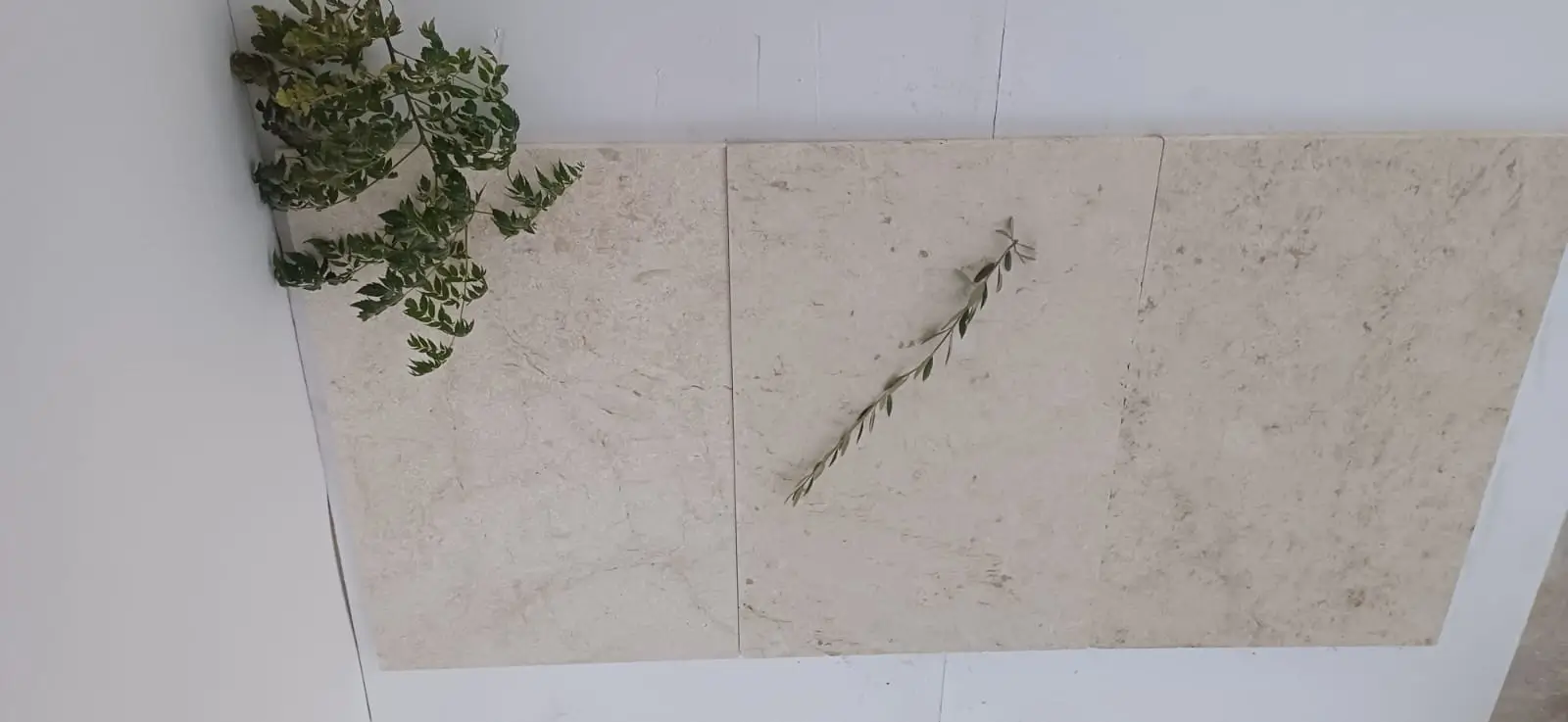
Installation Timing and Moisture Control Near Water
The window for installing limestone in water-adjacent applications is tighter than most project timelines account for. Setting bed mortars and adhesive systems used beneath limestone near pools or water features have specific temperature and humidity parameters — and ignoring them creates bond failures that look like water damage but originate at installation. Polymer-modified thin-set mortars, which are the standard for limestone in wet zones, require ambient temperatures between 50°F and 90°F to hydrate and cure correctly. Below that range, the polymer component doesn’t fully activate; above it, the open time shortens dramatically and you lose the window to adjust placement.
Spring and early autumn are the practical sweet spots across most of the country — not because of a named regional concern, but because the temperature differential between morning and afternoon is smaller, giving you a longer consistent working window. Mid-summer installations near water features carry real risk: stone heated by morning sun can be 30°F above ambient air temperature at the surface, which pulls moisture from the adhesive faster than it can hydrate. A shading protocol — even temporary shade cloth — is worth the setup time for a quality result.
Curing time before water exposure is non-negotiable. Most polymer-modified systems need 28 days of full cure before sustained water immersion or pressure. For pool copings and water feature surrounds, plan your installation schedule backward from the date the water feature goes live. A truck delivery timed to the start of that cure window, rather than the project completion date, gives you maximum scheduling flexibility without compressing the cure period.
Selecting Limestone for Water Feature Applications
Not all limestone is appropriate for sustained water exposure, and the specification decision starts with absorption rate data — not aesthetics. For pool surrounds, water feature bases, and outdoor fountain elements, target limestone with absorption rates below 5% per ASTM C97 testing. Above that threshold, the pore network is large enough that freeze-thaw cycling in applicable climates can cause internal fracturing as absorbed water expands. Even in temperate zones, high-absorption limestone near water will degrade sealers faster and demand more frequent maintenance than a denser alternative.
For projects where Citadel Stone limestone materials are specified near water features, the product data sheets include absorption and density figures that let you make this comparison directly — always verify those numbers rather than assuming based on visual density alone. Warehouse stock can include material from multiple quarry batches, and absorption can vary by a full percentage point between shipments of visually identical stone.
Finish selection also affects water performance in ways the specification sheet won’t always flag. Polished limestone in wet zones is consistently the highest-maintenance choice: the smooth, dense surface looks pristine when dry but shows every water spot and scale deposit with maximum contrast. Honed or brushed finishes are far more forgiving — they diffuse light across the surface irregularities and make routine maintenance intervals feel less urgent. According to Britannica’s limestone characteristics overview, the mineral composition and crystalline structure of the stone determine how a given finish responds to both mechanical wear and chemical exposure over time.
Getting Limestone and Water Performance Right
Getting limestone right near water comes down to three decisions made early: absorption rate selection, sealer chemistry, and installation timing. Compromise any one of them and the other two can’t compensate. You can specify the densest limestone available, but if it goes in during conditions that prevent proper adhesive cure, you’re building a maintenance problem rather than a durable installation. Conversely, perfect installation conditions with a high-absorption stone and a topical sealer will still produce a surface that demands frequent attention within two or three seasons. The maintenance burden on limestone in water-adjacent applications is directly proportional to how carefully those three early decisions were made. For ongoing care detail, limestone tiling care and maintenance covers the cleaning and protection protocols that keep the stone performing long-term. Sourced from quarries across the Mediterranean and Middle East, Citadel Stone limestone is chosen for measured absorption near water features.
Related reading: Patio Limestone Pavers: Full Cost Breakdown · limestone floor tile · white limestone paver.