

Jerusalem Grey Gold Limestone carries a compressive strength profile that surprises most specifiers the first time they pull the lab sheets — typically ranging from 8,000 to 11,000 PSI depending on bed orientation, which puts it well above the threshold for vehicular-rated outdoor paving without the weight penalties of denser igneous alternatives. That dual-tone character — the warm gold veining running through a cool grey matrix — isn’t a cosmetic coincidence; it reflects the iron oxide and calcite layering that also gives this stone its anisotropic density, meaning perpendicular cuts behave differently under load than parallel ones. Understanding that distinction before you finalise your thickness specification is what separates a 25-year installation from one that starts showing stress fractures at the mortar joints inside a decade.
What Jerusalem Grey Gold Limestone Actually Delivers
The first thing worth clarifying is that Jerusalem Grey Gold Limestone is a sedimentary bioclastic stone quarried from Middle East quarries, where millennia of marine deposit compression created a uniquely consistent micro-crystalline structure. That structure is what gives the material its characteristic tonal variation — no two slabs are identical, but the colour range stays predictably within a warm grey-gold palette that blends readily with contemporary and transitional design schemes. You’re not gambling on wildly inconsistent colour lots when you order this material in volume.
Porosity is the performance variable that drives most specification decisions with this stone. Jerusalem Grey Gold Limestone typically exhibits water absorption rates between 3% and 6%, which classifies it as moderately porous. That figure matters for sealing schedules, freeze-thaw performance in colder regions, and the type of setting mortar you specify. According to NSI limestone technical properties, porous limestones in this absorption range respond well to penetrating sealers applied before grout work rather than after — a sequencing detail that reduces efflorescence risk substantially.
Surface finish options meaningfully change the material’s performance envelope. A honed finish leaves a smooth, low-relief face — acceptable for covered outdoor applications but worth flagging for uncovered pool surrounds. A brushed or tumbled finish raises wet COF to the 0.55 to 0.65 range, which is where most landscape architects land for exposed outdoor specs. Your finish selection isn’t just aesthetic — it’s a safety and maintenance decision that affects every year of the installation’s service life.
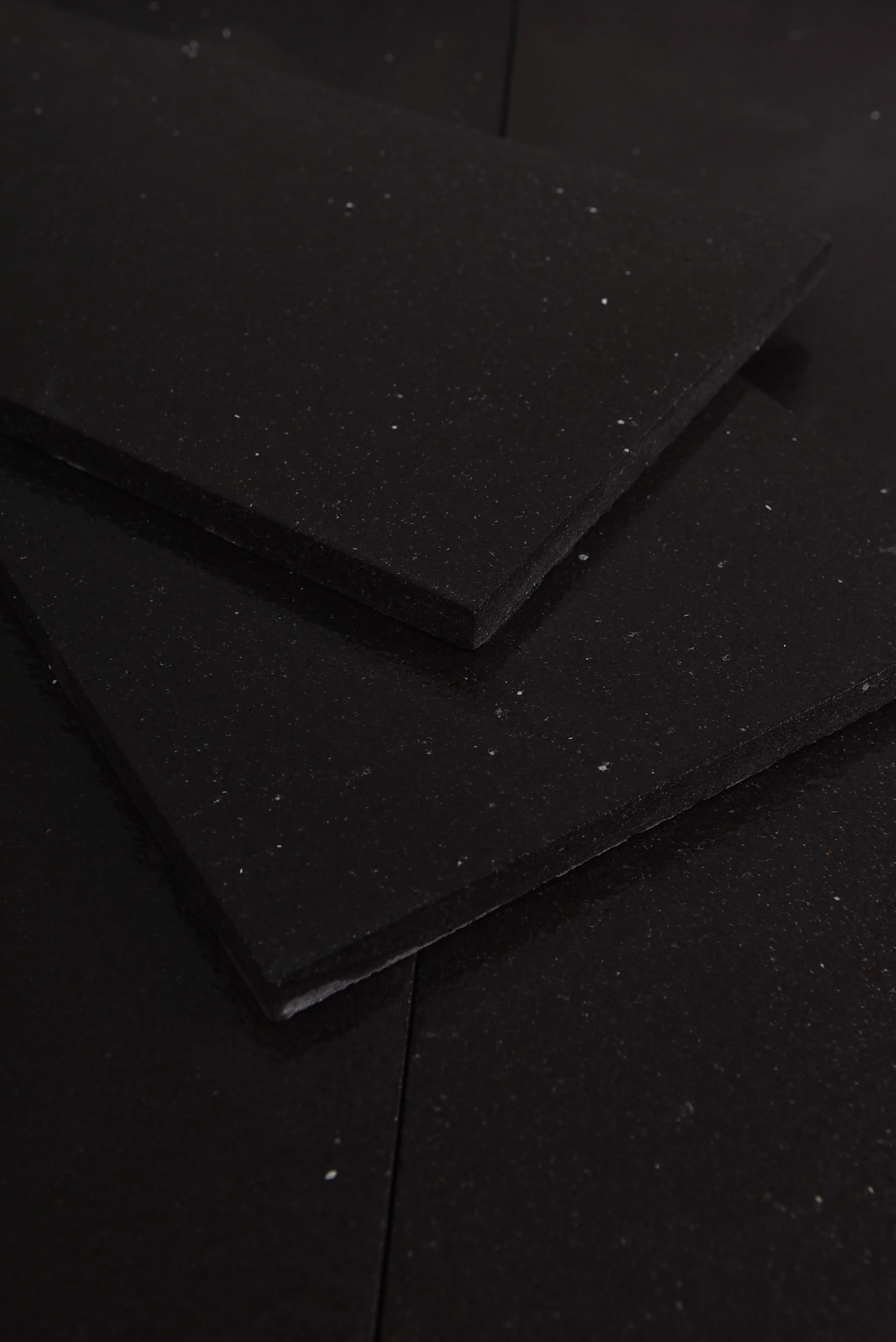
Thickness and Format Selection for Your Project
Getting thickness right is where most residential specifications stumble, and it’s usually because the installer defaults to a standard 3/4-inch tile thickness that’s appropriate for interior flooring but undersized for outdoor paving over aggregate bases. For pedestrian applications on a compacted MOT Type 1 or crusher-run base, you’ll want a minimum nominal thickness of 1.25 inches (30 mm). For applications with occasional vehicular overhang or service access, step up to 2 inches (50 mm) without debate.
- Pedestrian patios and walkways: 30 mm minimum on 100 mm compacted aggregate, 50 mm sand-set bed
- Driveway aprons and light vehicular areas: 50 mm minimum, concrete substrate preferred over aggregate-only base
- Pool surrounds: 30 mm on concrete substrate with anti-fracture membrane, pitched at minimum 1.5% away from water edge
- Interior flooring on structural slab: 20 mm nominal with uncoupling membrane acceptable
- Wall cladding panels: 20 to 30 mm depending on span and wind load zone — back-butter with polymer-modified mortar
Format size interacts with thickness in ways that matter. Large-format slabs — anything above 24 x 24 inches — require full mortar coverage (95% minimum) to prevent hollow spots that concentrate load stress. Your installer needs to understand that Jerusalem Grey Gold Limestone’s layered structure means it will telegraph point loads at hollow spots more readily than a denser granite. Specify the full-coverage requirement in writing before work begins.
Jerusalem Grey Gold Limestone pavers in the 24 x 24 and 24 x 48 formats perform best across large-scale outdoor terraces — the proportions complement the stone’s linear gold veining and reduce the number of grout joints that need maintenance over time. Tighter joint patterns look crisp at installation but accumulate biological growth in humid climates faster than wider, well-sealed joints.
Base Preparation: The Foundation You Can’t Skip
The base beneath your Jerusalem Grey Gold Limestone installation determines more of its long-term performance than any product choice above grade. A poorly prepared base that allows differential settlement will crack and de-bond even the most carefully laid stone. The standard for outdoor paving over natural subgrade is a minimum 4-inch compacted aggregate base, increased to 6 inches in clay-heavy or expansive soils. Your geotechnical conditions, not a generic spec sheet, should dictate final base depth.
Concrete substrates — the preferred choice for pool surrounds, covered terraces, and any application with controlled drainage requirements — need to achieve minimum 3,000 PSI before stone placement begins. Rushing that cure window to meet a project timeline is one of the most common causes of early bond failure. Allow 28 days of full cure, or use a polymer-modified mortar rated for green concrete if your schedule genuinely can’t flex.
- Subgrade compaction: minimum 95% Modified Proctor Density before aggregate placement
- Aggregate base: 4 to 6 inches of compacted crushed stone, 1.5-inch minus, layered in 2-inch lifts
- Concrete slab minimum: 3.5-inch thickness, 3,000 PSI, reinforced with #3 rebar at 18-inch grid for outdoor applications
- Control joints in concrete substrate: maximum 10-foot spacing in both directions — never skip these
- Anti-fracture membrane: specify for concrete substrates subject to thermal cycling or where substrate cracking is anticipated
Control joint placement in the substrate must transfer through to the stone surface. Covering a concrete control joint with continuous stone and grout is the single most reliable way to generate a cracked stone within two or three thermal cycles. Map your substrate joints before any stone layout planning begins, and coordinate the joint pattern with your stone format so that natural seams fall over substrate joints wherever possible.
Mortar and Setting System Specifications
Jerusalem Grey Gold Limestone’s moderate porosity means it interacts actively with the mortar bed during the setting window. A standard cement:sand mix without polymer modification will work in interior applications but will underperform outdoors where thermal cycling and moisture infiltration create bond stress. For all exterior applications, specify a polymer-modified thin-set mortar with a minimum tensile adhesion strength of 200 PSI — ANSI A118.4 or better is the benchmark to reference in your spec documents.
Back-buttering is non-negotiable for larger formats. Apply a skim coat of polymer-modified mortar to the stone back before setting — this eliminates air voids, improves bond coverage, and gives you a visual check on contact percentage when you lift a test tile. Your target is 95% contact coverage for exterior paving. Anything below 80% creates hollow zones that concentrate load, trap moisture, and accelerate freeze-thaw damage in cold-climate regions.
Grout selection deserves more attention than it typically gets on stone projects. For Jerusalem Grey Gold Limestone, a sanded epoxy grout in a warm buff or silver-grey tone gives you stain resistance without the brittleness of standard cement grout at wider joint widths. If you’re committed to traditional cement grout, specify a polymer-modified sanded product and plan a penetrating sealer application before grouting to protect the stone edges from grout hazing — this material’s surface responds to grout residue faster than polished granites.
Sealing Protocol and Long-Term Maintenance
Sealing Jerusalem Grey Gold Limestone isn’t optional for outdoor applications — it’s the maintenance decision that determines whether you’re resealing on a 2-year cycle or watching staining and biological growth become a restoration problem. A penetrating siloxane or silicone-based impregnator is the correct sealer class for this material. Topical film-forming sealers create a surface coating that traps moisture beneath, which leads to spalling and delamination in freeze-thaw climates over time.
Apply the first sealer coat before grouting on exterior applications — this is the sequencing detail mentioned earlier. A second coat after grouting, once grout has fully cured (minimum 72 hours), completes the initial protection cycle. After that, resealing frequency depends on traffic and climate exposure: heavily used outdoor terraces typically need resealing every 18 to 24 months; covered or low-traffic areas may extend to 36 months before water bead-up testing shows meaningful absorption has returned.
- Sealer type: penetrating siloxane or fluoropolymer impregnator — avoid film-forming coatings outdoors
- Pre-grout application: one coat, allow full penetration before grouting
- Post-grout application: one coat after grout cure (72-hour minimum)
- Resealing interval: test with water bead-up annually — reseal when water absorbs within 60 seconds
- Cleaning before resealing: pH-neutral stone cleaner only — avoid acidic or alkaline products that etch the calcium carbonate matrix
One maintenance detail that catches property owners off guard: Jerusalem Grey Gold Limestone’s gold veining is iron-rich, and prolonged contact with iron-bearing water — common with well water or certain municipal supplies — can darken the veining unevenly over time. A good impregnator significantly slows this process. If you’re installing in a region with high iron content water, specify a sealer with enhanced rust-inhibiting additives and discuss maintenance expectations clearly with the client before installation sign-off.
For a broader look at how grey-toned limestone performs across different applications and format options, browse our grey gold limestone options to compare finish choices and format availability before finalising your specification.
Wind, Storm, and Mechanical Stress Considerations
Jerusalem Grey Gold Limestone’s dense micro-crystalline matrix gives it genuine resilience to mechanical impact — hail strike testing on 30 mm slabs shows surface pitting is minimal compared to softer limestones with higher porosity. That resistance matters most in exposed outdoor applications where wind-driven debris and storm events are part of the annual performance equation. The stone’s flexural strength, typically in the 1,200 to 1,800 PSI range depending on quarry bed orientation, means it can handle the dynamic loading of wind-driven rain without the micro-fracturing that progressively opens joints in more brittle alternatives.
Edge restraint is the mechanical detail that most often fails during severe weather events. Wind-driven rain infiltrating open perimeter joints creates hydrostatic pressure that can dislodge even well-set pavers over repeated storm cycles. Your edge restraint specification needs to account for this:
- Perimeter restraints: minimum 6-inch concrete edging or structural steel angle, set before stone placement
- Perimeter mortar joints: fully bedded and pointed with flexible polymer-modified grout — no dry-pack at edges
- Joint width at perimeter: 3/8 inch minimum to allow for flexible pointing material with adequate body
- Drainage integration: perimeter channels or slot drains positioned so wind-driven rain volume doesn’t overwhelm the drainage capacity and back-pressure the installation
- Anchor fasteners for wall cladding panels: stainless steel mechanical anchors at minimum 4 points per panel in high-wind-load zones — adhesive-only installation is not adequate for elevated or exposed facade applications
Joint integrity under wind-driven rain is a specific performance criterion worth specifying explicitly. Standard sand-set installations perform adequately in sheltered environments but will experience joint sand displacement during sustained high-wind events. For exposed coastal or elevated installations, a polymeric joint sand rated for wind and water resistance significantly extends the interval before joint replenishment is needed. Re-sanding wind-eroded joints before each storm season is a maintenance task that most property managers don’t anticipate unless you document it at project handover.
Sourcing, Lead Times, and Project Planning
Jerusalem Grey Gold Limestone is sourced from Middle East quarries where extraction and initial processing happen close to the source, which keeps raw material costs more stable than stones dependent on longer trans-oceanic supply chains to multiple processing points. That said, colour lot consistency between orders placed months apart is a genuine variable — the gold intensity and grey background tone can shift between quarry extraction runs. If your project has a phased delivery schedule, ordering all material for a phase from the same production batch is worth the warehouse carrying cost to avoid visible tonal discontinuity in the finished installation.
Citadel Stone maintains ready warehouse inventory of Jerusalem Grey Gold Limestone in the most specified formats and thicknesses, which typically reduces project lead times to 1 to 2 weeks for standard orders rather than the 8 to 12 week import cycle you’d face sourcing directly. For custom sizes or non-standard thicknesses, lead times extend to 4 to 6 weeks — factor that into your project schedule during the specification phase, not after a purchase order is placed.
- Standard stocked formats: 12 x 12, 16 x 16, 24 x 24, 12 x 24, 24 x 48 — confirm current warehouse availability at order time
- Standard thickness range: 3/4 inch, 1.25 inch, and 2 inch nominal in most formats
- Custom fabrication: cut-to-size orders with precision tolerances available — allow 4 to 6 weeks
- Colour lot documentation: request quarry batch certification with your order confirmation if phased delivery is planned
- Truck delivery logistics: confirm site access dimensions before scheduling — full pallets on standard flat-bed trucks require adequate turning radius and level off-loading area
Material quantity calculations for Jerusalem Grey Gold Limestone should include a 10% overage allowance for cuts, breakage, and pattern matching — not the 5% that generic paving calculators suggest. The stone’s veining pattern means installers make more layout decisions in the field than they would with a uniform material, and those decisions consume more cut pieces. Order short and you’ll likely face a colour lot mismatch on the fill order. According to USGS limestone formation and properties data, the mineralogical variability inherent in bioclastic limestones is what drives this real-world tonal shift between extraction periods — understanding the geology helps you plan inventory decisions more accurately.
How Jerusalem Grey Gold Compares to Alternative Materials
The most common materials specifiers evaluate alongside Jerusalem Grey Gold Limestone are porcelain pavers, travertine, and grey granite. Each comparison reveals genuine trade-offs rather than a clear winner — your application context determines which attributes matter most.
Porcelain pavers offer extremely low water absorption (typically below 0.5%) and consistent colour lot uniformity that natural stone cannot match. They’re highly resistant to staining and require minimal sealing maintenance. The trade-off is a mechanically manufactured aesthetic that lacks the tonal depth and variation of natural Jerusalem Grey Gold Limestone — on a large terrace, the difference in visual warmth is immediately apparent. Porcelain also has lower flexural strength than 2-inch limestone in most commercial-grade formats, making it more susceptible to cracking over settling bases.
- Jerusalem Grey Gold vs. porcelain: natural warmth and tonal variation vs. maintenance simplicity and colour uniformity
- Jerusalem Grey Gold vs. travertine: denser matrix and lower porosity vs. travertine’s softer, more open-pore character — Jerusalem Grey Gold performs better in freeze-thaw regions
- Jerusalem Grey Gold vs. grey granite: limestone is more workable and lighter in weight, making installation easier; granite offers greater hardness and abrasion resistance for high-traffic commercial applications
- Jerusalem Grey Gold vs. sandstone flagstone: limestone delivers tighter dimensional tolerance and more consistent thickness; sandstone offers a more rustic character
The Britannica limestone reference on formation and characteristics provides useful context on why bioclastic limestones like Jerusalem Grey Gold Limestone occupy a distinct performance niche — the micro-crystalline matrix created by marine organism compression produces a stone that’s meaningfully denser and more dimensionally stable than reef or oolitic limestones often grouped under the same category name. That distinction matters when you’re comparing data sheets from different suppliers claiming to offer the same material.
For Jerusalem Grey Gold Limestone pavers specified in high-traffic applications, the key comparison metric is abrasion resistance — tested under ASTM C241. This stone typically achieves Ha values of 10 to 14, which is acceptable for residential and light commercial use but warrants careful review for heavy-traffic commercial entries where granite’s higher Ha values provide a meaningful service life advantage.
Installation Sequencing and Field Tips Worth Knowing
The sequencing of an outdoor Jerusalem Grey Gold Limestone installation involves decisions that the spec document rarely captures with enough precision. Start with a dry layout before any mortar is mixed — place slabs face-up across the full installation area and make all your pattern and colour distribution decisions before a single stone is committed to bed. This takes time, but it’s the step that separates installations that photograph beautifully from ones that have awkward tonal clusters visible from across the space.
Temperature at installation has a direct effect on open time and bond development. In hot, dry climates, polymer-modified mortars can begin skinning within 15 minutes of exposure — a skinned mortar surface bonds poorly regardless of coverage percentage. Dampen the substrate lightly before mortar application in high-temperature conditions, shade the work area where practical, and reduce batch sizes so mortar is always fresh when stone goes down. In cold conditions, protect the fresh installation from temperatures below 40°F for a minimum of 72 hours after setting — thermal shock during early cure is a bond failure risk that proper site protection eliminates.
- Dry layout: always complete before mortar work begins — budget 4 to 6 hours for this on a 500 sq ft installation
- Mortar open time: reduce batch size in temperatures above 85°F — fresh mortar only under every stone
- Setting sequence: start from a fixed reference line (typically a wall or primary view axis), not from the centre outward
- Lippage tolerance: maximum 1/32 inch between adjacent slabs for honed finish — verify with a straightedge frequently during placement
- Expansion joints: install at all changes of plane, at perimeters, and at maximum 15-foot intervals in field — never grout over expansion joints
- Grout application temperature: between 50°F and 90°F — outside this range, extended cure times affect final joint hardness
At Citadel Stone, our technical team consistently advises specifiers to account for the stone’s inherent surface micro-texture variation when selecting grout colour. A grout that reads as neutral on a sample board can read significantly warmer or cooler against Jerusalem Grey Gold Limestone’s natural tonal range in full-scale installation — request a mock-up panel with your actual grout selection before committing the full project.
Getting Jerusalem Grey Gold Limestone Specifications Right
Jerusalem Grey Gold Limestone rewards precise specification and careful installation preparation with decades of service life that most manufactured alternatives struggle to match on purely aesthetic grounds. The material’s moderate porosity, anisotropic density, and tonal variability are properties to plan around — not defects to overlook. Your specification document should address sealer sequencing, mortar open time management, control joint transfer, and colour lot documentation before a single pallet leaves the warehouse. Those details aren’t overhead — they’re the difference between an installation that performs as designed and one that generates callbacks within the first two winters. As you consider complementary natural stone options for related project areas, Tundra Grey limestone for comparison offers useful specification contrast worth reviewing alongside this material. Stone for nationwide projects arrives cut to order, letting jerusalem grey gold limestone from Citadel Stone match layouts precisely.
Related reading: honed grey limestone finish guide · Grey Limestone vs Limestone Look Tile: Which Wins? · Grey Limestone Floor Problems and How to Fix Them.