Choosing the Right Sealer for Flagstone
Selecting a film-forming sealer on a high-porosity flagstone in a wet climate is one of the most avoidable — and most common — causes of sealing failure. Knowing how to seal flagstone properly starts with understanding the two main sealer categories and where each one fits, because the wrong choice doesn’t just look bad; it actively traps moisture and accelerates spalling. Your stone type, finish, and site drainage conditions all factor into this decision before you open a single container.
Penetrating sealers (also called impregnating sealers) work below the surface, filling pore structures without forming a visible film. Film-forming sealers create a protective topcoat that sits above the stone. For most outdoor flagstone applications — patios, walkways, driveways — penetrating sealers outperform topcoat products because they allow vapor transmission. Moisture trapped beneath a surface film expands under temperature change and forces the coating to blister or peel within two to three seasons.
Matching Flagstone Porosity to Sealer Chemistry
Porosity varies dramatically across flagstone varieties. Sandstone flagstone can absorb 10–15% water by volume, while dense quartzite flagstone sits closer to 1–3%. A silane-siloxane penetrating sealer formulated for high-absorption stone will over-penetrate a dense quartzite, wasting product and leaving uneven coverage. For denser varieties, a silicone-based or fluoropolymer penetrating sealer with a smaller molecular structure delivers better pore adhesion.
- High-porosity sandstone and limestone flagstone: silane-siloxane hybrid sealers at 40% solids concentration minimum
- Medium-porosity bluestone and slate: silane or silicone penetrating sealers — test with a water-drop absorption test first
- Dense quartzite flagstone: fluoropolymer or silicone-based penetrating formulas for adequate pore penetration
- Honed or polished flagstone surfaces: avoid water-based acrylics outdoors — they fail at expansion joints in temperature-swing conditions
The water-drop test is worth doing before you commit to any flagstone sealer. Place a few drops of water on a dry, clean surface. If the stone absorbs them within 5 minutes, it needs sealing. If water beads immediately, the stone may already be sealed or have a naturally low porosity that demands a specialist product match.
Timing Your Flagstone Sealing Application
Application temperature matters more than most installers acknowledge. Most penetrating sealers require a surface temperature between 50°F and 90°F for proper cure. Below 50°F, the solvent carrier evaporates too slowly, leaving residue and uneven penetration. Above 90°F, the solvent flashes off before the resin component has time to migrate into the stone’s pore network.
New flagstone installations need a curing window before sealing — typically 28 days minimum for mortar-set applications and 14 days for dry-laid installations on compacted aggregate. Sealing too early traps residual moisture and alkaline compounds from setting materials, which react with certain sealer chemistries and cause white efflorescence to form beneath the surface. The stone surface must also be completely dry: 48–72 hours after any rain event is the standard wait time, not 24 hours as some product labels suggest.
- Ideal application window: overcast days with no rain forecast for 24 hours post-application
- Avoid direct midday sun during application — solvent flash-off is too fast
- Morning application on east-facing patios and afternoon application on west-facing surfaces reduces heat-driven evaporation
- Humidity above 85% slows cure times — plan for extended 48-hour no-traffic periods in humid conditions
Drainage and Moisture Control Before You Seal
A flagstone patio that holds standing water after rain will defeat any sealing program within a few seasons, regardless of product quality. Before committing to a flagstone sealer, assess your site drainage honestly. Low points where water pools accelerate joint deterioration, wick moisture into the stone matrix from below, and keep the surface damp long enough to support biological growth — algae and moss — that compromises sealer adhesion.
Base preparation is the real moisture management layer for flagstone. A minimum 4-inch compacted crushed stone base with 1–2% cross-slope gradient toward a drainage outlet keeps hydrostatic pressure from building beneath the stone. In regions with heavy seasonal rainfall — including monsoon cycles, hurricane-season precipitation, or spring flood events — bump that base depth to 6 inches and install a perforated drainage pipe at the base perimeter. According to ASLA natural stone outdoor paving guidance, permeable base systems significantly reduce water retention beneath stone paving and extend surface performance life. Sealing over poor drainage is treating a symptom instead of a cause.
Joint design also affects moisture behavior. Dry-packed sand joints on an outdoor flagstone patio allow vertical drainage through the joint, while fully mortared joints redirect all surface water to the perimeter. The mortar-joint approach works well on a properly graded slab, but it creates real problems if the substrate ever settles unevenly — cracked joints become water entry points that the sealer above can’t address. For high-rainfall sites, at Citadel Stone, we often recommend hybrid jointing: mortar-bedded stone with partially open sand-filled joints that retain some permeability.
How to Seal Flagstone: Application Method Step by Step
Surface preparation determines whether your sealer bonds or fails. Scrub the flagstone with a pH-neutral stone cleaner, not a household detergent — soap residue creates a hydrophobic barrier that prevents penetrating sealers from absorbing correctly. Rinse thoroughly and allow 48–72 hours of drying time before you begin.
- Apply sealer with a low-pressure garden sprayer or a short-nap roller (3/8-inch nap max) — brushes leave streak marks on textured surfaces
- Work in sections of 50–80 square feet to prevent sealer from drying on the surface before you can spread it evenly
- Apply a thin, even first coat — flood-coating causes pooling on low-porosity zones and uneven sheen
- Wait 20–30 minutes, then apply a second thin coat while the first is still tacky, not fully cured
- Wipe off any excess product sitting on the surface after 30 minutes with a clean microfiber cloth — pooled sealer dries as a sticky, whitish film
- Allow 24 hours before foot traffic and 72 hours before furniture placement
Two thin coats outperform one heavy coat every time. The pore structure of natural flagstone varies across each piece, and a single thick application will over-saturate high-porosity zones while leaving denser sections under-protected. The dual-coat method self-corrects for this variation. For rough-textured flagstone, a foam applicator brush works better than a roller for working sealer into recessed grain pockets.
Sealer Reapplication Cycles for Flagstone Patios
The standard guidance of “reseal every 2–3 years” is a starting point, not a fixed rule. High-traffic areas on a flagstone patio — entry paths, steps, dining zones — wear sealer faster than low-traffic perimeter zones. Use the water-bead test annually to assess actual sealer condition rather than relying on a calendar schedule alone.
UV exposure is the primary sealer degradation factor for most outdoor flagstone applications. Penetrating silane-siloxane sealers in full-sun installations typically show measurable performance decline at 18–24 months, while the same product on a shaded north-facing flagstone patio can maintain effective protection for 36–48 months. Tracking your actual reapplication intervals over two cycles gives you a reliable site-specific schedule that will serve you better than any generic recommendation.
The flagstone sedimentary rock characteristics outlined by Britannica explain why reapplication frequency varies so much — the layered, porous nature of sedimentary flagstone means water infiltration follows micro-fracture planes that reopen as the stone weathers, requiring fresh sealer to re-fill those pathways on a regular basis. This isn’t a product failure — it’s simply how natural flagstone behaves over time.
Common Sealing Mistakes That Reduce Flagstone Performance
Sealing damp stone is the single most common installation error. The stone surface may appear dry to the eye while retaining 8–12% moisture content below the surface layer — especially in shaded areas or in the 72 hours after rainfall. A moisture meter reading above 4–5% signals that the stone isn’t ready for sealer application regardless of what the surface looks like.
- Using a high-gloss topcoat sealer on exterior flagstone — gloss sealers become dangerously slippery when wet and peel faster than matte formulas outdoors
- Skipping the pH-neutral cleaning step and applying sealer over biological staining — algae residue prevents sealer adhesion and causes blotchy coverage
- Applying sealer to flagstone that was pressure-washed less than 72 hours earlier — pressure washing saturates the stone matrix and residual moisture blocks penetrating sealer from bonding
- Mixing sealer brands or applying a different chemistry over an existing sealer without stripping the original — incompatible chemistries cause clouding and surface separation
- Sealing over active efflorescence — salt deposits must be removed with an efflorescence cleaner before sealing or the salts will continue to migrate and lift the sealer from below
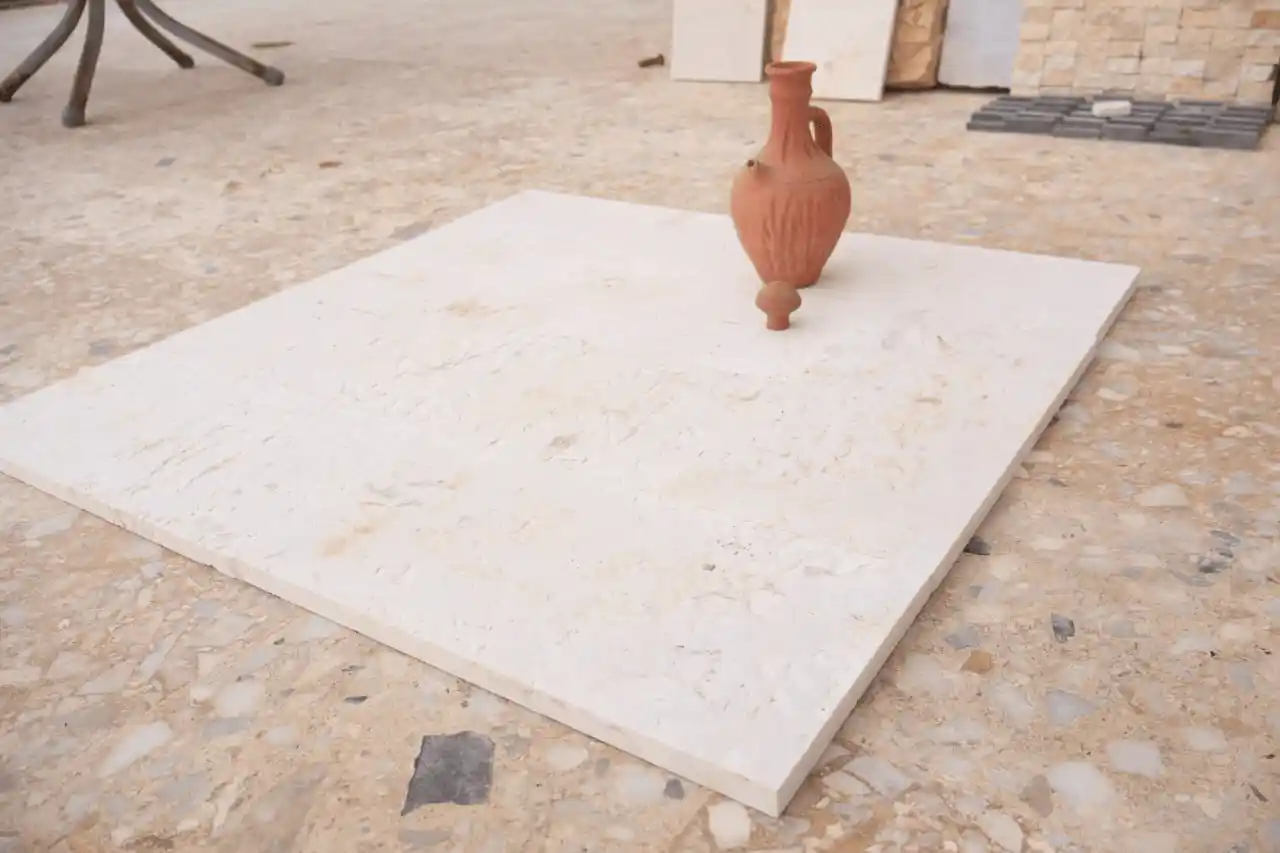
Flagstone Sealer Selection Across Different Climate Conditions
Climate performance is where sealer selection gets genuinely technical. In freeze-thaw regions, a penetrating sealer that allows vapor transmission is non-negotiable — any trapped moisture that freezes within the stone’s pore structure creates internal pressure exceeding 2,000 PSI, which is more than enough to cause spalling in most flagstone varieties. The USGS dimension stone production data documents the wide variation in natural stone absorption rates, which directly determines how vulnerable different flagstone types are to freeze-thaw damage when sealer selection is wrong.
For projects in hot, dry climates with intense UV exposure, fluoropolymer penetrating sealers offer superior UV resistance compared to standard silane-siloxane formulas — the fluorine backbone resists photodegradation better than silicone chemistry. In high-humidity coastal environments, look for sealers with algae-inhibitor additives in the formulation; standard sealers provide minimal resistance to biological growth in persistently damp conditions. You can find detailed technical guidance through our flagstone sealer advice to help match sealer chemistry to your specific site conditions before you commit to a product.
Wet-dry cycle frequency also matters. Sites in regions with distinct monsoon seasons or heavy hurricane-season rainfall face repeated cycles of saturation and drying that test sealer bonding far harder than steady moderate climates. For these applications, select a sealer with a solids content above 40% and reapply on an 18-month cycle rather than the standard 24–36 month recommendation.
How to Make a Flagstone Patio Last Longer Through Maintenance
Sealing is one component of flagstone longevity — the base, joint integrity, and drainage design carry equal weight. A properly sealed flagstone patio installed over a deteriorating base will still develop problems as the substrate settles and cracks the stone or opens joint gaps that allow water infiltration beneath the sealed surface. Your maintenance program needs to address all three layers: surface, joint, and base.
Annual joint inspection is worth building into your maintenance calendar. Sand-filled joints compact and erode over time, creating low spots where water sits rather than drains. Topping up joint sand every 12–18 months on dry-laid flagstone is a straightforward task that makes a material difference to long-term surface stability. For mortared joints, watch for hairline cracks that open at the stone-mortar interface — these need to be routed out and repointed before moisture infiltrates beneath the mortar bed.
- Clean flagstone with pH-neutral cleaners only — acidic or alkaline cleaners strip sealer and etch calcium-rich flagstone varieties like limestone
- Remove snow with a plastic shovel, not metal — metal edges chip the stone surface and create micro-fractures that accelerate moisture damage
- Avoid rock salt or chloride-based ice melt products directly on flagstone — they accelerate spalling, especially in freeze-thaw environments
- Inspect drainage outlets and ensure base slope is maintained — landscape settling can redirect surface water toward the structure over time
Citadel Stone ships nationwide with warehouse stock available for most flagstone varieties, which means your resealing and replacement material is accessible on short lead times — typically 1–2 weeks from order to delivery rather than the 6–8 week import cycle that complicates repair timelines for less-stocked suppliers.
Flagstone Sealing: Getting the Specification Right
Getting the sealing program right for flagstone comes down to three decisions that compound on each other: matching sealer chemistry to stone porosity, timing application to dry surface conditions, and establishing a reapplication cycle based on actual site performance rather than generic schedules. Miss one of these, and even a premium sealer product will underperform. Nail all three, and natural flagstone delivers the 20–30 year surface life it’s capable of with minimal intervention.
As you think through your broader stone specification, the stone tone you select affects how your sealed surface reads in different lighting conditions and how visible weathering appears over time. flagstone color and tone selection covers how different flagstone tones perform visually and practically across outdoor environments — a useful read once your sealing specification is confirmed. In high-moisture or freeze-thaw environments, Citadel Stone generally points buyers toward penetrating sealers, which protect without forming a surface film that can peel.
Related reading: how to lay a flagstone patio · how to lay a flagstone walkway · flagstone vs bluestone paving.