

Bluestone grade selection separates installations that hold up for decades from those that develop problems within the first few seasons. Knowing how to choose bluestone grade correctly means evaluating four interconnected variables — surface finish, thickness tolerance, cleft depth, and quarry classification — before a single pallet leaves the warehouse. Most buyers focus on color and price, but the grade you specify determines surface texture, dimensional consistency, structural capacity, and long-term maintenance burden simultaneously.
What Bluestone Grade Actually Means
Bluestone doesn’t follow a single universal grading standard the way lumber or concrete does. The term “grade” in the natural stone industry covers a spectrum of criteria depending on which supplier, quarry, or specification document you’re referencing. You’ll encounter terms like Select, Standard, Utility, and Irregular — and each classification carries specific implications for thickness tolerance, surface consistency, corner integrity, and edge finish.
Select-grade bluestone sits at the premium end of the classification range. Pieces meet tight dimensional tolerances, typically within ±1/8 inch of nominal thickness, and surface clefts are relatively uniform. Standard grade allows wider thickness variation — commonly ±3/8 inch — and may include minor corner chips or surface irregularities that don’t affect structural integrity. Utility or economy classifications tolerate larger tolerances still and are generally reserved for informal or rustic applications where tight joints aren’t required.
According to bluestone geological classification and properties, the stone’s sedimentary formation creates natural variation in cleft depth and layer thickness — which is precisely why grading systems exist. The classification system exists to manage that inherent variation, not eliminate it entirely.
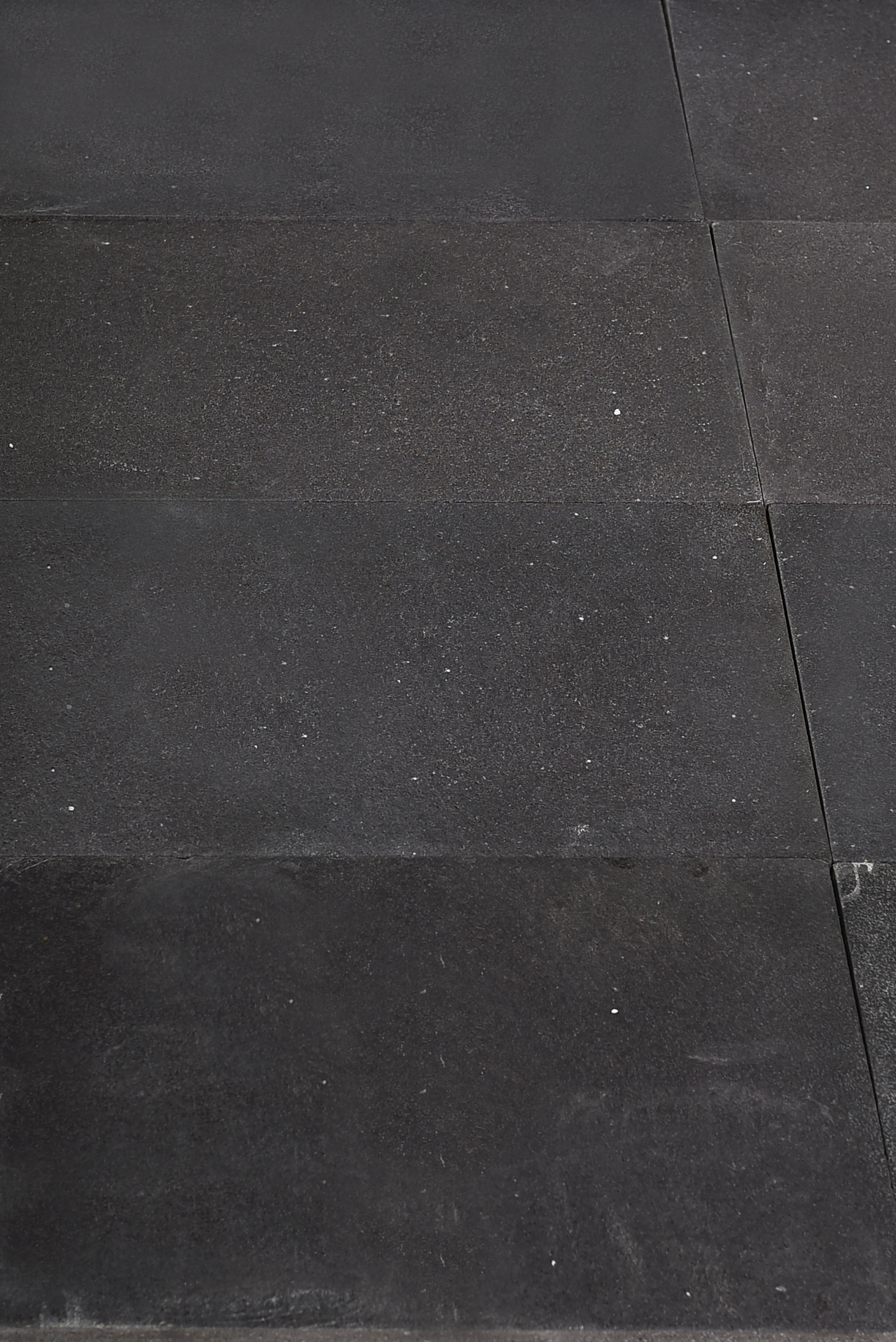
Surface Finish Options and Their Functional Impact
Your surface finish choice fundamentally changes how the installed material performs — not just how it looks. Bluestone arrives from the quarry in natural cleft form, meaning the surface texture comes directly from how the stone splits along its sedimentary planes. From there, it can be further processed to achieve honed, thermal, or sawn finishes, each serving a different functional purpose.
Natural cleft is the most common finish for exterior applications. The irregular texture provides inherent slip resistance, and the surface variation gives the stone its characteristic character. Cleft depth varies even within select-grade material — this isn’t a defect, it’s a geological reality you need to accommodate in your mortar bed or setting system.
- Natural cleft: highest slip resistance, greatest surface variation, best suited for patios, walkways, and pool surrounds
- Honed: smooth, consistent surface with reduced slip resistance — suitable for interior floors and covered outdoor spaces where wet exposure is limited
- Thermal (flamed): machine-processed surface that opens the stone’s texture through heat application, creating a coarser, highly slip-resistant finish ideal for commercial applications and high-traffic exterior spaces
- Sawn: machine-cut surface offering the tightest dimensional consistency, typically specified for formal paving where uniform joint lines are required
The finish also affects how the stone absorbs sealer and how frequently maintenance is required. Honed surfaces tend to show water marks and surface staining more readily than natural cleft, which means your sealing schedule becomes more critical when you specify a processed finish for exterior use.
Thickness Specifications and Structural Requirements
Thickness isn’t just about aesthetics — it’s a structural variable that directly affects load capacity and deflection resistance. Specifying bluestone pavers at the wrong thickness for the application is one of the most common and costly mistakes in residential and commercial hardscape work.
The USGS sandstone and bluestone dimension stone classification data confirms that bluestone is typically produced in thicknesses ranging from 3/4 inch for thin architectural applications to 3 inches and above for heavy-duty paving. For most residential patio applications on a compacted aggregate base, a 1.5-inch nominal thickness provides adequate structural capacity for pedestrian loads. Driveway applications — particularly where vehicle traffic is expected — require a minimum of 2 inches, and anything supporting heavy trucks or repeated vehicle loading should be specified at 2.5 to 3 inches.
- 1 inch (nominal): suitable only for setting on a continuous concrete substrate — no free-span capability
- 1.5 inches: standard residential patio and walkway thickness on a compacted base — handles pedestrian loads reliably
- 2 inches: entry-level vehicle paving — appropriate for occasional passenger car traffic on a well-prepared base
- 2.5 to 3 inches: specified for regular vehicle traffic, driveway aprons, and any application where load distribution across an aggregate base is required
Thickness tolerances matter as much as nominal specification. A pallet of standard-grade bluestone specified at 1.5-inch nominal may contain pieces ranging from 1.125 inches to 1.875 inches. Your setting bed needs to accommodate that variation — or you need to upgrade to select grade where tolerances are tighter. Factor this into your base preparation and mortar bed depth calculations before committing to a grade.
How to Choose Bluestone Grade by Application
The application dictates the grade specification. This is the clearest framework for making grade decisions, and it’s the approach experienced specifiers use consistently because it anchors the decision in functional requirements rather than aesthetic preferences or price pressure.
For formal residential patios where joint consistency and surface uniformity matter to the design outcome, select-grade natural cleft or sawn bluestone pavers in a consistent thickness deliver the tight lines and predictable installation your setting geometry requires. The premium cost is justified by reduced field adjustment time and a more controlled final appearance. At Citadel Stone, we consistently recommend select-grade material for projects where joint widths are specified at 1/4 inch or tighter — standard-grade thickness variation makes those tolerances nearly impossible to achieve without excessive mortar bed manipulation.
- Formal patio: Select grade, consistent thickness, natural cleft or sawn finish
- Informal patio with irregular layout: Standard grade, natural cleft finish — thickness variation is less critical when setting patterns accommodate irregular pieces
- Walkway with stepping stone layout: Standard or select grade depending on design intent — thermal finish improves slip resistance in shaded areas where moss and moisture are factors
- Pool surround: Select grade thermal or natural cleft — consistent thickness critical for coping alignment, slip resistance non-negotiable
- Driveway: 2-inch minimum, select grade preferred — standard grade at driveway thickness tends to have fewer structural inconsistencies, but verify with your supplier before specifying
Explore Citadel Stone bluestone grade options to review the specific thickness ranges and surface finish classifications available for your project specification.
Understanding Blue Stone Slate and Similar Materials
One of the most persistent points of confusion in the specification process is the relationship between bluestone and slate. Blue stone slate refers to a family of thinly cleaving sedimentary or metamorphic stones that share a similar blue-grey coloration but have distinct structural and performance characteristics. True slate has a much finer grain structure and cleaves into thinner, more uniform planes — which makes it better suited for roofing and interior tile applications but less appropriate for heavy exterior paving where impact resistance and thickness consistency are required.
Bluestone proper — the dense sandstone or basalt varieties quarried in significant quantities domestically — offers substantially higher compressive strength and better freeze-thaw durability than most blue stone slate varieties. According to Natural Stone Institute natural stone paving durability standards, dense sandstone bluestone typically achieves compressive strengths above 12,000 PSI, making it one of the more structurally capable options in the sedimentary stone category. When you encounter product described as blue stone slate in a supplier catalog, confirm whether you’re looking at true slate or a bluestone-family material before specifying thickness and base requirements — they’re not interchangeable in structural applications.
The color also behaves differently between the two. Bluestone tends to maintain its blue-grey hue with natural weathering, developing a lighter patina over time. Slate often develops more pronounced color shift and can exhibit surface delamination under repeated freeze-thaw cycling, particularly in thinner profiles. For exterior hardscape in freeze-thaw regions, dense bluestone outperforms most slate varieties measurably.
Quarry Classification and What It Tells You About Consistency
Not all bluestone comes from equivalent sources. The stone’s sedimentary geology means that quarry location, extraction depth, and bed orientation all affect the final material’s density, color consistency, and cleft characteristics. Domestic quarries produce material with established quality histories that experienced suppliers track across production runs. Material sourced from Middle East quarries introduces different geological characteristics — typically higher density and more consistent coloration — but with different surface texture profiles than domestic sandstone bluestone.
Knowing how to choose bluestone grade requires understanding that your grade specification interacts with quarry source in ways that aren’t always visible in a spec sheet. A select-grade designation from one quarry may allow tolerances that a different quarry’s standard grade exceeds. The practical implication: always request physical samples alongside grade documentation, and verify that the sample comes from the same production batch you’ll receive — not a curated showroom piece from a different run.
- Request samples from current warehouse stock, not catalog photography or archived samples
- Confirm the quarry source and production region for your specific order
- Ask for thickness range data across a representative sample of pieces from the pallet, not just nominal thickness
- Verify color consistency expectations — bluestone color can shift between quarry beds and production runs
Our technical team at Citadel Stone verifies incoming shipments against grade specifications before material is released from the warehouse, which catches dimensional inconsistencies before they reach your job site. This step matters more than most buyers realize — a pallet that doesn’t meet grade spec creates field labor costs that quickly exceed the price difference between grades.
Cost Factors and How Grade Affects Your Total Project Budget
Grade selection is never just a material cost decision — it’s a total project cost decision. The premium between standard and select grade on a per-square-foot basis typically runs 15 to 30 percent depending on thickness and finish. What that comparison doesn’t capture is the labor cost differential that comes with specifying the wrong grade for your installation method.
Standard-grade material’s wider thickness tolerance requires your installer to manage more variation in the setting bed. On a sand-set installation, that’s relatively manageable. On a mortar-set installation over concrete where joint widths are specified, every inconsistent piece requires additional bed adjustment — and that adjustment time adds up across a large installation. Labor rates vary across markets, but the additional setting time on a standard-grade mortar-set installation can exceed the cost savings on the material itself within the first 500 square feet.
- Sand-set informal patio: standard grade typically works well — thickness variation accommodated in the sand layer with minimal labor impact
- Mortar-set formal patio: select grade almost always delivers lower total project cost when labor rates are factored in
- Pool coping: select grade mandatory — thickness variation at a coping profile creates alignment problems that are extremely difficult and expensive to correct after installation
- Driveway paving: the grade premium is worth paying — a thicker, more consistent piece at the driveway edge prevents edge failure and rocking that generates callbacks
Freight distance also affects your cost calculation significantly. Bluestone is a dense material — natural sandstone varieties run 150 to 165 pounds per cubic foot — and truck delivery costs scale with distance and weight. Projects far from major stone distribution hubs absorb higher freight costs per pallet, which can compress the budget available for material grade. In those situations, value engineering toward a select-grade thinner profile (1.5 inches on concrete vs. 2 inches on aggregate) may deliver better total cost outcomes than dropping to standard grade and absorbing the labor premium.
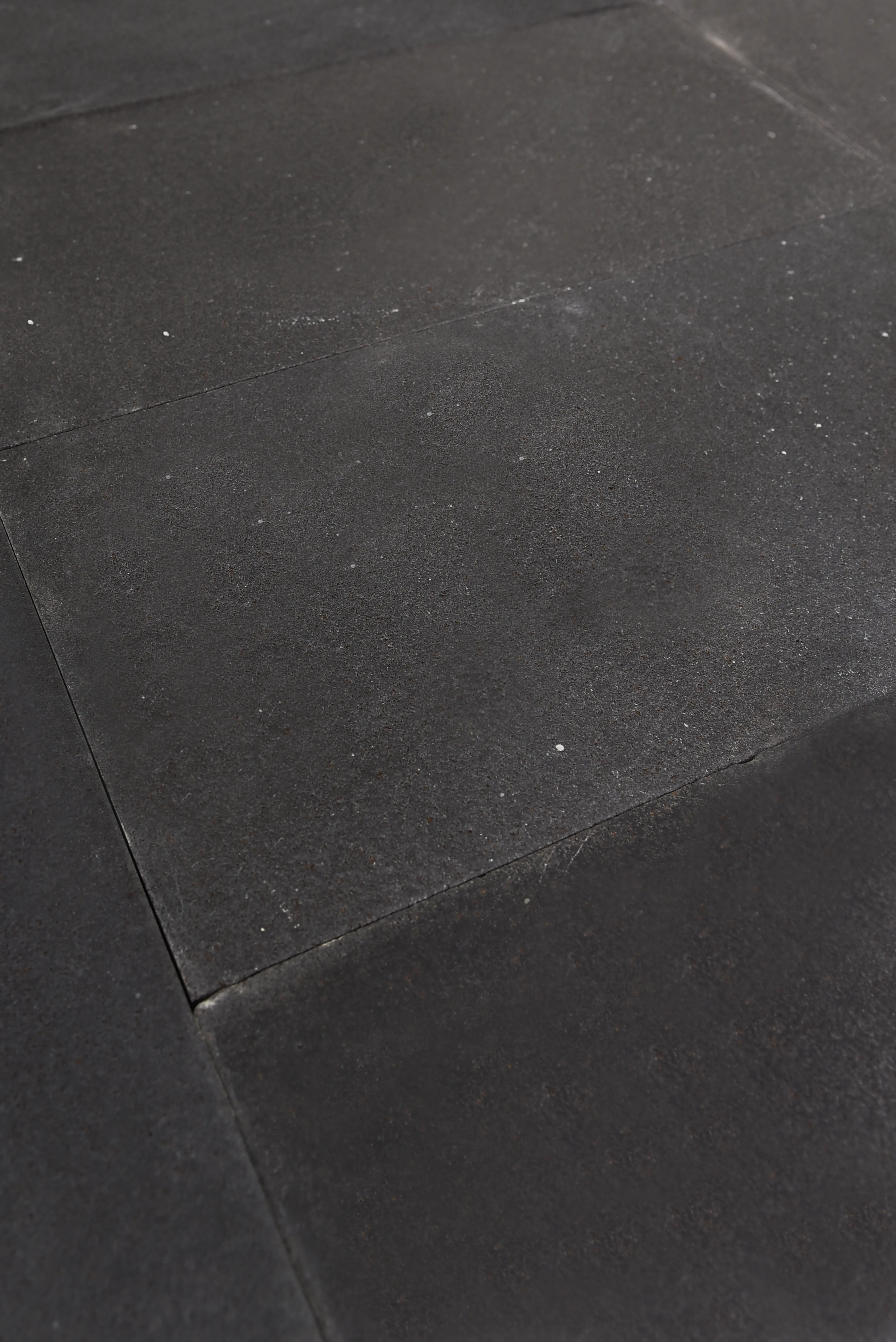
Edge Finish, Joint Design, and Installation Variables
Edge finish is a grade-adjacent specification that significantly affects both the installation process and the finished appearance. Bluestone arrives with natural broken edges in irregular and random rectangular formats, or with machine-cut edges in dimensional formats. The edge finish you specify affects joint alignment, cutting labor, and the overall formality of the installation.
Natural broken-edge material in irregular shapes suits informal dry-laid applications and rustic design aesthetics. The joint lines are inherently variable, and your installer fits pieces together rather than cutting to a grid. Dimensional material with sawn or guillotined edges allows consistent joint widths and a more formal grid layout — but requires a higher proportion of field cuts at borders, curves, and obstacles.
- Irregular natural edge: lower material cost, higher fitting labor — net cost depends on your installer’s skill level with irregular stone
- Random rectangular: moderate material cost, moderate fitting labor — pieces fit into a more structured pattern without requiring precise grid work
- Dimensional sawn edge: higher material cost, lower fitting labor on straight runs — field cuts at borders and features increase labor time
Joint width specification interacts directly with grade and edge finish. Tight joints at 1/8 to 1/4 inch require select-grade dimensional material with sawn edges. Joints at 1/2 to 1 inch tolerate standard-grade random rectangular material. Open joints above 1 inch are typically used with irregular material in informal sand-set applications. Your design intent and maintenance tolerance should drive this specification — wider joints require more frequent joint sand replenishment in high-traffic areas, but they also accommodate more thickness variation in the setting bed.
Sealing, Maintenance, and Long-Term Performance by Grade
Grade affects long-term performance in ways that show up years after installation. Select-grade material’s tighter dimensional consistency typically means more uniform surface density across the installation — which translates to more predictable sealer absorption and more consistent maintenance intervals. Standard-grade pieces that vary in thickness may also vary in surface density and porosity, creating uneven sealer uptake that shows as differential weathering over time.
Bluestone’s absorption rate typically falls between 1 and 3 percent by weight, which puts it in the moderate range for natural stone — lower than most limestone, higher than dense granite or basalt. This absorption level means sealing is advisable for most exterior applications, particularly where oil or organic staining is a risk. A penetrating silane-siloxane sealer is the standard specification for bluestone pavers in exterior settings — it doesn’t alter the surface appearance significantly and provides effective oil and water repellency without creating a film that can peel or trap moisture.
- Initial sealing: apply after installation and after the first cleaning cycle — 28 to 30 days after mortar installation allows full cure before sealer application
- Resealing interval: 2 to 4 years depending on traffic level, exposure, and sealer product — water bead test is the field indicator for when resealing is needed
- Thermal-finish surfaces: slightly lower sealer absorption due to the heat-opened texture — may require more liberal first application to achieve adequate penetration
- Honed surfaces: higher sealer maintenance frequency than natural cleft — smooth surface shows staining more readily and sealer wears faster under foot traffic
Freeze-thaw performance is one area where grade specification genuinely pays long-term dividends. Select-grade material is more likely to meet the absorption and density thresholds that determine how well bluestone handles repeated freeze-thaw cycling. For projects in freeze-thaw regions, requesting absorption test data from your supplier is worth the effort — pieces above 3 percent absorption are more vulnerable to spalling at the surface over multiple freeze-thaw seasons.
What Matters Most When Choosing Bluestone Grade
Getting the grade right comes down to being honest about your application requirements before the material decision is made. The most common grade specification error isn’t choosing too low — it’s choosing a grade without accounting for how it interacts with the installation method, setting system, and maintenance expectations. Select grade on a sand-set informal patio delivers no meaningful performance benefit over standard grade; standard grade on a mortar-set formal driveway creates a field labor problem that erases the savings within the first day of installation.
Your specification checklist should resolve five questions before grade is confirmed: What is the application and load type? What is the setting method — sand, mortar, or direct adhesive on concrete? What joint width is specified? What surface finish is required for slip resistance and aesthetics? And what are the long-term maintenance expectations of the owner or property manager? Those five answers will point you to a specific grade, thickness, and finish combination that performs without compromise.
For bluestone projects that involve both paving and vertical or feature elements, understanding how common field issues develop over time adds another layer of protection to your specification decisions. The common bluestone field problems and fixes resource covers the failure patterns that experienced installers encounter and how to prevent them at the specification stage. Selecting the right bluestone thickness for driveways versus patios is a question Citadel Stone field experts address regularly, as load requirements differ significantly across applications.
Related reading: Thermal Bluestone Price Guide: What Moves the Cost · Choosing Bluestone Steps Guide: Treads, Risers & More · thermal bluestone climate performance.