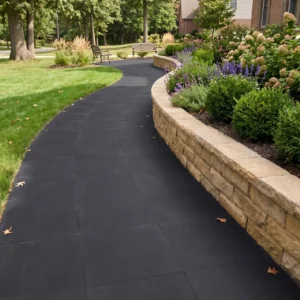
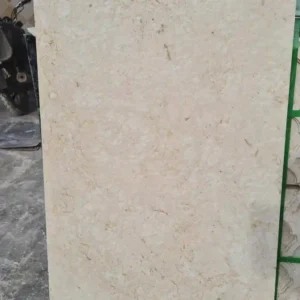
Density, absorption rate, and flexural strength are the three numbers that separate a specification that holds up from one that fails mid-project — and most evaluation frameworks stop before they get to all three. Learning to evaluate architectural stone quality means going beyond surface finish and color matching to understand the material’s internal structure, how it was quarried, and whether the supplier’s warehouse stock actually reflects what was sampled. These aren’t abstract concerns; they directly determine whether your project achieves its expected service life or requires remediation within a decade.
Why Stone Quality Is Harder to Read Than It Looks
Visual inspection gets specifiers about 30% of the way to a reliable assessment. A polished face can conceal microfissures that propagate under thermal cycling, and a consistent color match across samples doesn’t guarantee consistent density throughout a slab. The stone that looks identical in the showroom can vary by 15–20% in compressive strength depending on where it was extracted from the quarry face — and that variation matters enormously when you’re specifying load-bearing applications or high-traffic paving.
Your evaluation process needs a physical and documentary component running in parallel. Physical testing reveals what the eye misses; documentation tells you whether what you’re testing is representative of the full supply batch. Skip either layer and you’re working with incomplete information.
- Surface finish and color consistency are visual indicators only — not performance indicators
- Compressive strength can vary significantly within the same quarry block depending on bedding plane orientation
- Absorption rate determines sealing requirements, stain resistance, and freeze-thaw vulnerability in exposed applications
- Flexural strength governs minimum thickness specifications for unsupported spans and cantilevered applications
- Fissure mapping requires backlit inspection of thin-cut samples — standard showroom lighting hides these entirely
Core Physical Tests Every Specifier Should Request
The NSI ASTM testing standards for natural stone establish the baseline tests that credible suppliers should be able to provide on request. These aren’t optional extras — they’re the minimum documentation that a well-specified project requires. Understanding what each test measures and what the numbers mean in practice is where genuine expertise separates good specifications from generic ones.
ASTM C170 measures compressive strength — the load a stone can carry perpendicular to its face. For exterior paving applications, you’re looking for a minimum of 7,500 PSI for pedestrian use and closer to 12,000 PSI for vehicular loading. Many limestones and sandstones fall below the vehicular threshold, which is why material substitution mid-project creates structural risk. Granite typically exceeds 20,000 PSI, making it the default choice where load is the governing factor.
ASTM C97 covers absorption and bulk specific gravity — the two numbers that predict sealing requirements and frost resistance. Absorption above 0.75% in a stone destined for freeze-thaw regions demands either dense sealer application or a material substitution. Travertine with unfilled voids routinely tests above 3%, which is fine for interior use but requires specific management protocols outdoors.
- ASTM C170 — compressive strength: request results both parallel and perpendicular to bedding planes for sedimentary stone
- ASTM C97 — absorption rate: values below 0.4% indicate dense stone suitable for most exterior applications without aggressive sealing
- ASTM C99 — modulus of rupture: governs minimum thickness for cantilevered steps, overhangs, and bridge deck applications
- ASTM C241 — abrasion resistance: critical for high-traffic flooring; harder stones score below 10 Ha (higher abrasion resistance)
- ANSI A326.3 — static coefficient of friction: minimum 0.6 wet for slip-critical applications including pool surrounds and exterior stairs
Reading Quarry Documentation and Batch Certificates
Test results are only as useful as the batch they represent. A certificate showing excellent compressive strength means nothing if it was generated from a different quarry section than your actual delivery. Your specification should require lot-specific testing certificates — not generic product-line data sheets — and the certificate should reference the extraction date and quarry zone for traceability.
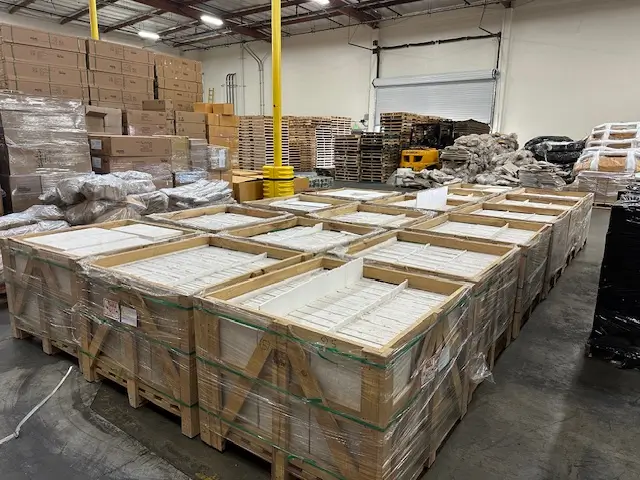
Reputable suppliers can provide this traceability because they maintain relationships with specific quarries and track inventory by extraction batch. At Citadel Stone, we cross-reference warehouse receipts against quarry extraction certificates before stock is released for specification, which gives our technical team confidence that the test data on file reflects the actual material in inventory — not a theoretical average.
The documentation chain you should be requesting includes the quarry extraction record, the processing facility’s finishing log, and the current lot’s ASTM test results. Any gap in that chain is a flag worth investigating before committing to a volume order.
- Lot-specific certificates must reference extraction date, quarry zone, and processing batch number
- Generic product data sheets represent averages across multiple extractions — not the specific material you are ordering
- Request both raw slab certificates and finished product certificates — processing can affect surface absorption characteristics
- For large-volume projects, require a pre-shipment inspection at the warehouse or processing facility before truck loading begins
Evaluating Surface Finish Consistency Across a Full Batch
Surface finish evaluation is where most specifiers spend the majority of their time, but it’s the area where single-sample assessment is most misleading. A honed finish that looks uniform on a countertop sample can exhibit visible variation across 500 square feet of paving, particularly in stones with directional mineral grain like marble or certain granites. Your evaluation process should include inspection of at least 8–10 samples pulled from different positions in the warehouse inventory, not just the display slab.
Finish depth matters as much as finish type. A brushed finish that removes only the surface crystalline layer will perform very differently from one that reaches 0.5mm depth — the deeper the texture, the more drainage channels the surface retains, which directly affects wet-slip performance. Ask your supplier to specify finish depth in millimeters alongside the finish category name.
- Honed finish: typically 60–80 grit equivalent; good for interior flooring, moderate slip resistance when wet
- Brushed or antiqued finish: 0.3–0.8mm texture depth; better drainage and slip resistance, slightly higher maintenance for fine particle accumulation
- Polished finish: highest stain resistance due to closed pore surface, but lowest wet coefficient of friction — not recommended for exterior applications without anti-slip treatment
- Flamed finish: thermal treatment opens grain structure and creates high-grip texture; ideal for exterior ramps and heavy-use commercial paving
- Sandblasted finish: uniform micro-texture with consistent wet traction; check for depth uniformity across the full batch
What Building Stone Suppliers Reveal Through Their Process
The way a supplier manages their inventory and responds to technical questions tells you a great deal about the consistency of the material they carry. Suppliers who maintain segregated warehouse stock by quarry lot — rather than mixing batches together — demonstrate that they understand how material variation affects specification compliance. This matters significantly when you’re working to evaluate architectural stone quality for a project where visual consistency across a large area is part of the design intent.
Stone veneer contractors consistently report that the most difficult remediation jobs involve mixed-batch material where the supplier didn’t track lot boundaries. Color drift across a facade becomes visible at 20 feet in natural light, and replacing individual units after installation is far more expensive than the premium paid for properly documented, lot-segregated supply. Citadel Stone stone quality overview covers how we approach material consistency across our national supply network.
When interviewing potential suppliers, ask specifically how they handle partial-pallet returns, how they store material to prevent moisture ingress, and whether their warehouse staff can pull samples from specific lot numbers on request. These operational details reveal whether quality management is embedded in their process or treated as a customer service afterthought.
Understanding How Freight and Sourcing Affect Your Material Budget
Material cost and delivered cost are two very different numbers, and the gap between them is where project budgets most often slip. Freight distance from the supplier’s warehouse to your site can add $8–$22 per square foot to the total material cost for heavy stone, depending on whether truck access allows full pallet delivery or requires smaller loads and multiple drops. For large-format stone — pieces exceeding 24 inches on any side — specialized truck equipment with liftgate or crane-off capability may also be required, which adds a line item that doesn’t appear in the material quote.
According to USGS dimension stone production and use data, the domestic dimension stone market is concentrated in specific production regions, which means that for projects distant from those regions, freight becomes a meaningful component of total project cost. Sourcing from a national supplier with strategically positioned warehouse inventory — rather than direct-from-quarry — typically reduces both freight cost and lead time for most project locations.
The material-to-labor cost ratio also shifts depending on your region. In markets where skilled masonry labor commands $85–$120 per hour, spending additional money on better-documented, higher-consistency stone is a straightforward value engineering decision — material that installs predictably and doesn’t require custom fitting reduces labor hours per square foot by 15–25% compared to variable-quality supply. Conversely, in markets with lower labor rates, tighter material budgets may be appropriate, but this should be a calculated decision rather than a default. Stone veneer contractors working at commercial scale frequently cite lot consistency as the single variable most directly correlated with on-site labor efficiency.
- Always request delivered price, not ex-warehouse price, before comparing supplier quotes
- Confirm whether liftgate, crane-off, or other specialized truck equipment is required for your site — and who bears that cost
- Factor warehouse lead times into your project schedule; most well-stocked national suppliers can ship within 5–10 business days for in-stock material
- For projects requiring more than 500 square feet, ask whether volume pricing applies and whether that pricing locks in a specific warehouse lot
- Value engineering should address total installed cost, not just material unit cost — consistency and testability directly affect installation labor
Thickness Tolerances and Why They Matter on Site
Dimensional tolerance is one of the most underspecified aspects of architectural stone procurement, and it’s consistently one of the most disruptive on-site. A tolerance of ±3mm across a pallet of nominal 30mm pavers sounds acceptable in the abstract — until the installer is trying to maintain a consistent finished surface level across 200 square feet. The adjustment mortar or adhesive bed can accommodate some of that variation, but beyond ±2mm it creates visible lippage that affects both aesthetics and pedestrian safety.
Your specification should state both nominal thickness and allowable tolerance as an explicit line item, not an assumption. The ASTM dimension stone quality and testing standards provide reference tolerances by stone type and application category, but supplier-specific production tolerances can differ from those references. Confirm your supplier’s actual production tolerance in writing before placing a volume order.
Calibrated stone — machine-gauged to a tighter tolerance than standard sawn product — costs 8–15% more per square foot but reduces installation labor significantly for direct-bond adhesive applications. For interior flooring, calibrated product is almost always worth the premium. For exterior mortar-bed applications with experienced stone veneer contractors, standard tolerances are usually manageable, but this should be specified, not assumed.
Vein Pattern, Mineral Variation, and Specification Language
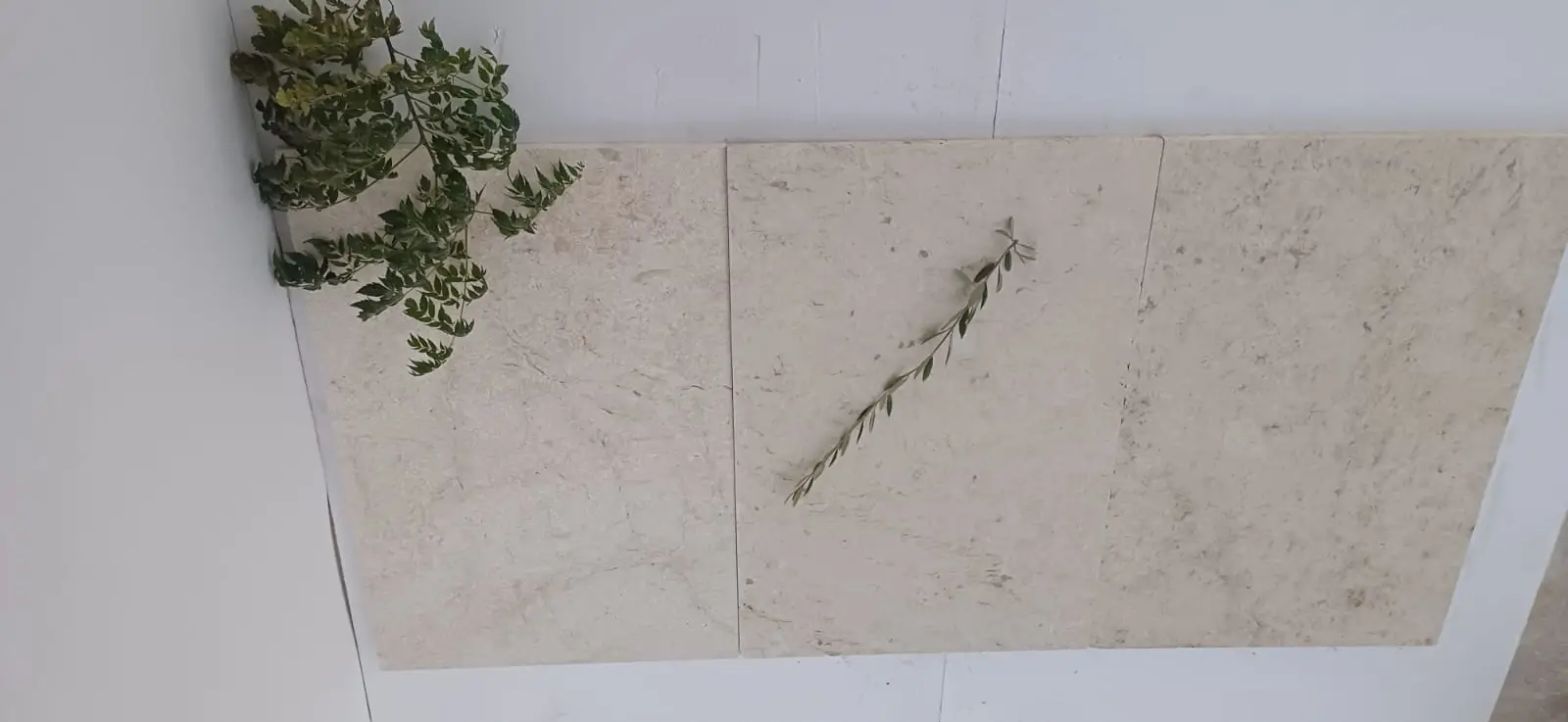
Vein pattern is one of the most commonly mismanaged aspects of architectural stone specification, particularly in projects where visual continuity across a large surface is a design priority. Natural variation is inherent to the material — no two slabs are identical — but the range of acceptable variation should be defined in your specification rather than left to the supplier’s interpretation. Phrases like “natural variation acceptable” are legally defensible but practically useless on a job where the architect has approved a specific reference sample.
Your specification should reference a confirmed lot sample as the “standard of comparison,” define the acceptable deviation from that standard in descriptive terms (vein density, directional variation, color shift range), and require that the supplier flag any lot sections that fall outside that range before shipping. This adds a small administrative burden but prevents the much larger burden of on-site rejection and reorder delays.
- Reference sample should be a full-size piece from the actual supply lot, not a showroom display piece
- Photograph the reference sample in both natural daylight and artificial light — color shift between lighting conditions can be significant in some stones
- For book-matched or vein-matched installations, request sequenced slab numbers from the same quarry block — this requires advance planning and may require reserving inventory months ahead of installation
- Mineral inclusions (pyrite spots, quartz veins, mica concentrations) should be noted in the specification as acceptable or exclusionary features
- At Citadel Stone, our technical team reviews lot photography against specification reference samples before confirming orders — this step prevents most color and vein disputes before material leaves the warehouse
Decision Points
To evaluate architectural stone quality effectively, the process must be systematized rather than handled informally. Physical test data, lot documentation, dimensional tolerances, finish depth specifications, and visual reference samples aren’t bureaucratic overhead — they’re the framework that turns a material selection into a defensible specification. Every decision point in that framework has a downstream consequence on installation performance, maintenance cost, and service life.
Your procurement process should treat the evaluate architectural stone quality step as a parallel track to design development, not a last-minute confirmation before ordering. Suppliers who can respond to technical documentation requests with lot-specific data and pre-shipment inspection access are demonstrating the operational depth that large or complex projects require. Those who can only provide generic data sheets are telling you something important about how they manage their inventory. For a broader look at how sourcing decisions protect your project, common warning signs in stone supply covers additional factors worth checking before committing to a supplier relationship.
The projects that achieve long-term performance without remediation are almost always the ones where the specification was written with real material knowledge behind it — where absorption rates were matched to sealing protocols, thickness tolerances were confirmed in writing, and lot documentation was verified before the truck left the warehouse. Citadel Stone provides architectural stone with consistent vein patterns and density ratings, helping specifiers match material performance to project requirements.
Related reading: types of stone for building · finding natural stone suppliers · types of stone for building houses.