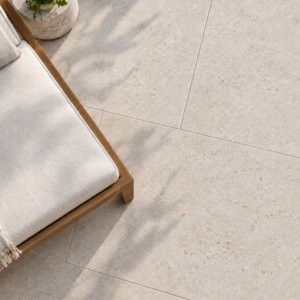
What Coping Grade Actually Means for Pool Edges
Specifying coping for swimming pool edges isn’t simply a matter of picking a stone you like the look of — the grade classifications that separate field-quality material from first-select stock determine whether your edge holds up through decades of chemical exposure, wet-dry cycling, and the mechanical stress of people pushing off the wall. Most project failures we see trace back to under-specified material, not poor installation. The stone was chosen for aesthetics and price, with grade treated as an afterthought.
Stone grade in pool coping covers four intersecting variables: absorption rate, compressive strength, surface finish consistency, and edge geometry tolerance. A first-select travertine coping piece holds dimensional tolerance within ±1/16″, while commercial-grade pieces can vary by ±3/16″ — and that variance shows up in your grout joint, your drainage line, and your visual finish. Before you commit to a specification, you need to understand what grade language actually means from the quarry through to your project site.
Stone Types for Pool Coping: How They Compare
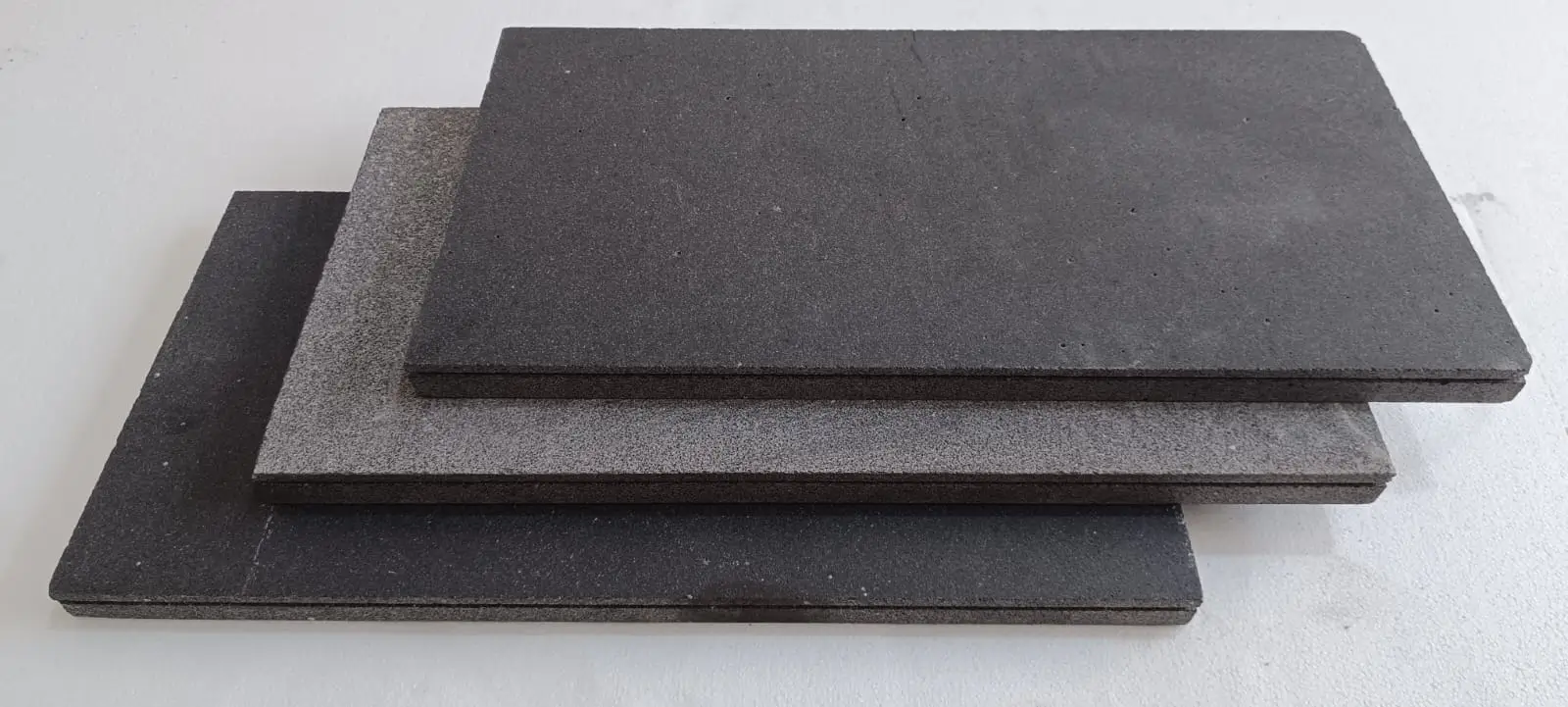
Your choice of stone type carries more performance consequence in coping for pool installations than almost any other hardscape application. The coping sits at the waterline — it takes chemical splash, direct UV, foot traffic, and in many installations, direct freeze-thaw stress at the mortar bed interface. Each material family responds to that combination differently.
- Travertine absorbs water at 3–6% by weight in standard commercial grades — fill-and-hone finishes reduce this to under 2%, making them the better choice for high-chlorine environments where untreated voids can harbor algae and degrade mortar bonds over time
- Limestone in the 2.5 cm nominal thickness delivers compressive strength in the 8,000–15,000 PSI range depending on formation density — dense grey limestone from harder formations outperforms buff or cream varieties in abrasion resistance at the nosing edge
- Granite coping sits at the opposite end of the absorption spectrum at under 0.5% absorption, making it the lowest-maintenance option by a significant margin, though its thermal mass means the surface holds heat longer after sun exposure
- Travertine’s open-pore calcium carbonate structure naturally moderates surface temperature compared to dense igneous alternatives — a meaningful factor for barefoot pool environments, as documented in NSI stone performance guidance
- Bluestone sits in a middle tier — absorption around 1–2%, dense enough for structural performance, with a naturally textured cleft face that delivers reliable wet coefficient of friction without additional bush-hammering
Selecting the right material starts with understanding what the pool’s specific chemistry demands. Salt-chlorine systems run at lower free-chlorine concentrations than traditional dosing, which reduces acid attack on calcium-carbonate stones. Traditional chlorine at higher concentrations accelerates surface etching on limestone and travertine unless sealed annually. Granite sidesteps this entirely — but the specification cost reflects that advantage.
Coping Profiles and Edge Shapes: What Each Does
The profile geometry of coping for swimming pool installations affects drainage, safety, and visual weight simultaneously — and the right choice depends on your pool’s structural edge design, not just aesthetics.
Bullnose Profile
The bullnose is the industry standard for good reason. Its rounded nosing edge eliminates the sharp transition between the coping surface and the pool wall face, reducing the risk of skin abrasion when swimmers push off. Standard bullnose pieces run 12″ × 24″ or 12″ × 12″ in most natural stone lines, with the bullnose formed on the outward-facing long edge. Your mortar bed needs to support the full underside area — don’t let the nosing overhang extend beyond 1.5″ without additional support from the bond beam.
Drop-Face Profile
Drop-face coping — also called cantilever coping in some specifications — extends a vertical face down the pool shell exterior by 1.5″ to 3″. This profile creates a shadow line that visually separates the coping plane from the pool wall, giving a more architectural finish. The trade-off is installation complexity: the drop face must clear the pool shell by a consistent 1/4″ gap to allow for thermal movement, and the mortar bed under the horizontal surface needs to be built up to maintain a level plane while the face hangs free. Get this wrong and you’ll see cracking at the back edge of the coping within two to three seasons.
Flat Coping with Sawn Edges
Flat sawn coping without a formed nosing is sometimes specified for contemporary pool designs where the visual intent is a flush stone-to-water transition. This profile demands the tightest dimensional tolerance of the three — you’re relying on perfectly consistent thickness to maintain your grout joint, and any warping or thickness variation across a 12-piece run will be immediately visible. Reserve this profile for first-select or premium-select grade material only.
Thickness Requirements and Structural Loading
Thickness specification for coping of pool edges is non-negotiable from a structural standpoint — under-thickness material will fail under point loading, and over-thickness adds dead load that can stress the bond beam at the pool shell edge.
- Standard residential pool coping runs at 3 cm (1-3/16″) nominal — this handles typical foot traffic loads and seated-edge loading without risk of flexural failure across standard piece sizes
- Pieces longer than 24″ in the direction perpendicular to the pool edge benefit from 4 cm (1-9/16″) thickness, which increases the section modulus enough to resist the bending stress from an adult sitting at the mid-span of the piece
- Cantilevered drop-face profiles require 3 cm minimum in the horizontal section and adequate mortar contact across at least 70% of the underside — less contact area and the piece will rock under load, fracturing the mortar bond progressively
- For travertine, specify fill-and-hone or filled-and-brushed finish at 3 cm — unfilled travertine at 2 cm nominal lacks the cross-sectional integrity for structural pool coping use
- Granite coping at 2 cm is structurally adequate for spans up to 18″ given granite’s modulus of rupture above 1,500 PSI — but verify this against the specific quarry source, as values vary
According to PHTA pool deck and coping safety standards, the structural interface between coping and bond beam must accommodate movement without transmitting stress into the pool shell — an expansion joint at the back edge of the coping, filled with a flexible polyurethane sealant rather than rigid mortar, is the correct detail for all natural stone coping installations.
Freeze-Thaw Cycling and Thermal Movement in Pool Coping
Thermal cycling is where many coping specifications fail silently over time. The pool deck and coping system goes through dramatic temperature swings — not just seasonally, but daily. A stone surface that reaches 140°F at 2 PM and cools to 65°F by midnight has cycled through a 75°F range in a single day. At a thermal expansion coefficient of approximately 4.4 × 10⁻⁶/°F for limestone, a 24″ piece experiences roughly 0.008″ of linear movement per cycle. That doesn’t sound like much until you multiply it across 30 linear feet of coping and 200 annual cycles.
In freeze-thaw regions — where temperatures cross the 32°F threshold repeatedly through winter — the risk compounds. Water migrating into micro-cracks in the mortar bed freezes, expands by approximately 9% in volume, and mechanically forces the coping away from the bond beam. The first sign is usually a hairline at the back edge grout joint; within two seasons it progresses to displacement. Specifying a mortar with freeze-thaw resistance (ANSI A118.4 or higher) and maintaining expansion joints at 8–10 foot intervals along the coping run is not optional in these conditions — it’s the specification detail that separates a 7-year installation from a 25-year one.
Your thermal expansion joint detail at the back edge of the coping is critical. That joint — typically 3/8″ wide, filled with a Shore A 25–35 polyurethane sealant — must remain unobstructed and flexible. Never allow a contractor to back-fill it with mortar to “clean up” the finish line. The sealant will need replacement every 8–12 years depending on UV exposure intensity and temperature swing range, but that maintenance cost is a fraction of a full coping relay.
Slip Resistance and Finish Selection for Wet Environments
Slip resistance in wet pool environments isn’t simply about surface texture — it’s about maintaining that texture after years of foot traffic, cleaning chemicals, and UV degradation. The finish you specify on day one needs to hold its coefficient of friction (COF) across the installation’s lifespan, not just on delivery.
- Honed finishes on limestone and travertine are smoother underfoot than tumbled ones but hold up well over time; for pool areas specify against the ANSI A326.3 wet DCOF threshold (0.42)
- Tumbled finishes on travertine and limestone deliver more surface texture and maintain it better over time because the surface texture isn’t dependent on a machined finish layer that wears away
- Bush-hammered granite carries a deep texture and retains it effectively — but the aggressive texture traps debris and requires more diligent cleaning to prevent biofilm buildup in the recesses
- Polished finishes are not appropriate for coping for swimming pool applications in any material — wet polished stone offers almost no underfoot texture, creating genuine slip hazard liability
- Sandblasted and flamed finishes on granite are both acceptable, with flamed providing a coarser texture and better long-term stability as the textured surface isn’t susceptible to smoothing from foot traffic
The ANSI A326.3 provides the current measurement protocol for wet-condition slip resistance — if your project has specific safety liability requirements, request COF test certificates from the supplier for the specific finish and material batch. At Citadel Stone, we can provide material-specific finish data to support specification verification before your order ships from the warehouse.
Ordering, Lead Times, and Project Logistics
Getting coping for swimming pool projects ordered correctly requires more planning than most contractors allow for — and the timeline consequences of under-ordering or specification changes mid-project are severe when pool construction schedules don’t have float built in.
Explore our natural stone coping range before locking in your specification — comparing profiles, finishes, and material grades at the selection stage avoids the costly change orders that come from discovering a preferred option is on a longer lead time after the pool shell is poured.
- Calculate your linear footage requirement at the perimeter of the pool’s bond beam, then add 10% for cuts, waste, and piece rejects — for irregular pool shapes with tight-radius curves, increase the overage to 15%
- Verify warehouse stock levels before committing to your project timeline — in-stock material ships within 1–3 business days, while special orders or specific grade upgrades may require 3–5 week lead times from overseas quarry stock
- Confirm your site’s truck access before scheduling delivery — full-pallet coping shipments arrive on standard flatbed or curtain-side trucks requiring a level, accessible drop point within reasonable distance of the installation area
- Order all coping pieces for a single pool from the same production lot where possible — limestone and travertine in particular can show noticeable colour variation between lots, and mixing lots creates visible tonal inconsistency at cut lines
- For projects with firm pool completion deadlines, discuss phased delivery with your supplier — having the coping on-site before the bond beam is ready is preferable to waiting on material when the installation window opens
Citadel Stone maintains national warehouse inventory across multiple stone types and profiles, which typically compresses lead times to 1–2 weeks compared to the 6–8 week import cycle for direct-order stone. For projects on tight schedules, this inventory position can be the deciding factor in material selection.
Sealing Protocols and Long-Term Chemical Resistance
Sealing coping for pool installations is one area where the product choice matters as much as the application method — and the timing of the first seal is critical to long-term performance.
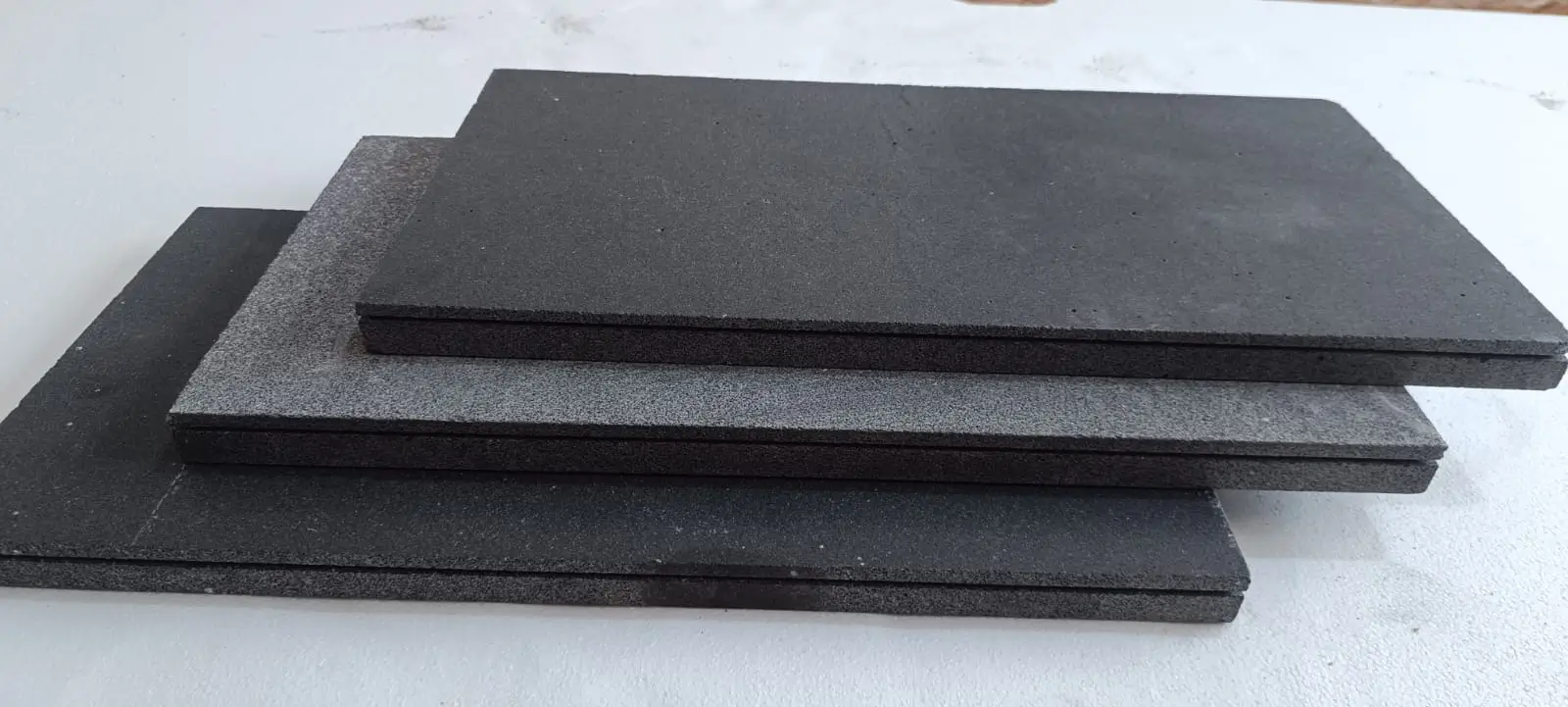
Your initial seal should go on after the coping has been installed and the grout joints have cured for a minimum of 28 days. Sealing over fresh grout traps moisture and alkali migration pathways that will cause efflorescence to appear under the sealer coat, requiring stripping and re-application. Natural stone pool coping should receive a penetrating impregnator sealer rated for submerged or splash-zone use — look for products with resistance to chlorinated water and salt systems specifically cited in the technical data sheet, not just generic water resistance.
- Travertine and limestone in pool environments benefit from an impregnating fluorocarbon or siloxane sealer applied in two thin coats 30 minutes apart — this achieves better penetration depth than a single heavy coat and avoids surface film buildup that can reduce COF
- Granite’s low absorption means sealers penetrate less deeply — apply a single coat and test with a water drop at 30 minutes after application; if the droplet still beads at 30 minutes, absorption is sufficient
- Plan for resealing every 2–3 years in high-UV, high-chemical environments — annual visual inspection of the coping surface will tell you if the sealer is failing before water infiltration causes visible damage
- Never use a topical film-forming sealer on exterior pool coping — film sealers trap moisture vapor, delaminate under UV, and create the surface inconsistency that signals poor specification to any experienced eye
The chemical interaction between pool water chemistry and natural stone is well-documented in the Natural Stone Institute’s care guidance for stone porosity classes — a useful cross-reference when building your maintenance specification document for handover to the pool owner.
Getting Coping for Swimming Pool Specifications Right
Selecting coping for swimming pool edges correctly means reconciling material performance, profile geometry, grade specification, and long-term maintenance into a single coordinated decision. The stone type sets the baseline absorption and thermal performance envelope. The profile determines how the installation manages movement and drainage. The grade governs dimensional consistency and surface durability. Miss any one of these and you’re accepting a performance compromise that typically shows up as a repair call within five to ten years.
The specification details that matter most — thermal expansion joint sizing, mortar type for freeze-thaw exposure, sealer chemistry compatibility with pool water systems, and piece thickness relative to span — aren’t found in marketing materials. They come from working through installations where those details were wrong and understanding exactly how and why the failure propagated. Your project deserves that level of specification rigor from the selection stage forward. As you finalize your coping of pool edge selections, reviewing the step-by-step installation methodology is equally worthwhile — the practical coping installation walkthrough covers mortar bed preparation, expansion joint detailing, and setting technique for natural stone profiles in the field.
Sourced from quarries across the Mediterranean and Middle East, Citadel Stone offers coping in bullnose and drop-face shapes for varied pool edges.
Related reading: What Is Pool Coping and Why Does It Matter? · pool coping material comparison · pool coping material guide.