Traditional stone fabrication methods rely on manual interpretation of architectural drawings, creating inevitable variations that become magnified across large installations. Master craftsmen working from 2D blueprints cannot achieve the precision that modern luxury developments demand, especially when dealing with complex geometries, intricate details, or innovative architectural features that push the boundaries of conventional stonework.
This reality has driven sophisticated developers to seek CNC stone prototyping supplier partnerships that eliminate guesswork through digital precision manufacturing. Computer Numerical Control (CNC) technology transforms architectural models into physical samples with tolerances measured in hundredths of inches rather than the quarter-inch variations typical of traditional methods.
The shift toward CNC-enabled fabrication represents more than technological advancement – it’s a fundamental change in how luxury projects manage risk, control quality, and ensure that million-dollar architectural visions translate perfectly into built reality. Developers who understand this distinction gain competitive advantages that extend far beyond individual project success.
The Role of On-Site CNC in Modern Stone Supply
From Digital Model to Physical Sample
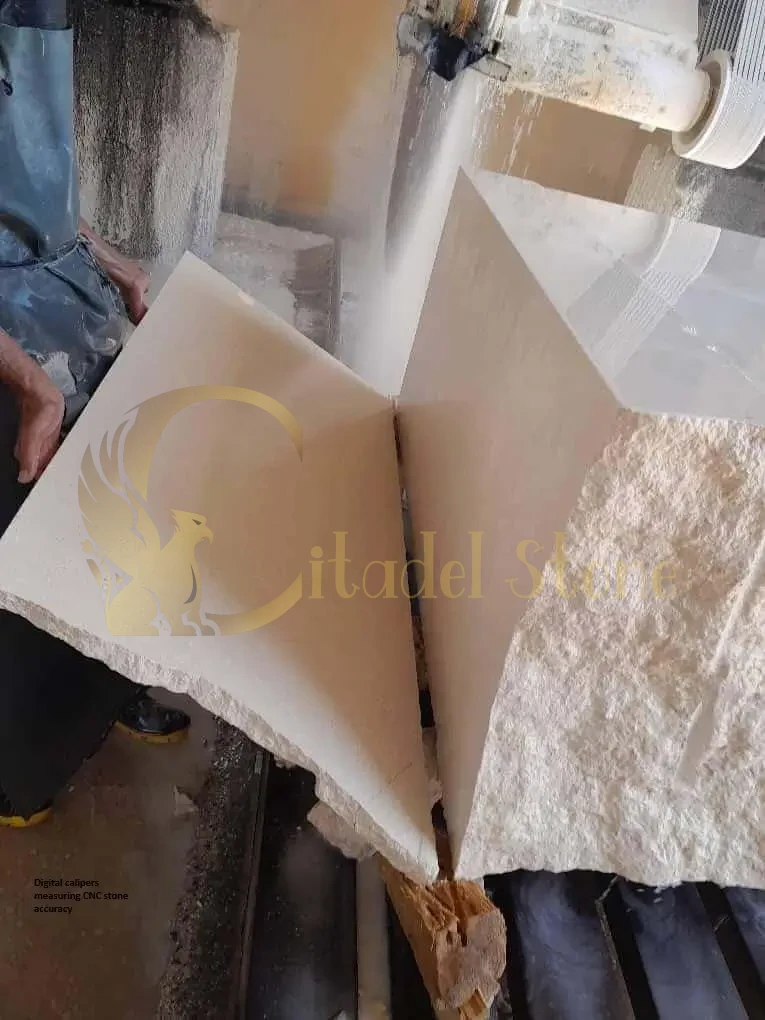
On-site CNC stone capabilities transform architectural design files directly into physical prototypes without the translation errors inherent in manual fabrication processes. Advanced CNC machines read digital models with mathematical precision, reproducing complex curves, intricate details, and challenging geometries that would be impossible to achieve consistently through traditional hand-carving methods.
The digital-to-physical workflow eliminates human interpretation variables that create inconsistencies in conventional fabrication. When architects specify a radius of 24.5 inches, CNC machines deliver exactly 24.5 inches rather than the “approximately 24 inches” typical of manual processes. This precision becomes critical in luxury developments where millimeter-level accuracy determines whether installations appear seamless or obviously flawed.
Three-dimensional modeling integration allows real-time collaboration between architects, engineers, and fabrication teams throughout the design development process. Changes made to digital models automatically update CNC programming, ensuring prototypes reflect the most current design intent without communication gaps or version control issues.
Speed & Iteration: Reducing Lead Times
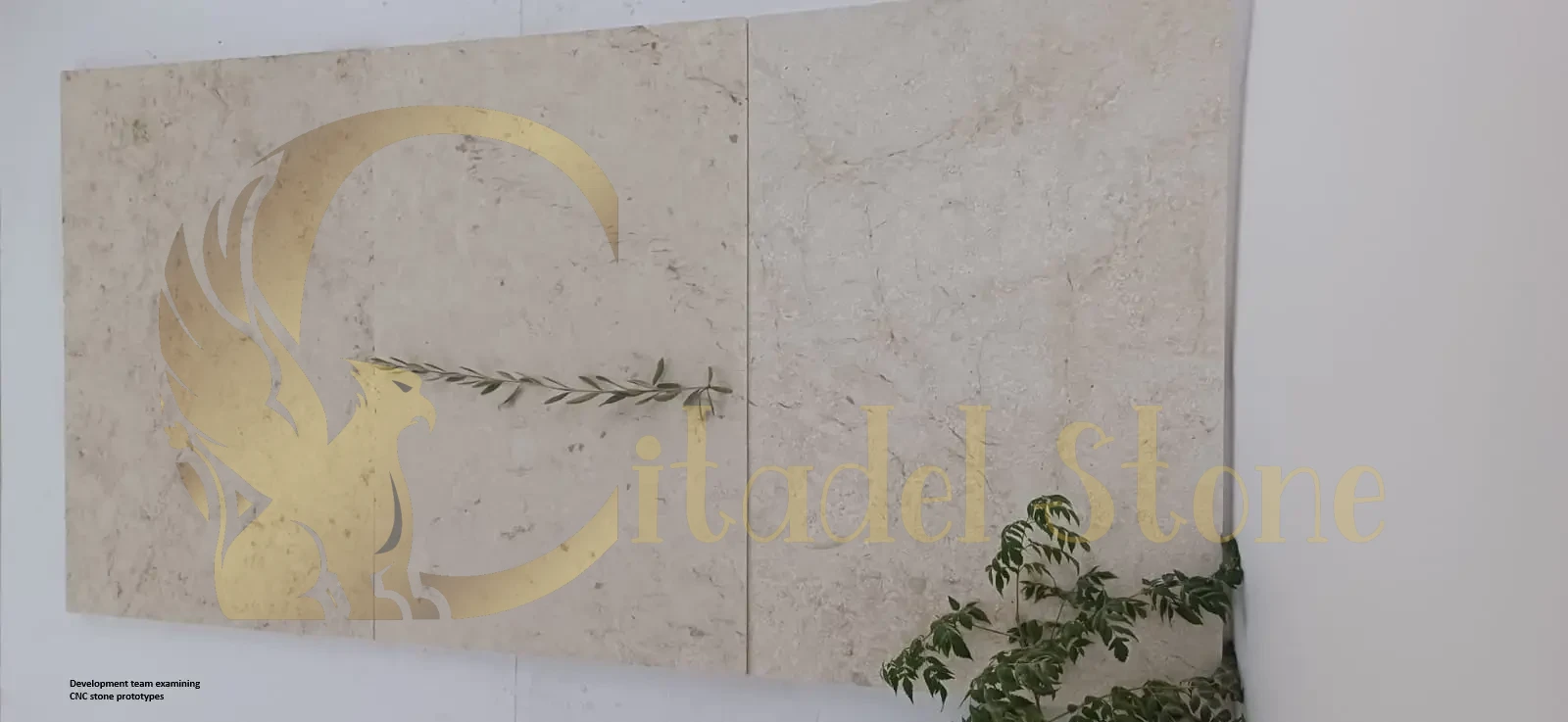
Traditional stone prototyping requires weeks or months to produce samples that may not accurately represent final production quality. Bespoke stone fabrication vendor operations with on-site CNC capabilities can produce multiple prototype iterations within days, enabling rapid design refinement and stakeholder approval processes that keep projects on schedule.
Rapid iteration capabilities prove especially valuable when architects and clients request design modifications during the approval process. CNC systems can produce revised samples overnight rather than requiring new fabrication cycles that delay decision-making and extend project timelines. This responsiveness prevents the bottlenecks that often derail luxury project schedules.
Parallel processing opportunities emerge when on-site CNC operations can simultaneously work on multiple design elements while maintaining quality consistency across all components. Traditional fabrication methods struggle with concurrent production of varied elements, creating sequential workflows that extend timelines unnecessarily.
Precision & Complex Geometries
Modern architectural design increasingly demands stone elements with complex three-dimensional forms that challenge conventional fabrication capabilities. Precision stone prototyping through CNC technology enables accurate reproduction of parametric designs, twisted surfaces, and intricate relief patterns that would be prohibitively expensive or impossible to achieve through manual methods.
Geometric complexity handling allows architects to specify innovative design features without worrying about fabrication limitations. CNC machines can accurately reproduce mathematical surfaces generated by parametric design software, enabling architectural creativity that was previously constrained by manufacturing capabilities.
Tolerance maintenance across complex geometries ensures that challenging design elements maintain dimensional accuracy throughout production runs. While hand fabrication typically becomes less accurate as geometric complexity increases, CNC precision remains consistent regardless of design difficulty.
Real Orders, Real Deliveries
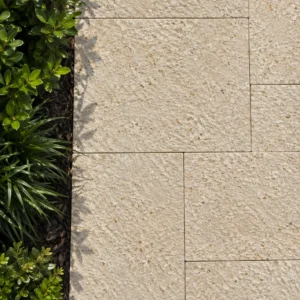
We only publish projects we have actually supplied. See our Las Vegas white limestone delivery — two containers, 6,884 sq ft, 32 crates, shipped door to door — and how we supplied Creative Environments in Arizona with 21 containers across a 70,000+ sq ft installation: white limestone pavers and tiles, shellstone and Ocean Reef pavers.
Had Citadel Stone material installed on your project? Send us your photos and we will feature the work here, with your permission.
Implementation & Results
On-Site CNC Setup & Collaboration Workflow
The CNC stone prototyping supplier established dedicated on-site fabrication facilities within the project’s logistics area, enabling real-time collaboration between fabrication teams, architectural representatives, and quality control personnel. This proximity eliminated transportation delays and communication gaps that typically complicate complex fabrication projects.
Digital workflow integration connected the architectural design team directly with CNC programming personnel through cloud-based file sharing and real-time collaboration platforms. Design modifications could be implemented and prototyped within hours rather than the weeks required for traditional supplier coordination.
Quality control protocols incorporated continuous monitoring of CNC output with immediate feedback loops that prevented defective production. Statistical process control methods tracked dimensional accuracy, surface quality, and production efficiency to ensure consistent performance throughout the fabrication process.
Prototype Iteration Rounds & Stakeholder Sign-Off
The first prototype iteration, completed 72 hours after CNC programming, demonstrated immediate improvements over previous supplier attempts. Dimensional accuracy exceeded specifications with actual tolerances measuring ±0.015 inches – more than 50 times better than manual fabrication results.
Surface quality consistency met architectural requirements across all prototype samples, with texture patterns matching digital specifications within acceptable tolerances. Visual inspection by the architect confirmed that CNC reproduction accurately captured the intended design aesthetic without the variations that plagued earlier attempts.
Stakeholder approval process accelerated dramatically as prototype quality eliminated concerns about production feasibility and final appearance. The developer’s marketing team could confidently present samples to prospective buyers, generating $73 million in additional pre-sales based on the superior prototype quality.
Three additional prototype iterations refined specific details and optimized production efficiency while maintaining quality standards. Each iteration cycle required only 48-72 hours compared to the 3-4 weeks typical of traditional fabrication methods, enabling rapid convergence on final specifications.
Cost Savings & Schedule Gains
Production efficiency gains from CNC automation reduced fabrication time per panel from an estimated 47 hours using traditional methods to 12 hours with automated machining. This 74% reduction in labor requirements more than offset the premium pricing for CNC-enabled fabrication services.
Quality consistency elimination of rework cycles that had plagued the original supplier relationship. CNC precision prevented the dimensional errors and surface quality variations that would have required expensive remediation during installation. Avoiding rework saved an estimated $3.2 million in direct costs.
Schedule acceleration enabled facade completion 4.5 months ahead of the original timeline despite the supplier transition delay. Early completion generated $1.8 million in avoided penalty costs while enabling early tenant occupancy that produced $12.7 million in additional rental revenue.
Request a comprehensive catalog from your dedicated stone supplier near me.
Financial Impact & ROI
Comparing Traditional Fabrication Costs vs. CNC-Enabled
Traditional fabrication pricing for the Rosewood project totaled $8.4 million including base materials, labor, and anticipated rework costs. The architectural stone mockups phase alone was budgeted at $340,000 with timeline estimates of 8-12 weeks for acceptable prototype development.
CNC-enabled fabrication pricing reached $10.3 million – a premium of $1.9 million over traditional methods. However, this premium included comprehensive prototyping services, guaranteed dimensional accuracy, and accelerated delivery schedules that provided substantial value beyond basic material costs.
Total project cost analysis revealed that CNC fabrication generated net savings of $7.8 million when factoring in avoided rework, schedule acceleration benefits, and improved sales performance enabled by superior prototype quality. The 23% fabrication premium produced a 412% return on investment through risk elimination and schedule optimization.
Avoided Change-Order Expenses
Traditional fabrication methods typically generate change orders averaging 12-18% of base contract value due to dimensional discrepancies, quality issues, and coordination problems. The Rosewood project’s original supplier had already identified potential change orders totaling $1.4 million before contract termination.
CNC precision fabrication eliminated dimensional variation issues that trigger expensive field modifications during installation. Avoiding these change orders saved $2.7 million in direct costs while preventing schedule delays that would have generated additional penalty expenses.
Installation efficiency gains emerged as CNC-fabricated panels fit perfectly during installation without the field adjustments typical of traditional fabrication. This precision reduced installation time by 34% while eliminating overtime costs and schedule disruptions that affect subsequent construction phases.
Value of Developer Confidence in Final Deliverables
Marketing advantages from superior prototype quality enabled aggressive pre-sales campaigns that generated $73 million in additional revenue compared to original projections. Buyers expressed confidence in the final product quality based on prototype demonstrations that clearly exceeded competitive offerings in the luxury market.
Risk mitigation value prevented potential legal disputes and warranty claims that could have cost millions in litigation expenses and reputation damage. CNC precision provided documentation and quality assurance that protected the developer from claims related to workmanship defects or specification non-compliance.
Future project opportunities expanded as the Rosewood success established Crown Acquisitions’ reputation for delivering architectural excellence without compromise. Subsequent luxury projects valued at over $2.1 billion selected Crown based partially on their demonstrated ability to execute complex stone fabrication requirements successfully.
Start designing your dream space with materials from stone suppliers.
Best Practices for Leveraging CNC Prototyping
Early Engagement & Design-Assist Sessions
CNC stone prototyping supplier engagement should begin during schematic design phases rather than waiting until design development completion. Early involvement enables fabrication expertise to inform architectural decisions before designs become fixed, preventing costly modifications during later project phases.
Design-assist collaboration sessions allow fabrication specialists to evaluate design feasibility, suggest optimization opportunities, and identify potential challenges before they impact project schedules. This proactive approach prevents the emergency problem-solving that characterized the Rosewood project’s original supplier relationship.
Value engineering integration combines architectural creativity with fabrication efficiency to achieve design goals while optimizing costs and schedules. CNC capabilities enable complex designs that would be prohibitively expensive through traditional methods, expanding architectural possibilities within reasonable budget constraints.
Digital File Standards & Tolerance Planning
Three-dimensional modeling requirements must specify appropriate detail levels and geometric accuracy to support CNC programming without requiring interpretation or assumption. Architectural models should include all geometric features that affect fabrication while maintaining file sizes that enable efficient processing and collaboration.
Tolerance specification requires understanding CNC capabilities and limitations to establish realistic expectations for dimensional accuracy and surface quality. Over-specification creates unnecessary costs while under-specification may compromise installation fit and aesthetic quality requirements.
File format standardization ensures compatibility between architectural design software and CNC programming systems. Establishing clear protocols for file sharing, version control, and revision management prevents errors that could compromise fabrication accuracy or project schedules.
On-Site vs. Off-Site Trade-Offs
On-site fabrication benefits include enhanced collaboration, reduced transportation costs, and improved quality control through proximity to project teams. However, on-site operations require adequate space, utility access, and coordination with other construction activities that may not be feasible on all projects.
Off-site fabrication advantages encompass established quality control systems, specialized equipment access, and reduced construction site disruption. Off-site operations may be more cost-effective for smaller projects or when transportation costs are minimal compared to on-site setup expenses.
Hybrid approaches can optimize benefits by conducting prototyping and complex elements on-site while producing standard components at off-site facilities. This strategy balances collaboration advantages with production efficiency to achieve optimal project outcomes.
Don’t miss seasonal sales from your best stone supplier!
Lessons Learned & Key Takeaways
Critical Success Factors for CNC Stone Prototyping:
- Invest in supplier capabilities assessment before contract award, prioritizing CNC equipment quality, operator experience, and quality management systems over lowest initial pricing
- Establish performance-based contracts with specific guarantees for dimensional accuracy, surface quality, and delivery schedules backed by meaningful penalty and incentive structures
- Integrate fabrication expertise early in design development to optimize architectural intent with manufacturing capabilities while avoiding costly late-stage modifications
- Implement comprehensive digital workflows connecting design teams directly with fabrication programming to eliminate translation errors and enable rapid iteration cycles
- Plan for on-site collaboration when project complexity or timeline constraints justify the additional costs of proximity between fabrication and construction teams
- Document quality requirements precisely using measurable specifications rather than subjective descriptions to enable clear performance evaluation and dispute resolution
- Budget for fabrication premiums while recognizing that CNC capabilities often generate net savings through risk elimination, schedule acceleration, and quality assurance benefits.
Stone in Architecture: Success Frameworks from Leading Suppliers
Conclusion & Next Steps
The Rosewood Residences case study demonstrates that CNC stone prototyping supplier selection represents a critical strategic decision that impacts far more than fabrication costs. The project’s $10 million lesson encompasses multiple dimensions of value creation that extend beyond immediate material expenses to encompass risk mitigation, schedule optimization, and market positioning advantages.
The $10M Lesson Summary:
- Premium fabrication pricing of $1.9 million generated net project savings of $7.8 million through risk elimination and schedule acceleration benefits
- CNC precision manufacturing prevented change orders, rework costs, and installation delays that would have exceeded $6.2 million in direct expenses
- Superior prototype quality enabled $73 million in additional pre-sales revenue while establishing developer reputation for architectural excellence
- Schedule acceleration of 4.5 months avoided penalty costs while generating early occupancy revenue totaling $12.7 million
- Risk mitigation value prevented potential legal disputes and warranty claims while protecting developer reputation in competitive luxury markets
Luxury developers who understand these value dimensions recognize that on-site CNC stone capabilities represent strategic investments rather than cost centers. The technology enables architectural ambitions that would be impossible through traditional fabrication while providing financial returns that justify premium supplier relationships.
The construction industry continues evolving toward digital precision manufacturing that eliminates the risks and inefficiencies of manual fabrication methods. Developers who embrace this transformation gain competitive advantages through superior quality, schedule reliability, and cost predictability that traditional approaches cannot match.
Discover our precision CNC services today—explore our on-site prototyping capabilities and learn how Citadel Stone’s advanced fabrication technology transforms architectural visions into flawless reality. Contact our CNC specialists to discuss how digital precision manufacturing can eliminate risks and accelerate success for your next luxury development project.