

Blue stone price varies more than most buyers expect — and the gap between a well-sourced order and an overpriced one often comes down to understanding exactly what you’re comparing. Thickness, finish, format size, and order volume all shift the number significantly before you factor in freight. The buyers who get the best value are the ones who know which variables they can control and which ones are fixed by the material itself.
What Drives Blue Stone Price at the Source
Bluestone is quarried from sedimentary deposits — primarily dense sandstone or fine-grained basaltic material depending on the source region — and the geological consistency of the deposit directly affects yield and therefore price. Higher-yield deposits produce more usable material per extraction cycle, and that efficiency flows through to the order. According to bluestone geological classification and properties, the stone’s composition varies by region, which is why pricing from different supply chains rarely aligns exactly even for nominally similar formats.
Finish is the next major driver. A thermal or flamed surface requires mechanical processing time that a sawn finish doesn’t. Honed surfaces sit between the two — they need controlled abrasion passes, but not the intense heat or extended milling that other finishes require. You’ll pay a measurably different price per square foot depending on the finish specification, and that difference compounds across large orders.
Format size matters too. Larger slabs — particularly those exceeding standard modular dimensions — require more careful handling, generate more waste at the quarry edge, and carry higher breakage risk in transit. That risk is priced in. If your project can use modular formats, you’ll generally see a more favorable price point than if you’re specifying oversized feature pieces.
Thickness and Its Effect on Cost Per Square Foot
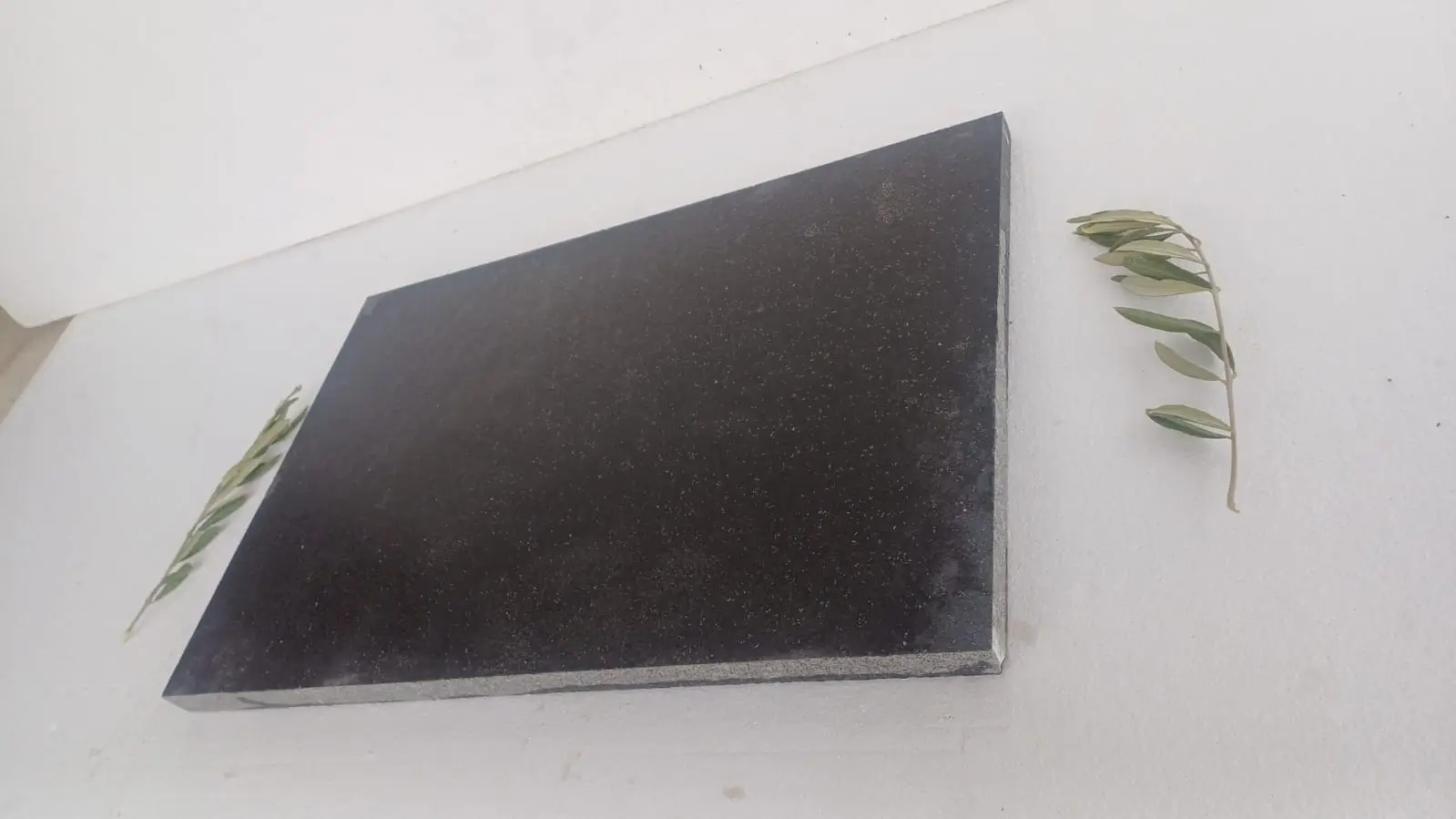
Thickness is the specification variable buyers most often underestimate when budgeting. A 20mm paver and a 40mm paver of identical surface dimensions are not just twice the weight — the thicker piece requires a deeper cut, more material per unit, and different handling at every stage of production and delivery. Blue stone price scales with thickness in a real and predictable way, and your structural base design should lock in the required nominal thickness before pricing begins.
- Thinner formats — typically 20–30mm — suit foot-traffic applications on prepared bases with adequate compaction
- Mid-range thicknesses in the 30–40mm range handle light vehicular access or applications where the base preparation may be less controlled
- Thicker pieces above 40mm are generally reserved for driveways, commercial settings, or locations where point-load stress is a factor
- Specifying a thickness your structural requirement doesn’t demand adds cost without adding performance value
- Requesting thickness confirmation from the supplier before ordering prevents costly replacements when pieces arrive outside the specified tolerance
Your engineer’s load calculation — not a generic rule of thumb — should determine thickness. Once that number is fixed, you can price accurately and compare suppliers on equal terms.
Format and Finish: Pricing the Combination That Fits Your Project
The combination of format and finish is where blue stone pricing gets genuinely complex. A thermal-finish large-format piece carries a different price than a honed modular tile of the same nominal thickness — even from the same quarry source. Understanding the finish-price relationship lets you make deliberate trade-offs rather than being surprised at invoice.
- Sawn finish is generally the most accessible price point — it requires the least post-extraction processing
- Honed finish adds abrasion-pass time and consumable costs, reflected in a modest price premium
- Thermal and flamed finishes require controlled heat exposure, which adds processing complexity and cost
- Tumbled finishes involve mechanical agitation, which works well for smaller cobble formats but is impractical for large slabs
- Brushed or antiqued finishes often involve multiple processing stages, which the pricing will reflect
The detail that most buyers miss is that finish choice also affects how you need to seal the material. A more open, textured surface absorbs sealant more aggressively, which means your maintenance cost over years of use is part of the finish decision — not just the upfront price per square foot.
Order Volume and Freight Economics
Blue stone price per square foot falls as order volume rises — but not in a straight line. The key breakpoint is the full pallet. Below a full pallet, you’re paying for partial loads that require more handling at origin, intermediate consolidation, and often higher per-unit freight charges. At or above a full pallet, freight becomes more predictable and the per-square-foot landed cost drops noticeably.
Freight itself is a line item that deserves its own analysis. The cost to move stone from the point of quarrying to your project site varies with distance, access constraints at delivery, and vehicle type. Your project’s site access for a standard flatbed will affect scheduling and potentially cost — if the delivery point requires a smaller vehicle or a crane-assisted offload, factor that into your total landed cost before comparing suppliers on material price alone.
At Citadel Stone, we recommend calculating your total landed cost — material plus freight — before making format or volume decisions, because what looks like a better price per square foot can shift significantly once freight is included. Our technical team can walk through order volumes with you to find the most efficient pallet configuration for your project scope. You can review Citadel Stone bluestone cost options to understand the format and volume combinations available.
Weather Loads and Long-Term Installation Integrity
Material price is only part of the equation — installation integrity over the life of the project determines whether you’re getting value. In regions subject to storm events, wind-driven rain, and hail, the mechanical demands on a stone installation go beyond static load. Joint integrity, edge restraint, and base drainage under saturated conditions all affect how the installation performs after severe weather.
Blue stone’s density and mass work in its favour under wind-driven rain conditions. Water penetration at joints is the more relevant concern — if mortar joints or sand-set joints allow sustained water ingress during storm events, repeated saturation and drying cycles work on the bond between stone and base over time. Specifying the correct joint width and fill material for your installation method matters more in high-rainfall or storm-exposed locations than it does in sheltered settings.
- Mortar-set installations are more resistant to joint displacement under mechanical stress from wind-driven debris and hail impact
- Sand-set installations require solid edge restraints — steel or concrete — to prevent lateral drift during freeze-thaw or storm saturation cycles
- Joint fill should be appropriate to the finish — open-textured finishes can allow fine joint material to migrate more readily under water flow
- Base drainage design is critical: saturated bases that cannot drain create hydraulic pressure under pavers during storm events, which dislodges even heavy pieces over time
- Hail impact on thinner formats is worth considering in exposed locations — mid-range and thicker specifications are more resistant to surface damage from impact
According to USGS sandstone and bluestone dimension stone classification, the dense sedimentary structure of properly classified bluestone contributes to its mechanical resilience under loading — which includes impact loading from storm events. That resilience is a genuine performance advantage, but it doesn’t eliminate the need for correct installation detailing.
Blue Stone Sale Pricing: How Timing Affects What You Pay
Promotional pricing on bluestone — what the market often calls a blue stone sale — typically reflects a combination of factors: order consolidation windows, favourable freight availability, and supply-chain timing at the quarry level. Understanding what’s driving the price reduction helps you assess whether the saving is real for your project’s specific requirements.
Order consolidation is the most common mechanism. When multiple projects can be combined onto full pallets or full containers, the freight efficiency saving is passed through in part to the buyer. The saving is genuine, but it requires that your project timing aligns with the consolidation window — if your delivery date is fixed and urgent, you may not be able to access the same pricing as a project with flexible scheduling.
- Confirm that promotional pricing applies to your specific format and thickness — not all line items are included in consolidation windows
- Check lead times carefully — a lower price that extends your project timeline by several weeks needs to be weighed against scheduling costs on site
- Verify that the pallet count you need qualifies for the pricing tier advertised
- Ask whether the promotional price is a delivered landed cost or a material-only price — freight terms change the real comparison
The natural stone supply chain — from quarrying through to your project site — has genuine lead time built in. Blue stone pricing that seems unusually low for a small-format, non-urgent delivery window deserves closer examination of the freight terms and lead time assumptions behind it.
Comparing Bluestone to Alternative Materials on Price
Blue stone price sits in a range that competes with several alternative natural stone and manufactured materials, and the comparison is only meaningful when you’re comparing the same application and specification. Porcelain tile, for example, is water-resistant and dimensionally consistent, but it carries a different installation requirement and a different performance profile under impact loading. Dense natural stone like bluestone typically responds differently to concentrated impact and edge stress than a fired ceramic body does.
Limestone is the most frequently compared natural stone alternative. Depending on the source region and finish, limestone can be priced similarly or higher than comparable bluestone formats. The key difference for outdoor applications is absorption behaviour — you should request the absorption test report (ASTM C97 covers water absorption for dimension stone) from your supplier for both materials and compare them directly before specifying for a high-exposure location.
- Limestone: closer in geological structure to some bluestone variants, absorption rates vary significantly by source — always request the test report
- Granite: typically higher price point, extremely low absorption, relevant for heavy vehicular and commercial applications
- Porcelain tile: consistent format and lower absorption, but different impact resistance profile and different requirements at the substrate level
- Sandstone: can overlap with bluestone classification depending on source, pricing varies with yield and finish
The Natural Stone Institute natural stone paving durability standards provide a useful framework for comparing stone types by performance category — absorption, density, and flexural strength are the properties that matter most for outdoor paving decisions, and each should come from a real test report rather than a general claim.
What to Ask Before You Order
Your specification is only as good as the questions you ask before confirming an order. Blue stone pricing covers a wide range of actual products — the label alone doesn’t tell you what you’re getting in terms of absorption, surface consistency, or dimensional tolerance. Here’s what to confirm before any order proceeds.
- What is the geological classification of this stone — sandstone, basalt-derived, or other sedimentary origin?
- Are test reports available for absorption and compressive strength? Ask specifically for ASTM C97 and ASTM C170 test reports from the supplier
- What are the dimensional tolerances for length, width, and thickness — and what is the acceptable variation within a single pallet?
- Is the finish consistent across the full order, or does it vary between production batches?
- What is the lead time from order confirmation to delivery, and what are the freight terms?
- Projects of every size are served — contact us for a tailored price.
- Is access at your delivery site suitable for the vehicle type the freight arrangement requires?
Getting clear answers to these questions before you commit protects your project budget and avoids the expensive scenario of receiving material that doesn’t match your specification. Citadel Stone supplies bluestone cut to order from our selected quarries, and our technical team is available to confirm specification details before the order is placed — not after.
Blue Stone Price: Getting the Specification Right
Blue stone price is a number that only makes sense in context — the format, thickness, finish, order volume, and freight terms all determine whether a quoted price per square foot is genuinely competitive or misleading. The buyers who get strong value are the ones who fix their specification first, understand their total landed cost, and confirm material performance through test reports rather than general descriptions. Bluestone is an exceptionally durable material with decades of service life in demanding outdoor applications — but none of that value is captured if the wrong thickness or finish reaches your site. Your project specification sets the terms; the price follows from it, not the other way around. For projects where complementary stone surfaces are part of the scope, large-format tile installation guidance covers a different but relevant dimension of natural and stone product specification. Stone for nationwide projects is cut to order and lead times are quoted with each order, where Citadel Stone consolidates orders onto full pallets to reduce freight per square foot.
Related reading: How to Choose Bluestone Grade: A Practical Buyer’s Guide · blue stone pavers for sale · thermal bluestone price.