

What Black Stone Tile Actually Delivers in Modern Interiors
Black stone tile carries a surface temperature differential you’ll want to understand before specifying it indoors — dense materials like basalt and black limestone absorb radiant heat efficiently, which translates to a floor that stays noticeably cooler underfoot in warm spaces and warmer in cool ones. That thermal mass behavior is a genuine performance asset in any black stone tile application, not just an aesthetic quality. Your specification decisions around tile thickness, finish, and subfloor preparation determine whether that behavior works for your project or against it.
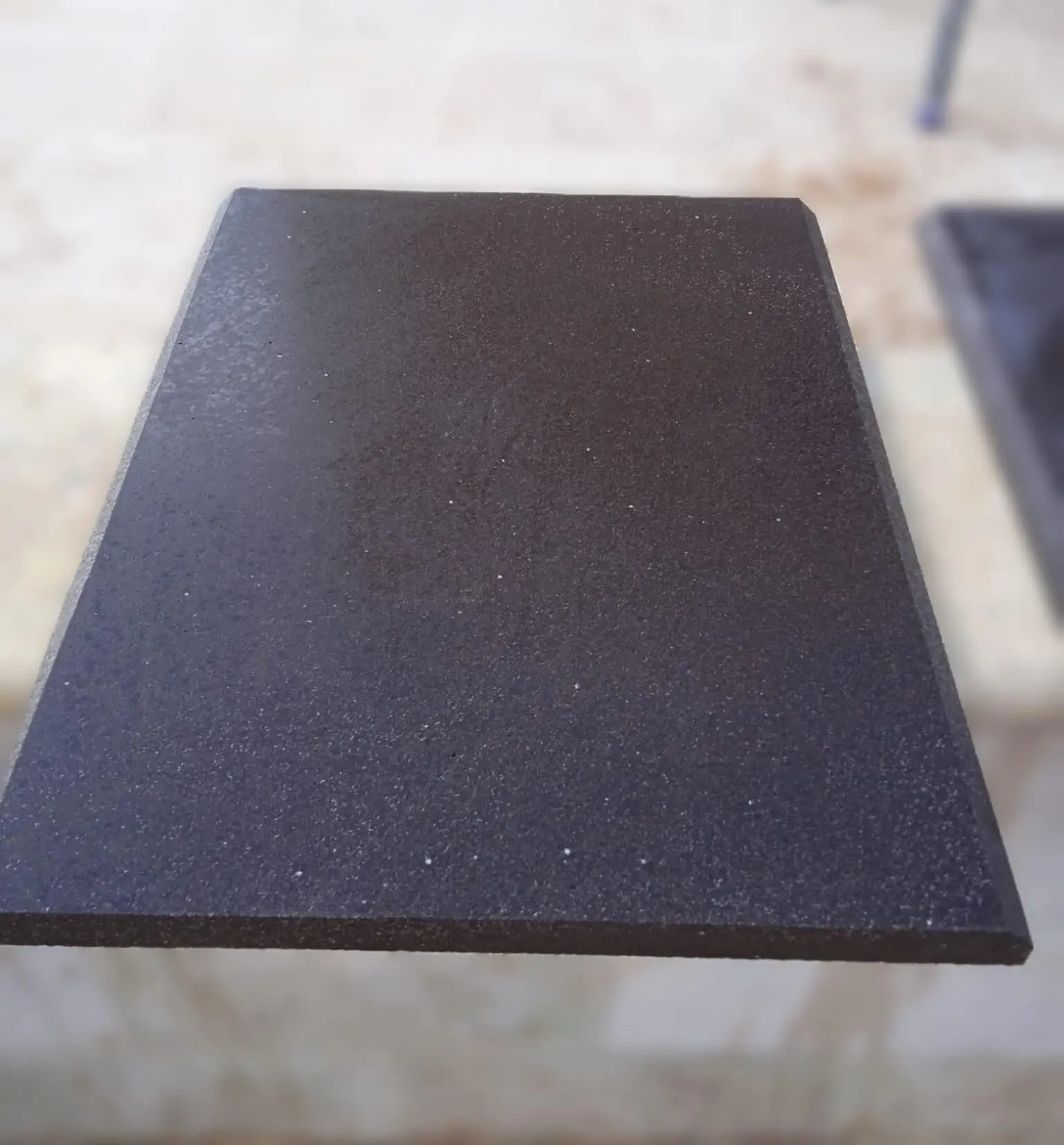
Design Ideas That Work Across Flooring Contexts
The most compelling black floor tile applications lean into contrast rather than fighting it. Pairing honed black limestone against light-toned grout lines creates a grid pattern that reads as modern and deliberate — a look that photographs well and holds its visual weight in large open-plan spaces. For a softer effect, you’ll find that a tight 1.5mm joint with a charcoal grout nearly eliminates the grid entirely, letting the natural variation in the stone read as the dominant texture.
Diagonal layouts are worth considering for rectangular rooms. Setting black stone tile at 45 degrees to the wall breaks up the predictable directionality most floors carry, and it draws the eye toward the room’s depth rather than its width. The trade-off is a higher cut waste factor — plan for 12–15% overage rather than the standard 10% when you go diagonal on natural stone tile.
- Large-format slabs (600mm × 1200mm or larger) minimise grout lines and emphasise the stone’s natural veining and tonal variation
- Herringbone patterns in narrower plank formats (e.g., 150mm × 600mm) add movement to hallways and entryways without overwhelming the space
- Bookmatched pairs create a dramatic mirror effect in feature floors when you source consecutive slabs from the same quarry run
- Mixing honed and brushed finishes within the same tile format adds textural interest without introducing a second material
Finish Options and What They Mean for Performance
Your finish selection on natural stone tile shapes both the aesthetic outcome and the maintenance commitment. Polished black stone tile delivers the highest visual drama — reflectivity amplifies depth and emphasises colour saturation — but it also shows water marks, foot traffic scuffs, and micro-scratches more readily than any other finish. In high-traffic corridors or entryways, polished surfaces can look tired within two to three years without a consistent maintenance routine.
Honed finishes are the workhorses of black floor tile applications. The matte surface diffuses light evenly, hides minor surface wear, and maintains a consistent appearance far longer between resealing cycles. According to NSI stone tile specifications, honed natural stone tile requires sealing every 12–24 months depending on porosity and traffic volume — a realistic interval most commercial and residential projects can sustain.
Brushed and flamed finishes occupy the middle ground. The brushed surface opens the stone’s pore structure slightly, creating a gentle texture that improves grip underfoot while preserving the dark tonal range. Flamed finishes are less common for interior black stone tile but work well for transition zones between interior and exterior applications where slip resistance needs to match across surfaces.
Thickness, Structural Fit, and What the Subfloor Actually Needs
Thickness selection isn’t just a weight calculation — it’s a deflection calculation. Standard 10mm natural stone tile tolerates a maximum subfloor deflection of L/720 under load; exceed that and you’ll see hairline cracks develop at grout joints within the first heating season. Most residential subfloor systems built to code sit at L/360, which means you’ll need to confirm structural adequacy before specifying black stone tile in thinner gauges over timber-framed systems.
For ground-level concrete slabs, 12mm gauged tile is the practical minimum for most flooring applications. The TCNA installation standards recommend a minimum 95% mortar coverage for natural stone tile on concrete substrates — that’s higher than the 80% typically cited for ceramic tile, and it matters because stone’s rigidity means any voids beneath the tile become stress concentrators under point loading.
- 12mm gauged tile works for most residential concrete slab applications with properly prepared substrates
- 20mm thick tile handles outdoor-to-indoor transitions and areas with moderate point loads from furniture
- 30mm formats suit commercial lobbies, high-traffic retail floors, and any application where wheeled loads are present
- Uncoupling membranes are worth specifying over radiant heat systems — they absorb the differential expansion that rigid mortar beds can’t accommodate
Subgrade Stability and Ground Preparation for Stone Tile
The ground beneath your slab influences black stone tile performance in ways that don’t show up until months after installation. Expansive clay soils — the kind that swell measurably during wet seasons and contract in dry periods — create cyclic movement that transfers directly through a concrete slab into any rigidly bonded tile above it. You’ll see this expressed as grout joint cracking, tile debonding at edges, or in severe cases, actual tile fracture across the face. The fix isn’t in the tile selection; it’s in the subgrade treatment before the slab is poured.
Sandy or granular soils present a different challenge: differential settlement. Loosely compacted fill beneath a slab allows localised subsidence, which creates low spots in the tile plane and concentrates stress at specific grout joints. When specifying natural stone tile over a slab with unknown fill history, it’s worth requesting a compaction report or at minimum a visual inspection of the subgrade before committing to a rigid installation system. Caliche layers common in arid regions can create a false sense of stability — caliche is hard but brittle, and water infiltration can cause sudden localised collapse.
The practical specification response to problematic subgrade conditions is an isolation layer. A crack isolation membrane between the slab and mortar bed breaks the movement transfer chain, allowing the subfloor to shift without propagating that movement through to the tile surface. For projects over known expansive soils, specify a membrane rated for shear movement of at least 1/8 inch — standard anti-fracture membranes typically handle that range without compromise to bond strength.
Black Pebble Tile and Feature Accent Applications
Black pebble tile operates in a completely different design register from large-format stone. The rounded, tactile surface reads as organic and spa-like — it’s the material of choice for shower floors, feature walls behind freestanding baths, and garden path accents. The challenge with pebble tile is grout joint management: the irregular surface geometry creates deep recesses that collect soap residue and mineral deposits faster than any flat-format tile.
Specify an epoxy grout for black pebble tile in wet applications. Standard cementitious grout in pebble tile shower floors fails within 18–24 months in most residential use patterns — the combination of thermal cycling, cleaning chemicals, and moisture infiltration degrades the grout faster than the tile itself. Epoxy grout costs more upfront but eliminates the regrouting cycle that makes pebble tile shower floors a recurring maintenance burden.
- Pebble tile works best as an accent bounded by flat-format stone — the contrast in surface geometry is where the visual interest lives
- Mesh-mounted sheets (typically 300mm × 300mm) allow consistent joint spacing across irregular pebble profiles
- Sealing pebble tile with a penetrating impregnator before grouting prevents grout haze from bonding to the stone surface — this step is easy to skip and costly to fix after the fact
- In outdoor applications, black pebble tile retains heat more than lighter alternatives — factor this into barefoot-comfort decisions for pool surrounds
Black Limestone Tile: Specification Depth for Demanding Projects
Black limestone sits in a specific performance band among natural stone tile options. Its compressive strength typically ranges from 7,000 to 12,000 PSI depending on formation density — adequate for most flooring applications but worth confirming against your project’s point load requirements before specifying in commercial contexts. According to NSI limestone specifications, absorption rates vary significantly within the limestone family, and black varieties sourced from dense, low-porosity formations can perform comparably to harder igneous stones in wet conditions.
Explore our black limestone tile range for gauged and ungauged formats that suit both residential flooring and commercial feature applications. At Citadel Stone, we conduct density and absorption checks on incoming shipments from our partner selected quarries, which gives you verified performance data before you finalise your specification rather than relying on generic category averages.
The USGS geological data on limestone composition confirms that calcium carbonate content and crystal structure are the primary determinants of surface hardness and acid sensitivity — factors that directly affect maintenance protocol and finish durability over time. Black limestone with high calcite density resists etching better than lower-density variants, which matters significantly in kitchens and dining areas where acidic spills are routine.
Ordering, Warehouse Stock, and Project Lead Times
Your project timeline depends heavily on whether the black stone tile you’ve specified is warehouse stock or a quarry order. Warehouse-held inventory typically ships within 5–10 business days from confirmation — enough lead time to coordinate with your setting contractor’s schedule without holding the project up. Quarry orders for custom formats, special thicknesses, or lower-volume black stone tile varieties run 8–12 weeks from order confirmation, and that window doesn’t compress regardless of project urgency.
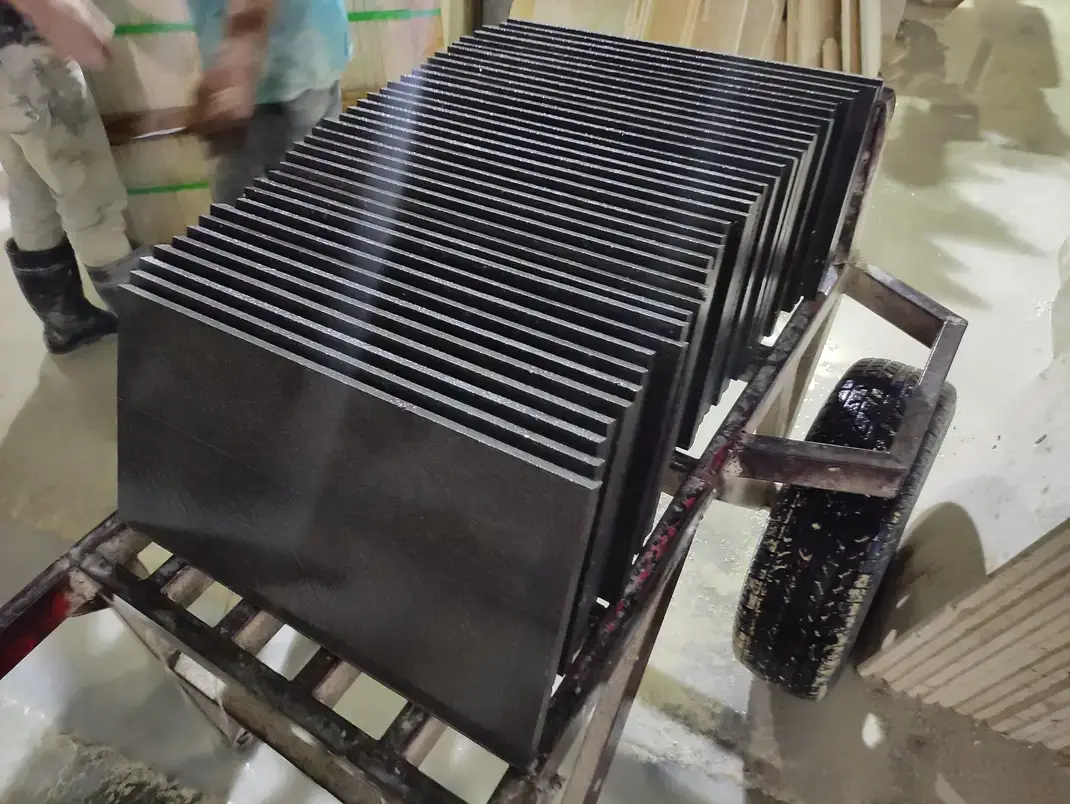
Citadel Stone maintains national warehouse stock in the most common black limestone formats — 600×600mm, 600×1200mm, and 300×600mm in both honed and brushed finishes — which covers the majority of residential and mid-scale commercial project requirements. For oversized formats or bookmatched slab orders, factor the full quarry lead time into your construction programme and place the order before groundwork is complete rather than after. Truck delivery scheduling for full-pallet stone orders typically requires 48–72 hours’ notice to coordinate with loading dock or site access requirements.
Sealing and Long-Term Maintenance for Black Stone Tile
Sealing frequency for black stone tile is a function of finish type and traffic pattern — not a single universal rule. Polished black limestone in a residential kitchen needs resealing every 12 months; the same material in a low-traffic guest bathroom can hold a seal for 24–36 months. The field test that actually tells you when to reseal is the water bead test: drop a tablespoon of water on the tile surface and watch. If it beads and holds for 3–4 minutes, the seal is intact. If it absorbs within 60 seconds, reseal immediately.
Choose penetrating impregnators over topical coatings for most black floor tile applications. Topical sealers sit on the surface and alter the tile’s appearance — they can add unwanted sheen to a honed finish or create a plastic-like surface effect on brushed stone. Penetrating sealers work within the pore structure without changing the surface aesthetics, which is the correct approach for most design-led flooring specifications. Apply sealer to a clean, dry surface and wipe off excess within 5–7 minutes — sealer left to cure on the surface leaves a hazy residue that requires mechanical removal to correct.
- Test your sealer on an offcut before applying to installed tile — some dark limestones temporarily darken on first application
- Avoid alkaline cleaners on black limestone — pH above 10 accelerates surface degradation and dulls polished finishes over time
- Grout joint sealing is as important as tile sealing — unsealed grout in black tile floors shows mineral deposits and bio-growth within months in humid environments
- Resealing is always cheaper than refinishing — a 20-year floor is achievable with biennial maintenance cycles on most black stone tile formats
Getting Black Stone Tile Right From Specification to Installation
The specification decisions that separate a long-performing black stone tile floor from a problematic one are mostly made before a single tile is set. Subgrade stability, subfloor deflection limits, finish selection relative to traffic pattern, and mortar coverage requirements all need to be resolved at the design stage — not during installation. The material itself is forgiving of many things, but not of an inadequate base or an under-engineered substrate. Take those decisions seriously and the aesthetic case for black stone tile makes itself.
For related stone flooring applications worth considering alongside your black tile specification, midnight black limestone paving details covers format, finish, and thickness options that extend the same material palette into exterior applications. From premium quarries in Turkey and the broader Middle East region, Citadel Stone black stone tile ships in consistent 12mm gauged sheets.
Related reading: black limestone countertops · black limestone pavers · does black limestone fade.