

The dark, heavy soil that weathers from basalt can be one of the harder grounds to pave on. Much of it is clay, and some of that clay swells when it gets wet and shrinks as it dries, so the ground under a patio, path or drive can rise and fall with the seasons. The stone is rarely the weak point; what decides whether basalt paving stays flat on this kind of ground is the preparation underneath it. This guide covers how these soils behave, how to recognize them, what base, drainage and edge details give stone paving the best chance, and the point at which an engineer should take over the design.
What Is Black Basalt Soil?
Basalt is a fine-grained volcanic rock. According to USGS basalt volcanic rock properties and composition, basalt is rich in calcium, magnesium, and iron. As it weathers, particularly in climates with distinct wet and dry seasons, it often breaks down into dark, fine-textured clay soils. The most troublesome of these are known as black cotton soils, or vertisols in soil-science terms. Their deep color can make them look like rich topsoil, but the clay they contain can take up water and swell, then give it back and shrink.
The color is a prompt to check, not proof. Not every dark soil over basalt is strongly expansive, and expansive clays also form over other rocks. For background on the parent rock itself, Britannica’s overview of basalt is a useful starting point; the rest of this guide deals with the ground you will actually be building on.
Why Clay-Rich Basalt Soils Swell and Shrink
Some clay minerals, smectite in particular, can hold water between their microscopic layers. When the soil wets up, those layers take on water and the soil swells; when it dries, it shrinks and cracks. The swing follows the seasons and the local water supply: a wet winter, a dry summer, a leaking downspout, a well-watered bed or the root zone of a thirsty tree.
For paving, the real trouble is uneven movement. The ground under the middle of a patio may stay fairly steady while its edges wet and dry with the weather, so the surface tends to lift, dip or rock at the margins first. Rigid, mortar-bonded paving usually answers that movement by cracking; paving on a flexible base shifts unevenly and opens its joints. Neither result is a fault of the stone. Basalt’s dense, fine-grained character makes it a durable paving stone outdoors, but no paving material can stop the ground beneath it from moving.
How to Recognize Expansive Soil on Your Site
You can often spot expansive clay before any digging machine arrives. Look for these signs, and check more than one spot, because soil can change across a single site:
- Dark gray to black soil that turns sticky and plastic when wet and can be rolled into a thin thread without crumbling
- Wide, deep cracks that open in a rough polygon pattern in dry weather and close up again after rain
- Dry clods that are very hard to break by hand
- Clues in existing work nearby: cracked slabs, rocking pavers, heaved edging, or doors and windows that stick in some seasons and not others
- Local knowledge: published soil surveys, the local building department and nearby builders often know whether expansive clay is common in the area
Field signs are a good first screen, not a design basis. Where paving will carry vehicles or sit close to a building, a geotechnical engineer can sample the soil and assess how much it is likely to move.
Base Preparation for Basalt Paving on Expansive Clay
The aim is to put a stable, well-drained layer between the stone and the clay, and to keep the clay’s moisture as steady as practical. Typical steps, which your designer or installer will adapt to the site, look like this:
- Strip the dark topsoil and any organic matter; never lay a base on soft, wet or freshly loosened clay
- Excavate to firm, undisturbed ground and shape the bottom of the excavation to a fall, so water that reaches it can run out rather than pool
- Lay a separation geotextile over the clay so fine particles cannot work their way up into the base
- Build the base from crushed aggregate, placed and compacted in thin layers; the right depth depends on the load and on how reactive the clay is, so take it from your engineer or local standards rather than a rule of thumb
- Protect the open excavation from heavy rain and from drying out over long breaks in the work
On strongly expansive ground, engineers may go further: removing a deeper layer of clay and replacing it with non-expansive fill, treating the clay with lime, or designing a reinforced slab that can tolerate movement. These are design decisions for a professional, not improvisations on site.
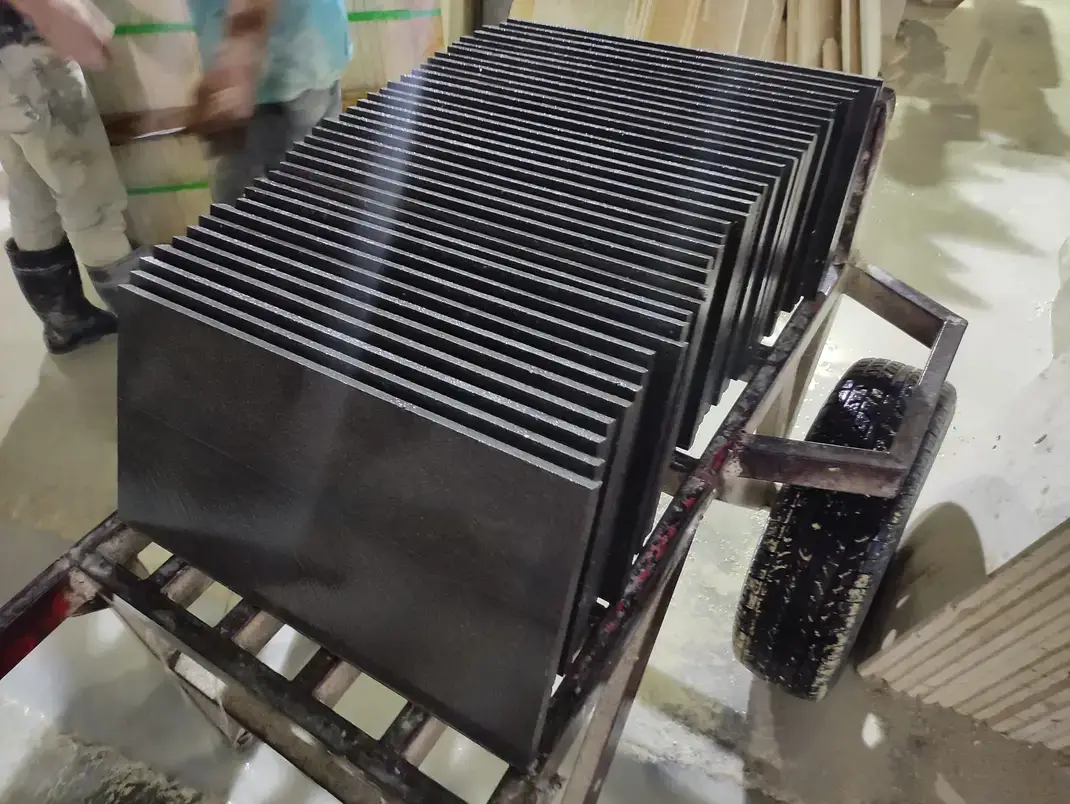
Drainage: Keeping Moisture Steady Under the Stone
Water is what drives the movement, so drainage on expansive soil is less about removing water quickly and more about stopping it from reaching the clay unevenly.
- Give the paved surface a fall away from buildings and toward a planned outlet
- Carry downspouts away from the paving edge in a pipe instead of letting them discharge beside it
- Avoid the bathtub effect: a granular base cut into clay can fill with water that has nowhere to go, so where the site allows, give the bottom of the base a way out, such as a perforated drain to a lower outlet
- Keep irrigation off the paving edge and set heavily watered beds back from it
- Think about tree positions, because large trees close to paving can draw moisture from the clay beneath it in dry spells
Where paving runs alongside a planting area, a French drain at the low edge can do double duty: it takes surplus water away from the bed and protects the stone’s base from saturated ground. That’s a detail worth raising with your landscaper before the hardscape work begins, not after.
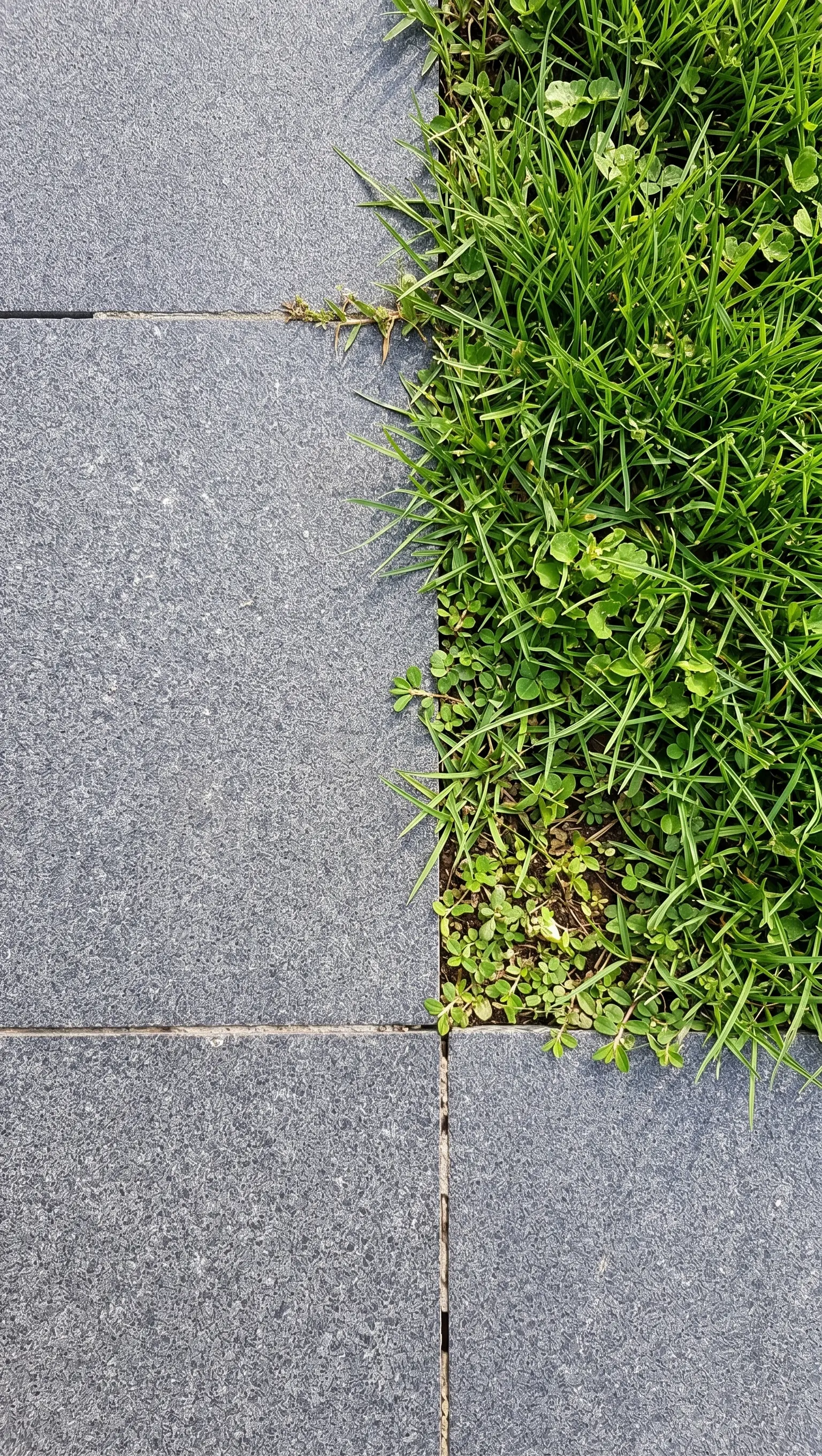
Edge Restraint Where Paving Meets Soil and Planting
Edges are usually where paving on expansive soil fails first. The soil beside the paving wets and dries more than the soil beneath it, and an unrestrained edge has nothing to stop the outer pavers from creeping outward. A sound edge restraint is anchored in the compacted base, typically stone edging or a curb set on a concrete haunch, rather than pushed into the loose soil that moves around it.
Black basalt pavers, cobbles and edging stones give a crisp, dark border that sits naturally beside lawns and planting. The distinction between honed black basalt granite finishes and natural cleft or tumbled textures is worth considering here — each reads differently against dark planting-bed soil, and the choice affects both the visual weight of the feature and how the surface texture presents in your specific light conditions. When you compare stone types for the surface, the Natural Stone Institute guide to stone varieties is a useful neutral reference. Explore our basalt landscaping stone for a look at the formats and finishes available.
Where a planting bed meets the paving, a few habits help both the bed and the paving edge:
- Keep bed soil and mulch below the paving edge, so rain and watering do not wash soil onto the stone or into its joints
- Water beds at the plants rather than across the paving edge
- Where black basalt granite or similar dark stone mulch is used as a decorative surface layer, ensure it’s separated from the soil by landscape fabric or a sand buffer — direct stone-to-soil contact in basalt-derived beds can accelerate surface crusting
When to Ask an Engineer
A small garden path on mildly reactive soil can often be handled with careful base and drainage work. Bring in a geotechnical or civil engineer before you build when:
- The paving will carry cars or delivery vehicles
- It adjoins a house, garage or pool, where ground movement or trapped water could affect the structure
- You can see wide seasonal cracks, past heave, or damage to slabs and walls nearby
- The site slopes, or the project includes steps or retaining walls
- You plan rigid, mortar-bonded paving on a concrete slab
- Local building rules call for a soil report
Driveways deserve particular care. The stone format matters too: use setts or cobbles at least 3.5 in deep, or pavers of 5 cm or more mortar-bonded to a reinforced concrete slab, and on expansive clay have the base, and any slab, designed by an engineer. A soil report then becomes the brief that the base, the edges and the stone are all chosen against.
Parting Guidance for Building on Black Basalt Soil
Black basalt soil does not rule out stone paving; it changes where the effort goes. Recognize the soil early, keep water away from it so its moisture stays as steady as possible, build on a well-drained, compacted base with a firm edge, and hand the design to an engineer when vehicles, structures or severe movement are involved. Treat the paving and the ground around it, planting beds included, as one system rather than separate jobs. For a closer look at how basalt stone performs across different landscaping applications, basalt rock for landscaping projects covers material selection, finish options, and specification considerations in detail. Citadel Stone supplies basalt pavers, landscaping stone and crushed basalt from our selected quarries, so the stone can be matched to your base design once that design is settled.
Related reading: honed black basalt finish explained · black basalt driveway surface guide · black basalt cobblestone.