

Basalt raised garden beds fail more often at the base than at the block — that’s the field reality most project guides skip entirely. You can stack beautiful dark stone to any height you like, but if the compacted base beneath it doesn’t account for lateral soil pressure and seasonal ground movement, the wall shifts, and the joints open up within a couple of growing seasons. Understanding the structural mechanics behind a basalt block garden wall before you order material is what separates a bed that looks the same in year ten as it did on installation day from one that needs rebuilding.
Why Basalt Suits Raised Bed Construction
The density of basalt — its tightly interlocked crystalline structure formed under volcanic pressure — gives the material a mass that works in your favour when you’re building a retaining wall around a garden bed. Soil load, irrigation water, and root expansion all push outward against the wall face, and you want a block heavy enough to resist that pressure without needing mortar or rebar on every course. For most residential basalt raised garden beds sitting below four feet in height, the block mass alone carries the lateral load, provided the batter angle and base preparation are done correctly.
The colouring also stays consistent over decades in a way lighter sedimentary stones don’t always manage. Basalt’s dark iron-rich mineralogy doesn’t bleach in UV the way some granites do at the surface. You’ll see a slight weathering patina develop, but the structural colour — that near-black or deep charcoal tone — holds. According to USGS basalt volcanic rock properties and composition, basalt’s dense mineral matrix gives it an absorption rate that keeps moisture penetration low, which matters when the block face is in constant contact with moist garden soil on one side and weather on the other.
There’s a practical sourcing dimension worth knowing here. Citadel Stone cuts basalt blocks to order at our selected quarries in the Middle East, which means you can specify the face dimensions and thickness that suit your bed geometry rather than working around whatever nominal sizes a domestic supplier happens to stock.
Block Sizing and Wall Geometry
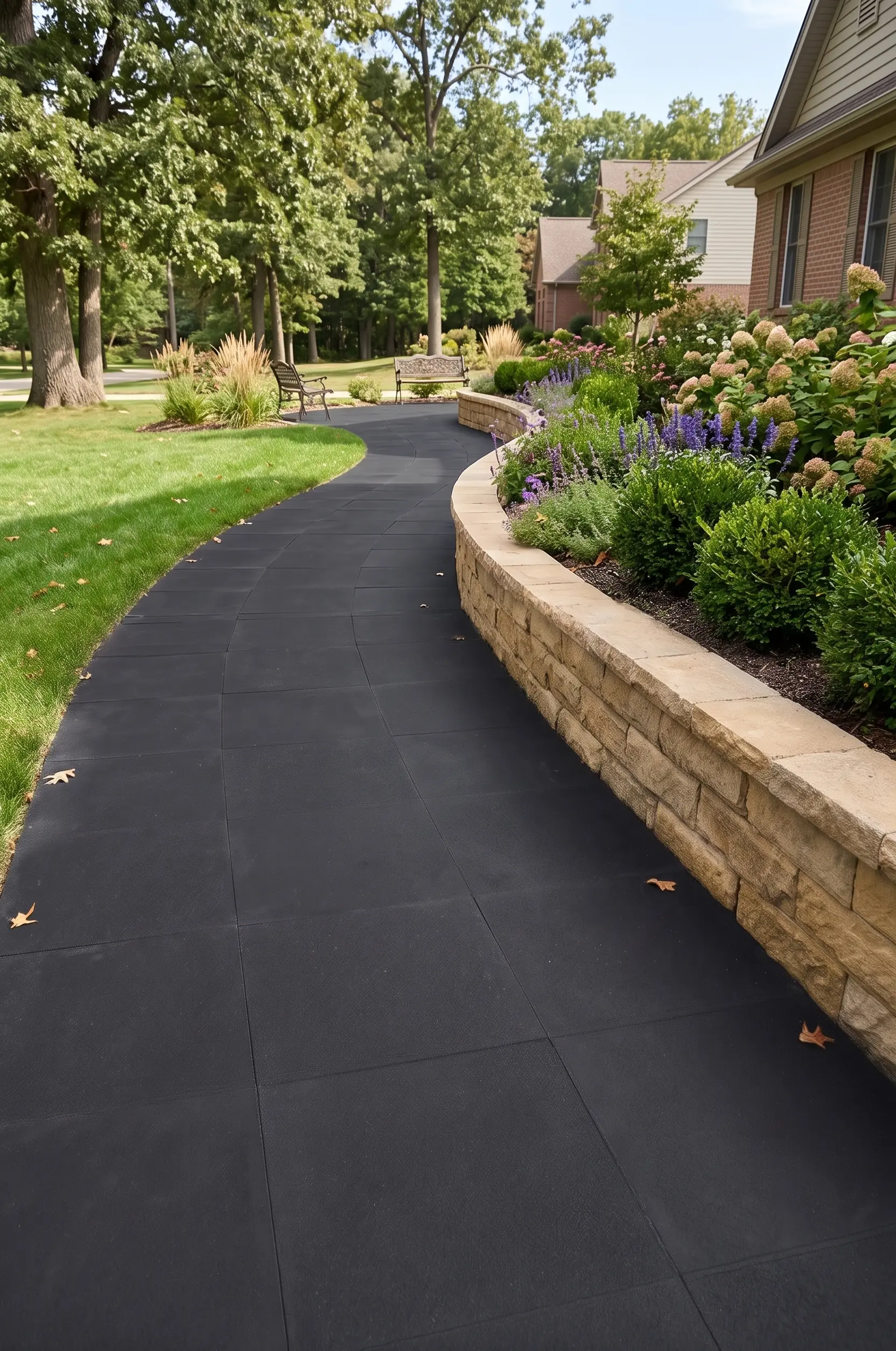
Your block dimensions drive everything downstream — the base trench depth, the required batter, and how you handle corners. For basalt raised garden beds in the range of twelve to thirty-six inches tall, a block nominally four to six inches thick provides adequate face depth for a dry-stack wall without the mass becoming unmanageable for two people to position. Longer blocks, say twelve to twenty-four inches in face length, give you more bearing surface per course and reduce the number of vertical joints, which strengthens the overall run.
Batter — the rearward lean of the wall face — is the geometric variable most homeowners underestimate. A setback of one inch per foot of rise is a reasonable starting point for dry-stack basalt raised garden beds. Below thirty inches of finished height, you may get away with a slight batter rather than a full inch-per-foot lean, but you don’t want to run the wall plumb. Even a modest lean puts the block weight working in the direction of the retained soil rather than against it.
- Face length: longer blocks mean fewer joints and a stronger run per course
- Block thickness: four to six inches is manageable for two-person setting without lifting equipment
- Batter angle: set the wall leaning back into the retained bed from the first course
- Corner treatment: plan corner blocks as a separate unit — overlap alternating courses ninety degrees for mechanical lock
- Capstone thickness: a thicker cap block adds visual weight and keeps the top course from shifting in freeze-thaw cycles
Base Preparation and Structural Requirements
The base course is where the structural engineering happens, and it’s where local building standards become genuinely relevant to a raised garden bed project. Most jurisdictions treat a garden retaining wall under four feet in height as exempt from a formal permit, but that exemption doesn’t mean the structural requirements disappear — it means you, the property owner, carry the responsibility for meeting them without a code-enforced inspection. For walls approaching or exceeding four feet, check with your local building department. Many municipalities have adopted versions of the International Building Code that require engineered drawings or specific base depth for any retaining wall above that threshold.
In frost regions, your base trench needs to extend below the local frost line — not to the bottom of the first block course, but to the bottom of the compacted aggregate beneath it. A base that terminates above the frost line will heave with every freeze-thaw cycle. Over three or four winters, that cumulative movement pushes the bottom course out of level and opens the face joints. Frost line depths across the country range widely, so confirm the local depth with your building department or consult the frost depth data your county publishes for foundation design. The base aggregate itself should be compacted in lifts — not dumped and tamped once — using angular crushed stone rather than rounded gravel, which compacts tighter and resists lateral creep under load.
- Trench depth: base of aggregate must sit below local frost line in freeze-thaw climates
- Aggregate type: angular crushed stone compacts tighter than rounded pea gravel
- Compaction: compact in lifts of four inches maximum, not as a single deep fill
- Level check: the first course must be dead level — errors compound with each course added
- Drainage: lay a perforated drain pipe behind the first course if the retained bed is large or sits in a low spot
According to the Natural Stone Institute’s guidance on igneous stone, base preparation for dense igneous stone like basalt should account for the block’s own mass bearing on the substrate — heavier material demands a firmer, more consistently compacted base than lighter sedimentary alternatives.
Dry-Stack vs. Mortar-Bed Construction
The decision between dry-stack and mortared basalt raised garden beds isn’t purely aesthetic — it’s a drainage and maintenance trade-off you’ll live with for as long as the wall stands. Dry-stack construction lets moisture move freely through the joints, which protects both the block and the retained soil from hydrostatic pressure buildup. A mortared wall traps water behind a sealed face unless you install weep holes deliberately, and a mortared joint that fails — from movement, age, or root intrusion — is more disruptive to repair than a shifted block in a dry-stack run.
For garden bed applications specifically, dry-stack is the more forgiving system. Roots from vigorous perennials or shrubs will find any joint over time, and in a dry-stack wall, a displaced block is a fifteen-minute fix. In a mortared wall, root infiltration behind the face often means dismantling a section. The aesthetic difference between the two systems is subtle from ten feet away — what you gain with mortar is a slightly crisper joint line, but you give up the self-draining character that suits a planted bed best.
Finish Selection for Basalt Blocks
The finish on your basalt blocks shapes how the wall reads visually and how the surface weathers over time. Split face basalt — where the block face is fractured rather than cut or ground — gives you a textured, irregular surface that reads as natural and rugged. It suits informal garden settings, cottage-style planting schemes, and landscapes where the wall is meant to disappear into the planting rather than command attention as a design element.
A sawn or honed face delivers clean, flat geometry with a more contemporary character. The colour reads darker and more uniform on a honed surface than on a split face, because the flat plane reflects light differently. For formal kitchen gardens, modern landscape designs, or beds where the wall face is a deliberate architectural element, a sawn or honed basalt block gives you a crisper result. The practical difference in maintenance between a textured and smooth face is minimal for a retaining wall — both weather well in garden conditions.
For the capstone course, consider a bush-hammered finish if the cap will receive foot traffic or serve as a seat wall. A bush-hammered finish leaves an open, matte texture that handles wet conditions differently from a polished or honed surface, which should be reserved for dry indoor applications. The cap is the one surface on a raised bed wall that a person is likely to touch or sit on, so texture matters there in a way it doesn’t on the face courses.
Height Limits, Drainage, and Soil Management
Basalt raised garden beds built above thirty-six inches start to behave more like structural retaining walls than garden edging, and the design requirements shift accordingly. The soil pressure calculation changes as height increases — not linearly, but progressively — so a wall twice as tall faces more than twice the lateral load. At this height, you should consider geogrid reinforcement laid horizontally into the retained soil at intervals, or consult a landscape engineer to confirm that your block mass and batter angle are adequate without it.
Drainage behind the wall face is non-negotiable above twenty-four inches. A large retained soil mass holds water after irrigation or heavy rain, and that water needs a path to exit that isn’t through the joints on the face. A four-inch perforated pipe laid on a bed of washed stone directly behind the base course, daylighted at each end of the run, handles the drainage load in most residential applications. Some landscapers also lay a geotextile fabric against the soil face before backfilling, which keeps fine particles from migrating into the drain aggregate over time.
- Below twenty-four inches: drainage gravel behind the base course is usually sufficient
- Twenty-four to thirty-six inches: install perforated pipe at the base course, daylighted at each end
- Above thirty-six inches: consider geogrid reinforcement and a drainage layer at mid-wall height
- Soil mix: a well-draining raised bed mix reduces static water pressure on the wall versus heavy clay fill
- Irrigation: drip systems produce lower peak water volume than overhead, which eases drainage demand on the wall
Using Basalt Cobbles Alongside Blocks
Basalt blocks for raised garden beds work particularly well when the surrounding hardscape uses the same stone family. Pathways between beds, edging along planting borders, and low decorative walls all benefit from material consistency. Basalt Cobbles provide a complementary scale for pathway fills and bed dividers, giving you the same dark tone and density in a smaller, more manageable unit that suits curved layouts and irregular fill zones where cut blocks would require awkward trimming.
The visual logic of mixing block and cobble sizes in the same landscape is well established in formal kitchen garden design — larger blocks define the structural walls, while cobbles fill the in-between spaces at grade. Both units weather to the same patina over time, so the palette stays coherent across the seasons.
Sealing and Long-Term Care
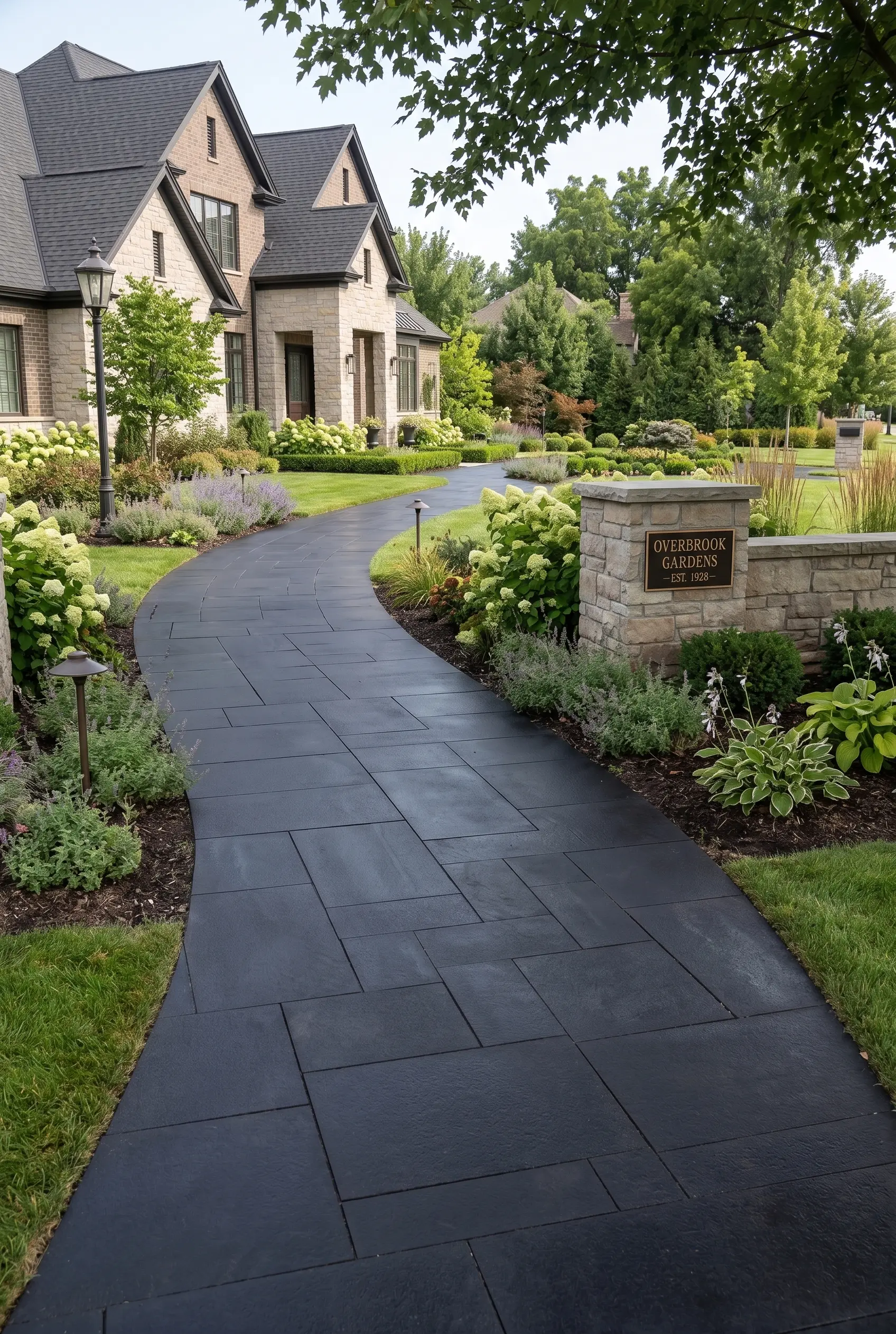
Basalt’s low absorption rate means sealing a raised garden bed wall is optional rather than mandatory, but it does change how the surface handles organic staining from soil, compost, and decomposing plant matter. An unsealed face develops a natural patina fairly quickly in garden conditions — mineral deposits from irrigation water, algae in shaded spots, and soil transfer during planting all mark the surface over time. Some owners prefer this lived-in look; others want the fresh-cut dark colour to persist. Sealing once after installation and on the interval your sealer manufacturer states keeps the surface closer to its original tone.
Choose an impregnating sealer designed for dense igneous stone — the same product category used on honed granite countertops. Surface film sealers are better suited to porous stones; on basalt, they tend to peel rather than bond long-term, especially on a wall face that expands and contracts through temperature cycles. Clean the wall face before sealing to remove any mortar haze or efflorescence that developed during and after installation, as sealant applied over contamination locks the staining in rather than protecting against it.
According to Britannica’s overview of basalt volcanic rock formation and construction properties, basalt’s dense, fine-grained structure results from rapid cooling, which produces a surface that absorbs far less moisture than coarser volcanic or sedimentary alternatives — a property that works in your favour for an outdoor garden wall context.
Planning Your Basalt Raised Garden Bed Order and Delivery
Calculating block volume for basalt raised garden beds requires accounting for the wall’s batter — the actual face area is slightly less than a plumb calculation suggests, but the weight is the same. Order a five to eight percent overage on your block count to allow for cuts at corners, adjustments at the cap course, and any blocks rejected during the setting process for face defects or dimensional inconsistency. Basalt is a consistent material, but natural stone always produces a small percentage of units that don’t pass field inspection once you hold them to the string line.
Your project’s site access is worth planning before you confirm the delivery schedule. Basalt blocks arrive palletised, and the pallet weight can be substantial. If your site has restricted access — a narrow gate, a soft lawn approach, or a limited turning radius — confirm those constraints with Citadel Stone when you place the order so the delivery arrangement matches your site reality. Lead times are quoted with the order and depend on your block specification and the production schedule at our selected quarries.
The Bottom Line
Basalt raised garden beds reward the time you spend on the base and the first course more than any other stage of the project. Get the trench depth right, compact the aggregate properly, set the batter from the first block, and install drainage behind walls above knee height — everything above that performs predictably for decades. The block mass, the low absorption rate, and the finish durability of basalt make it a strong choice for garden bed walls that need to hold up to soil pressure, irrigation, and the seasonal movement of freeze-thaw climates without constant maintenance. As you wrap up construction, if mortar was used at the cap course or at a footing, take care of any residue before it cures hard — our guide on cleaning mortar haze from basalt walks through the correct removal sequence for this material. Dark basalt blocks from Citadel Stone frame planting beds with a clean edge, sourced from our selected Middle East quarries.
Related reading: Stony Basalt Texture Guide for Cobble Selection · Smooth Basalt Stone Blocks: A Buyer’s Guide.