

Texture grade is the specification variable that most stony basalt texture guide readers underestimate — and the one that creates the most field problems once the stone is laid. The surface character of basalt is not a cosmetic detail: it controls how the stone interacts with water, foot traffic, cleaning equipment, and the bedding system beneath it. Get the grade wrong for your application and you’re looking at pooling water in a flush-jointed courtyard, accelerated wear on a high-traffic entry, or a finish that reads coarser than the design intent the moment it gets wet.
What Stony Basalt Texture Actually Means
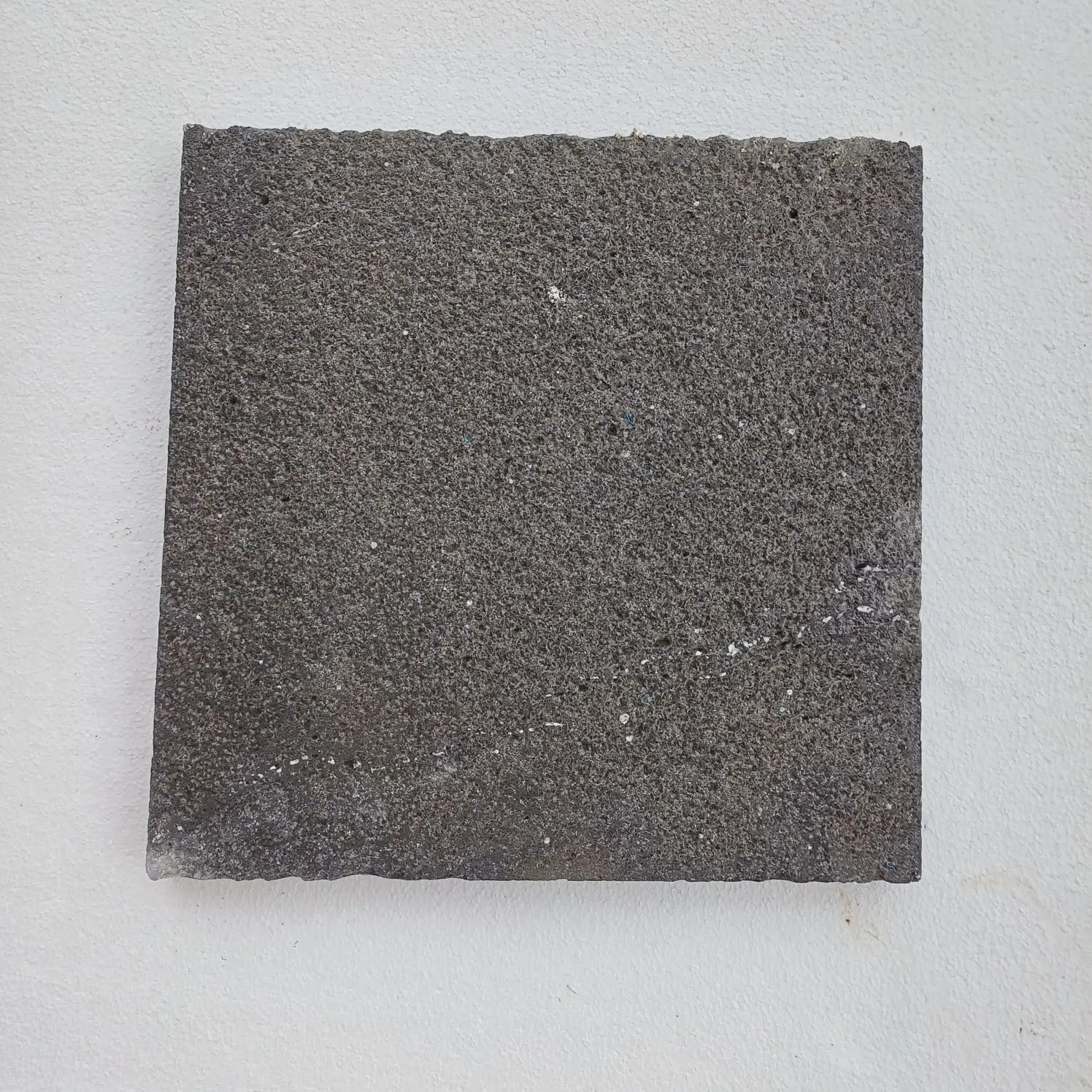
The term “stony basalt” describes the raw character of the material before any surface processing — its tight, interlocking crystalline structure, its naturally dark ground mass, and the micro-relief that comes from volcanic cooling rather than from a tool. That baseline matters because every finish you apply to basalt starts from this place. A honed finish removes the outermost grain relief and brings out a matte flatness; a flamed finish opens the surface by thermal shock, creating a coarser open texture; a bush-hammered finish compresses and textures by mechanical impact. Understanding where each process starts — on a dense, fine-grained volcanic rock with very low absorption — tells you a lot about where it ends up. According to USGS basalt volcanic rock properties and composition, basalt is a fine-grained mafic igneous rock formed from rapid cooling of lava, which accounts for both its density and the tight grain structure that makes surface finishing so controllable and predictable across a range of mechanical processes.
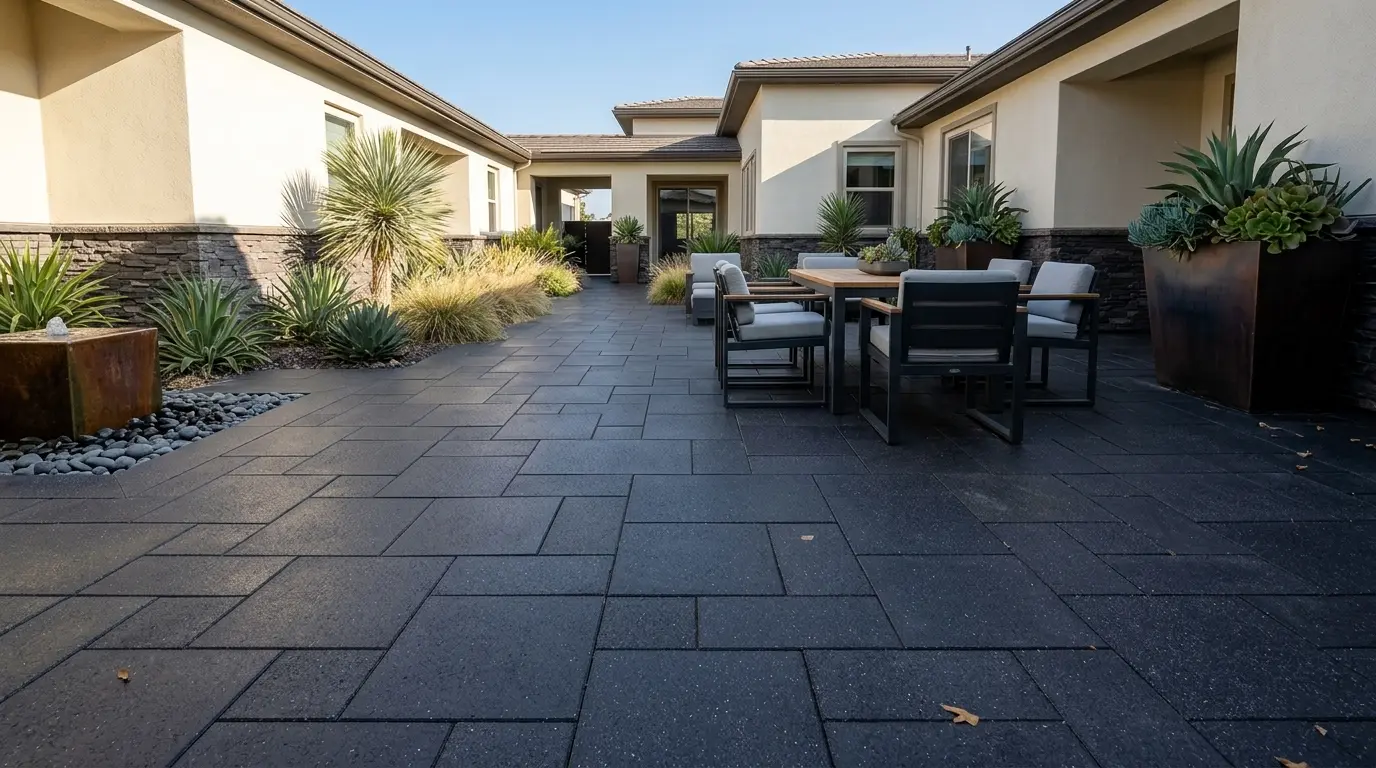
Reading Texture Grades Before You Specify
Your specification process should start with physical samples, not with finish names. The industry uses terms like “sawn”, “honed”, “flamed”, “bush-hammered”, and “tumbled” to describe basalt surface grades, but the same term from two different cut programs can produce noticeably different results depending on blade speed, thermal intensity, and the particular origin of the stone. Request samples under your actual site lighting, not just under a showroom halogen — basalt shifts dramatically between natural daylight and artificial light, and a finish that reads as charcoal-grey indoors can read almost black outdoors when wet. Checking samples wet is essential: the texture grade that looks appropriate dry may close up under wet conditions and read flatter or shinier than intended.
The stony basalt texture guide framework most useful for cobble selection breaks grades into three practical tiers:
- Fine grade — sawn or honed, tight surface relief, absorbs minimal moisture, suited to internal flooring and covered external areas where drainage is controlled
- Medium grade — bush-hammered or lightly flamed, moderate surface relief, visually active texture that reads well in paving formats and pathways
- Coarse grade — deep flamed, heavily bush-hammered, or tumbled with edge-rounding; open texture with pronounced relief, suited to heavy-traffic paving, cobble applications, and areas with meaningful drainage demand
Coarse-grade basalt cobbles in particular benefit from their open surface in wet conditions — the texture profile allows water to disperse across the face rather than sheet across it. That said, textural character is not a safety guarantee, and you should specify ANSI A326.3 wet-method testing and request the test report from your supplier rather than relying on texture descriptions alone.
Basalt Cobble Selection by Texture Grade
Cobble selection is where the stony basalt texture guide becomes most directly practical. Basalt cobbles sit at the coarser end of the texture spectrum almost by definition — their irregular geometry, tumbled or sawn faces, and varied edge profiles create inherent surface relief that makes them a genuinely different product from a cut paving tile. Your selection criteria for cobbles should focus on three intersecting variables: face texture consistency across the batch, dimensional tolerance within the grade range, and joint width compatibility with the bedding system you’re using.
Face texture consistency matters more in cobble work than most buyers anticipate. A batch that mixes heavily tumbled pieces with lightly sawn pieces will read as patchy once laid — the light catches each face differently and the result is a visually restless surface rather than the cohesive character most projects intend. Ask your supplier whether the batch has been graded for texture consistency, and if possible, view the full pallet rather than a showroom single piece. Our technical team at Citadel Stone reviews texture consistency at the quarry before orders are confirmed, so specifiers get a predictable batch rather than a mixed one.
- Dimensional tolerance: confirm the allowable size variation within the grade range — tight tolerance gives a more controlled joint pattern, wider tolerance suits informal random-lay
- Edge profile: full tumble produces rounded edges that bed well in sand-set systems; sawn-and-tumbled produces flatter faces with softened edges suited to mortar-set applications
- Colour banding: some basalt origins carry subtle banding or vesicular pockets — these are natural characteristics, not defects, but your specification should acknowledge them so they don’t trigger rejection on site
Drainage and Water Management for Basalt Paving
Texture grade selection and drainage design are inseparable decisions. Basalt’s low absorption rate — among the lowest of common paving stones — means surface water does not move into the material efficiently. It moves across it. That characteristic is an asset in most applications, but it demands that your drainage geometry is properly designed before the stone goes down. A flat or near-flat basalt surface with no crossfall and no outlet will pond, period.
In regions that experience heavy seasonal rainfall, intense monsoon events, or rapid snowmelt cycles, the crossfall requirement for basalt paving is not optional. The recommended minimum crossfall for external basalt surfaces is typically expressed in your project’s civil drainage specification — check with your engineer for the site-specific requirement, as it varies with area, run length, and catchment. What you can control at the material specification stage is finish selection: a coarse or medium-grade texture creates micro-channels across the face that help disperse sheet flow, whereas a honed or polished finish creates a surface where water builds velocity before reaching the drain. In flood-risk zones or climates with pronounced wet seasons, specifying a coarser texture grade is a defensible decision with a real functional basis, not just an aesthetic preference.
The base preparation beneath your basalt paving must also account for drainage performance. A well-compacted aggregate sub-base with appropriate falls prevents hydrostatic pressure from building beneath the slabs or cobbles — a failure mode that manifests as rocking stones, displaced joints, and ultimately surface movement. Your Basalt Cobbles specification should include a base drainage layer detail alongside the surface specification, particularly in applications exposed to seasonal precipitation extremes.
Finish Comparison for Basalt Projects
Choosing between the main finish options for basalt comes down to understanding what each process does to the same dense, dark volcanic base. Here’s the practical breakdown for the most common finishes you’ll encounter:
- Sawn: a machine-cut face with visible saw marks, tight surface, low relief — used primarily for floor tiles and precision-cut formats where joint tolerance is tight
- Honed: a sawn surface taken through progressive abrasive stages to a smooth matte finish — the texture is flat and consistent, very low surface relief, reads almost polished in certain lights
- Flamed: a high-temperature torch is passed across the sawn surface, causing differential thermal expansion and grain pop-out — the result is a coarse, open, visually active texture that reads lighter in tone than honed due to the fractured grain faces
- Bush-hammered: a mechanical process that dimples the surface with a multi-point head — produces a regular, pebbly texture with good surface relief and consistent appearance across large areas
- Tumbled: stone pieces are tumbled in a drum to round edges and soften faces — the result is an aged, weathered character suited to cobble formats and informal paving with natural joint variation
The Natural Stone Institute provides technical guidance on igneous stone paving technical standards that is worth referencing when you’re writing a finish specification for a public or commercial project — having a named industry reference strengthens the specification document and gives your contractor a standard to work to.
Columnar Basalt and Texture Origin
Columnar basalt deserves its own note in a stony basalt texture guide because its geological formation produces a naturally different starting texture from standard quarry basalt. Columnar basalt formations, found across several Middle East and Central Asian sources, develop the characteristic polygonal column structure through slow, even cooling of thick lava flows — the contraction stress creates near-perfect hexagonal columns that fracture along predictable planes. The natural cleavage faces of these columns are rough, crystalline, and visually distinctive in a way that no mechanical process can exactly replicate.
That natural face texture is the reason columnar basalt is specified for feature walls, water features, and statement paving rather than for high-precision floor tile work. The dimensional variability is inherent to the material — columns vary in diameter and the natural faces are not parallel planes. Your specification should treat it as a sculptural material with dimensional allowances rather than a precision-cut tile with tolerance constraints. Where the application suits it, the result is a surface texture that reads as genuinely geological rather than manufactured. According to basalt volcanic rock formation and construction properties, the columnar jointing pattern — a defining characteristic of columnar basalt wherever it forms — is a direct function of cooling rate and lava flow thickness, which makes each geological source produce a subtly distinct column geometry.
Installation Variables That Affect Texture Performance
The texture grade you specify can be undermined by installation decisions that seem unrelated to the surface. Two in particular come up repeatedly in basalt projects.
Bedding mortar pointing into a coarse-textured surface can visually flatten the texture if the mortar is worked too aggressively into the face — this is a common issue with bush-hammered and flamed finishes where the surface relief creates ledges that catch mortar during jointing. Your installation specification should require that mortar is kept back from the face edge by a consistent depth and that excess mortar is removed before it sets. For tumbled basalt cobbles in particular, a raked or recessed joint reads better against the irregular face texture than a flush-pointed joint, which tends to make the surface look patchy rather than coherent.
- Sealer selection: basalt’s low absorption means penetrating sealers work differently on it than on limestone or travertine — a sealer that performs well on a porous stone may bead on basalt without penetrating effectively; always test the sealer on a sample piece from the actual batch before committing
- Cleaning during installation: flamed and bush-hammered surfaces can trap fine dust and stone debris in their surface relief during cutting and laying — wet-vacuuming before sealing removes debris that would otherwise be locked in by the sealer coat
- Joint width and drainage: wider joints in cobble formats allow more drainage between stones, which matters in high-flow areas; tighter joints give a more formal appearance but demand very good perimeter drainage to manage concentrated runoff
Ordering and Supply Considerations
Your ordering process for basalt should account for the fact that texture consistency across a large volume requires coordination at the cut-to-order stage, not just at delivery. Basalt paving sourced from our selected quarries in the Middle East is cut to the specified dimensions and finish after your order is confirmed — this means the texture grade you agree at sample stage is the grade that goes into production, rather than a finish applied to pre-cut stock. Lead times are quoted with the order and depend on the volume and finish complexity; your project programme should include this lead time rather than treating the stone as immediately available.
Delivery access is a practical consideration that often gets addressed too late in the planning process. Your project’s site access constraints — particularly for cobble orders delivered on pallets — affect how the delivery is scheduled and offloaded. Confirm site access dimensions and weight limits with your contractor before the delivery date is set. Offloading arrangements are confirmed before arrival, and pallets of basalt cobbles are heavy enough that a forklift or telehandler is the preferred offloading method rather than manual handling.
Your Action Plan
Pulling a stony basalt texture guide into a working specification means making four decisions in sequence rather than all at once. Start with the application type and drainage environment — this determines whether you need a coarse, medium, or fine texture grade. Then select the finish within that grade tier based on the visual character the design requires. After that, confirm your cobble selection against a physical batch sample rather than a single piece, checking both dry and wet appearance. Finally, write your installation specification to protect the texture grade you’ve chosen — pointing depth, sealer compatibility, and joint width all affect how the finished surface reads.
For projects where the surface comparison extends to other dense igneous stones, honed granite versus basalt paving provides a useful framework for evaluating how finish behavior differs between the two materials under the same conditions. Both are strong candidates for demanding applications, but their texture response to the same finish process is noticeably different, and knowing that difference before you specify saves a costly revision later. Dense-grained basalt cut to order at our selected quarries in the Middle East gives specifiers a reliable starting point for comparing texture grades before purchase.