

Basalt luster explained properly starts not with aesthetics but with mineralogy — the way olivine, pyroxene and plagioclase feldspar crystals lock together during rapid volcanic cooling determines how much light a cut face can reflect, and that determines every sheen decision you make downstream. The crystal size is small because the lava cooled fast, and that fine grain is exactly what gives polished basalt its mirror-like depth while keeping honed and brushed surfaces in the matte-to-satin range most architects prefer outdoors. Understanding that mechanism means you stop choosing a finish by eye from a catalogue image and start choosing it by knowing what the surface is actually doing to light at the microscopic level.
What Actually Creates Basalt Luster
Surface sheen in any stone is a function of crystal size, mineral composition and surface texture working together. In basalt, the fine-grained matrix means that even a polished face presents thousands of tiny reflective facets rather than the broad crystal plates you see in coarser igneous stones like granite. The result is a sheen that reads as dense and uniform — no flicker, no sparkling — which is why basalt luster explained to a designer usually gets described as a “wet look” even when the stone is dry, particularly in darker colourways.
Mineral content shifts this slightly between basalt sources. Iron-rich basalts from our selected quarries in the Middle East tend toward a deeper, cooler tone that intensifies the apparent sheen contrast between polished and honed faces. Lighter-mineral basalts sit closer to a mid-grey and their polished faces feel a little less dramatic — still clearly reflective, but quieter. You’ll notice this difference most obviously when you hold two polished samples at a low angle to raking light, which is exactly the test worth running before you lock in a finish specification.
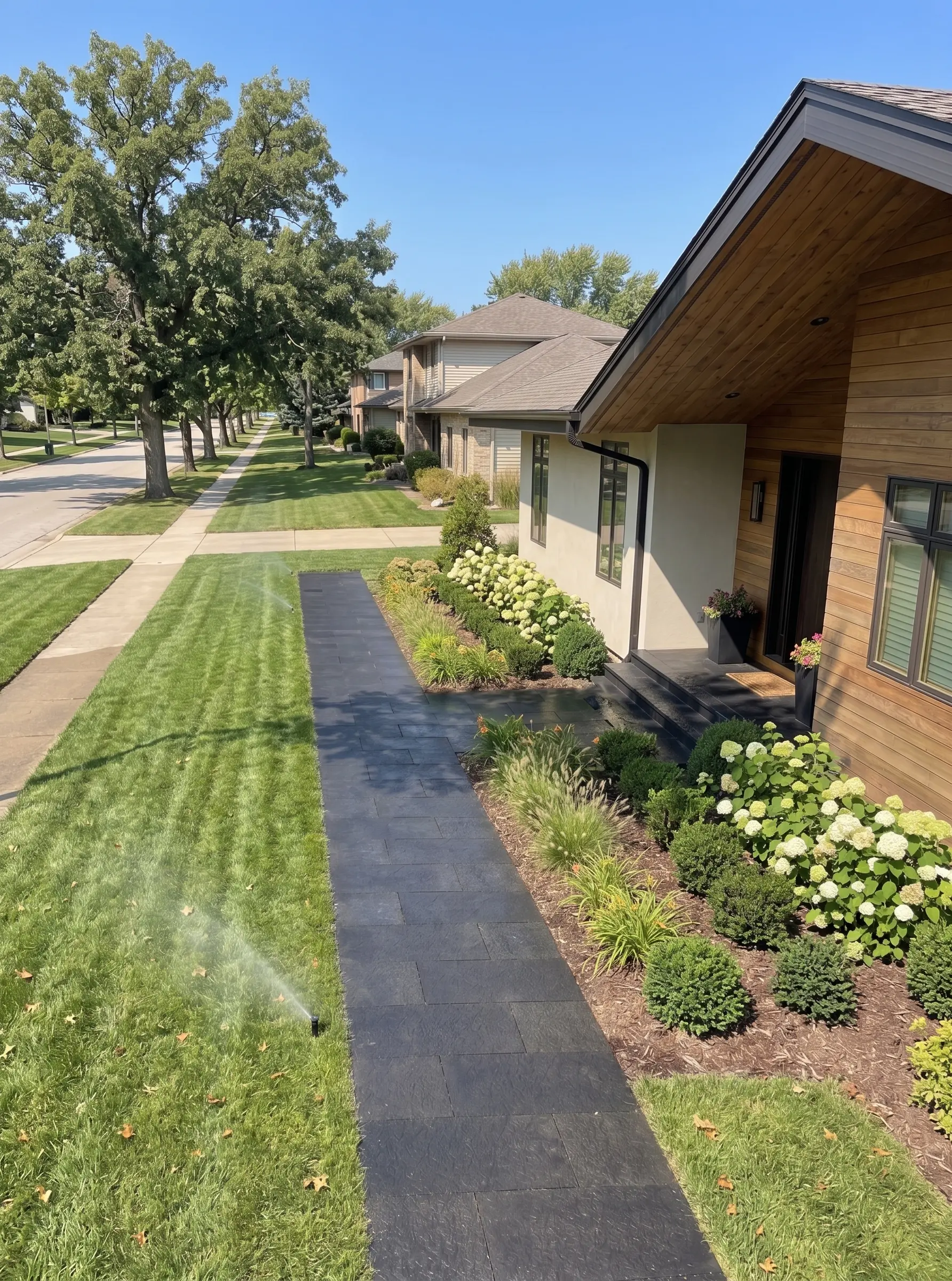
Finish Controls Sheen, Not Stone Colour
The basalt luster explained to most buyers as “dark and reflective” is really a description of one specific finish — polished — applied to one specific material. Change the finish and you change the sheen entirely, while the underlying stone colour stays in the same family. This distinction matters enormously when you are specifying across multiple surfaces in the same project, because mismatched finishes on the same basalt can read as two different stones in certain lighting conditions.
- A polished finish creates a high-gloss, mirror-like sheen — best reserved for dry indoor surfaces such as floors, walls, countertops and fireplace surrounds, where the reflective quality reads cleanly without raising concerns about wet-surface behaviour
- Honed 60 Grit produces a flat, low-sheen surface — reflectance is minimal and the tone reads slightly lighter than polished, which some designers use to soften a dark basalt palette in interior applications, covered terraces and pool houses
- Honed 120 Grit sits at a finer matte — suitable for interiors, bathrooms and wall cladding where you want the stone’s deep colour without any perceived gloss
- Brushed 80 Grit leaves a soft, open texture with essentially no specular reflectance — ideal for barefoot pool decks and terraces where you want the visual weight of basalt without any sheen at all
- Bush-Hammered finishes pit the surface mechanically, scattering light in all directions and producing the most matte result in the range — the right choice for pool decks, ramps and publicly trafficked wet areas
- Split Face exposes the raw fracture plane of the stone, producing a dimensional, highly textured surface used on feature walls, cladding, exterior fireplace surrounds and retaining walls
The practical rule: polished stays indoors and dry. For everything outdoors or wet, you are working from bush-hammered through the brushed grits, and the sheen decreases as the grit coarseness increases.
Reading Sheen Under Different Light Conditions
The variable that most specifications underestimate is the difference between how basalt luster reads under diffuse overcast light versus hard directional sun. A honed basalt floor that appears a satisfying flat grey on a cloudy day will pick up a faint sheen under a skylight at midday — not because the finish changed, but because the incident angle changed. Knowing this stops you from being surprised during a client walkthrough.
Polished basalt is the most light-angle-sensitive surface in the range. At low angles to raking light it produces strong reflections — dramatic and intentional in a feature wall application, but potentially distracting in a large floor area where the source of light moves through the day. Honed faces are far more stable across lighting conditions, which is why many hospitality specifications choose honed even for prestige lobbies where a polished product might seem the obvious call. Brushed finishes are the most stable of all — the open texture scatters light so evenly that sheen barely registers regardless of light angle.
According to USGS basalt volcanic rock properties, basalt’s dense, fine-grained structure results from rapid cooling of lava flows, and that mineralogical density is directly responsible for the stone’s capacity to take a high polish. Understanding the geology helps you explain to clients why the sheen is so uniform — there are no coarse crystals to interrupt the reflective plane.
How Format Affects the Sheen You See
Format — tile, paver, slab or cladding — interacts with finish to alter the perceived sheen of your installation. A large-format polished slab produces broad, uninterrupted reflective planes that emphasise luster. The same polished finish on a smaller tile introduces grout joints that break the reflective field and reduce the overall sheen reading at normal viewing distance. This is a specification lever, not just an aesthetic preference.
- Large-format slabs (600 mm and above, or cut to size from full slab stock) maximise the visual impact of polished and honed finishes because the uninterrupted face area lets the sheen read continuously
- Smaller tile formats introduce joint lines that visually interrupt sheen — useful when you want the material’s colour without its full reflective intensity
- Basalt pavers in standard formats work well with brushed and honed finishes outdoors, where the joint pattern also helps manage water movement across the surface
- Cladding in split face or bush-hammered finish produces a deliberately matte, textured plane that reads as shadow and depth rather than sheen — the preferred call for exterior feature walls
You can explore our low-sheen basalt finishes across the full paver range, where honed and brushed options are stocked at the quarry and cut to order in your specified dimensions.
Indoor vs Outdoor: How the Sheen Decision Changes
The finish-selection logic shifts completely when you move from indoor to outdoor. Indoors, on dry surfaces, you have genuine freedom across the full sheen range — polished for maximum reflectance, honed for a quieter interior, brushed for an urban-industrial aesthetic. Outdoors, the decision is constrained by exposure conditions, drainage geometry, and — where public projects are involved — the requirements your local building code places on surface texture in pedestrian and wet areas.
For pool decks, wet steps and slopes, choose a bush-hammered finish. For other outdoor paths, bush-hammered or Brushed 16 Grit or Brushed 36 Grit both work depending on the traffic pattern — check a sample in the actual light conditions of your site before committing. The key point is that sheen and surface texture are inversely related: the more open and textured the surface, the less sheen it carries, and the more appropriate it becomes for wet or public-access conditions.
Surface texture evaluation for wet areas is governed by Natural Stone Institute igneous stone paving technical standards, which frame finish selection as a material-performance decision rather than a purely aesthetic one. ANSI A326.3 is the current standard for evaluating stone surfaces under wet conditions — it measures wet, not dry, and the finish of the stone is the primary variable. If a tested result exists for a specific basalt finish, request the test report from your supplier.
Code and Structural Requirements That Affect Your Finish Specification
Local building codes and structural requirements enter the finish conversation more directly than most specifiers expect. In publicly accessible projects — commercial entrances, hotel pool decks, municipal plazas — the surface finish you choose may need to satisfy the wet-measured standard referenced in your local jurisdiction’s adopted building code, and some jurisdictions reference ANSI A326.3 explicitly in their accessibility and public-safety chapters.
Seismic design areas add a layer of consideration around how the stone is set. In high-seismic zones, large-format polished slabs bonded to a substrate demand that the setting-bed system and expansion joint layout comply with IBC requirements for movement accommodation, since joint failure exposes the edges of polished tiles to impact chipping — and polished edges show damage far more visibly than bush-hammered or brushed ones. Your structural engineer’s input on movement joint spacing belongs in the specification before the finish decision is final, not after.
Frost-line depth affects outdoor installations in cold climates. Basalt pavers or slabs set on a base that does not extend below the local frost line will experience seasonal heave, and any polished or honed face will telegraph the resulting lippage far more clearly than a bush-hammered surface where minor movement reads as part of the texture. The base depth requirement is a local code call — check your jurisdiction’s frost table and design the base system accordingly, separate from any material-strength consideration.
- Confirm whether your jurisdiction’s adopted code references ANSI A326.3 for wet pedestrian surfaces in your project type
- Specify expansion joint spacing in consultation with the structural engineer, not from a generic rule of thumb — this is especially important for large-format polished formats in seismic zones
- In freeze-thaw regions, base depth must reach below the local frost line — a polished or honed finish makes any heave-induced lippage immediately visible, so a more textured finish may be the lower-risk call outdoors in cold climates
- For driveways, use setts or cobbles at least 3.5 in (4 in standard) thick on a compacted base, or pavers 2 in (5 cm) or thicker mortar-bonded to a reinforced concrete slab — finish choice follows thickness and base requirements, not the other way around
Sealing and How It Shifts Perceived Luster
Sealer choice is the variable that can dramatically alter basalt luster after installation, and it is often decided too late in the project sequence. An impregnating sealer that sits below the surface — the correct call for most basalt applications — leaves the finish appearance unchanged. A topical or film-forming sealer adds a coating above the stone surface and raises the apparent sheen, sometimes by a full finish category: a honed basalt sealed with a gloss-finish topical sealer can read closer to polished in certain light conditions, which may not be what your specification intended.
The practical check: always ask your sealer supplier to confirm whether the product is impregnating or topical, and request a test on a sample piece in your specified finish before committing to the full installation. Citadel Stone cuts basalt to order from slab and tile stock at our selected quarries, so sample pieces in your chosen finish are available to run sealer tests before your material ships.
- Impregnating sealers — penetrate the surface without forming a film, preserve the original finish sheen, re-apply on the interval your sealer manufacturer states
- Topical sealers — sit on the surface, raise perceived sheen, can yellow over time in UV-exposed outdoor applications, generally not recommended for exterior basalt
- Colour-enhancing sealers — deepen the apparent tone of the stone without raising sheen to a gloss level, useful when you want to intensify a dark basalt without changing its matte finish appearance
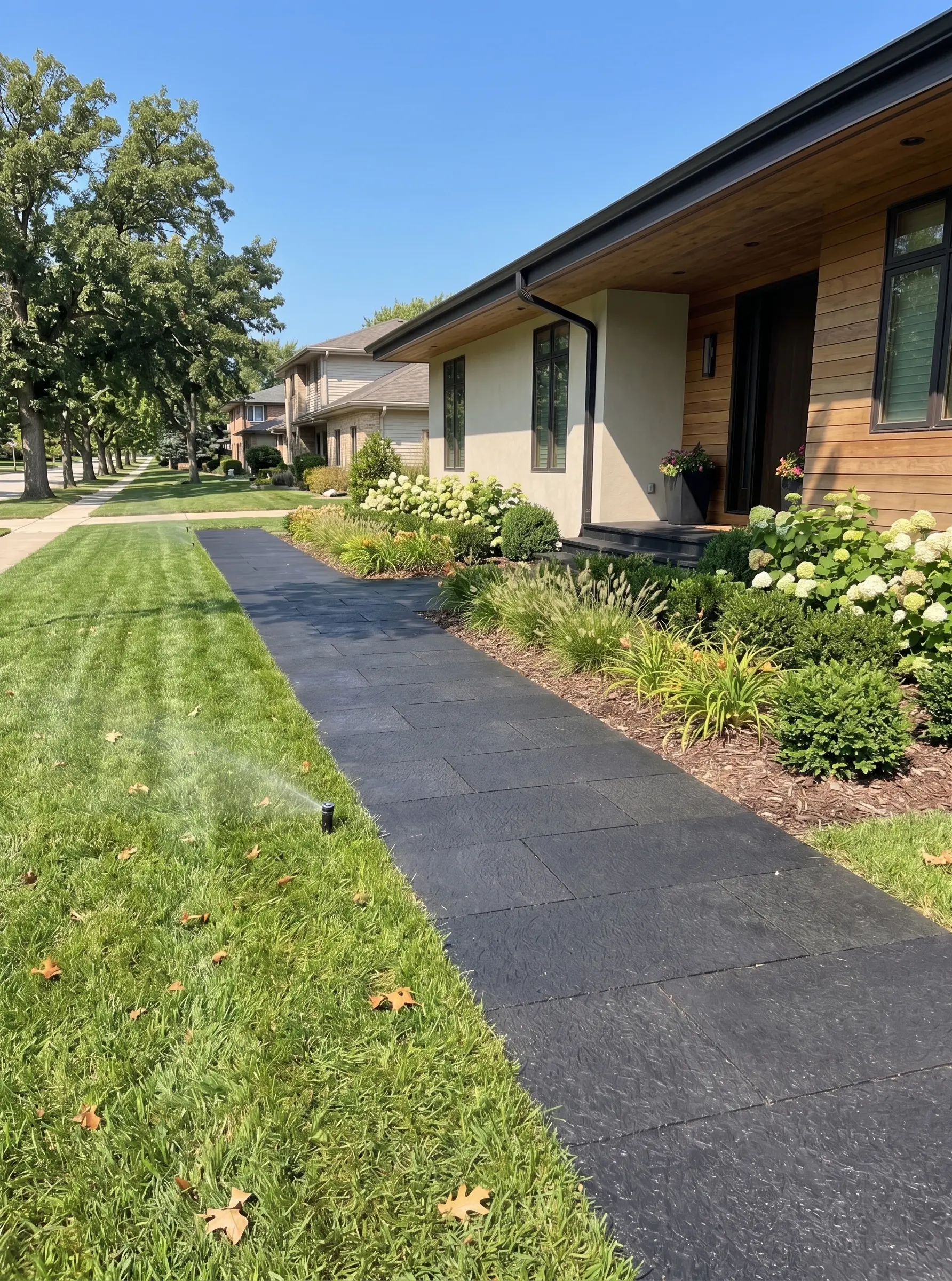
Finish Compatibility with Basalt Thickness and Application
Thickness drives the structural capacity of the installation, and finish is overlaid on top of that structural decision — not instead of it. A polished finish on a 10 mm wall tile is appropriate; a polished finish on a 20 mm tile being specified for a covered patio is not. The moment you move outdoors to pedestrian traffic areas, however, your thickness and setting method decisions are governed by the load and drainage requirements of the application, and the finish is chosen last, from within the options that are appropriate for that wet or dry, indoor or outdoor context.
The Britannica entry on basalt volcanic rock formation details how the stone’s interlocking fine-grain matrix contributes to its notably low water absorption compared with sedimentary stones like limestone — a property that affects both sealing intervals and long-term appearance in wet applications. For test data specific to the material you are specifying, request the absorption test report from your supplier rather than relying on general figures.
- Interior wall cladding in Honed 120 Grit or Polished — standard tile thickness applies, set in accordance with TCNA specifications for your substrate type
- Interior and covered-terrace floors in Honed 60 Grit or Double-Brushed 60 — thickness to the project specification, substrate prep is the critical variable
- Exterior pedestrian paving in Brushed 36 Grit or Bush-Hammered — 30 mm (3 cm) on a proper base for patios, paths and pool decks; confirm thickness with your structural drawing
- Driveways in basalt setts or cobbles — minimum 3.5 in thick on a compacted base as specified, finish options are Split Face or as-split for setts
Final Recommendations
Basalt luster explained through the full chain — mineralogy to finish to format to sealer to lighting — gives you a specification that holds up through the client sign-off, the installation and the years of service that follow. The single most useful discipline is to test your finish choice in a sample under the actual lighting conditions of the installation space before you finalise the order, because catalogue images and showroom lighting both flatten the range of sheen effects that show up in real-world raking light. Your delivery schedule factors into this: lead times for cut-to-order basalt are quoted with the order, so build sample review into the project programme early enough that a finish change does not affect your programme.
Polished stays for dry indoor surfaces. Bush-hammered and the coarser brushed grits belong outdoors, in wet areas and on any surface where pedestrian safety in wet conditions is a code or design consideration. Honed finishes work across interior floors, covered terraces and wall cladding where a flat, low-reflectance surface reads better than gloss. For a related material comparison that may inform your hardscape palette — particularly where basalt is being considered alongside fired clay products — how basalt and brick compare on wear and maintenance provides a direct side-by-side look worth reviewing before you finalise the material call. Basalt from Citadel Stone is selected for its even, matte-to-satin luster, which generally reads consistent under direct sunlight.
Related reading: basalt rock type explained · brushed basalt pavers · large format basalt pavers.