

The finish you choose for a basalt hexagon shower floor does more specification work than any other single decision — it determines texture, maintenance interval, and how the surface behaves underfoot once water and soap film are present. Most specifiers focus on the tile shape and miss this entirely, then spend the first year of ownership wondering why the floor feels different from the showroom sample. Basalt is a dense volcanic material with a closed, fine-grained structure, and that density is genuinely advantageous in a wet interior environment — but only when the finish, the joint width, and the drainage geometry are matched to each other from the start.
Why Finish Is the Deciding Variable in a Wet Shower
Your shower floor sits at the intersection of daily water exposure, soap residue, and bare feet — a combination that makes finish selection far more consequential than it is on a dry bathroom wall. A polished finish, which reads beautifully on a dry indoor countertop or vanity top, creates a surface that becomes slippery when wet and soapy; it is not appropriate here. For shower floors, the correct finish range runs from honed to bush-hammered, and the choice within that range depends on how much texture you want underfoot and how rigorously you intend to maintain it.
The current slip performance standard for wet interior tiles is ANSI A326.3, which is measured wet — not dry. The predecessor to this standard, the ASTM C1028 static test, was withdrawn in 2014. Under ANSI A326.3, the finish is the primary variable; a tested certificate is available on request. Rather than publish a figure, the practical guidance is straightforward: bush-hammered leaves the most open, matte surface texture and is the right call for shower floors where textural confidence matters most; honed at 60 or 120 grit leaves a smooth but non-reflective surface that works well in showers maintained on a regular cleaning schedule.

What the Hexagon Format Actually Does for Drainage
Hexagonal tiles have more linear joint length per square foot than square or rectangular formats of the same nominal size. In a shower floor, that means more grout joint area — and more pathways for water to move toward the drain. This is a structural drainage benefit, not just an aesthetic one, and it is one reason the basalt hexagon shower floor has become a practical specification choice rather than a trend-driven one.
The catch is that more joint length also means more surface area for soap scum and mineral deposits to accumulate. You will want to spec an epoxy or urethane grout for the joints rather than a standard cementitious grout — the resistance to staining in a shower environment is meaningfully better, and the joint holds its color over time without the discoloration cycle that cementitious grout goes through. Joint width for a small hexagon mosaic typically runs tight, and that tightness amplifies the importance of grout choice.
- More joint perimeter per square foot accelerates water movement toward the drain
- Tight joints on a small hexagon require precise leveling — an uneven mortar bed telegraphs through the tile surface
- Epoxy grout outperforms cementitious grout in the soap-and-mineral environment of a daily shower
- The hexagon geometry allows a mosaic sheet format, which simplifies installation alignment considerably
Reading Basalt Wet-Area Performance Honestly
Basalt is among the denser volcanic stones used in interior applications, and its low absorption rate — verifiable through ASTM C97, with the test report available on request — means it takes up very little moisture through the body of the tile. This is a genuine advantage in a shower: the tile itself does not become saturated over years of use the way a more porous stone can. According to USGS data on basalt volcanic rock properties, basalt’s fine-grained, interlocking mineral structure produces exactly the low-permeability characteristic that makes it a sound choice for wet interior applications.
That low absorption does not make the surface maintenance-free, though. Soap film builds on any dense, smooth surface, and basalt is no exception. A honed basalt hexagon wet area needs sealing on the interval your sealer manufacturer specifies — typically annually for a heavily used shower — and cleaning with a pH-neutral product that does not etch the surface or break down the sealer prematurely. Acidic cleaners are a hard no: basalt contains iron and calcium minerals that react badly to acid-based products, leaving dull patches that cannot be reversed without re-finishing.
Setting Basalt Hexagon Tile on a Mortar Bed
The mortar bed is where basalt hexagon shower floor installations succeed or fail, and the failure mode is almost always the same: lippage caused by an insufficiently flat substrate. Small hexagons on a mesh-backed mosaic sheet are unforgiving of substrate variation because the sheet is rigid enough to reveal any deviation from flat but too small to bridge it. Your substrate needs to be flat to within the tolerance your tile setter’s TCNA method requires — for a mosaic tile, that is tighter than for a large-format tile.
Use a large-format trowel and back-butter each sheet rather than relying solely on the bed coverage from the notched trowel. Full coverage underneath a basalt hexagon mosaic is important: voids beneath individual tiles in a shower floor allow flex under foot traffic, and flex eventually cracks the grout joints or debonds the tile. In a shower, a debonded tile is a water-infiltration problem, not just an aesthetic one.
- Substrate flatness tolerance for mosaic tiles is more demanding than for large-format tiles — confirm with your installer’s TCNA method reference
- Back-butter each sheet to ensure full mortar contact across the tile face
- Use a polymer-modified thin-set rated for natural stone and wet interiors
- Allow the mortar bed to cure fully before grouting — do not compress the schedule in the shower environment
Slope and Drain Geometry in the Shower Pan
Your drain placement and floor slope determine whether the hexagon format works with the installation or against it. A center drain with a uniform slope radiating outward is the most straightforward geometry with a hexagonal tile pattern — the grout joint lines run in six directions, so water finds a path regardless of which direction the slope runs. A linear drain along one wall requires a single-plane slope, which is easy to achieve with larger tiles but demands careful mortar bed screeding when the tile is a small mosaic format.
The minimum slope for a shower pan is typically set by your local plumbing code, with most references landing at a quarter-inch drop per foot. Do not go shallower than code minimum — pooling water on a shower floor is a maintenance problem that compounds over time, regardless of the tile material. For basalt hexagon wet area applications with a linear drain, consider working with a prefabricated sloped foam shower pan system rather than a hand-screeded mortar bed: the slope geometry is manufactured in, and the installation tolerance is tighter than most field-screeded beds.
Outdoor and Climate-Exposed Basalt Hexagon Applications
The basalt hexagon format occasionally appears in covered outdoor wet areas — outdoor showers adjacent to pool decks, or sheltered spa surrounds. In these settings, the installation must account for mechanical stresses that an indoor shower never sees. Wind-driven rain penetrates joint edges differently from shower water: it arrives at an angle, under pressure, and can work into joint lines that would be perfectly adequate for a vertical-flow shower. Edge restraint at the perimeter of any outdoor hexagon installation needs to be rigid and continuously bonded — a gap in the edge restraint allows wind load to work the tiles at the perimeter, and once movement starts at the edge, it propagates inward.
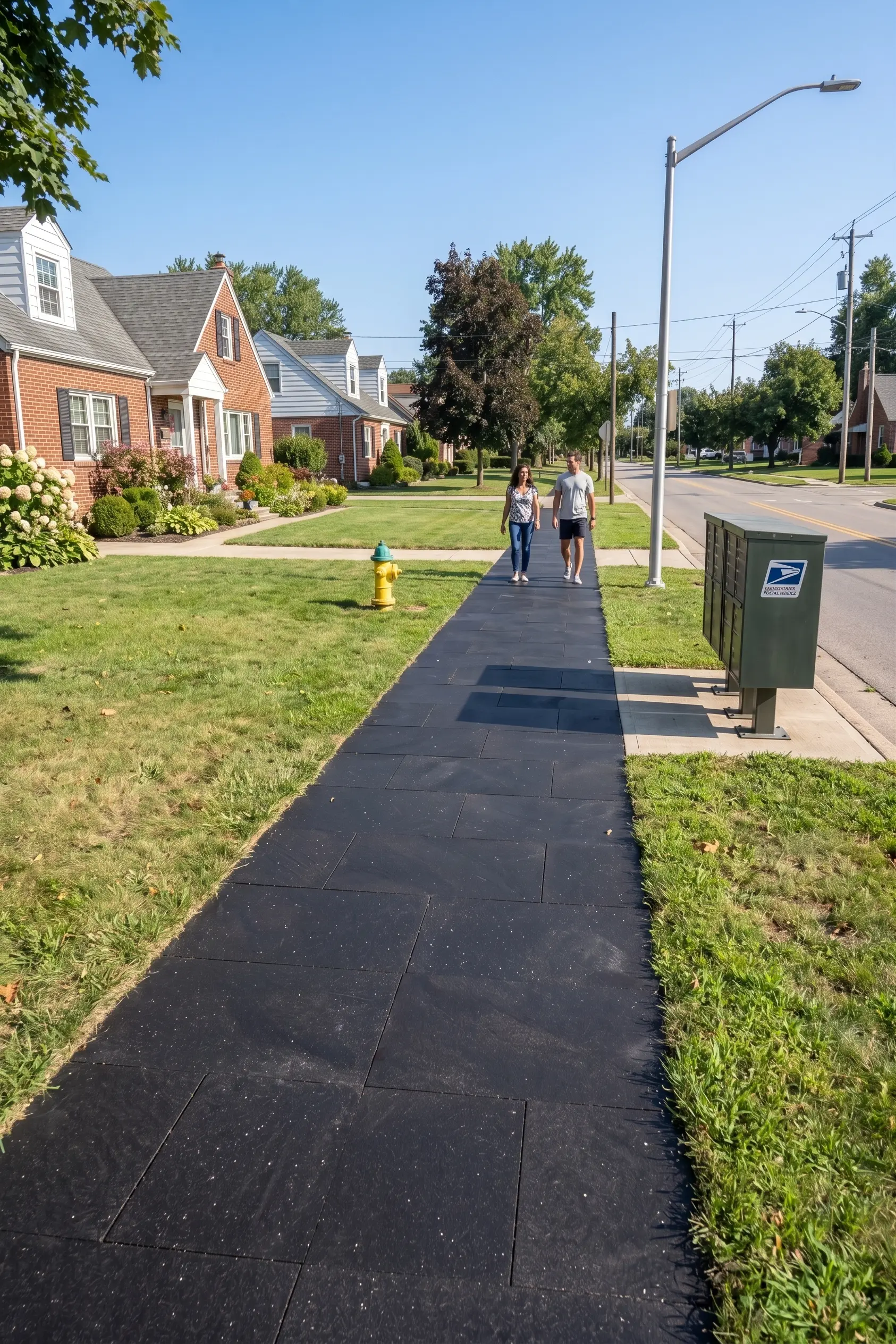
According to the Natural Stone Institute’s ASTM tile stone specifications, natural stone tile installations in exposed outdoor environments should be specified with flexural and bond strength appropriate to the thermal and mechanical load of the site. For outdoor basalt installations, a medium-bed mortar with polymer modification gives the bond-line the flexibility to absorb minor movement without cracking — a rigid thin-set in a temperature-cycling outdoor environment is more prone to bond failure than one with some flex engineered in. Bush-hammered finish is the right choice for pool decks, wet steps, and exposed outdoor shower floors; for other outdoor covered paths, bush-hammered or a coarse-grit brushed finish both work — check a sample before committing.
Sealing and Maintenance on a Realistic Schedule
Sealing a basalt hexagon shower floor is not optional — it is the maintenance step that protects the stone body and the grout joints from soap scum penetration and mineral staining. The sealer does not change the surface texture or the finish character; it occupies the microscopic pore structure of the stone and the grout, reducing how much material can be absorbed during daily use. The product you choose matters: look for a penetrating impregnator rated for natural stone in wet interiors, not a topical coating that sits on the surface and peels.
Apply sealer to a clean, fully cured, dry surface — the standard waiting period after installation before first sealing is typically 28 days for the mortar and grout system to cure completely. After that, the reapplication interval depends on the sealer manufacturer’s recommendation and the intensity of use. A heavily used household shower may need resealing annually; a guest shower used infrequently can go longer. The test is simple: put a few drops of water on the surface and watch. If the water beads, the sealer is active. If it absorbs within a minute or two, it is time to reseal.
- Use a penetrating impregnator, not a topical coating, for a shower floor application
- Allow the full mortar and grout cure period before first sealing
- Reapply on the interval your sealer manufacturer states — the bead test tells you when it is due
- Clean with pH-neutral products only — acidic or alkaline cleaners degrade both the sealer and the stone surface
Ordering and Planning for a Basalt Hexagon Project
Basalt hexagon mosaic sheets are cut to order from slab stock, so the consistency of color and finish across your order depends on the blocks being drawn from the same quarry run. Citadel Stone cuts this material to order at our selected quarries in the Middle East, and the specification is confirmed before production begins — color range, finish, nominal tile size, and sheet layout. Lead times are quoted with the order and depend on current production schedule and delivery logistics, so build that into your project timeline before committing a shower rough-in date.
Order a meaningful overage — for a mosaic format in a shower with a custom drain cutout, angled walls, or a niche, your waste factor will be higher than for a rectangular tile in a simple square room. A ten to fifteen percent overage is a reasonable starting point for a standard shower; a more complex geometry warrants more. For delivery, confirm that truck access to the site is workable before the order ships — mosaic sheets on pallets are manageable in weight but need clearance to offload cleanly. Explore our basalt hexagon mosaic options and specifications before finalizing your material order.
Getting Your Basalt Hexagon Shower Floor Specification Right
Getting a basalt hexagon shower floor right comes down to a sequence of decisions that reinforce each other: finish first, then grout selection, then substrate preparation, then sealing protocol. None of these steps is independently sufficient — a perfectly chosen bush-hammered finish on a poorly prepared mortar bed will still fail at the joints. The hexagon format genuinely earns its place in the specification when it is installed correctly: the joint geometry supports drainage, the dense basalt body resists moisture absorption, and the material ages well in a maintained interior wet environment without the surface degradation you see in softer stones over the same period. For related hexagon material decisions, basalt hexagon tile selection guidance covers the buying process in depth. Stone for nationwide projects ships from selected quarries in the Middle East, with flamed basalt hexagon chosen for wet shower floors.
Related reading: Outdoor Basalt Hexagon Tile: Edges, Cuts and Borders · How to Install Basalt Hexagon Floor Tile · basalt hexagon tile care.