

Basalt hexagon tile care separates installations that stay sharp-looking for decades from those that dull, stain, or effloresce within a few years — and the dividing line almost always comes down to sealer selection and timing, not the stone itself. Basalt is a dense, fine-grained volcanic stone with a characteristically low absorption rate, but that doesn’t mean it shrugs off neglect. The pore network is tight enough that staining agents — cooking oils in kitchens, iron-rich water at pool surrounds, tannin-heavy runoff outdoors — take longer to penetrate, but once they’re in, they’re harder to draw out than in a more open stone like limestone.
What Makes Basalt Hexagon Tile Different to Maintain
The hexagonal format introduces more lineal grout joint per square foot than a standard square or rectangular tile. That matters for maintenance because grout is almost always the first place you’ll see discolouration and biological growth — not the stone face itself. Basalt hexagon tile care therefore means you’re maintaining two materials simultaneously: the stone and its grout network. Treating them with the same product at the same interval is a common mistake. Penetrating stone sealers are formulated for porous mineral substrates; they have no benefit on dense cementitious grout and can actually interfere with grout-specific sealers applied afterward.
The dark coloration typical of basalt — charcoal, blue-black, or near-black — also hides efflorescence early but makes calcium deposits and lime haze from hard water dramatically visible once they develop. You’ll notice white streaks on a dark basalt floor long before you’d spot the same deposit on a pale limestone. Early detection is an advantage; overlooking it because you assume the dark stone is clean is not.
Sealer Selection for Basalt Hex Tile
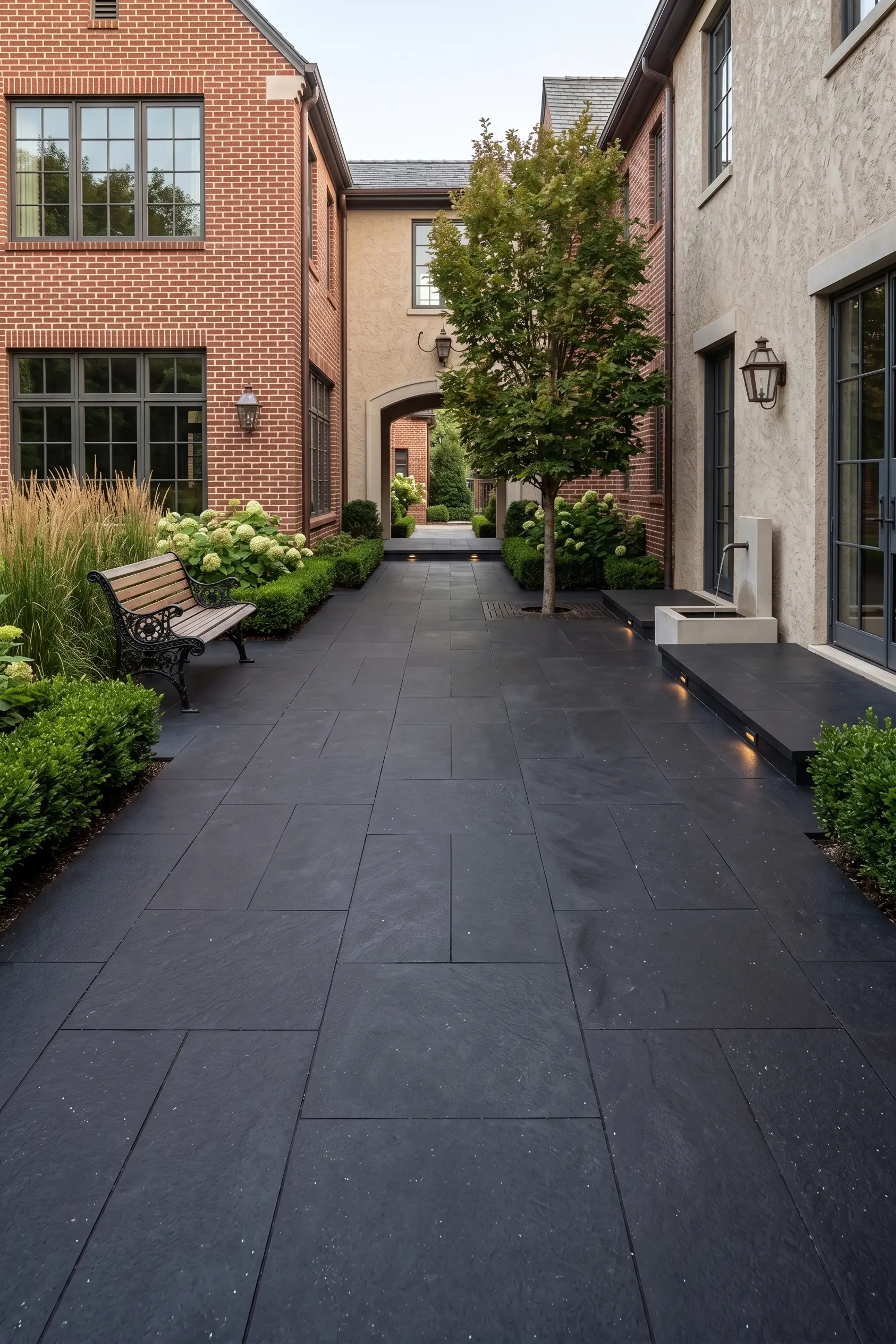
Your sealer choice is the single most consequential decision in any basalt hexagon tile care programme. There are two broad families: impregnating penetrating sealers and topical film-forming sealers. For basalt hex tile in interior floors, kitchens, bathrooms, and wet-room walls, a penetrating impregnating sealer is the correct call. It bonds below the surface, leaves the stone’s natural appearance intact, and doesn’t create a film that can peel, yellow, or trap moisture.
Topical sealers — acrylics, urethanes, and wax-based products — are sometimes marketed as stone sealers, but they sit on the surface and require stripping before reapplication. On a hexagonal layout with tight grout joints, stripping a topical sealer without leaving residue in the joint profile is genuinely difficult. Stick with penetrating sealers for basalt hex tile and you’ll avoid that problem entirely.
- Choose a fluorocarbon-based or silane-siloxane impregnating sealer rated for dense igneous stone
- Confirm the sealer is suitable for interior wet environments if the tile is in a bathroom or wet-room setting
- Apply sealer only to clean, fully cured stone — grout must cure completely before sealing or the sealer traps outgassing moisture
- Check the sealer manufacturer’s stated reapplication interval and follow it, not a generic rule of thumb
- Test the sealer on an off-cut or inconspicuous area first — some sealers slightly deepen the colour of honed basalt, which is usually desirable but worth confirming before full application
According to NSI stone tile standards, the interaction between a sealer and a stone’s surface finish type is a key specification variable — a detail that often gets glossed over in general-purpose sealing guides.
Initial Sealing: Timing and Application
The initial seal on freshly installed basalt hexagon tile is the most important application in the tile’s maintenance lifecycle. Get this one right and every subsequent maintenance step becomes easier. Allow at least 48 to 72 hours after grout has fully cured before applying the first coat — some deep-bed mortar installations in cooler or more humid environments need longer. Check the grout manufacturer’s technical data sheet for the stated cure time; don’t guess.
Application technique matters on hexagonal tiles specifically because the varied joint angles create more corners and recesses than a grid layout. Apply sealer with a soft cloth or a low-nap applicator, working in small sections. Keep the sealer moving — don’t let it pool in grout joints or sit on the stone face longer than the manufacturer’s dwell time. Buff off any excess before it starts to dry. Residue left on honed basalt creates a patchy sheen that requires a dedicated residue remover to correct.
- Apply two thin coats rather than one heavy coat — thin coats penetrate more effectively and leave less surface residue
- Allow the first coat to absorb fully before applying the second, per the product’s stated inter-coat window
- Work in sections no larger than you can comfortably buff out before the sealer tacks
- Keep ventilation high during application and for several hours afterward
Routine Cleaning for Basalt Hexagon Tile
Day-to-day basalt hexagon tile care is genuinely straightforward once a solid sealer is in place. The principle is pH-neutral everything — neutral cleaners, neutral rinse water where possible, and no acid or alkaline products unless you’re targeting a specific problem and know what you’re doing. This applies whether the tile is on a kitchen floor, a bathroom wall, or an outdoor terrace covered by a pergola.
The TCNA installation and maintenance standards for natural stone tile are clear that routine alkaline or acidic cleaning agents accelerate sealer breakdown, even in small quantities over time. A sealer that would otherwise last three to five years can degrade in twelve to eighteen months under weekly cleaning with a mildly alkaline floor cleaner. The sealer cost is a fraction of the re-sealing labour cost, so protecting the sealer by choosing the right routine cleaner is straightforward value engineering.
- Use a pH-neutral stone cleaner diluted to the manufacturer’s stated ratio
- Damp-mop rather than wet-mop — standing water left on basalt hexagon tile can wick into the grout joints and cause efflorescence over time
- Dry the surface with a microfibre mop or cloth after wet cleaning in sealed interior spaces
- For outdoor installations, a low-pressure rinse followed by drying is adequate for routine maintenance
- Sweep or vacuum frequently — fine grit and sand act as an abrasive on honed basalt surfaces and cause premature dulling of the finish
Targeted Stain Removal Without Damaging Basalt
Stain removal on basalt hexagon tile requires matching the treatment to the stain type — not reaching for the strongest cleaner available. The most common stains on basalt in residential and commercial settings fall into a few predictable categories: oil-based (food fats, body oils, machine oils), iron-based (rust from metal furniture or water supply), and mineral-based (lime scale, calcium deposits, efflorescence).
For oil-based stains, a poultice made from an absorbent powder mixed with a degreasing agent is more effective than a surface scrub. Apply the poultice, cover it with plastic film, and leave it to draw the oil out over twelve to twenty-four hours. For iron staining, a proprietary iron-removing stone cleaner formulated for use on dark stone is the right tool — never use a generic rust remover with hydrochloric acid on basalt, as it will etch the stone and destroy the grout. Lime scale and calcium deposits respond to a mildly acidic cleaner, but use it at low dilution, rinse immediately, and reseal the area afterward because the acid will strip the impregnating sealer in the zone of application.
- Identify the stain type before selecting a treatment — the wrong product can set the stain or damage the stone
- Always test any stain remover on an inconspicuous tile or off-cut before treating visible areas
- Never leave acidic or alkaline products on basalt longer than the manufacturer’s stated dwell time
- Rinse thoroughly with clean water after any chemical treatment
- Reseal the treated area after aggressive stain removal, as sealers in that zone will have been depleted
How Finish Type Changes Your Maintenance Approach
The finish on your basalt hexagon tile has a direct effect on how much maintenance effort the installation demands and which cleaning methods are appropriate. A polished finish on basalt — suitable only for dry indoor surfaces like floors, walls, countertops, and fireplace surrounds — presents a closed, reflective surface that resists staining well but shows water spots and cleaning residue immediately. Routine cleaning has to be more thorough and more consistent to keep the reflective surface looking right.
A honed finish, which is the more common specification for basalt hexagon tile in bathrooms, kitchens, and general interior floors, leaves a matte, slightly open surface that hides minor soiling but requires sealing more attentively than a polished surface. For pool surrounds and wet areas, a bush-hammered finish offers an open, matte texture that changes the cleaning dynamic — the textured surface traps more particulates and organic material, so more frequent brushing with a stiff natural-bristle brush is part of the routine. Understanding basalt’s volcanic mineralogy helps explain why its surface responds differently to various finishes compared to sedimentary stones — its tightly interlocked crystalline structure means each finishing process produces a distinctly different absorption profile at the microscopic level.
For outdoor paths and terraces, a Brushed 36 Grit finish works well for patios and pool surrounds, while a Brushed 80 Grit finish suits barefoot pool deck areas and terraces. Both leave an open matte texture that allows for vigorous brushing during routine cleaning without damaging the stone face. For our honed basalt hexagon in interior applications, the smooth matte surface responds best to soft cloths, non-abrasive mops, and pH-neutral cleaners — never abrasive pads, which will create visible scratch patterns on the uniform surface.
Grout Care in a Hexagonal Layout
The grout network in a basalt hexagon tile installation covers more surface area relative to the tile than almost any other standard format. That’s worth stating plainly because it means grout maintenance isn’t a secondary concern — it’s central to the overall appearance of the installation. Discoloured or cracked grout on a dark basalt hexagonal floor reads as badly as stained tile.
Grout sealing should be handled separately from stone sealing unless you’re using a product specifically formulated for both substrates. Grout-specific penetrating sealers protect the cementitious matrix from biological growth, oil penetration, and mineral staining without leaving a surface film. Apply grout sealer after the stone sealer has fully cured — typically twenty-four to forty-eight hours after the final stone sealer coat, following the stone sealer manufacturer’s guidance. Inspect grout joints annually. Fine cracks or voids in the grout are the entry point for moisture, and in freeze-thaw regions, even a small grout failure on an outdoor installation can propagate quickly once water gets into the joint and cycles through freezing and thawing.
- Regrout failed joints promptly rather than waiting for adjacent joints to fail as well
- Match the grout colour carefully when regrout is needed — basalt hex tile layouts make colour inconsistency highly visible
- Keep grout joints free of biological growth in shaded outdoor areas by brushing with a stiff natural-bristle brush during routine cleaning
- Reseal grout after any deep cleaning, regrout, or stain removal treatment
Budgeting for Long-Term Care: Sourcing and Cost Considerations
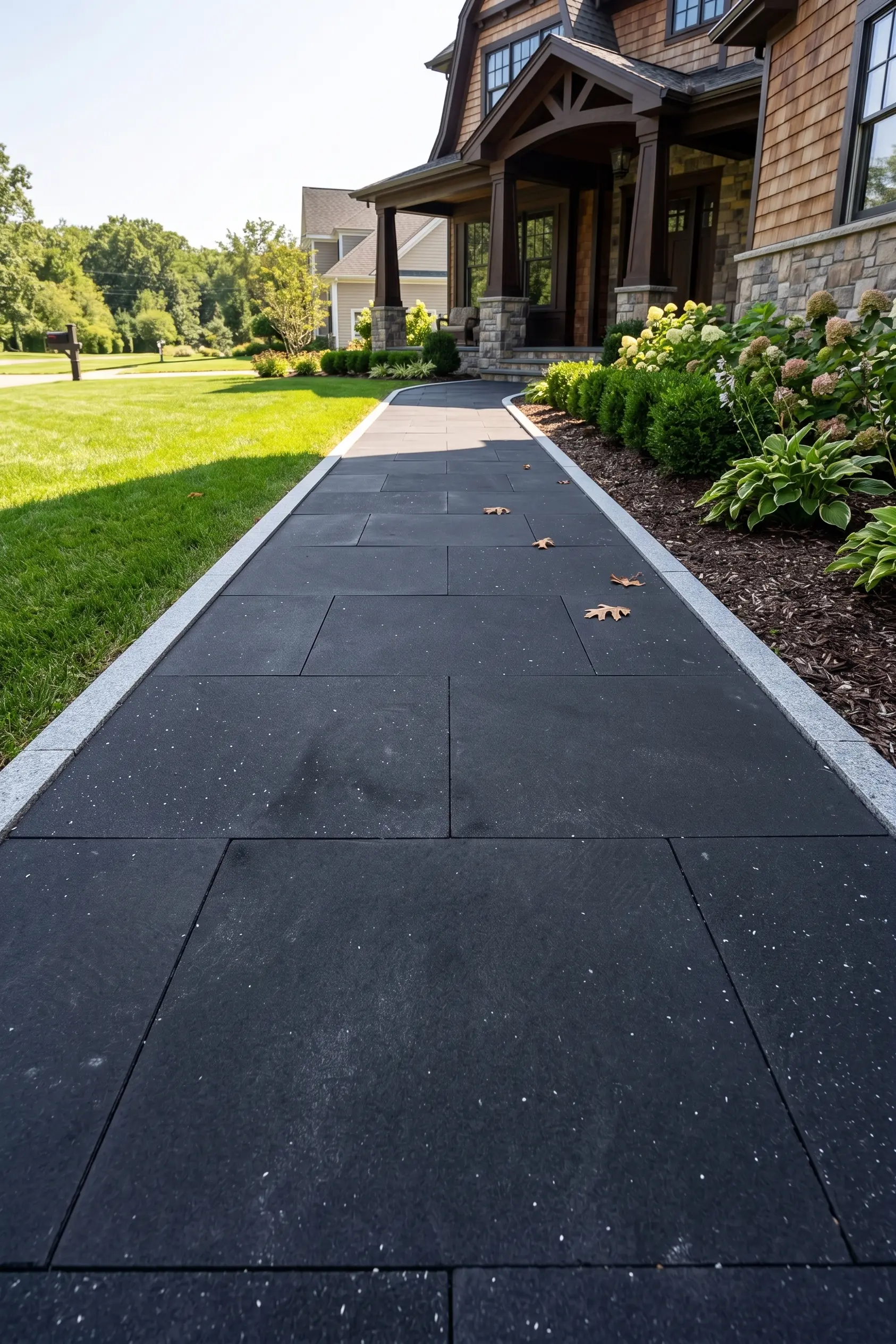
Basalt hexagon tile care carries an ongoing cost that’s worth factoring into your project budget from the start. Sealer, grout sealer, pH-neutral cleaner, and the occasional stain-removal treatment represent a modest but real recurring expense. For most residential installations, the annual consumables cost is minimal — but for large commercial floors or public-facing installations, the scale makes it material.
Freight distance plays into this more than most owners anticipate. Basalt hexagon tile is typically quarried and cut to order at selected quarries, and delivery schedules are quoted with the order. For projects in freight-intensive regions — rural areas far from major ports or distribution hubs — the lead time between ordering replacement tiles for a repair and receiving them can run several weeks. The practical implication: order a buffer of spare tiles when you do your initial order and store them flat in a climate-stable space. Matching a tile from a different production batch later is harder than it sounds, because the natural colour variation in basalt means even tiles from the same quarry can shift slightly between cuts. Citadel Stone cuts basalt hexagon tile to order from slabs at our selected quarries, which means exact-batch reorders are possible within a production run but not guaranteed months or years later.
Labor cost for a professional re-seal on a large hexagonal floor is higher than for the same square footage in a grid format — the additional grout lineal footage means more care is needed during application and buffing, and experienced stone finishers charge accordingly. In markets where skilled stone maintenance labor is scarce, that cost differential is steeper. Budget for professional resealing every three to five years depending on traffic levels and your sealer manufacturer’s stated interval, and handle routine cleaning yourself between those professional services. The Natural Stone Institute’s stone care guidance provides a useful framework for understanding what maintenance tasks are DIY-appropriate and which benefit from professional handling.
Basalt Hexagon Tile Care: Spec Wrap-Up
Basalt hexagon tile care comes down to three decisions executed well: the right sealer for the right finish, a pH-neutral routine cleaning protocol, and a grout maintenance programme that treats the joint network as seriously as the stone face. Get those three right at installation, and the ongoing maintenance burden is low. Overlook any one of them, and you’re likely dealing with staining, efflorescence, or grout failure within the first few years — problems that are correctable but far more expensive to address than to prevent.
Your finish specification shapes the entire maintenance approach, so confirm the finish before the order is placed. For pool surrounds and wet areas, bush-hammered is the correct specification. For interior floors and bathrooms, honed is the standard choice. Polished stays reserved for dry indoor surfaces only. The installation substrate and drainage geometry also affect how moisture moves through the system, which in turn affects how often you’ll need to address efflorescence and grout integrity. For a detailed walkthrough of substrate preparation and setting methods, basalt hexagon tile installation guidance covers the technical decisions that underpin a long-lived result. Basalt hex tile from Citadel Stone generally stays easy to maintain when sealed, with surface finish confirmed before each order ships.
Related reading: how basalt columns form · basalt herringbone tile ideas · Scoria vs Basalt Rock: Key Differences Compared.