

Black basalt soil stops most gardens before they start — its dense, compacted structure creates a root environment that drains poorly, warms slowly, and locks out oxygen at the rhizosphere. The problem isn’t the basalt mineral content itself, which actually contributes useful trace elements over time. The real issue is physical structure: when fine basalt-derived particles compact without organic matter to create pore space, you get a medium that behaves more like a poorly-drained subgrade than a growing medium. Understanding why that happens is the first step toward fixing it effectively.
What Is Black Basalt Soil and Why Does It Behave Differently
Basalt is a fine-grained volcanic rock, and its weathered derivatives tend to produce some of the most mineral-rich but structurally challenging soils on the planet. According to USGS basalt volcanic rock properties and composition, basalt is rich in calcium, magnesium, and iron — elements that support plant nutrition over the long term. The difficulty is that basalt-derived particles, especially when they include significant clay fractions, compact aggressively under foot traffic, irrigation pressure, and their own weight. You end up with a dark, heavy medium that looks fertile but resists drainage and root penetration simultaneously.
The dark coloration comes from both the iron-rich mineral content and the organic matter that accumulates in low-drainage conditions. That organic matter is often anaerobic — it’s broken down without oxygen — which means it contributes very little to soil structure and can even generate compounds harmful to fine roots. Your instinct to add compost and work the soil is correct, but the sequence and technique matter more than most gardeners realize.
Diagnosing Your Drainage Problem Before You Amend Anything
The single most useful field test you can run before spending money on amendments is a simple percolation check. Dig a hole roughly twelve inches deep and twelve inches wide, fill it with water, let it drain completely, then fill it again and time how long the second fill takes to empty. Healthy garden soil drains at a rate that empties that hole within an hour or two. Black basalt soil that’s heavily compacted or clay-dominant will often hold standing water for several hours — sometimes longer than a full day.
- A drain time under two hours suggests moderate compaction — amendments and aeration will resolve it
- A drain time between two and six hours signals significant clay-fraction buildup requiring structural amendment and possible raised-bed construction
- Standing water remaining after six or more hours indicates a drainage problem that surface amendments alone won’t solve — you may need subsurface intervention
- Check multiple spots across the planting area — drainage performance in basalt-derived soils varies considerably within a single garden bed
This test costs nothing and takes thirty minutes. Skipping it and going straight to amendment is the single most common mistake in black basalt soil remediation — you might be solving the wrong problem at the wrong depth.
Why Compaction Is the Core Problem, Not Nutrient Deficiency
Here’s what most gardeners miss when they first encounter heavy black basalt soil: the instinct is to add fertilizer because the plants look stressed. But nutrient availability in dense basalt soils is almost always a secondary problem. The roots can’t access nutrients they can’t physically reach. Compaction reduces macro-pore space — the larger gaps that allow oxygen, water movement, and root extension — and once those pores close down, even a chemically well-balanced soil becomes hostile to plant growth.
The mechanical structure of black basalt soil under compaction also creates a perched water table effect. Water moving down through the profile hits the dense layer, pools briefly, then moves laterally instead of continuing downward. Roots sitting in that temporarily saturated zone experience oxygen stress even when the surface looks dry. You’ll often see plants wilting in wet weather — a classic sign that the roots are suffocating rather than dehydrating.
According to Britannica’s overview of basalt volcanic rock formation and construction properties, basalt weathers into a fine, dense clay-like matrix in many geological settings. That weathering product is what gives black basalt soil its characteristic heaviness and why it behaves so differently from sandier or more granular growing media.
Amendment Strategies That Actually Work for Heavy Basalt-Derived Soil
Your amendment program needs to target structure first and nutrition second. The most effective approach combines coarse organic matter with a mineral amendment that creates permanent pore space — something that won’t compress out over one or two seasons the way fine compost alone tends to.
- Coarse horticultural grit or pea gravel mixed through the top twelve inches opens macro-pore space permanently — target a volume ratio that gives the mix a noticeably grittier feel
- Mature compost with visible fibrous structure (not fine, homogenous black compost) adds both organic matter and pore geometry — avoid over-composted material that has lost its structural benefit
- Aged wood chip mulch worked into the top six inches breaks down slowly and maintains pore space longer than green compost
- Biochar, if available, is particularly well-matched to basalt-derived soils — its permanent micro-porous structure offsets the soil’s tendency to collapse pore space under moisture cycling
- Avoid adding sand alone without also adding organic matter — fine sand mixed into clay-fraction soils without additional structure creates a material that behaves worse than either component alone
The depth of incorporation matters as much as the amendment choice. Working amendments only into the top four or five inches creates a sharp boundary between the amended layer and the dense basalt soil below — roots hit that boundary and deflect sideways, giving you shallow-rooted plants that are more vulnerable to drought and wind than they should be.
Subgrade Conditions and What Lies Beneath the Growing Zone
The soil science here connects directly to a challenge that anyone who has specified natural-stone paving over basalt-derived subgrades will recognize. Basalt-origin soils present specific subgrade instability risks — they expand when saturated and contract when dry, creating movement that destabilizes both planted areas and any hardscape elements above them. Expansive subgrade behavior is particularly pronounced in regions where seasonal wet-dry cycles are pronounced, and the clay fractions in weathered black basalt soil amplify that movement considerably.
For garden beds, this means your amendments need to extend deep enough to disrupt the compaction horizon, not just sit on top of it. For any hardscape elements you’re planning around the planting area — natural stone path edging, flagstone stepping stones, or basalt paving adjacent to planting beds — the subgrade movement risk is real and worth accounting for in your base preparation. At Citadel Stone, we’ve seen installations where excellent stone was specified over unaddressed expansive subgrade, and the movement creates joint failures within a few seasons regardless of how well the surface material performs.
If you’re working with raised beds as a solution to severe black basalt soil conditions, the bed frame and drainage layer beneath the growing medium become the effective subgrade. A minimum four-inch drainage layer of coarse aggregate beneath the growing mix gives you protection against the perched water table effect described earlier and decouples the growing medium from the expansive native soil below.
Drainage Solutions for Severe Cases Where Amendment Alone Won’t Solve It
Some black basalt soil profiles are too dense at depth for surface amendment to resolve. You’ll recognize this situation when your percolation test times are extremely long, when you have persistent standing water after moderate rain, or when you find a dense, almost rubbery basalt-clay horizon within the first eighteen inches of digging. At that point, you have three practical options:
- Raised bed construction that bypasses the native soil entirely — the most reliable solution for severe cases, but it requires the most investment in materials and edging
- French drain installation at the base of the planting area — effective where the drainage failure is localized and you have a practical outfall point at a lower elevation
- Deep aeration with a subsoiler or broadfork followed by heavy amendment — this physically fractures the compaction horizon before amendments are incorporated, and it makes subsequent amendment work far more effective
- Incorporating coarse mineral material at depth — crushed volcanic rock or coarse aggregate worked below the twelve-inch level disrupts the density horizon and improves downward drainage movement
For garden areas adjacent to natural-stone paving or landscaping features, the French drain option does double duty — it resolves the planting problem while also protecting the stone installation’s base from hydrostatic pressure buildup. That’s a detail worth raising with your landscaper before the hardscape work begins, not after.
Working Basalt Stone Into Your Landscape Design
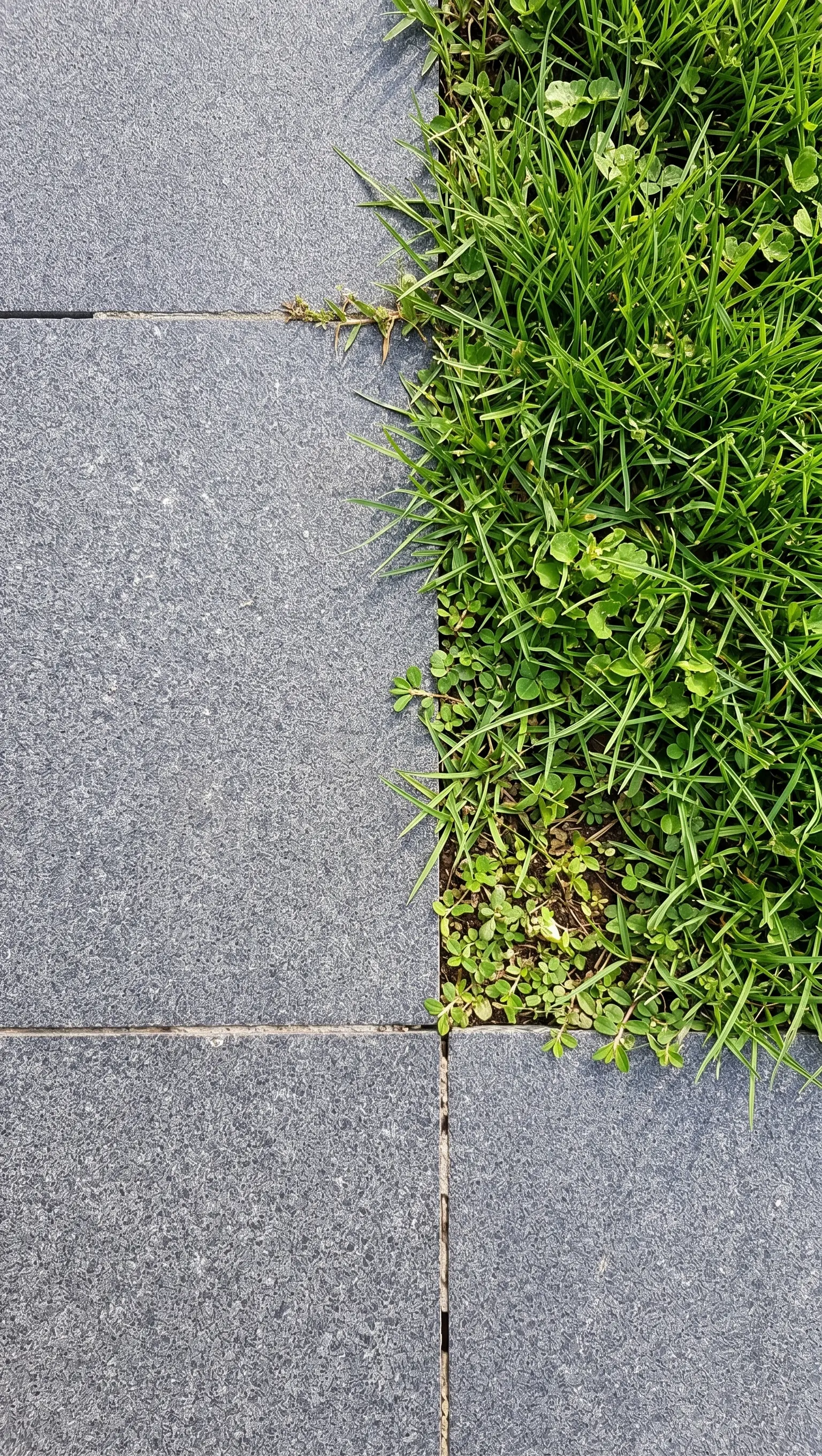
There’s a natural pairing between improving black basalt soil for planting and using basalt stone as a hardscape material in the same landscape. Basalt’s dense, fine-grained character — the same geological character that makes its weathered soil so challenging — makes the stone itself exceptionally durable in outdoor settings. Natural Stone Institute igneous stone paving technical standards cover the performance characteristics of basalt and related igneous stones in paving applications, and the material’s inherent density means it handles foot traffic and weather cycling with a long service life.
If you’re using natural-stone elements as path edging, stepping stones, or low walls to define planting beds, black basalt pavers or basalt cobbles integrate visually with the dark soil tones while providing clean, stable edges. The distinction between honed black basalt granite finishes and natural cleft or tumbled textures is worth considering here — each reads differently against dark planting-bed soil, and the choice affects both the visual weight of the feature and how the surface texture presents in your specific light conditions. Explore our basalt landscaping stone for a look at the formats and finishes available.
The delivery logistics for larger stone elements are worth thinking through early in the project. Your site’s access constraints — path width, surface load capacity, turning radius — affect what can be delivered directly to the placement area and what needs to be offloaded and moved by hand. Lead times are quoted with the order, so building that into your planting timeline avoids the common situation where your soil prep is complete but the stone elements are still in transit.
Long-Term Maintenance: Keeping Black Basalt Soil Productive After Amendment
The hard work of initial amendment doesn’t stay effective indefinitely. Black basalt soil’s tendency to compact means that annual maintenance is necessary to preserve the structure you’ve created. Maintenance amendments are substantially lighter than the initial remediation work — you’re maintaining pore space, not rebuilding it from scratch.
- Apply a two-to-three-inch layer of coarse compost or aged wood chip mulch to the surface each autumn and allow it to work down naturally over winter
- Avoid walking on planting beds — foot traffic on amended basalt soils compresses the pore structure faster than almost any other single factor
- Use broadfork aeration annually in early spring before planting — this disrupts surface compaction without inverting the soil profile and destroying the biological structure you’ve built
- Monitor drainage after heavy rain each season — a returning percolation problem is a signal to add coarse organic matter before the compaction horizon re-establishes
- Where black basalt granite or similar dark stone mulch is used as a decorative surface layer, ensure it’s separated from the soil by landscape fabric or a sand buffer — direct stone-to-soil contact in basalt-derived beds can accelerate surface crusting
The mineral richness of basalt-derived soil is a genuine long-term asset once drainage and structure are addressed. Plants established in well-amended black basalt soil often show exceptional resilience once roots penetrate below the amended layer into the mineral-rich native material below.
Parting Guidance for Black Basalt Soil Projects
Getting black basalt soil to perform as a productive growing medium takes more than a single season of amendment — but the improvements accumulate, and the underlying mineral richness that comes with basalt-derived growing media rewards the effort. Your starting point should always be the percolation test, because the severity of the drainage problem defines which intervention level you actually need. Light compaction responds well to amendment and aeration. Severe compaction with a dense subsurface horizon needs physical disruption before amendments can do their job. And in the most challenging situations, raised bed construction gives you a reliable growing environment regardless of what’s below.
The connection between black basalt soil remediation and the broader landscape design is worth keeping in mind as you plan. Natural stone edging, path elements, and hardscape features that sit on basalt-derived subgrade need their base preparation to account for the same expansive, movement-prone native material that your planting beds are dealing with. Addressing both together — the growing medium and the subgrade beneath any stone features — produces a more stable, coherent landscape than treating them as separate problems. For a closer look at how basalt stone performs across different landscaping applications, basalt rock for landscaping projects covers material selection, finish options, and specification considerations in detail. Citadel Stone supplies crushed basalt from our selected quarries, a useful addition where heavy black basalt soil needs better drainage.
Related reading: honed black basalt finish explained · black basalt driveway surface guide · black basalt cobblestone.