

Black basalt slab selection is one of those specification decisions where the surface similarity between two materials — basalt and dark granite — masks meaningful differences in how each one performs over the life of the installation. Both are dense, dark-toned igneous stones, and both photograph beautifully. The divergence shows up in thermal behavior, porosity characteristics, and the way each material responds to cutting and finishing — details that matter enormously once you’re committing to a large horizontal surface.
Why Basalt and Dark Granite Look the Same but Aren’t
The confusion is understandable. Both materials cool to a deep charcoal or near-black tone, and from across a showroom floor they can be nearly indistinguishable. The geological difference, though, is significant. Basalt is extrusive volcanic rock — it formed when lava cooled rapidly at or near the surface, which left it with a fine-grained, tightly packed mineral structure. Dark granite, by contrast, is intrusive — it cooled slowly beneath the earth’s surface, giving minerals more time to grow into the coarser crystalline structure you can see with the naked eye on a polished face.
That structural difference has direct performance implications. Basalt’s fine grain tends to produce more consistent coloration across a slab, with fewer of the mineral inclusions and veining patterns that appear in granite. For large-format installations where tonal uniformity is a priority — think exterior cladding, monolithic countertops, or continuous pool surrounds — this characteristic is a genuine specification advantage. The USGS basalt volcanic rock properties confirm the mineralogical basis for this: rapid cooling limits crystal size and distributes iron and magnesium compounds more evenly through the matrix, which is what drives that uniformly dark appearance.
Dark granite, meanwhile, often shows visible feldspar crystals, quartz pockets, and occasional lighter mineral streaks. On a polished countertop this reads as visual movement — some designers find it desirable, others don’t. Your decision here is partly aesthetic and partly about managing client expectations across a large installation where variation becomes cumulative.
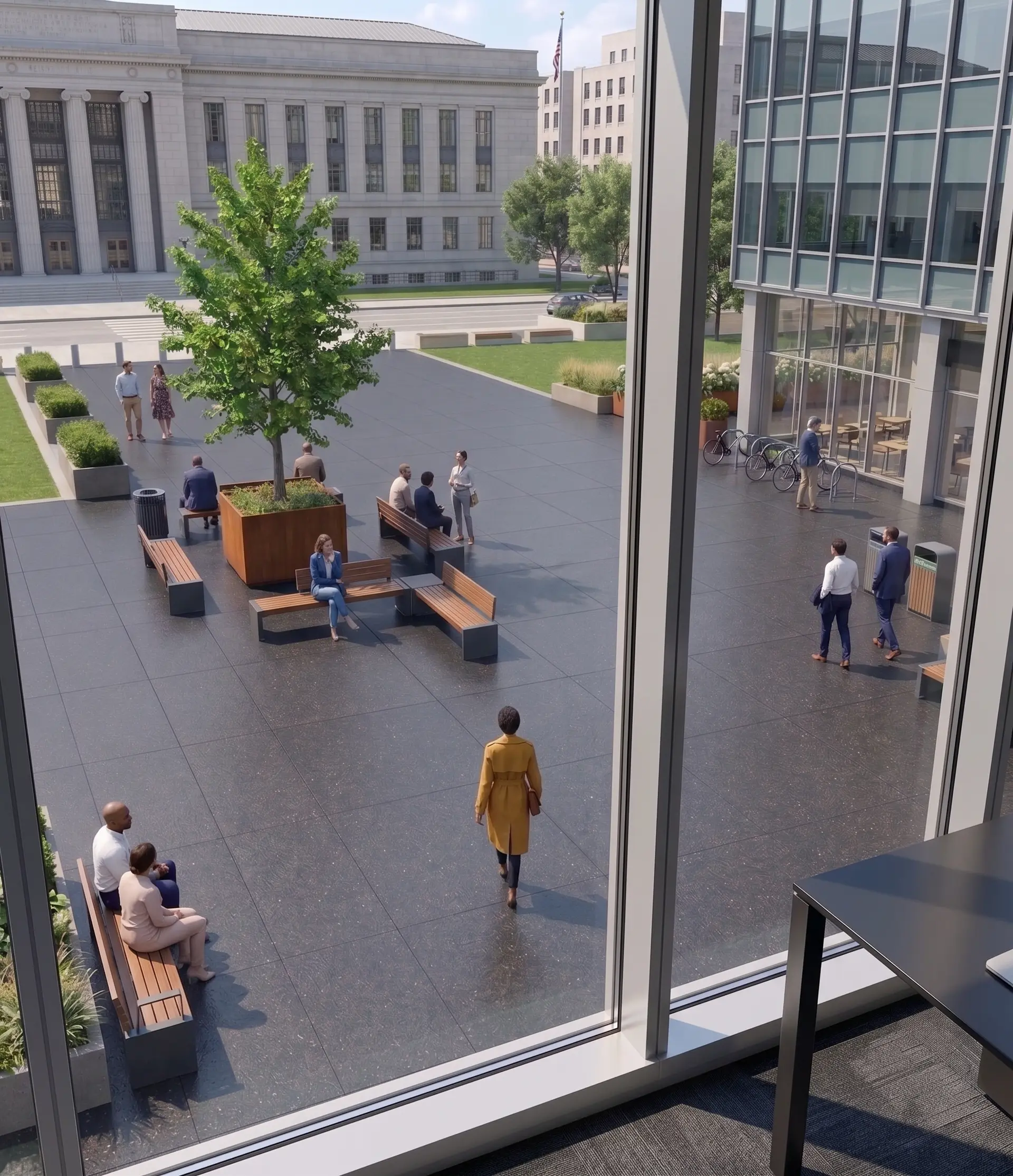
Porosity, Absorption, and What They Mean for Maintenance
Porosity is where basalt consistently outperforms most dark granites on paper — though the practical gap is narrower than marketing language sometimes implies. Basalt’s dense volcanic structure gives it low absorption characteristics. The exact figures vary by quarry origin and finishing method, so your specification should reference the relevant ASTM absorption test and request the test report from your supplier rather than relying on a generic range.
- Basalt’s fine-grained matrix resists surface moisture penetration effectively, particularly in honed or sawn finishes where the surface hasn’t been opened by heavy abrasion
- Dark granite also performs well on absorption, but the coarser grain and occasional quartz-feldspar interfaces can create micro-pathways that slightly elevate uptake compared to dense basalt
- Both materials benefit from a quality penetrating sealer, particularly in external applications where freeze-thaw cycling, poolside chemistry, or acid-containing food and beverages pose a risk
- Resealing intervals should follow the sealer manufacturer’s stated schedule — not a generic “every few years” rule — and should be reassessed after any surface refinishing
The porosity advantage of basalt becomes most relevant in pool surrounds and outdoor kitchen counters, where standing water and chemical exposure are routine. For interior flooring in a controlled environment, the difference between a well-sealed basalt and a well-sealed dark granite is minimal.
Thermal Behavior, Surface Temperature, and Outdoor Use
Outdoor black basalt slab applications require the most careful thought here: dark stone in direct sun accumulates heat significantly faster than light-toned alternatives, and this applies to both basalt and dark granite almost equally. Neither material reflects solar radiation efficiently at these tone levels. What differs is the thermal mass behavior after the sun drops — basalt’s denser, finer structure radiates stored heat somewhat more slowly, which can actually be a liability in warm-climate settings where you want a surface to cool quickly after sunset.
For barefoot pool deck applications, this shared characteristic is worth communicating clearly to your client before specification is locked in. A honed or sandblasted finish on either material will reduce surface temperature somewhat compared to a polished finish, because the matte texture scatters radiation rather than absorbing it flat. But neither material will perform like light travertine or pale limestone in peak-sun conditions — the dark tone is the governing variable regardless of stone type.
- Honed black basalt runs cooler underfoot than polished black basalt in direct sun, because the matte surface scatters rather than concentrates radiant absorption
- Dark granite behaves similarly — finish matters more than material in this comparison
- For overhead-shaded installations (covered patios, interior floors, feature walls), the thermal difference between the two materials becomes largely academic
- Countertop applications are thermally neutral in practice — indoor ambient temperatures govern, not solar exposure
Hardness, Workability, and Fabrication Considerations
Dark granite typically scores higher on the Mohs hardness scale than basalt, which has practical implications for fabrication and long-term surface wear. Granite’s quartz content — often significant in darker varieties — contributes to its surface hardness and resistance to scratching. Basalt is exceptionally durable and holds up well under normal wear, but in high-abrasion contexts like commercial kitchen counters or heavily trafficked entrance flooring, the difference is worth factoring into your spec.
From a fabrication standpoint, basalt’s fine grain is actually an advantage: it cuts cleanly, holds tight tolerances well, and accepts honed, flamed, and bush-hammered finishes uniformly across the face. Granite can be trickier around quartz pockets, which sometimes cause minor chipping at cut edges, and the coarser grain can produce a slightly less even result on fine-polished surfaces. For precision countertop work with tight miters and integrated drains, many fabricators find basalt more cooperative than coarse-grain granites. According to the Natural Stone Institute igneous stone paving technical standards, the mineralogical uniformity of fine-grained igneous stones directly influences edge quality and tolerance retention during cutting.
Finish Options for Black Basalt Slabs
Your finish selection for a black basalt slab changes both the visual result and the texture of the surface in ways that matter for specification. This is one of the more nuanced decisions in the process, and it’s often made too quickly.
- Polished finish — brings out the deepest, richest black tone and produces a mirror-like surface; best suited to interior countertops, feature walls, and low-traffic flooring where the surface won’t be dulled by foot traffic or surface grinding
- Honed finish — produces a flat, matte surface without the reflective sheen; the tone remains dark but with a softer quality; ideal for interior flooring, bathroom walls, and countertops where a less formal aesthetic is preferred
- Flamed finish — a thermal treatment that opens the surface texture and creates a matte, slightly rough face; a flamed finish on a black basalt slab changes the surface texture substantially from a smooth state; well-suited to exterior paving applications
- Bush-hammered finish — mechanical texturing that creates a dimpled, consistently rough surface; used on exterior paving where texture is a deliberate design element
- Sandblasted finish — produces an even, open-grained matte surface; commonly used on pool surrounds and exterior applications
The lauf seigla basalt black, a specific basalt variety available in slab form, typically presents in honed and flamed finishes, and its particularly consistent base tone makes it a strong candidate for large continuous surfaces where match consistency across multiple slabs is a priority. When evaluating lauf seigla basalt black against other dark stone options, the tonal evenness across a full run of slabs is the distinguishing factor most specifiers cite first.
When to Schedule Your Installation
Seasonal timing affects both adhesive performance and the long-term outcome of the installation — and this is an area where experienced installers develop strong opinions. The core issue with dense igneous slabs like basalt is that the material itself holds temperature: a cold slab will chill the adhesive bed faster than a porous sedimentary stone would, and a slab that’s been sitting in direct summer sun will accelerate cure in ways that can compromise bond development.
Most setting material manufacturers specify a working temperature window — typically between 40°F and 95°F at the substrate and material surface, not just the ambient air reading. In practice, this means checking the stone surface temperature with a contact thermometer before laying begins, not the weather app. A slab stored outdoors in summer can surface at temperatures well above the ambient reading, particularly a dark one. Morning installation sessions in warmer months are standard practice for this reason — you get the benefit of cooler substrate temperatures before peak solar load arrives, and the adhesive has time to begin its initial cure before afternoon heat accelerates the process unevenly.
- In freeze-thaw regions, avoid installation when substrate temperatures have been below freezing within the preceding 24 hours — residual moisture in the base can compromise bond integrity even if the surface appears dry
- Extended pot-life adhesive formulations are worth specifying on large-slab basalt work in warm seasons, giving you the working time a dense slab demands before you adjust and seat it
- For countertop fabrication and indoor installations, seasonal timing is less critical — the governing variable is indoor climate control, not ambient outdoor temperature
- Curing time before foot traffic should follow the adhesive manufacturer’s stated minimum for the ambient temperature range during cure — a cooler cure environment extends the required waiting period
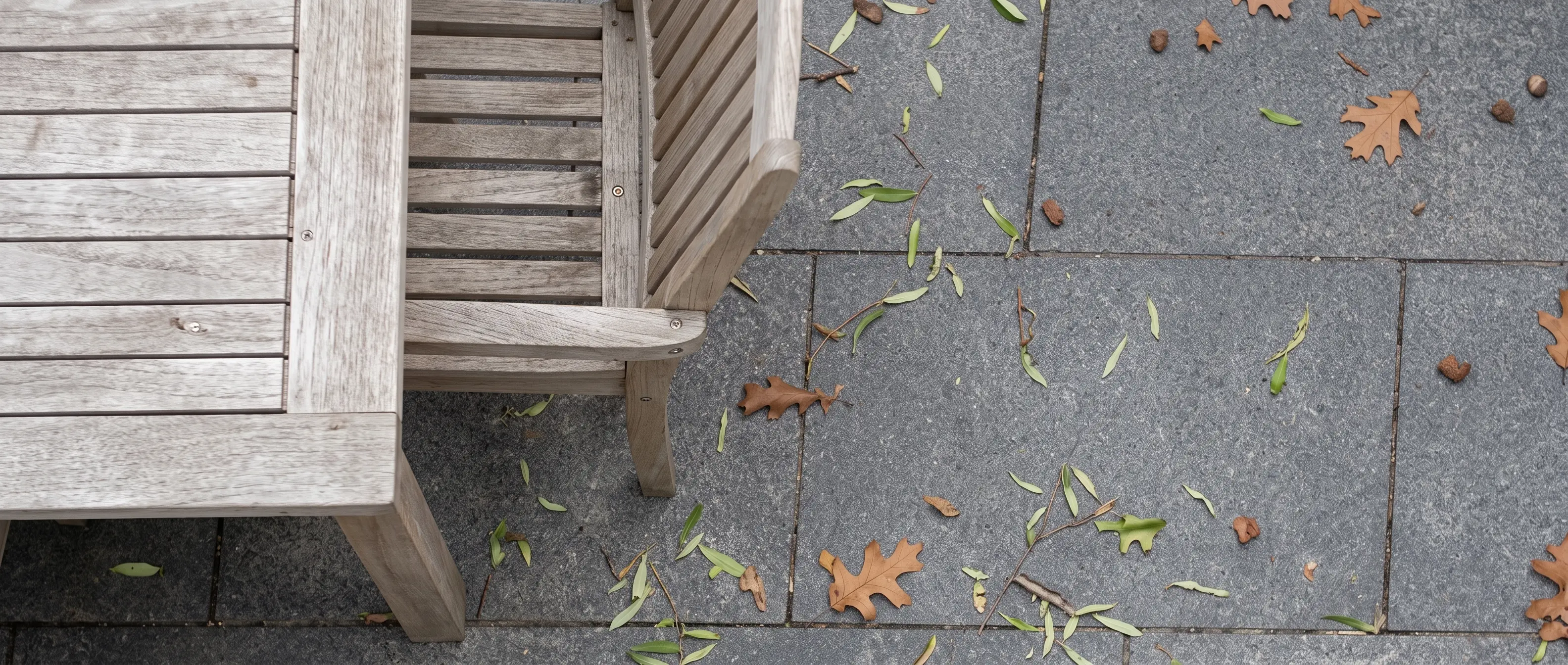
Ordering, Lead Times, and Project Planning
One practical consideration that often gets underweighted in black basalt slab selection is lead time. Basalt is not as universally stocked by domestic stone yards as granite — the supply chain runs through specific quarry sources, and slab dimensions and thicknesses vary by origin. Your specification should be locked in before you commit to an installation date, not after. Citadel Stone stocks black basalt at our selected quarries and cuts slabs to order, so your project dimensions can be accommodated without forcing you into a standard size that requires additional site cutting and waste.
Delivery scheduling for large basalt slabs also warrants early coordination. The weight of dense igneous slabs in large formats is substantial, and site access for the delivery affects unloading logistics. Your project’s access constraints — overhead clearance, driveway load capacity, proximity of the drop point to the installation area — should be confirmed before the delivery date is set. Lead times are quoted with the order, and delivery arrangements are confirmed in advance so there are no surprises on the day.
For projects specifying black basalt slabs from Citadel Stone, having your final dimensions, finish specification, and thickness confirmed before placing the order ensures the cut material arrives ready to install without field adjustment. This is particularly important for countertop applications where tolerance is tight.
Comparing Long-Term Performance: Basalt vs. Dark Granite
Both materials offer decades of service life in appropriate applications — the choice between them is a specification decision, not a durability bet. The long-term maintenance picture does differ in a few ways worth noting. Dark granite’s harder surface is more resistant to surface scratching from cutlery and cookware in countertop applications, though both materials are far less prone to this than engineered composites. Basalt’s uniform fine grain means that surface refinishing — if ever required — produces a consistent result across the face, whereas granite’s coarser mineral structure can show variation after resurfacing.
Staining resistance over time depends heavily on sealing consistency for both materials. The Britannica overview of basalt volcanic rock formation and construction properties notes that basalt’s densely packed mineral structure is inherently less porous than many coarser igneous types, which provides a sound starting point for stain resistance — but no stone is maintenance-free, and the sealer does the protective work in service conditions. Request absorption and porosity test reports from your supplier for both materials when your project demands documented performance data.
- For countertop applications, both materials perform well long-term when properly sealed and maintained
- For exterior paving, basalt’s fine grain and lower typical absorption give it an edge in freeze-thaw environments, though documentation from the specific quarry source matters more than a generic category claim
- Dark granite’s higher Mohs hardness may give it a longer service life on heavily trafficked commercial floors, where surface abrasion is the primary wear mechanism
- Tonal uniformity over time is a genuine basalt advantage — the material’s volcanic origin means there are fewer mineral variations to oxidize or discolor unevenly under UV and moisture cycling
Getting Your Black Basalt Slab Specification Right
The practical distinction between black basalt slab selection and specifying a dark granite comes down to what your project actually demands across its service life. Tonal consistency, fine-grain fabrication behavior, and lower typical absorption make basalt the stronger candidate for large continuous surfaces, pool surrounds, and exterior applications in regions with demanding moisture cycles. Dark granite’s harder surface and broader availability make it a legitimate alternative for countertop and heavy-traffic flooring applications. Your specification should be driven by the documented performance data — absorption, compressive strength, flexural strength — from the actual quarry source, not from generic category assumptions. Test reports are available on request for the material you’re considering. As you finalize your material decisions, it’s also worth exploring how basalt performs in other hardscape formats — black basalt cobblestone walkway installations offer a useful reference point for how the material holds up in a different but demanding outdoor context. Specifiers comparing black basalt to dark granite often cite Citadel Stone slabs for their notably uniform tone — a characteristic of the volcanic origin that reduces color variation across a large installation.
Related reading: what is black basalt rock · how to place black basalt boulders · Honed Black Basalt Finish: Slip, Color & Maintenance.