

The geometry of columnar jointing in basalt is not a geological curiosity — it is a direct record of the physics governing how basalt columns form as a lava flow transitions from a molten mass to a crystalline solid. The cooling rate, the flow thickness, and the thermal gradient between the surface and the interior all interact to produce columns that are strikingly regular in cross-section. Understanding that mechanism in precise terms changes how you think about basalt as a building material, because the same thermal contraction that produces those columns also governs how quarried basalt behaves under freeze-thaw cycling in service.
The Mechanics of Columnar Jointing in Basalt
Columnar jointing is the result of volumetric contraction. As a basalt lava flow cools, it shrinks — and that shrinkage generates tensile stress across the surface of the cooling mass. The stress field resolves itself by fracturing the rock along planes oriented perpendicular to the cooling surface, propagating downward as the thermal front advances. What controls the geometry of those fractures is the isotropic nature of the stress field: tension acts equally in all horizontal directions, so the most efficient fracture pattern — the one that minimises surface energy — is a network of regular polygons. A hexagonal tiling achieves that efficiency, which is why the cross-sections of basalt pillars tend toward six-sided forms even though the underlying geology applies no directional preference.
The propagation rate of the fracture front matters too. Slow, steady cooling allows the crack network to self-organise, producing taller, more regular columns. Rapid quenching — at the flow’s outer margin or where the lava contacts water — produces shorter, more irregular jointing or none at all. You’ll see this contrast clearly at natural exposures where the column geometry shifts dramatically between the interior and the margins of the same flow unit.
Cooling Rate and Column Geometry
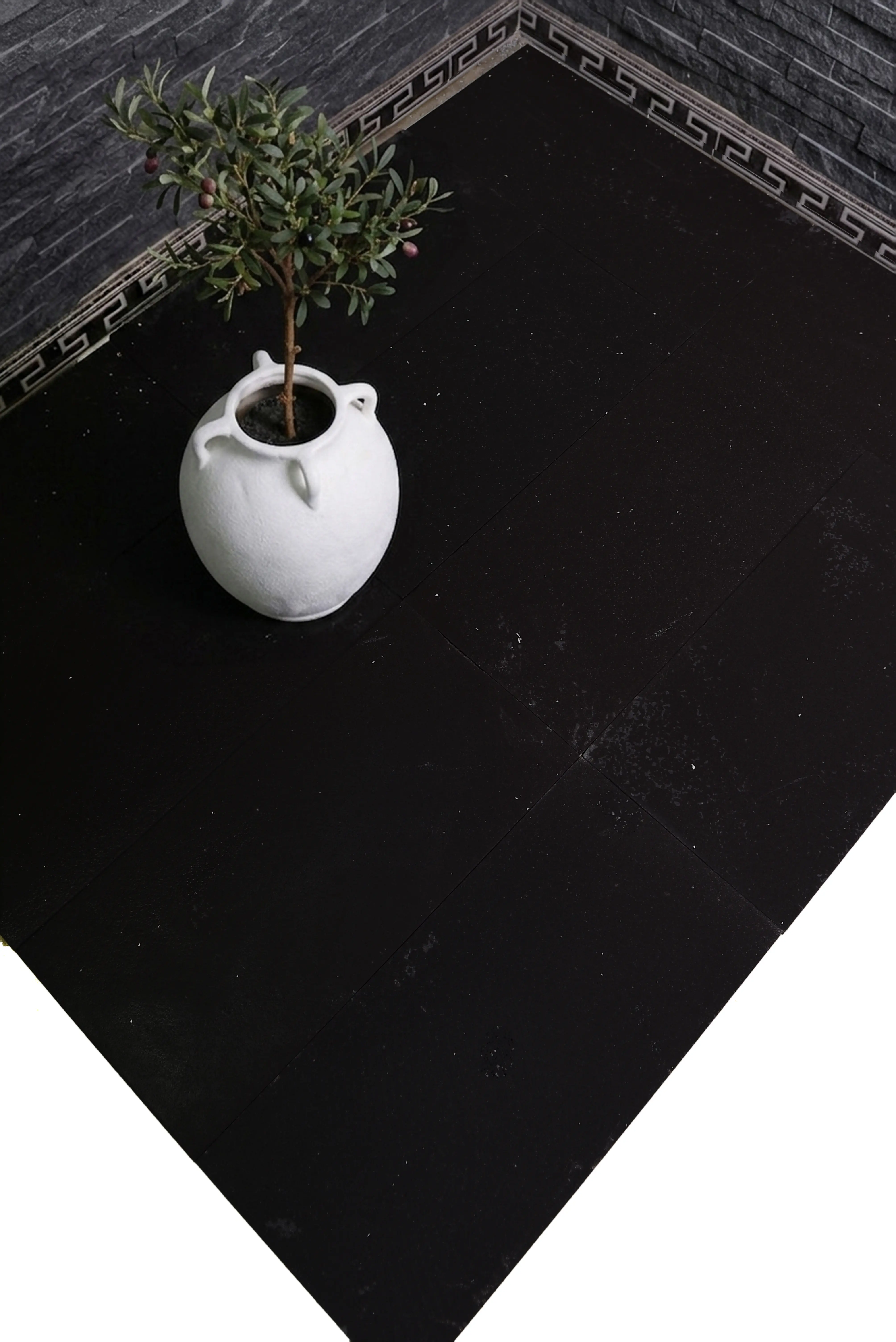
The relationship between cooling rate and column diameter is well-established in the geological literature. Slower cooling produces wider columns because the crack network has more time to organise before the rock becomes fully rigid. Faster cooling produces narrower columns with shorter lengths. This relationship has a direct implication for quarried basalt: material extracted from the interior of thick, slow-cooled flows typically shows a coarser, more uniform crystalline texture than basalt from flow margins. According to USGS basalt volcanic rock properties, basalt is a fine-grained extrusive igneous rock whose mineral composition and texture vary with the cooling environment — a variable that affects mechanical properties in ways a test report makes explicit.
- Interior flow zones cool slowly, producing wider, taller columns with more developed crystal structure
- Margin zones cool rapidly, yielding narrower, shorter columns and a glassier, less crystalline texture
- The transition zone between entablature and colonnade — the two structural layers of a thick flow — is where column geometry becomes most irregular
- Column diameter correlates with the thermal diffusivity of the lava and the thickness of the flow unit
Why Hexagons Dominate in Basalt Pillars
Most people who encounter basalt pillars note the hexagonal cross-section, but the geometry isn’t perfectly hexagonal in every instance. You’ll find columns with four, five, six, seven, or even eight sides in the same exposure. The hexagon simply dominates statistically because it satisfies the minimum-energy condition most efficiently when the stress field is isotropic. Think of it as the same principle that governs soap-bubble arrays: the system settles into the geometry that requires the least total fracture surface area to relieve a given volumetric strain.
As the Britannica entry on basalt volcanic rock formation describes, the jointing pattern emerges from thermomechanical stress rather than from any crystallographic control — the mineral grains within basalt do not align to produce the column geometry. That distinction matters when you’re specifying the material, because it means the column boundaries are stress-relief fractures that may have different surface characteristics than the interior of each column.
The Entablature and Colonnade: Two Layers of One Flow
Thick basalt flows characteristically develop two distinct structural zones that geologists call the colonnade and the entablature. The colonnade forms at the base and sometimes at the top of the flow, where cooling is relatively slow and uninterrupted. It produces the tall, regular, well-formed columns that photographers favour. The entablature develops in the upper-middle zone of the flow, where cooling is complicated by infiltrating groundwater or rainfall percolating into the still-hot interior.
- The colonnade: regular columns, often vertical, formed under steady downward-propagating thermal fronts
- The entablature: irregular, fan-shaped, or curved columns formed where multiple cooling fronts intersect
- Curvicolumnar jointing in the entablature zone reflects competing thermal gradients from above and below simultaneously
- Quarry operators selecting basalt for dimensional stone typically work the colonnade zone, where predictable column geometry produces more consistent block dimensions
At Citadel Stone, our technical team reviews quarry-face documentation before committing to a cut specification, because the structural zone a block comes from affects how the stone responds to sawing and edge finishing. Material from a well-developed colonnade yields cleaner cuts than material from entablature zones where micro-fractures are more numerous.
Mineral Composition and What It Means for Specification
Basalt is composed primarily of plagioclase feldspar, pyroxene, and olivine, with accessory magnetite and ilmenite. The relative proportions shift with the geochemistry of the parent magma, but the dominant minerals are all silicate-based and relatively dense. That density is what gives quarried basalt its low water absorption and its resistance to surface wear — properties confirmed through ASTM test methods rather than through visual assessment. The Natural Stone Institute igneous stone technical standards provide the framework for evaluating basalt alongside other igneous materials, and any serious specification should request the supplier’s test report covering absorption, modulus of rupture, and compressive strength rather than relying on category averages.
Your specification should name the ASTM test method alongside the property — ASTM C97 for absorption and bulk specific gravity, ASTM C99 for modulus of rupture, ASTM C170 for compressive strength. Request the actual test report for the specific material you’re ordering; test results on basalt vary between quarry sources, and a report from one origin does not confirm performance at another. Citadel Stone stocks basalt at our selected quarries and cuts to order, so quarry-specific documentation is available before your order is placed.
Columnar Jointing Structure and Structural Code Considerations
The practical relevance of understanding how basalt columns form extends into the code-compliance dimension of material specification. In regions governed by seismic design requirements — zones where IBC Chapter 16 or local amendments impose lateral load criteria — the selection of a dense, low-absorption igneous stone like basalt offers predictable structural behaviour under dynamic loading. Basalt’s crystalline matrix, consolidated under the thermal contraction that creates the columnar jointing structure, contributes to a high mass-per-unit-volume that structural engineers factor into dead load calculations.
- Frost-line depth requirements in cold-climate zones affect base preparation beneath basalt paving — your base must extend below the frost line, and the specification should call for well-draining compacted aggregate to prevent ice-lens formation under the stone
- Seismic design categories in high-activity zones may require additional mortar-bed or adhesive specifications for vertical basalt cladding applications — check IBC Chapter 21 requirements for natural stone veneer
- Load-bearing applications should reference ASTM C170 compressive strength data from a supplier-provided test report, not from generic stone-type averages
- Thickness specifications for traffic-bearing basalt pavers should account for point-load distribution across the support layer — your structural engineer should confirm minimum thickness for the anticipated load class
The basalt columnar jointing structure that makes this stone visually striking in its natural form also reflects the high internal stress history of the material — a history that produced a dense, tight-grained rock well-suited to demanding structural environments.
The Connection Between Column Geometry and Cut-Stone Products
The hexagonal cross-section of natural basalt pillars has a direct lineage to cut-stone products that reference the same geometry. When basalt is sawn into tile format with a hexagonal outline, the product is literally replicating the natural fracture pattern at a controlled scale. The Basalt Hexagon Tile translates geology into an architectural surface element, and specifying it for flooring or cladding rewards anyone who understands that the shape is not decorative invention but geological inheritance. Hexagonal formats also tesselate without waste, which has a practical implication for material ordering — your takeoff quantity is closer to your installed quantity than it would be with irregular or offset-format tiles.
Finish Selection and Surface Texture in Practice
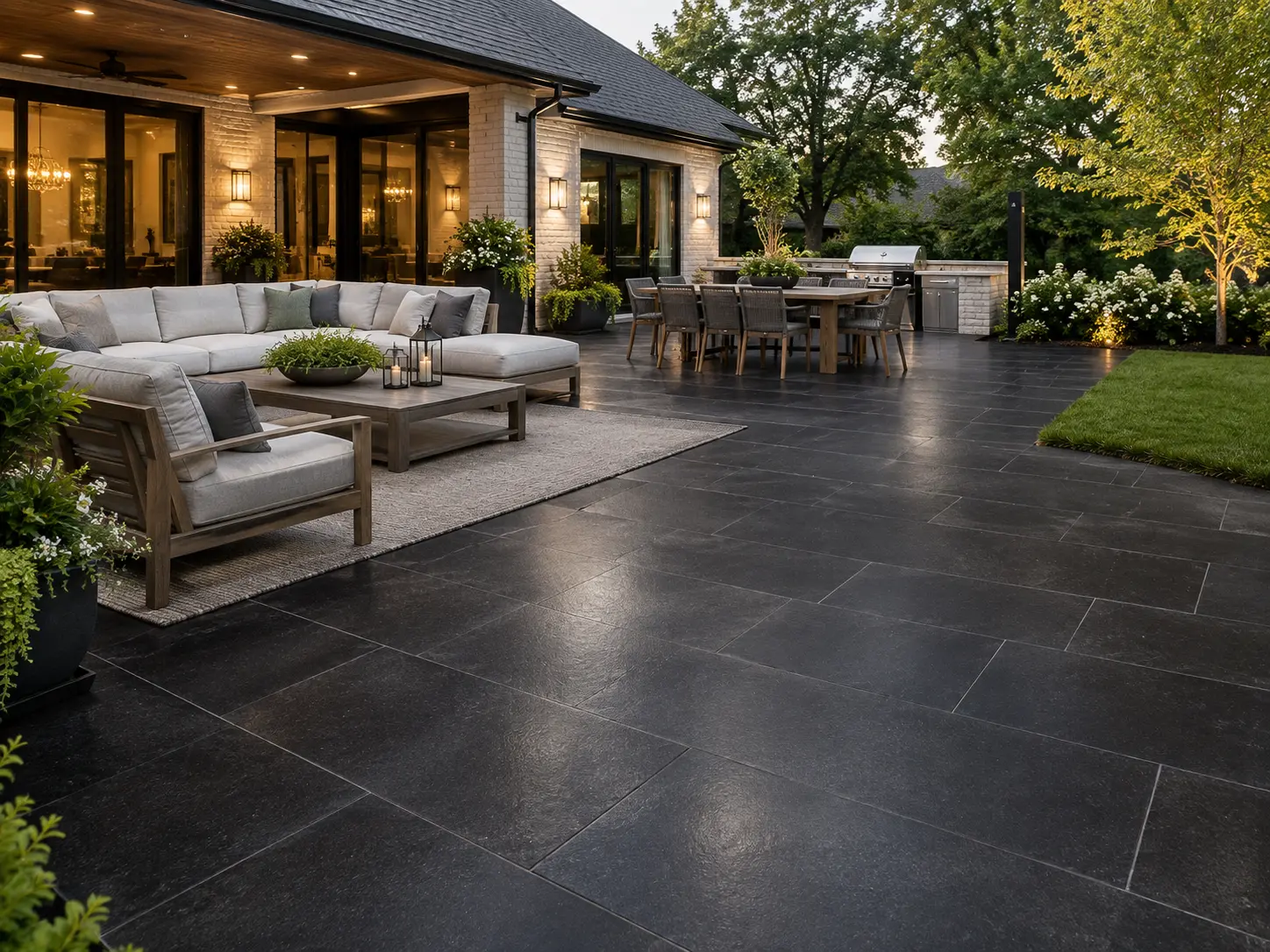
The finish applied to sawn basalt alters the surface texture substantially, and that texture has implications for how the material performs across different applications. A honed finish leaves a smooth, closed surface that emphasises the stone’s deep charcoal colour but also means the surface is relatively flat under foot or vehicle traffic. A flamed finish — produced by applying a torch to the sawn face — causes differential thermal expansion at the surface, spalling off micro-layers of the weaker mineral grains and leaving an open, textured surface. A bush-hammered finish uses mechanical impact to create a uniformly dimpled texture.
- Honed: smooth, tight surface, suited to interior flooring and wet-area wall cladding where cleaning ease is a priority
- Flamed: open, textured surface, suited to exterior paving and pool surrounds where the surface texture is a design and functional consideration
- Bush-hammered: mechanically textured, uniform dimple pattern, commonly specified for commercial exterior paving
- Sandblasted: lighter surface texture than bush-hammered, used where a softer aesthetic is preferred without the directional pattern of sawing
Your finish choice should be confirmed against the application’s requirements before ordering, because cutting to a different finish post-manufacture is a re-processing operation that adds cost and lead time. Slip resistance under ANSI A326.3 — which measures dynamic coefficient of friction on wet surfaces — varies with finish; if your project specification requires a documented wet result, request the test report from your supplier rather than relying on finish-category assumptions.
Specifying Basalt with Confidence: Your Action Plan
Understanding how basalt columns form gives you a framework for evaluating the material beyond visual appeal. The columnar jointing structure is a record of thermal history, and that history produces specific mechanical properties — density, low absorption, crystalline toughness — that translate directly into decades of service life in the right application. Your specification should start with quarry-specific test reports covering ASTM C170, C97, and C99, not with generic stone-category data. Name the test method, request the report, and confirm that the quarry zone the material comes from matches the performance tier your project requires.
For basalt paving applications, confirm your base preparation depth against the frost-line requirement in your jurisdiction and specify drainage-grade compacted aggregate beneath the stone. For vertical cladding, review IBC Chapter 21 requirements and confirm mortar or adhesive specification with your structural engineer before finalising the detail. Finish selection should be resolved before the cut order is placed — not after. As you develop your broader knowledge of basalt’s geology and its implications for product design, the science behind basalt’s six-sided geometry covers the crystallographic and thermomechanical detail that connects geological process to finished product. The same geological forces that produce six-sided basalt pillars in the field are what give Citadel Stone’s basalt, drawn from selected quarries in the Middle East, its characteristic hardness and color depth.