Snow white marble fading is rarely a sudden event — it’s a slow process that most owners don’t notice until the contrast against a grout line or an adjacent unstained section makes it obvious. The underlying mechanism is almost always a combination of UV degradation, mineral leaching, and inadequate sealing, but the proportions of each cause vary considerably depending on how and where the marble is installed. Understanding which factor is driving the color shift in your specific situation is what determines whether a corrective treatment will hold or whether you’re treating a symptom while the real problem continues unchecked.
Why Snow White Marble Fades: The Root Causes
The calcium carbonate matrix of white marble is highly reactive compared with denser igneous stones. UV radiation breaks down surface crystalline bonds gradually, and in direct sun exposures the oxidation of trace iron minerals within the stone produces a warm, yellowish cast that reads as fading to most observers. This is distinct from actual bleaching — in marble, “fading” usually means either a yellowing shift or a loss of the crisp, reflective surface that made the stone look white in the first place.
Mineral leaching is the second driver. Your marble’s open pore structure allows water to carry dissolved calcium and iron compounds to the surface as it evaporates — a process called efflorescence at the macro level and sub-surface deposition at the micro level. Over repeated wet-dry cycles, these deposits accumulate in the surface texture and alter the perceived tone. On polished finishes this appears as a milky haze; on honed or tumbled surfaces it reads as an uneven yellowing or graying.
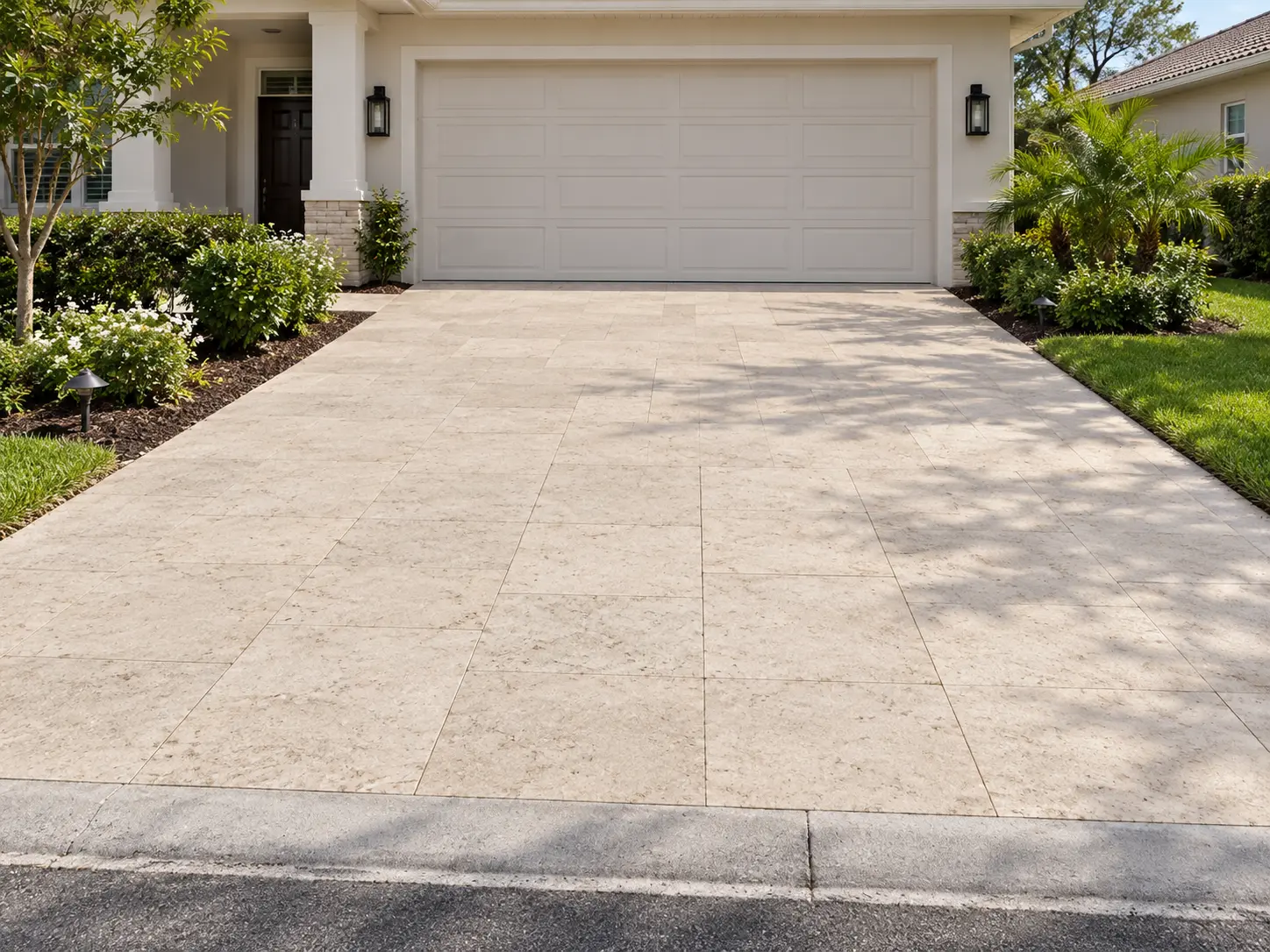
The third factor is organic staining from algae, mold, or tannins. In shaded installations — particularly at grade level — biological growth begins in the pore structure before it’s visible on the surface. By the time you see a greenish or gray tinge, the organism is already established several millimeters deep. This type of snow white marble fading is often misdiagnosed as mineral discoloration, which leads to the wrong corrective treatment being applied.
- UV oxidation of trace iron minerals produces a yellowing cast on exterior-facing slabs
- Calcium leaching through under-sealed pores creates a milky surface haze on polished marble
- Efflorescence driven by capillary moisture movement deposits mineral salts that alter surface tone
- Biological growth in shaded or low-drainage areas produces organic discoloration in the pore structure
- Acid attack from rain, cleaning products, or organic debris degrades surface calcite and dulls reflectivity
Diagnosing the Type of Fading Before You Act
Treating snow white marble discoloration without an accurate diagnosis is the most common and costly mistake in marble maintenance. A simple water-drop test on the surface tells you whether your sealant has failed — water that absorbs within a few minutes confirms the stone is unprotected and open to further staining. A small amount of pH-neutral stone cleaner applied to a test patch will tell you whether surface haze is removable or whether it has penetrated into the stone body.
For yellowing, the distinction between iron oxidation and organic staining matters enormously. Iron oxidation typically appears evenly distributed across sun-exposed faces and is resistant to standard cleaning. Organic staining is usually patchy, concentrated in joints and lower-drainage areas, and responds to an appropriate biocide treatment. The Natural Stone Institute marble grades and technical specifications provide useful background on marble’s mineral composition, which helps explain why different marble sources respond differently to the same environmental exposures.
Your installation’s finish is a diagnostic variable too. A polished surface that has gone dull and cloudy has almost certainly suffered acid etching — a chemical reaction with the calcite surface that destroys the crystalline polish. This is irreversible without re-polishing. A honed surface that has yellowed is more likely a sealer-failure or iron-oxidation issue, which is addressable with the right chemistry and resealing protocol.
The Role of Sealing in Fading Prevention
Sealing is not a one-time event — it’s a maintenance interval that most marble owners treat as optional until the stone starts visibly deteriorating. An impregnating sealer penetrates the pore structure and creates a hydrophobic barrier that slows moisture ingress, reducing both mineral leaching and biological colonization. It does not stop UV degradation, which is why exterior installations always require additional protective strategies beyond sealing alone.
Your sealer selection should be matched to the marble’s finish and the installation’s exposure. Solvent-based impregnators generally penetrate more deeply and last longer than water-based options on dense, low-absorption marble. For highly porous marble variants, a water-based impregnator applied in multiple thin coats often achieves better, more even coverage than a single heavy solvent-based application. Always follow the sealer manufacturer’s stated reapplication interval — these are based on absorption testing for the specific chemistry, and guessing shortens effective protection. The ASTM natural stone tile absorption testing framework, documented through ASTM standards publications, underpins how sealer compatibility is evaluated against stone absorption rates in professional specifications.
For exterior marble exposed to full sun, a UV-stabilizing topical treatment layered over an impregnating sealer adds meaningful protection against the photochemical degradation that drives iron oxidation. This is not a substitute for the impregnator — both layers serve different functions and protect against different failure modes.
- Use an impregnating sealer as the base layer — it protects the pore structure without altering surface finish
- Layer a UV-stabilizing topical treatment on exterior installations that receive direct sun for four or more hours daily
- Reseal on the interval your sealer manufacturer specifies — not on a fixed annual calendar
- Test sealant effectiveness with a water-drop test annually; absorption within two to three minutes signals reapplication is needed
- For honed marble, select a sealer that does not alter surface sheen — some topical products leave a gloss on matte finishes
How Drainage and Grade Affect Snow White Marble Fading
Here’s what most specifiers overlook in marble installations on sloped or tiered sites: drainage geometry directly determines how long water contacts the stone surface and what dissolved minerals it carries when it finally moves off. On hillside or terraced installations, water doesn’t drain uniformly — it follows the path of least resistance, which often means pooling at specific low points, saturating the base material unevenly, and creating localized zones of chronic moisture exposure. Those zones almost always show the earliest and most pronounced fading.
On flat or near-flat installations, the problem is different but related. Without adequate fall — typically a minimum gradient confirmed by your site engineer — water sits on the surface rather than draining off it. Extended surface contact drives faster mineral leaching and provides the wet-period conditions that biological growth requires. Your base preparation must account for drainage geometry first; surface finish and sealing are secondary controls, not primary ones.
Elevated installations on hillside retaining systems face a further complication: hydrostatic pressure from uphill water movement can push moisture through the substrate and up into the stone from below. This sub-surface moisture pathway bypasses topside sealing entirely and produces staining and discoloration that appears to have no obvious surface source. Specifying an adequate drainage membrane and bond-break layer beneath marble on retained or sloped sites is not optional — it’s the specification decision that determines whether your surface protection strategy can actually work. For projects where marble pavers are part of a mixed hardscape, ASTM C503, the marble building stone specification, provides the testing framework your supplier should reference when qualifying material for grade-variable exterior applications.
Fixing Existing Snow White Marble Fading
Corrective treatments depend entirely on what type of discoloration is present. For iron oxidation and yellowing, a professional-grade iron stain remover formulated for calcium carbonate substrates is the starting point — these are typically oxalic-acid-based products, and they must be used with care because oxalic acid also etches polished finishes if left in contact too long. Always test on a non-visible area first and follow the product manufacturer’s dwell time exactly.
For biological staining — the patchy gray or greenish discoloration concentrated in low-drainage zones — an alkaline biocide treatment applied to a damp surface is more effective than acidic cleaners, which can fixate organic material into the stone. After biocide treatment, a light pressure rinse removes the residue, followed by a drying period before any sealer is applied. Skipping the drying period and sealing over a still-damp surface traps moisture and often makes the discoloration worse rather than better.
For the Citadel Stone marble care support resources, you’ll find guidance on matching treatment chemistry to specific finish types — which matters because the corrective approach for polished marble differs from what works on honed or tumbled surfaces. Polished marble that has been acid-etched cannot be restored to its original finish with cleaning products alone; mechanical re-polishing is required, and that’s a job for a stone restoration professional with the right diamond-abrasive tooling.
- Apply iron stain remover formulated for calcium carbonate substrates — never use generic rust removers, which can permanently bleach the stone
- Treat biological discoloration with an alkaline biocide before any acid-based cleaner
- Allow full drying before resealing — minimum 48 hours in moderate conditions, longer in humid climates
- Re-polish acid-etched surfaces mechanically — no topical product reverses crystalline surface loss
- Address the moisture pathway first; corrective treatments are temporary if the drainage or sealing failure continues
Maintenance Intervals That Prevent Fading Long-Term
Preventing snow white marble fading is substantially cheaper than correcting it, and the maintenance program that achieves this is simpler than most owners expect. The core elements are a consistent cleaning routine with pH-neutral stone cleaner, annual sealant testing, and a proactive resealing schedule based on what the water-drop test shows — not on an arbitrary calendar date.
Avoid acidic cleaners entirely on white marble — vinegar, lemon-based products, and many standard bathroom cleaners are acidic enough to etch the calcite surface with repeated use. This is one of the most common sources of gradual surface dulling that gets misidentified as fading. Your cleaning product selection is a specification decision, not a casual choice.
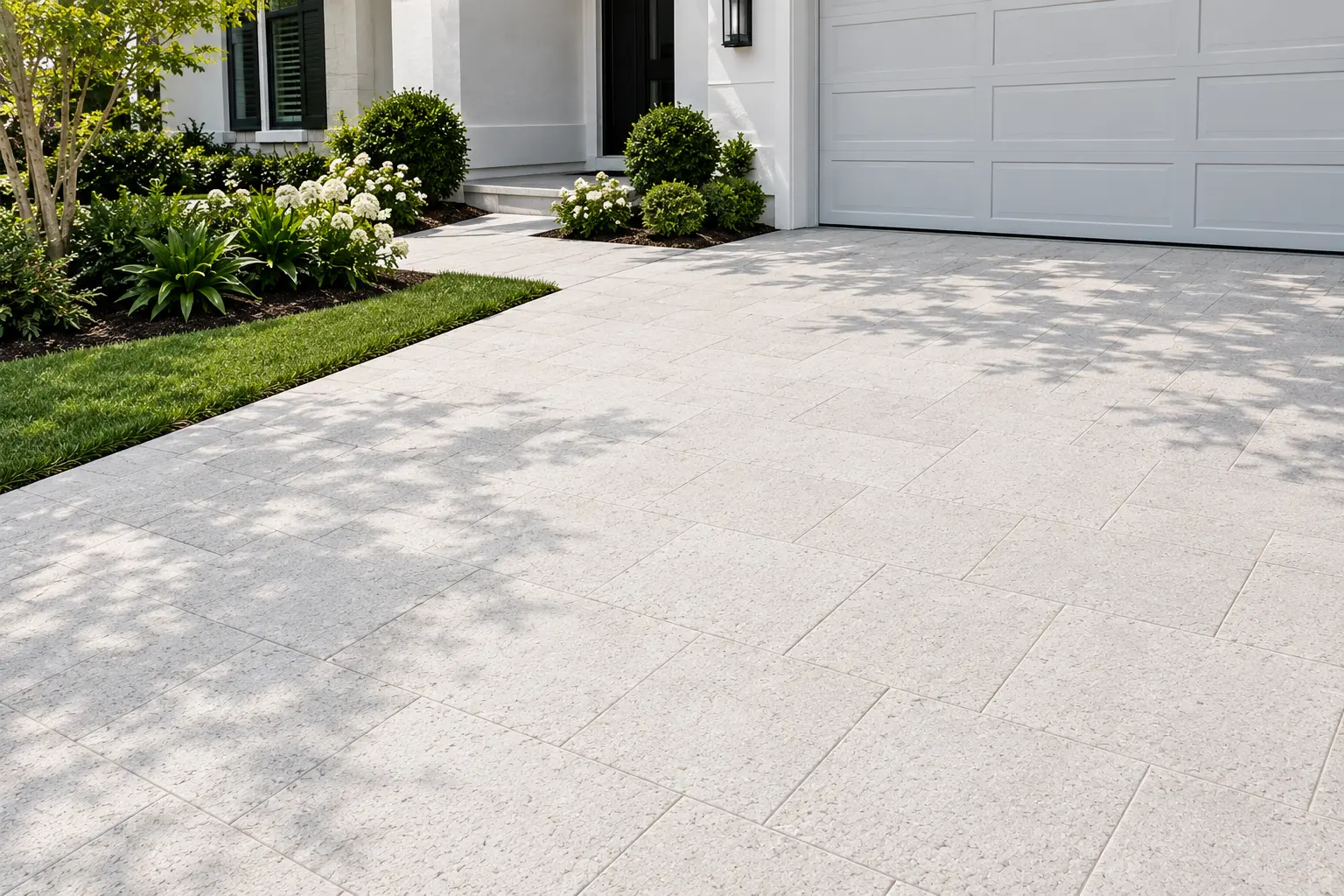
For exterior installations, an annual inspection of grout and joint condition is critical. Failed joints allow water to enter the substrate directly, bypassing surface sealing entirely. Joint maintenance — repointing or re-sanding as required — is as important to fading prevention as the sealer schedule. On terraced or sloped sites, check that drainage outlets and channels remain clear after each wet season; debris accumulation at outlets creates the pooling conditions that accelerate mineral leaching and biological growth.
- Clean with pH-neutral stone cleaner only — acidic household cleaners etch white marble with repeated use
- Run a water-drop test annually to assess sealer performance — don’t wait for visible staining
- Inspect grout and joint condition each year; re-point failed joints before resealing the surface
- Clear drainage outlets after each wet season on terraced or sloped installations
- Trim overhanging vegetation that deposits tannins and retains moisture on stone surfaces
How Finish Selection Affects Fading Susceptibility
Your choice of surface finish at the point of specification has a lasting effect on how visible snow white marble fading becomes over the installation’s life. Polished white marble has the most dramatic visual response to any surface change — a small amount of mineral haze or etching reads as a significant contrast shift against the mirror finish. Honed marble is more forgiving; its matte, even surface texture masks minor staining variations and makes periodic maintenance less visually critical.
Tumbled or brushed finishes leave an open, matte texture that provides some natural camouflage for early-stage discoloration, but the more open pore structure also means faster sealer consumption and a shorter resealing interval. The trade-off is real: a more textured finish is less visually sensitive to fading but demands more frequent sealer maintenance to hold that performance over time. According to Britannica’s marble geological formation data, white marble’s characteristic brightness derives from its tight calcite crystal structure — which is precisely why surface-level changes, however minor chemically, produce a pronounced visual effect.
For exterior applications where direct sun exposure is unavoidable, a honed or bush-hammered finish extends the interval before UV-related yellowing becomes noticeable. The polished finish amplifies color shifts because any oxidation on the crystalline surface reflects light differently than the undamaged areas around it — creating a mottled appearance that accelerates the perceived rate of snow white marble fading even when the actual discoloration is minor. Citadel Stone cuts marble to order at our selected quarries, and our technical team can advise on which finish specification best suits your project’s exposure conditions before the order is placed.
Expert Summary
Snow white marble fading is preventable and, in most cases, correctable — but only when you’ve accurately identified the mechanism driving the color shift. UV oxidation, mineral leaching, biological growth, and acid etching each require a different response, and applying the wrong treatment not only fails to fix the problem but can accelerate deterioration. Your sealing protocol, drainage geometry, finish selection, and cleaning product choices are all specification decisions that compound over time — get them right at the outset and the stone rewards you with decades of service life; get them wrong and you’re in a cycle of reactive treatments that never quite restore the original appearance.
The maintenance program doesn’t need to be complex. A pH-neutral cleaner, an annual sealant check, clear drainage, and intact joints cover the majority of fading risk for well-specified exterior marble. For sloped or tiered sites, add a drainage membrane and base-layer assessment to the initial specification — the corrective cost of addressing sub-surface moisture after installation is far higher than engineering it out upfront. As you develop the full scope of your natural stone project, choosing marble pavers for your project covers the material selection decisions that complement the maintenance approach outlined here.
Whether you’re specifying new marble or addressing an existing installation showing early signs of discoloration, the specification decisions you make around drainage, finish, and sealing determine how much corrective work you’ll face five years from now. Marble from Citadel Stone is inspected for micro-veining before shipping, reducing the risk of uneven weathering over time.
Related reading: choosing white travertine pavers · white paver design ideas · marble paver cost comparison.