

Edging pavers are where most hardscape failures quietly begin. You can pour the most carefully compacted base in the industry, select premium field stone, and nail every joint — then watch the entire surface gradually migrate outward because the perimeter restraint wasn’t specified with the same rigor as everything else. The border detail is the load-bearing seam between your hardscape and the surrounding landscape, and it deserves a dedicated performance review, not an afterthought specification.
What Makes Edging Pavers Perform Over Time
The function of edging pavers goes beyond aesthetic definition. They resist the lateral thrust that accumulates every time a vehicle load, foot traffic, or freeze-thaw cycle pushes outward against the perimeter. Natural stone border units do this through mass and embedment depth rather than mechanical connectors — which is why material density and dimensional consistency matter more here than almost anywhere else on the project.
Field performance comes down to three variables: embedment depth, the quality of the bearing bed, and material resistance to edge loading. Shallow embedment — anything under 4 inches in most residential applications — lets the unit tip under lateral pressure. An inconsistent bearing bed creates point loading at the unit’s lower edge, which concentrates stress and accelerates fracture. And material that can’t handle repetitive impact at thin cross-sections will chip progressively at the arris, degrading both function and appearance.
Stone Types Best Suited for Border Applications
Not every natural stone that works beautifully as a field paver holds up as a border unit. The edge position means the stone takes impact loading from mowers, vehicle tires grazing the perimeter, and foot traffic angled across the arris. You want a material with the flexural strength to handle that without delaminating, and the density to resist moisture infiltration at the exposed face.
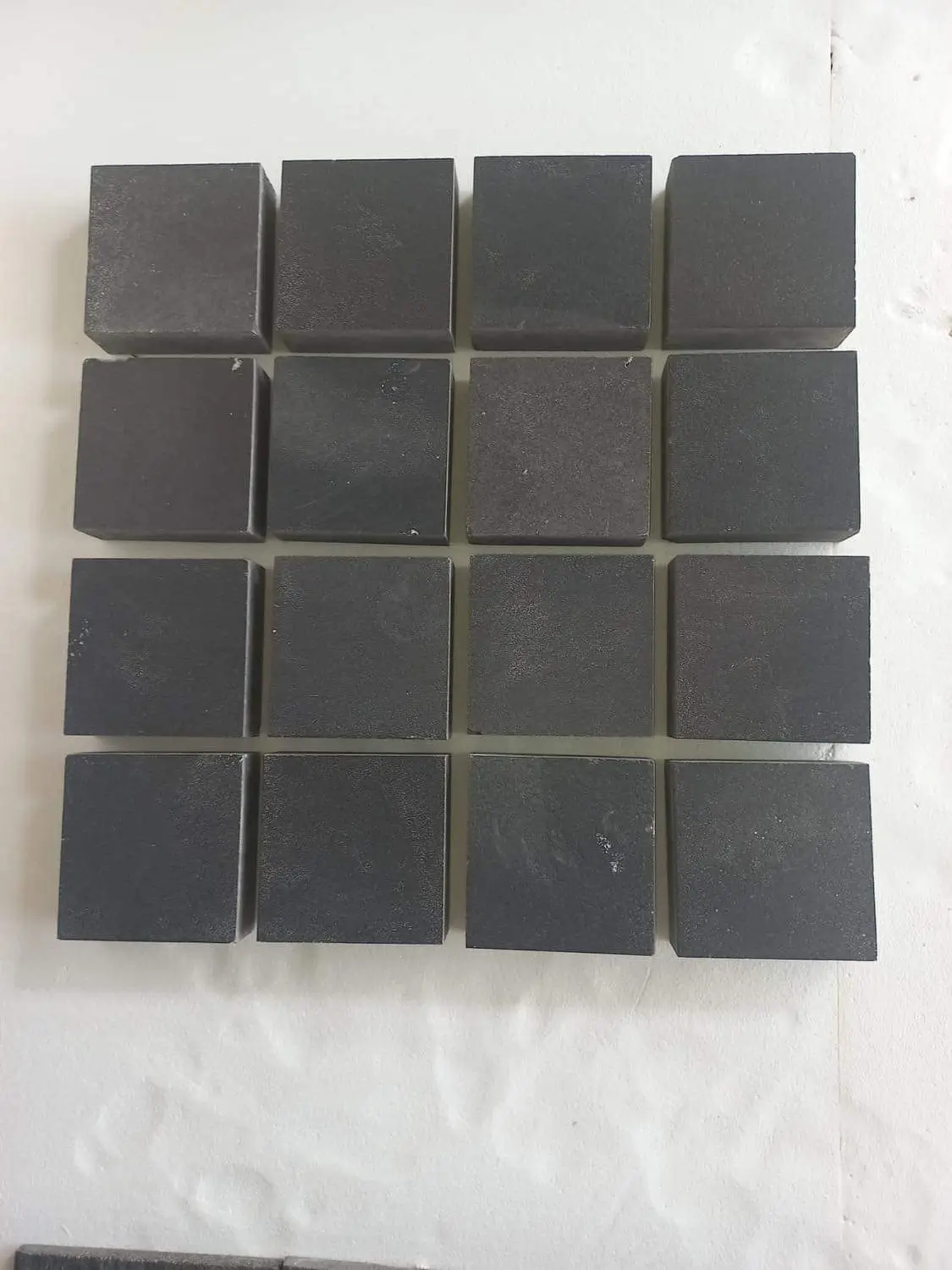
Granite cobblestone is the benchmark for demanding edging applications. Its interlocking crystalline structure gives it exceptional resistance to edge chipping, and its low absorption rate keeps the exposed face stable through wet-dry cycles. Limestone border units are a strong choice where the design calls for a warmer tone — dense, low-porosity limestone sourced from selected quarries in the Middle East performs considerably better in exposed edge positions than softer domestic varieties. Basalt brings a striking visual contrast and handles edge loading well, though its hardness requires diamond tooling for any site cuts.
According to Natural Stone Institute granite durability and application specifications, granite’s interlocked grain structure gives it outstanding resistance to the kind of abrasion and impact that border stone faces in high-traffic areas — a key reason it remains the default choice for professional landscape architects specifying long-service perimeter restraints.
- Granite cobblestone: superior edge strength, low absorption, minimal maintenance requirement
- Dense limestone: warmer aesthetic, good flexural performance when properly sourced and sealed
- Basalt: striking contrast finish, highly resistant to edge chipping in correctly dimensioned units
- Tumbled travertine: suitable for low-traffic decorative edging, but requires more frequent sealing in wet climates
Dimensional Specifications That Actually Matter for Edging Pavers
The dimension conversation for edging pavers is different from field paver sizing. You’re not optimizing for pattern efficiency or visual scale — you’re optimizing for embedment geometry and lateral resistance. Taller units with a lower centre of gravity resist tip-over under lateral load far better than wide, thin profiles that look substantial but offer minimal soil anchor.
A minimum 4-inch height (the dimension that goes into the ground) gives you enough embedment depth in stable subgrades to resist ordinary lateral thrust. In softer soils, push that to 6 inches. Width at the face can range from 3 to 6 inches depending on whether the unit is primarily decorative or structural — narrower units work well in garden bed transitions, while wider profiles are appropriate where vehicle overhang is a risk.
Thickness in the direction of travel matters less than you’d think for containment, but it directly affects how the unit reads visually against the field pavers. Matching your edging paver thickness to your field paver thickness creates a flush-to-grade finish that reads as intentional rather than retrofitted. That detail separates specifier-level work from contractor-grade shortcuts.
- Minimum embedment depth: 4 inches for standard residential applications, 6 inches in soft or expansive subgrades
- Face width: 3–4 inches for decorative borders, 5–6 inches for structural containment along driveways
- Thickness tolerance: hold units to ±⅛ inch for flush-to-grade installations — wider tolerances require shimming
- Unit length: longer units (8–12 inches) create a cleaner coursed line; shorter units allow tighter radius curves
Cobblestone Pavers and Hardscapes: Getting the Border Detail Right
Cobblestone pavers and hardscapes are where border specification gets genuinely technical. A cobblestone field creates multi-directional lateral thrust because the units lock against each other across the entire surface — every load event ripples outward. Your perimeter restraint has to absorb that cumulative force continuously, which means the border unit needs to be heavier and more deeply embedded than you’d spec for a cut-stone field.
The joint between a cobblestone field and its border unit is also a maintenance pinch point. Polymeric sand migrates differently at the perimeter than it does in the field, partly because the border unit moves more than field units do, and partly because the exposed edge of the border unit wicks moisture that accelerates joint erosion. Specify a bedding mortar at the base of the border unit’s inside face rather than relying entirely on compacted aggregate — it anchors the base without locking the unit rigidly enough to fracture under thermal movement.
For projects involving a cobblestone drive, the border unit takes genuine vehicular loading — not just foot traffic. Spec your cobblestone drive border units at a minimum of 6 inches embedded depth, seated in a concrete haunch on the traffic side. The haunch doesn’t need to be a full concrete edging system; even a narrow lean-mix pour on the outer face of the unit provides the resistance needed to handle the repetitive lateral thrust of vehicle departure and approach.
Base Preparation and Subgrade Challenges for Border Stone
Your edging paver installation starts failing at the subgrade level, not at the surface. The border position is the most vulnerable point in any hardscape because it sits at the transition between the compacted and engineered area and the surrounding unimproved landscape — two zones with dramatically different settlement characteristics.
Expansive clay soils are the most common subgrade problem in border stone installations. Clay expands laterally when saturated and contracts when it dries, and it does this unevenly along the perimeter. You’ll see the border units rock progressively — high on the outer face in wet season, settling back in dry season — until the bedding layer fractures and the units begin to wander. The fix isn’t a thicker bedding layer; it’s a wider excavation on the landscape side of the border unit, filled with free-draining granular material to interrupt the moisture cycle.
Sandy soils present the opposite problem: insufficient bearing capacity rather than movement. In looser sand subgrades, border units can sink gradually under their own weight, particularly where they’re taking any repeated impact loading. A crushed aggregate base compacted to a minimum 95% Proctor density gives the unit a stable platform. In caliche-dominant soils common to arid zones, you’ll encounter the reverse challenge — a near-impermeable hardpan layer that prevents drainage, trapping moisture directly under the border unit and accelerating joint deterioration. Chipping through the caliche and installing a gravel drainage sump at regular intervals along the border run is the correct field response.
According to ASLA landscape edging and border stone design guidance, perimeter stone installations that incorporate proper drainage detailing into the subgrade preparation demonstrate significantly better long-term stability across varied soil conditions — a finding that aligns with what experienced installers observe in the field across different climate zones.
- Expansive clay: widen excavation on the landscape side, backfill with free-draining granular material
- Sandy or loose soils: compact to 95% Proctor, use wider unit base for bearing area
- Caliche hardpan: chip through and install drainage sumps at regular intervals along the border run
- Rocky subgrade: hand-compact around the unit rather than relying on plate compactor — avoid fracturing the bedding layer
Installation Sequence and Setting Considerations
The sequence in which you install border units relative to your field pavers determines how the finished surface performs. Setting borders first gives you a rigid perimeter to work against — you’re compacting toward a fixed wall rather than a flexible edge. It also lets you string-line between installed corner units and hold consistent alignment throughout the field installation. Most specifiers get this backward by laying field pavers first and fitting borders to the perimeter after the fact, which means the borders are absorbing any dimensional inconsistencies in the field pattern.
Bedding depth consistency is the other sequence variable that gets missed. You’re working against an inherently variable surface at the perimeter — the excavation edge is never perfectly uniform — so pre-screening the bedding layer with a screed rod before placing units saves significant correction time. Set your screed to the design elevation minus the unit’s nominal thickness, account for a 10% compaction allowance in the bedding layer, and you’ll have units that sit within ⅛ inch of design grade on first placement rather than after multiple adjustments.
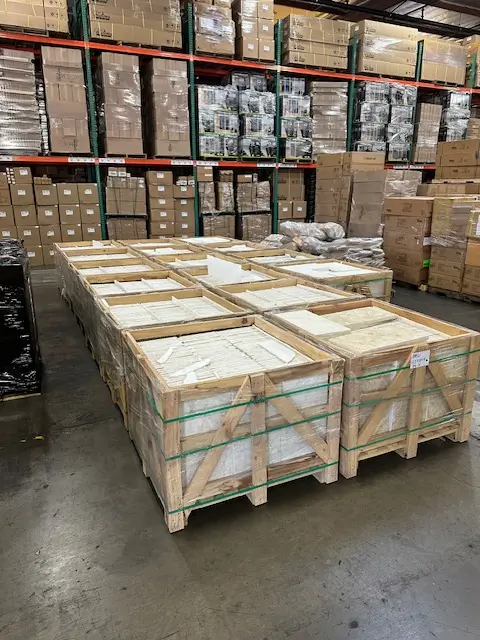
For the Citadel Stone border units we supply to hardscape projects nationally, our technical team recommends confirming warehouse stock depth before finalising your installation schedule — border units often ship as a separate SKU from field pavers, and aligning both deliveries from the warehouse to your job site in a single truck run reduces mobilisation cost significantly.
Finish Selection and Slip Considerations for Edging Pavers
The finish you specify on your edging pavers serves both aesthetic and functional roles. A tumbled finish creates a rounded arris that’s visually cohesive with cobblestone fields and also reduces the sharp edge that pedestrian traffic catches on transitional surfaces. A sawn finish gives you a crisp line appropriate for contemporary hardscape designs but leaves a sharper arris that requires careful installation to avoid presenting a trip hazard at grade transitions.
Slip resistance at the top surface of a border unit matters more than most specifiers realise, particularly in residential applications where border stone runs along pool surrounds or steps down to a lower grade. The finish is the controlling variable — a honed or polished finish reduces surface texture and changes slipperiness when wet, while a flamed, bush-hammered, or tumbled finish maintains more surface relief. Finish selection should be evaluated alongside the material’s absorption characteristics, since high-absorption finishes can become more slippery when wet than the same finish on a denser stone.
The current slip standard for wet surfaces is ANSI A326.3, which establishes the testing protocol and minimum wet DCOF threshold — replacing the ASTM C1028 static test withdrawn in 2014. Point your finish selection decisions toward that standard rather than relying on generic descriptions of surface texture.
- Tumbled finish: softened arris, cohesive with cobblestone fields, maintains surface relief when wet
- Sawn finish: crisp contemporary line, requires precise installation to manage grade transitions
- Flamed or bush-hammered: maximum surface texture, appropriate for sloped border runs or pool-adjacent applications
- Honed: smooth aesthetic, specify only on level, low-traffic edging runs where wet exposure is minimal
Sealing and Maintenance Protocols for Border Stone
Border stone takes more weathering exposure than field pavers, and that exposure is directional — the outer face is fully exposed to precipitation, freeze-thaw cycling, and UV, while the embedded portion sits in permanently moist soil contact. That combination makes sealing less optional for border units than it is for protected field applications.
A penetrating silane-siloxane sealer applied to the top and exposed face of the border unit before installation provides the most durable protection. The pre-installation window matters because it lets the sealer fully cure before the unit goes into soil contact — attempting to seal installed border stone on the exposed face only leaves the arris and back face unprotected, which is exactly where moisture infiltration causes spalling in freeze-thaw environments.
Reapplication interval depends heavily on how much UV and moisture the face receives. In high-sun, high-rainfall environments, plan for resealing every three to four years. In sheltered or dry-climate installations, a five-to-seven-year interval is realistic. The tell is bead test behaviour — when water no longer beads on the exposed face and instead absorbs within 30 seconds, the sealer has depleted and reapplication is overdue.
Sourcing and Lead Times for Natural Stone Border Units
Natural stone edging pavers sourced from selected quarries in the Middle East and other international origins typically carry longer lead times than domestic concrete alternatives — the supply chain involves quarrying, processing, quality grading, and ocean freight before the material reaches warehouse inventory. Your project timeline needs to account for that reality, particularly if the border units are a non-stock profile or custom dimension.
Citadel Stone cuts every order at its selected quarries, and the lead time for your specification is quoted with the order. For custom dimensions or high volumes, a 6–10 week lead time from confirmed order to truck delivery is a realistic planning figure. Sequencing your border unit order ahead of your field paver order is the safer approach — borders install first, and a delayed border delivery holds up the entire field installation, not just the perimeter work.
Verify that the warehouse holds matched lot inventory for your full order quantity. Natural stone exhibits colour and texture variation between production batches, and border units from a different quarry run than your field pavers will read as mismatched even if the specification is identical. At Citadel Stone, we quarry, template, manufacture, and handle material quality at the source to keep batch consistency within acceptable tolerance for matched installations — but confirming lot availability before order placement is always the right professional practice.
- Confirm warehouse lot availability before committing to a project timeline
- Allow 6–10 weeks for non-stock profiles or custom dimensions
- Order border units ahead of field pavers — they install first and hold up the full project if delayed
- Verify that the truck delivery includes matched lot documentation so the site team can cross-reference on arrival
Professional Summary: Edging Paver Specification Essentials
Edging pavers earn their specification on performance, not aesthetics — the border detail is what determines whether a hardscape holds its geometry through years of lateral loading, soil movement, and seasonal cycling. Getting the specification right means addressing subgrade preparation with the same rigour as the field installation, selecting stone dimensioned for embedment depth rather than just visual proportion, and matching finish to application rather than defaulting to whatever ships fastest.
The subgrade variable is the one most specifiers underweight. Expansive clay, sandy bearing layers, and caliche hardpan each require a different preparation response, and a border unit installed without that site-specific thinking will migrate regardless of how good the stone is. Pair the right material with the correct embedment geometry, a penetrating sealer applied before installation, and warehouse-verified matched lot inventory, and the installation will deliver decades of service life with minimal intervention. As you build out your hardscape specification, related perimeter and walkway applications are worth reviewing alongside your border detail — cobblestone walkway design ideas explores how natural stone continues that language through connected pathways and pedestrian surfaces.
Border stone from Citadel Stone resists shifting under seasonal soil movement, drawn from internationally sourced quarries.
Related reading: cobblestone paver patterns · cobblestone edging pavers · cobblestone pavers for patio.