

What Portsea Grey Limestone Reveals About a Space
Portsea grey limestone’s tonal range — running from cool dove grey through warmer charcoal-edged midtones — gives designers something concrete pavers and porcelain tiles rarely offer: an appearance that shifts with natural light rather than fighting it. The surface reads differently at dawn than it does at midday, and that variability is precisely what makes it compelling in considered design work. Understanding how to harness that quality, rather than working around it, separates installations that photograph well from ones that perform beautifully year after year.
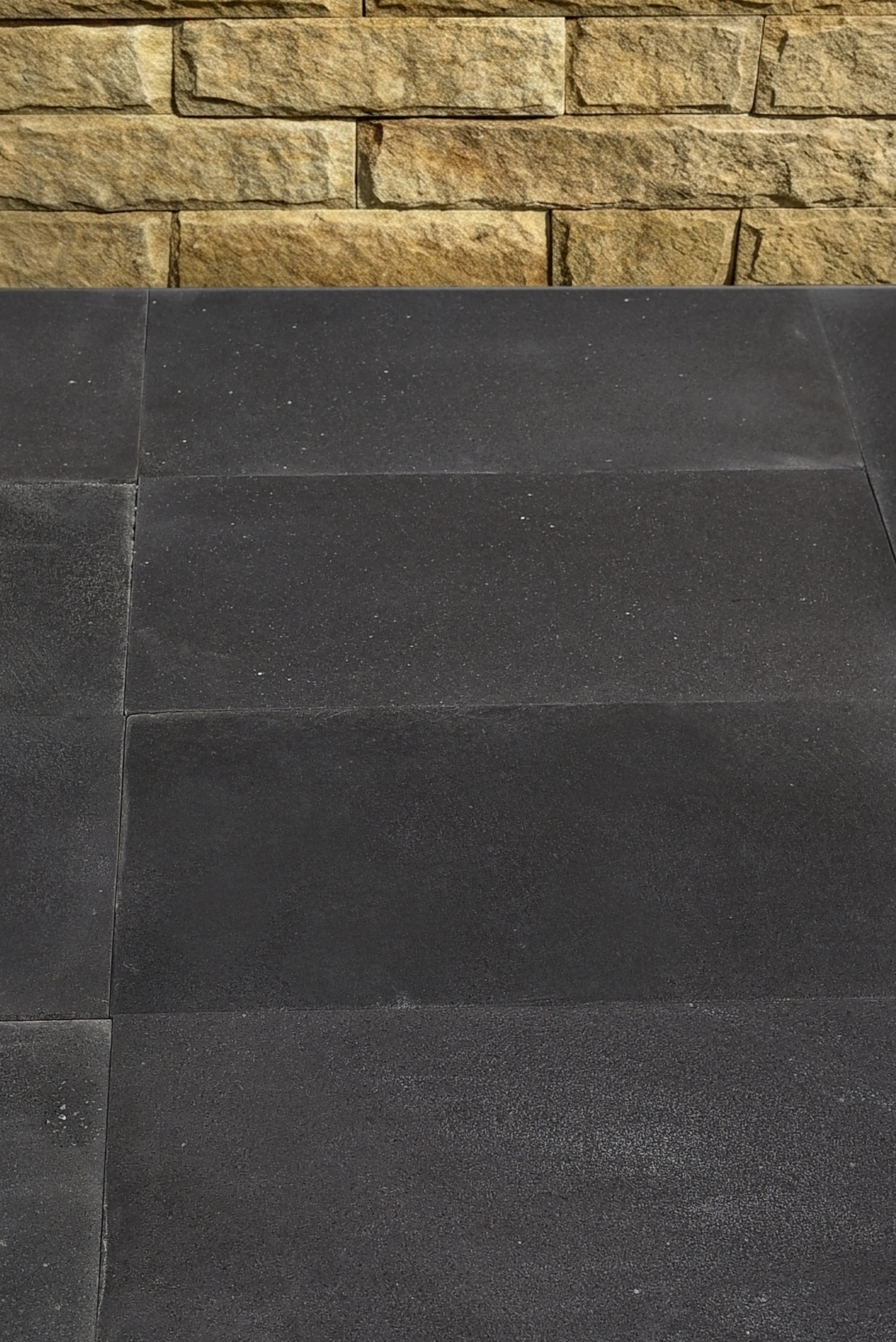
Surface Finish Options and Their Design Implications
Your finish selection is the single most consequential decision after material choice itself. Portsea grey limestone responds to processing in ways that open up genuinely different aesthetic directions, not just surface texture variations.
- Honed finish: delivers a smooth, matte surface that pulls out the cooler, blue-grey undertones — ideal for interior floors and covered outdoor spaces where you want consistent colour without the reflective glare of polish
- Brushed or antique finish: introduces micro-relief that catches raking light and emphasises the natural veining, creating visual warmth without sacrificing the material’s inherent restraint
- Sawn and tumbled: rounds arrises and adds character that suits more informal planting-heavy landscapes where a purely architectural look would feel jarring
- Flamed finish: opens the surface pores slightly more and reduces slip risk on wet surfaces — a practical consideration for pool-adjacent decking and exposed pathways
According to Natural Stone Institute limestone technical specifications, finish selection affects surface porosity and therefore sealing frequency — factor that into your maintenance planning from the outset, not as an afterthought.
Integrating the Colour Palette Across Landscape Styles
Portsea grey limestone doesn’t impose a single aesthetic. Its neutral mid-grey sits at a crossroads that serves several distinct landscape traditions simultaneously.
In modern minimalist schemes, the material’s natural variation provides the only ornamentation the design needs — no planted borders, no contrasting coping, just calibrated proportions and a stone surface that holds its own. For traditional colonial or heritage garden settings, a sawn-and-brushed finish paired with established planting and clipped hedges creates the kind of grounded, settled appearance that takes concrete pavers decades to approximate — if they get there at all. In desert xeriscaping contexts, where water-sensitive planting keeps colour schemes muted and textural contrast carries the design, the grey tones of portsea grey limestone read as a natural extension of the surrounding palette rather than an imposed hardscape element.
Tropical planting schemes present a different challenge. Against intensely saturated foliage greens and flowering plants, a cool grey stone can recede effectively or read as stark, depending on how you manage joint width and the ratio of planted to paved area. Wider planted joints filled with decomposed granite or moss — rather than cement-pointed tight joints — soften the contrast and allow the limestone to function as a cohesive ground plane rather than a competing focal element. You can explore our portsea grey limestone tones to see how the material coordinates across different finish and joint treatments.
Portsea Grey Limestone Pavers: Format, Sizing, and Pattern Logic
Format decisions do significant design work in any paving scheme, and portsea grey limestone pavers respond well to both modular and random-coursed layouts. The material’s inherent colour consistency across a batch means you don’t need to rely on random patterns to hide tonal variation the way you might with some other limestones sourced from inconsistent quarry runs.
- Large-format slabs (600×900mm or 600×600mm): amplify the stone’s quiet authority in contemporary outdoor rooms — fewer joints means less visual interruption and a cleaner horizontal plane
- Modular tile sizes in a coursed pattern: give you predictable quantities and straightforward installation geometry, especially useful on larger commercial projects where waste reduction matters to the programme budget
- Random coursed or broken bond: suits informal gardens and transitional spaces where the rigid geometry of a modular grid would feel over-engineered
- Running bond in narrower plank formats: works well for pathways and pool surrounds where directional emphasis supports circulation logic
The ASLA provides useful outdoor paving and permeable surface design guidance on balancing hardscape proportion against planted area — worth reviewing when you’re making initial area calculations for larger landscape projects.
Performance Specification: What the Numbers Tell You
Design intent only translates into a successful project when the material’s physical properties support the application. Portsea grey limestone, as a dense carbonate stone, delivers meaningful performance advantages that go beyond aesthetics.
Compressive strength in the 100–300 N/mm² range — typical for dense basalt and comparable dense limestones — means the material handles the point loading of residential driveways and pedestrian plazas without surface crushing at joint edges, which is where inferior stones typically fail first. Water absorption below 1% in quality-certified batches keeps freeze-thaw cycling damage minimal in cold climates: absorbed moisture has limited scope to expand and fracture the matrix. You’ll want to confirm lot-specific certificates for any large procurement; at Citadel Stone, we pull batch-level test data from our warehouse receiving records precisely because absorption figures can vary between quarry runs even within the same product line.
The Böhme abrasion test result — the metric that tells you how the surface holds up under sustained foot traffic and dragged furniture — matters more than compressive strength alone for paving applications. Denser limestones sourced from well-consolidated quarry beds perform measurably better here, and that’s the conversation worth having with your supplier before specifying rather than after installation.
How Portsea Grey Limestone Compares to Alternative Grey Stones
Specifiers frequently evaluate portsea grey limestone alongside jura beige limestone and slate slabs. Each occupies a different part of the grey-to-warm-neutral spectrum, and the performance profiles diverge in ways that affect long-term outcomes.
Jura beige limestone, sourced from German Jurassic-era deposits, sits warmer in tone — beige-ivory with subtle grey veining rather than a true grey ground. Where portsea grey reads cool and architectural, jura beige limestone skews towards a warmer, continental aesthetic that pairs naturally with honey-coloured render and timber. Both are dense limestones, but jura beige tends toward a tighter, more consistently structured matrix; batch variation is narrower. Your choice between them hinges less on performance and more on whether the project’s palette demands coolness or warmth as its base note.
Slate slabs occupy a genuinely different category. The metamorphic layering that gives slate its characteristic cleavage plane also makes it naturally resistant to polishing — it splits rather than hones — which means your finish options are more limited. Slate slabs deliver excellent slip resistance in their natural riven state, and the dark graphite tones are dramatically different from the mid-grey warmth of portsea grey limestone. Where slate makes sense: high-traffic urban steps, garden wall cladding, and feature panels where the laminar texture reads as a design element. Where limestone makes more sense: large paved areas, pool surrounds, and interior-exterior transitions where surface consistency across format and tone is more important than textural drama.
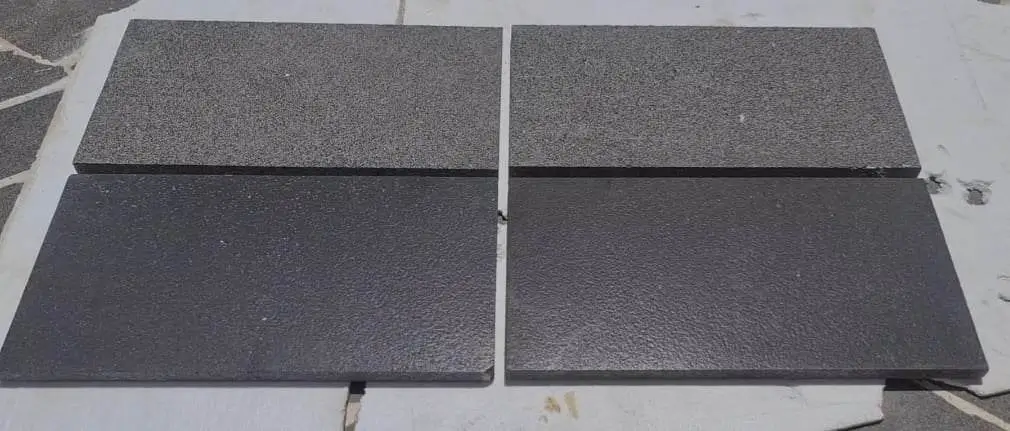
Sealing Protocols and Long-Term Maintenance
Portsea grey limestone’s tonal character depends on keeping the surface clean and protected — the grey palette you selected at specification can shift noticeably if iron-bearing organic matter is allowed to stain into an unsealed pore matrix. Getting sealing right the first time is significantly easier than reversing a staining problem eighteen months into the project.
- Apply a penetrating impregnator sealer — not a surface-coating sealer — before grouting to prevent grout haze from bonding to the stone face
- Allow 72 hours minimum curing time after installation before first sealer application, longer in cold conditions below 10°C where off-gassing from the adhesive bed hasn’t completed
- Reapply sealer every 2–3 years for exterior installations in moderate climates; annually for high-UV, high-rainfall or pool-adjacent locations where the sealer bond degrades faster
- Use a pH-neutral cleaner for routine maintenance — acid-based cleaners etch the calcium carbonate matrix and accelerate surface wear at the microscopic level
- Stone mesh or matting at entry transitions from exterior paved areas significantly reduces grit tracking onto interior limestone floors, which is the leading cause of surface micro-scratching in residential installations
The Britannica limestone formation and characteristics entry explains why carbonate stones respond to acid exposure at the mineralogical level — useful background if you’re advising clients on cleaning product selection or explaining maintenance requirements to facilities teams.
Ordering, Logistics, and Project Timeline Planning
Your project timeline needs to account for stock availability, pallet configuration, and truck access at the delivery point. Portsea grey limestone in standard modular formats typically moves from warehouse to site faster than custom-sized or colour-matched cut-to-order work — but confirming stock levels against your quantity schedule before finalising procurement avoids the most common cause of programme delays on stone projects.
Citadel Stone maintains nationwide warehouse inventory for core limestone formats, which compresses the lead time window considerably compared to direct import procurement. For larger projects requiring matched batch quantities across multiple delivery phases, it’s worth co-ordinating with our technical team early to reserve stock from a single production batch — tonal consistency across phases depends on it. Truck access on your site affects pallet drop options; full pallet weights for natural stone run 800–1,200 kg depending on thickness and format, which means a standard rigid truck requires a hardstand area clear of soft ground or stepped access.
Portsea Grey Limestone: Spec Wrap-Up
The design decisions that matter most with portsea grey limestone come down to finish, format, and the honest assessment of how the material’s cool-grey palette integrates with your project’s planting scheme and architectural language. Get those three things right, and the material’s physical properties — density, low absorption, measured abrasion resistance — will sustain the design intent through decades of service life without requiring remedial intervention. Overlook them, and no amount of post-installation maintenance recovers a surface specified against its grain. If you’re working with related limestone materials elsewhere on the same property, grey foussana limestone options offer another Citadel Stone grey-palette material worth reviewing for complementary applications. Product from Citadel Stone ships in modular tile sizes, letting portsea grey limestone form clean patterns across open patios.
Related reading: Grey Limestone Care and Cleaning: Keep Its Color · Grey Limestone Countertops: A Practical Selection Guide · tundra grey limestone.