

Salem Grey Limestone’s performance edge in side-by-side evaluations often comes down to a detail that gets skipped in most comparison charts — the difference in pore structure between the two stones and what that means for long-term dimensional stability under load. Both Salem Grey Limestone and Grey Lueders are sedimentary limestones with broadly similar mineral compositions, but their depositional origins produce meaningfully different internal architectures. Understanding those differences before you commit a specification is where projects go from performing adequately to performing well across decades of service life.
Material Origins and Composition
Salem Grey Limestone comes from the Salem Formation — a mid-Carboniferous deposit with a notably uniform oolitic texture. That consistency isn’t just visual. It reflects a tight, even grain structure that translates into predictable compressive strength readings and low variance in absorption rates from slab to slab. When you’re ordering across multiple pallets for a large project, that uniformity matters enormously — you won’t be chasing colour or density shifts between batches.
Grey Lueders Limestone, by contrast, is a Permian-age deposit sourced primarily from West Texas. Its character is layered rather than uniform — you’ll notice subtle horizontal banding and occasional shell fossil inclusions that add texture variation. This isn’t a defect; it’s geology. But it does mean grey lueders limestone naturally exhibits more visual variation between pieces and, more importantly for specification purposes, slightly more variation in physical properties between the densest and most porous sections of a given block. The Natural Stone Institute limestone technical specifications confirm that formation-specific density variations in sedimentary limestone directly affect long-term compressive performance — a point worth grounding your material selection in before the order goes in.
Compressive Strength and Density Compared
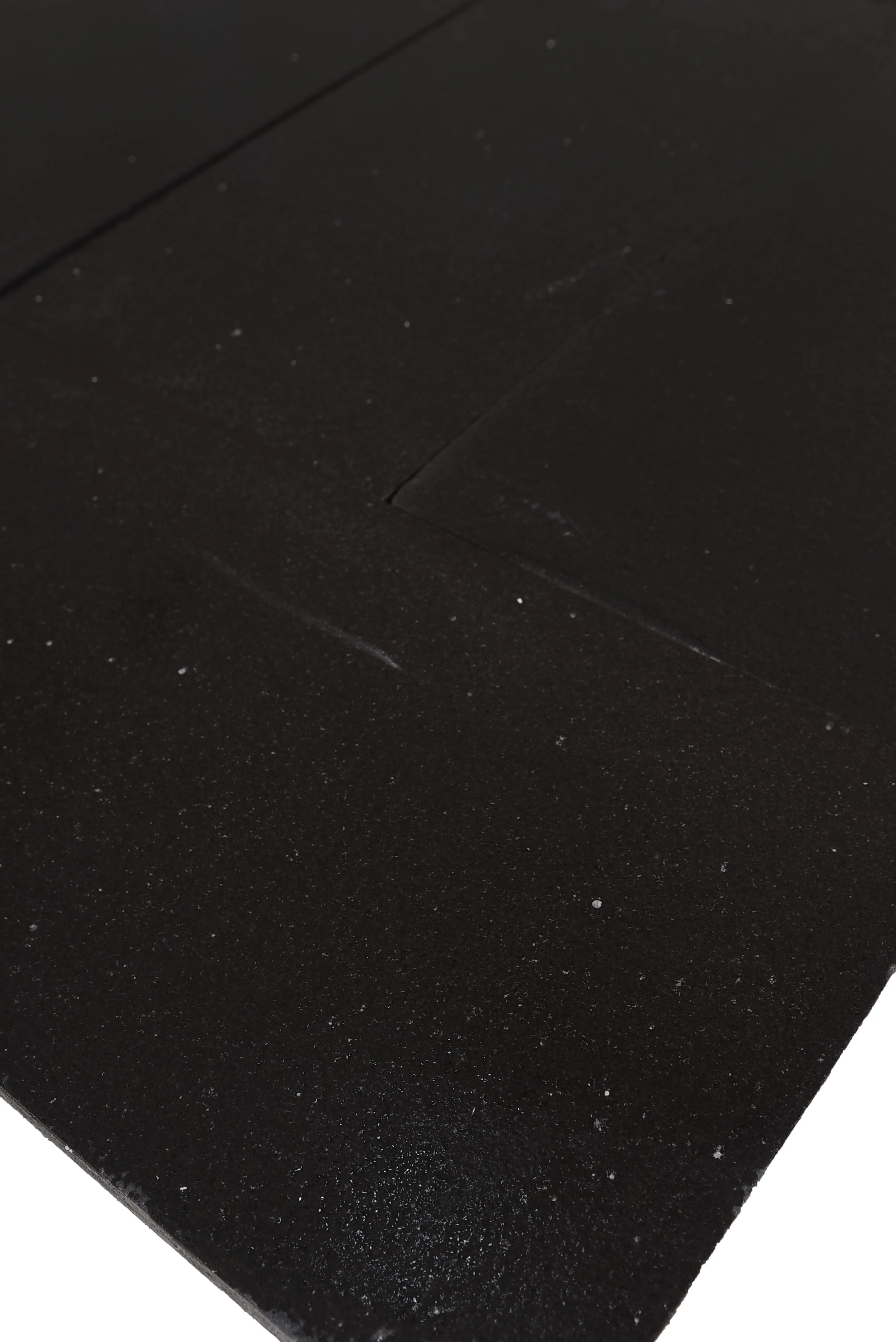
Salem Grey Limestone typically tests in the 8,000–12,000 PSI compressive strength range, with the oolitic grain structure distributing load efficiently across the stone face. Density runs approximately 143–150 lbs/ft³ depending on specific quarry section. Grey Lueders, being a denser, tighter-grained calcite stone, often tests higher — commonly 10,000–15,000 PSI — with density closer to 150–158 lbs/ft³ in its most compact layers.
Here’s what that difference actually means in the field: Lueders carries more raw structural mass, which is advantageous in certain heavy-load applications. Salem Grey, however, achieves a strength-to-weight ratio that performs reliably in residential and commercial paving contexts without the additional weight penalty — a relevant consideration when you’re planning truck delivery logistics over restricted-weight routes or specifying for elevated deck structures where dead load is a constraint.
- Salem Grey compressive strength: 8,000–12,000 PSI — reliable for most paving and coping applications
- Grey Lueders compressive strength: 10,000–15,000 PSI — suited to heavier-load or structural contexts
- Salem Grey density: approximately 143–150 lbs/ft³ — manageable for elevated and tiered installations
- Grey Lueders density: approximately 150–158 lbs/ft³ — heavier, beneficial for thermal mass but relevant to load calculations
- Both materials meet ASTM C568 Type II or III classification thresholds for dimension limestone used in exterior applications
Absorption Rates and Water Resistance
Absorption is where the two stones diverge most practically. Salem Grey Limestone typically shows water absorption rates between 3–7% by weight, which classifies it in the moderate-absorption band. Grey Lueders runs tighter — commonly 1–4% — because its Permian depositional environment produced a more interlocked crystalline matrix. The USGS limestone composition and construction applications data details how Permian formation limestones tend toward lower void ratios than Carboniferous oolitic equivalents — a geological distinction that plays out directly in field moisture behavior.
For your project, this means grey lueders limestone offers an advantage in consistently wet environments or where freeze-thaw cycling is a recurring seasonal condition. Salem Grey’s slightly higher absorption makes proper sealing more critical, but with biennial penetrating sealer application it performs well across a broad range of climates. The absorption number alone shouldn’t decide the specification — the sealing protocol and substrate drainage are equally influential variables.
Finish Options and Visual Character
Your finish selection will affect how each stone reads in the final installation more than almost any other single decision. Salem Grey Limestone responds exceptionally well to a sawn or honed finish — the oolitic texture creates a fine, consistent grain that holds a smooth surface without appearing artificially polished. Thermal (flamed) finishes on Salem Grey open the surface texture beautifully while maintaining the material’s characteristic cool grey mid-tone.
Grey Lueders takes a different character depending on finish. Its natural cleft surface — split along bedding planes — gives an organic, textured result with pronounced layering lines. Sawn finishes on Lueders reveal the banding more clearly, producing a visual rhythm some designers prefer for feature paving. Bush-hammered or tumbled finishes on Lueders tend to soften the banding lines and produce a more weathered aesthetic.
- Salem Grey honed: fine, uniform grain — best for formal terraces and interior-exterior transitions
- Salem Grey thermal: excellent slip resistance, maintains mid-grey tone, ideal for pool surrounds and commercial walkways
- Grey Lueders natural cleft: strong horizontal layering, highly textured, ideal for wall cladding and rustic paving
- Grey Lueders sawn: banding more pronounced, distinctive linear patterning, suits contemporary landscaping
- Both stones accept penetrating sealers well — avoid topical film sealers, which can alter the surface character noticeably
Thickness and Sizing for Paving Applications
Standard paving thickness for both materials runs 1.25″ to 2″ nominal for residential pedestrian applications. For vehicular areas, stepping up to a minimum of 2.5″ is advisable — and in driveway contexts where trucks or heavy delivery vehicles are expected, 3″ nominal with a proper compacted aggregate base is the safer spec. At Citadel Stone, we typically recommend checking your intended use pattern against projected load cycles before settling on thickness, because undersized stone in vehicular applications accounts for a disproportionate share of field failures we see reported.
Salem Grey Limestone pavers handle sizing flexibility well — the stone’s internal consistency means large-format pieces (24″ × 24″ and up) maintain dimensional accuracy without the void or weak-layer risk that can affect more variable sedimentary stones. Grey Lueders in large formats can be spectacular, but you’ll want to specify pieces from the denser, lower-absorption sections of the quarry block — ask your supplier explicitly about this when ordering, because it’s not a detail that always gets flagged automatically.
Terrain, Drainage, and Base Preparation
Elevation changes and site topography have a significant bearing on how either stone performs over time — and it’s a dimension that often gets underspecified compared to material choice. On sloped or hillside installations, water management is the defining engineering challenge. Salem Grey Limestone pavers installed on grades above 1.5% require a modified base design: the compacted aggregate layer needs to be anchored with geotextile fabric to prevent migration, and mortar-set systems are preferable to sand-set on grades above 2% to prevent differential settlement as substrate moisture fluctuates seasonally.
Grey Lueders’ lower absorption rate gives it a marginal advantage on sites where sub-surface moisture is consistently elevated — particularly in low-lying areas where the water table is seasonally close to the surface. The denser matrix simply takes on less incidental moisture during wet periods, reducing the hydrostatic stress that causes spalling in more porous alternatives. On flat sites without natural drainage gradient, engineering positive drainage of at least 1/8″ per foot into the base design is necessary regardless of which stone you choose — neither material tolerates standing water beneath the slab without eventual consequence.
For both materials, the base specification follows the same fundamental structure: compacted subgrade, minimum 4″ crushed aggregate base (6″ in frost-affected regions), and a setting bed appropriate to your slope and load conditions. The terrain-driven difference is whether you’re managing water running toward the installation or water sitting beneath it — and those two scenarios call for different drainage solutions. Explore our grey limestone slab range to assess thickness and format options before finalising your base depth specification.
Sealing and Maintenance Protocols
Both stones benefit from penetrating silane-siloxane sealers applied to clean, dry surfaces prior to use and refreshed on a biennial cycle in typical exterior conditions. The differences show up in sealer consumption rates: Salem Grey Limestone’s higher porosity means it absorbs more sealer per square foot on the first application — budget roughly 15–20% more product for Salem Grey versus Lueders to achieve comparable penetration depth.
- First-application sealer rate for Salem Grey: approximately 150–200 sq ft per gallon depending on porosity
- First-application sealer rate for Grey Lueders: approximately 200–250 sq ft per gallon — denser matrix absorbs less product
- Reapplication interval: biennial in most climates; annual in high-UV or coastal environments
- Joint sand should be maintained at 90–95% capacity — sand loss is the leading maintenance failure point in sand-set installations of both materials
- Efflorescence is possible in both stones — particularly in the first 18 months post-installation as salts migrate through the setting bed
- Use pH-neutral cleaners only — acidic products etch both limestones quickly, and the damage is difficult to remediate without resurfacing
Ordering, Logistics, and Lead Times
Your ordering strategy for either stone should account for the practical realities of natural stone supply. Salem Grey Limestone — given its North American quarry origin — typically carries shorter import lead times than alternatives quarried in the Middle East. Warehouse stock levels for standard paving formats (12″ × 24″, 16″ × 24″, 24″ × 24″) are more consistently maintained, which means you can often confirm availability and get truck delivery scheduled within 1–2 weeks for stock items rather than the 6–10 week window typical for made-to-order imports.
Grey Lueders availability depends more on quarry production cycles, and custom cuts or unusual thicknesses may require lead times of 4–8 weeks. The Britannica limestone formation and characteristics reference puts into context why quarry yield varies seasonally for sedimentary formations — a practical reality that affects production scheduling. Citadel Stone cuts every order at its selected quarries, and the lead time for your specification is quoted with the order.
- Confirm warehouse stock status before finalising project timelines — stock levels fluctuate, and assuming availability on non-standard sizes is a common scheduling risk
- For projects over 2,000 sq ft, request a material reserve hold — this prevents your specified batch from being allocated to another order mid-project
- Order 8–10% overage above net area — cutting waste and breakage during installation is universal, and sourcing a matching batch after the initial order is harder than it sounds
- Coordinate truck delivery access with your site foreman early — large-format slabs on pallets require flat, accessible staging areas near the installation zone
Which Stone Suits Your Project Best
The decision between Salem Grey Limestone and Grey Lueders comes down to three converging factors: visual intent, site hydrology, and project logistics. Salem Grey Limestone is your stronger choice when you need highly consistent colour across a large paving area, when the installation timeline is constrained, or when the project involves elevated or tiered structures where weight is a design constraint. Grey Lueders earns its place in specifications that call for a more characterful, layered aesthetic, where heavier structural mass is an asset, or where the installation environment subjects the stone to persistent moisture exposure that rewards lower absorption.
Neither material is a universal winner — and any supplier who tells you one is definitively better across all applications hasn’t spent enough time troubleshooting field failures to have earned that opinion. Both perform reliably over decades of service life when the base is engineered correctly, the sealing protocol is maintained, and the stone is matched honestly to the site conditions.
Getting Your Salem Grey Limestone Specification Right
Your specification decision between these two materials should be documented with the physical data — not just the finish preference. Note the absorption class, the target compressive strength, the sealer product and reapplication schedule, and the base design appropriate to your terrain gradient. Those details are what turn a good material choice into a reliably performing installation. For projects where a warm-toned grey with translucent mineral veining is a complementary direction worth exploring, the Jerusalem Grey Gold limestone options offer another dimension of grey-toned natural stone specification worth reviewing alongside your Salem Grey or Lueders evaluation.
At Citadel Stone, we source both grey limestone varieties with direct quarry relationships, which means our technical team can provide batch-specific absorption and density data before your order is placed — not as a best estimate, but as confirmed material data from the production run. Sourced direct from quarries in Turkey, the Mediterranean, and beyond, salem grey limestone from Citadel Stone offers uniform tone across large orders.
Related reading: grey limestone blocks buyers guide · grey limestone care and cleaning · grey limestone countertops.