

Pavers with black border ideas that truly work share one underappreciated quality: the border does structural and perceptual work simultaneously. A well-specified black edge doesn’t just look sharp at installation — it resists differential settlement over years of thermal cycling, holding the field pattern together when seasonal temperature swings would otherwise cause edge units to creep or rotate. That dual function is what separates a considered design from one that simply looks good in the first season.
Why a Black Border Makes Your Paved Area Read as a Room
Your eye naturally follows contrast lines before it reads texture or color. A dark perimeter against a lighter field tells the brain where a space begins and ends — the same principle used in interior design to ground a rug in a room. In outdoor paving, that definition does something concrete: it anchors seating arrangements, marks the transition between lawn and hardscape, and prevents the eye from skipping past the paved zone entirely. Without a border, even a large paved area can read as an afterthought. With a correctly proportioned black frame, a modest courtyard reads as deliberate and finished.
The width of your border matters more than most guides admit. A single-unit border (typically 4–6 inches wide) works for intimate walkways and tight garden paths. For driveways and entertaining terraces, you’ll want a double-course border — two rows of border stone running parallel — which gives the eye enough visual mass to register against a broad field. Going wider than two courses tends to fight the field pattern rather than frame it.
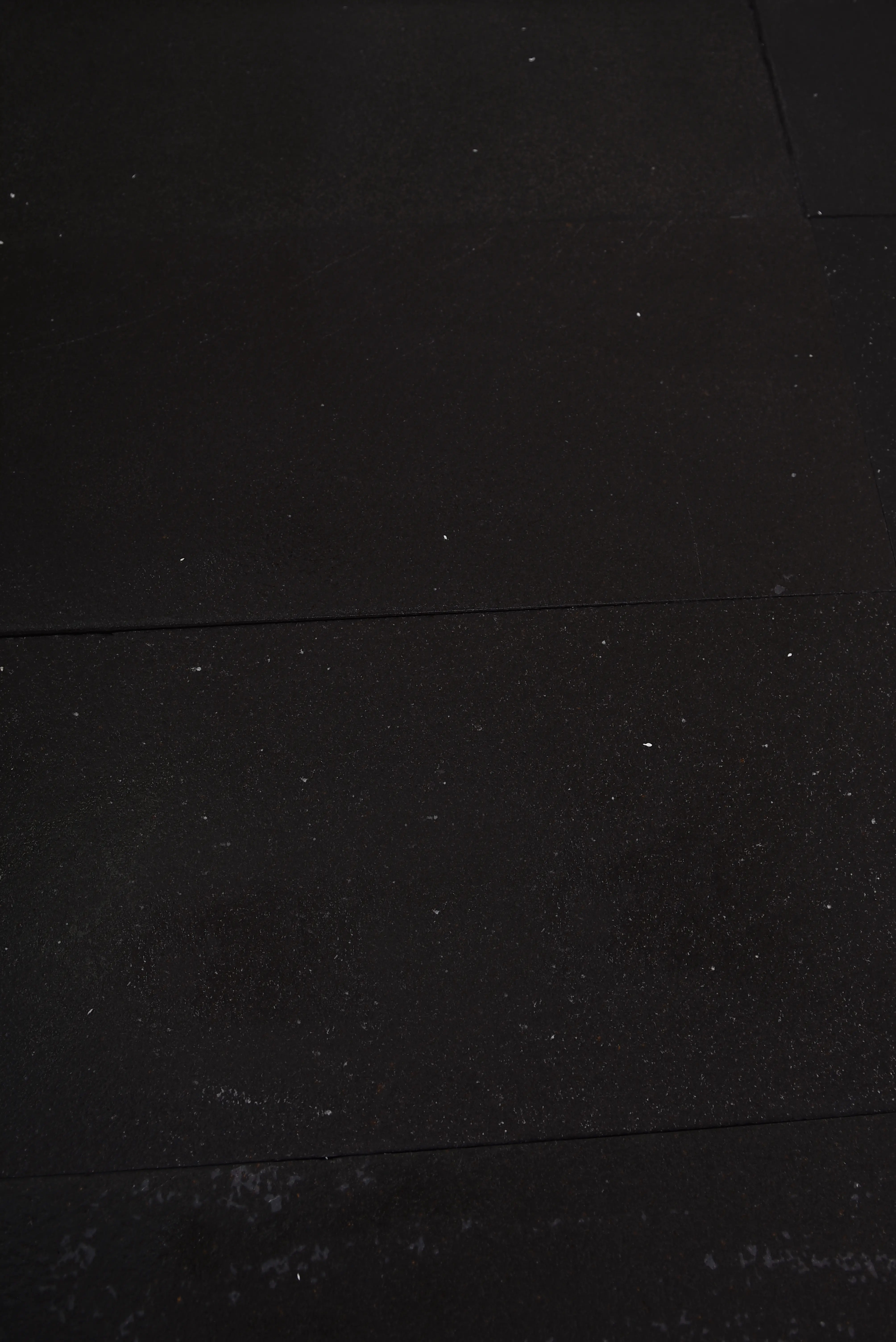
7 Pavers With Black Border Ideas Worth Specifying
Grey Limestone Field, Charcoal Basalt Border
This is the combination you’ll see on the most resolved residential projects right now. Grey limestone — honed or lightly brushed — carries a cool, neutral tone that photographs well and ages gracefully. Pair it with a charcoal or near-black basalt border cut to the same nominal thickness, and the contrast is crisp without being harsh. The material pairing also makes sense structurally: both limestone and basalt handle thermal cycling reasonably well when joints are correctly filled, and their similar thermal expansion coefficients (limestone at roughly 4–8 × 10⁻⁶/°C, basalt slightly lower) reduce the risk of differential movement at the junction between field and border.
Warm Beige Limestone Field, Black Granite Border
Warm-toned limestone — cream, buff, or sandy beige — creates an immediately approachable surface that reads as welcoming rather than corporate. A polished or flamed black granite border against that warm field delivers a very high-contrast edge that suits formal entry courts and symmetrical garden designs. Granite’s compressive strength (typically above 15,000 PSI) makes it a sound choice for the border position, where edge loading from vehicle tyres or heavy foot traffic concentrates. According to NSI granite durability data, granite dimension stone consistently outperforms softer materials in high-traffic border applications. You should confirm the granite is flamed or bush-hammered on the top face if slip resistance is a priority — polished granite at a border edge can be hazardous in wet conditions.
Gray Pavers With Black Border in Herringbone Pattern
Gray pavers with black border treatments work particularly well when the field is laid in herringbone. The diagonal lines created by a 45-degree herringbone run naturally toward the border, and the border anchors them before the eye reaches the lawn or planting bed. The visual energy of herringbone needs that frame — without it, the pattern feels like it’s sliding off the edge. Specify your gray field units at 4 × 8 inches for a traditional herringbone proportion, and run your border units perpendicular to the perimeter at the same 4-inch nominal width for a clean termination detail. Gray pavers with black border edging in this configuration are among the most-specified combinations for residential courtyard renovations.
White or Pale Natural Stone Field With a Bold Black Frame
Maximum contrast is a legitimate design strategy, and a white or near-white field stone with a deep black border delivers exactly that. This combination suits pool surrounds, Mediterranean-style courtyards, and contemporary entry approaches where a graphic quality is the goal. The practical specification consideration is maintenance: pale field stone adjacent to dark border stone means any joint sand migration or efflorescence on the border will be visible against the light field. Use a polymer-modified joint sand rated for color stability, and plan for annual inspection rather than assuming the joints will hold indefinitely.
Black and Yellow Paving as an Accent Border Strategy
Black and yellow paving combinations are less common but genuinely striking in the right context — think contemporary urban gardens, modern commercial forecourts, or bold residential driveways where the client wants a proprietary look. The approach works best when the yellow or golden-toned field stone (certain sandstones and warm limestones from selected quarries from the Middle East deliver this palette well) is paired with a true black border rather than a dark charcoal. At Citadel Stone, we’ve sourced warm ochre-toned field stone alongside dense black basalt borders for projects where the client wanted a colour-forward result that still reads as natural stone rather than a manufactured product. Black and yellow paving of this kind works best when the contrast ratio is anchored by the border’s material density rather than surface finish alone.
Blue-Grey Limestone Field With a Black Limestone Border
Blue-grey limestone is one of the most architecturally versatile field stones available. Its cool, slightly blue undertone reads differently in morning and evening light, giving the surface a dynamic quality that warmer stones lack. Running a black or near-black limestone border in the same material family creates a tonal relationship that feels resolved — the surfaces share the same mineral character, so the border reads as a darkened version of the field rather than a foreign element inserted beside it. For projects where visual consistency and tonal harmony are priorities, this is the combination to reach for. You can explore our grey and black paver combos to see how this pairing performs across different project types.
Natural Stone Field With a Double-Course Soldier-Course Border
A soldier-course border — units stood upright with the long face running parallel to the perimeter — adds a vertical emphasis that standard flat borders can’t achieve. When those soldier-course units are a deep charcoal or black stone, the border gains both visual weight and an architectural quality that suits formal gardens and elevated estate projects. The structural consideration is depth: soldier-course borders need to be set into a concrete haunch or be mechanically restrained, because they rely on confinement rather than gravity to stay in position. This is a detail your installer needs to plan for before the base is poured.
Choosing the Right Stone for Your Black Border
Your border material needs to satisfy four performance criteria simultaneously: color depth, surface stability, dimensional consistency, and durability under edge loading. Not every dark stone meets all four. Here’s how the main options stack up:
- Black basalt delivers the deepest, most consistent black tone and handles compressive loads well — ideal for driveway borders and high-traffic edge courses
- Dark charcoal limestone offers a slightly softer edge color that tends to harmonize better with limestone field stones — the material affinity reduces the visual jump between field and border
- Black granite is the hardest and most abrasion-resistant option, suited for borders where vehicle tyres will regularly track across the edge course
- Honed finishes give a matte black result that reads as sophisticated without the maintenance demands of a polished surface — polished black stone shows every dust particle and water mark
- Thermal or flamed finishes add slip resistance to the border surface, which matters when the border doubles as a step edge or pool coping termination
The Natural Stone Institute variety specifications provide technical baseline data for absorption, compressive strength, and freeze-thaw resistance across stone types — useful when comparing basalt against limestone for a border specification in regions with hard winters.
Freeze-Thaw Cycling and What It Does to Your Border Joints
Pavers with black border designs that look immaculate at installation can degrade quickly in freeze-thaw regions where overnight temperatures swing hard below freezing after warm days. The mechanism is specific: water infiltrates the joint, freezes and expands (water expands roughly 9% by volume when it transitions to ice), and works the joint open incrementally over multiple cycles. After enough cycles, the border unit starts to shift outward — the classic “creeping border” problem that landscapers in freeze-thaw regions know well.
The specification response is straightforward but non-negotiable. According to USGS dimension stone production data, stone with absorption rates above 0.75% by weight is significantly more vulnerable to freeze-thaw degradation. Your border stone should meet or exceed ASTM C568 Class I absorption limits (not more than 0.75%), and your joint filler should be a polymer-modified sand rated specifically for freeze-thaw exposure. Epoxy-grouted joints in the border course are worth considering for regions that see more than 30 freeze-thaw cycles annually — it’s a higher upfront cost that eliminates the most common long-term failure mode in bordered paving.
Expansion joints are the other variable to plan for. Natural stone expands and contracts across its length with temperature — most limestones and basalts move in the range of 0.5–1.2 mm per metre across a 40°C seasonal swing. For a 6-metre driveway, that’s up to 7 mm of cumulative movement. Place a compressible backer rod and flexible sealant joint every 4–5 metres in the field, and make sure your border detail accommodates rather than fights that movement.
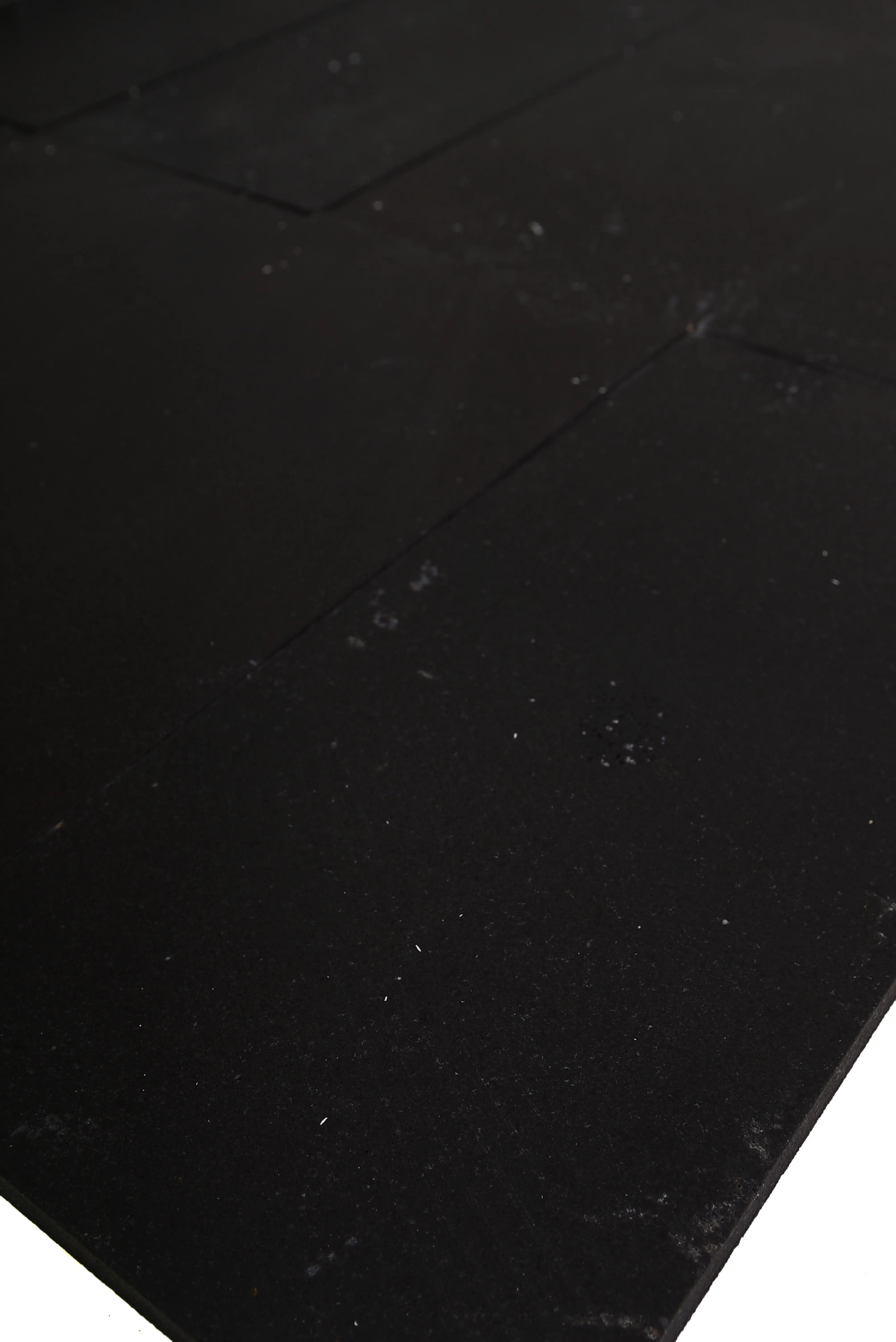
Installation Details That Determine Long-Term Performance
The border is the most vulnerable part of any paving scheme because it’s where the structured field meets unconfined edge conditions. Here are the details that separate durable bordered paving from installations that need remedial work within five years:
- Set border units on a full bed of mortar rather than a sand setting bed — the additional restraint prevents lateral movement under edge loading without requiring a concrete haunch on every project
- Back-fill behind the border with compacted angular aggregate to a minimum depth of 150 mm — rounded gravel or topsoil immediately behind the border unit is the most common cause of outward border creep
- Use matching or complementary joint sand in the border course — mismatched joint colors between field and border undermine the precision the design is trying to achieve
- Verify that your pavers with black border design accounts for the slight dimensional variation between field and border units — even well-calibrated stone can vary ±2 mm, and that variation reads more visibly at a high-contrast junction than it does within a monochrome field
- Check warehouse stock levels before finalizing your project schedule — mismatched batches between your initial delivery and a top-up order can produce visible color variation in the border, which is far more noticeable than the same issue in a large field area
Ordering, Lead Times, and Project Planning
Your project timeline needs to account for the fact that field stone and border stone are effectively two separate orders — different materials, potentially different quarry sources, and different cutting specifications. Order samples of both materials together and view them side by side in the actual site lighting conditions before committing. Color-matching under a warehouse fluorescent is not the same as color-matching in full sun or in the diffuse light of an overcast day, and black borders in particular can shift from near-black to warm brown depending on the light source.
Citadel Stone carries field and border stone in coordinated palettes specifically to reduce the guesswork in that matching process — materials are pre-assessed for tonal compatibility before they reach our warehouse floor. Lead times for coordinated field-and-border orders typically run 1–2 weeks from confirmed stock, versus the 6–10 week import cycle that can apply to bespoke sourcing. If your project has a fixed completion date, confirming warehouse availability before your contractor schedules base preparation is worth the five-minute phone call.
Parting Guidance
The most lasting pavers with black border installations share three qualities: the border stone is harder and denser than the field stone (not softer), the joint detail at the field-border junction is treated as a separate specification from the field joints, and the border width is proportioned to the field area rather than selected arbitrarily. Get those three decisions right, and the design will hold its character across decades of use, seasonal movement, and normal weathering. Citadel Stone’s blue limestone family performs across a wide range of applications — for a look at how the same material transitions into interior and semi-exterior contexts, blue limestone in countertop applications explores that complementary project scope in useful detail. A grey limestone field paired with a charcoal or black basalt border is among the most requested combinations Citadel Stone supplies for residential courtyard and driveway projects.
Related reading: blue sandstone vs blue limestone · blue limestone rock · blue limestone types compared.