

Blue stone pavers for sale range widely in finish, thickness, and format — and the gap between a cleft surface and a thermal finish isn’t just aesthetic; it determines slip resistance ratings, maintenance intervals, and long-term patina development. Thickness tolerances, finish options, and format dimensions define whether your project meets specification or falls short of it, and those decisions start well before the first pallet arrives on site. This guide walks through every variable that separates a confident purchase from a costly revision order.
What Bluestone Actually Is
The term “bluestone” gets applied loosely in the stone trade, and that looseness creates real specification problems. In the strictest geological sense, bluestone refers to a dense, fine-grained sandstone or basalt with a characteristic blue-grey coloration — but the material you’ll encounter from quarries in Pennsylvania, New York, and selected quarries from the Middle East varies considerably in mineral composition, density, and cleavage behavior. According to bluestone geological classification and properties, the term encompasses several distinct rock types that share visual characteristics but differ in structural performance. That matters when you’re specifying for load-bearing applications like driveways or commercial plazas.
You’ll also encounter Australian bluestone, which is a basalt — a volcanic rock with substantially different absorption rates and thermal characteristics than the sedimentary sandstone varieties. The two materials look similar in photographs and in some showroom settings, but they behave differently under freeze-thaw cycling, and they require different sealing protocols. Know which variety you’re ordering before you commit.
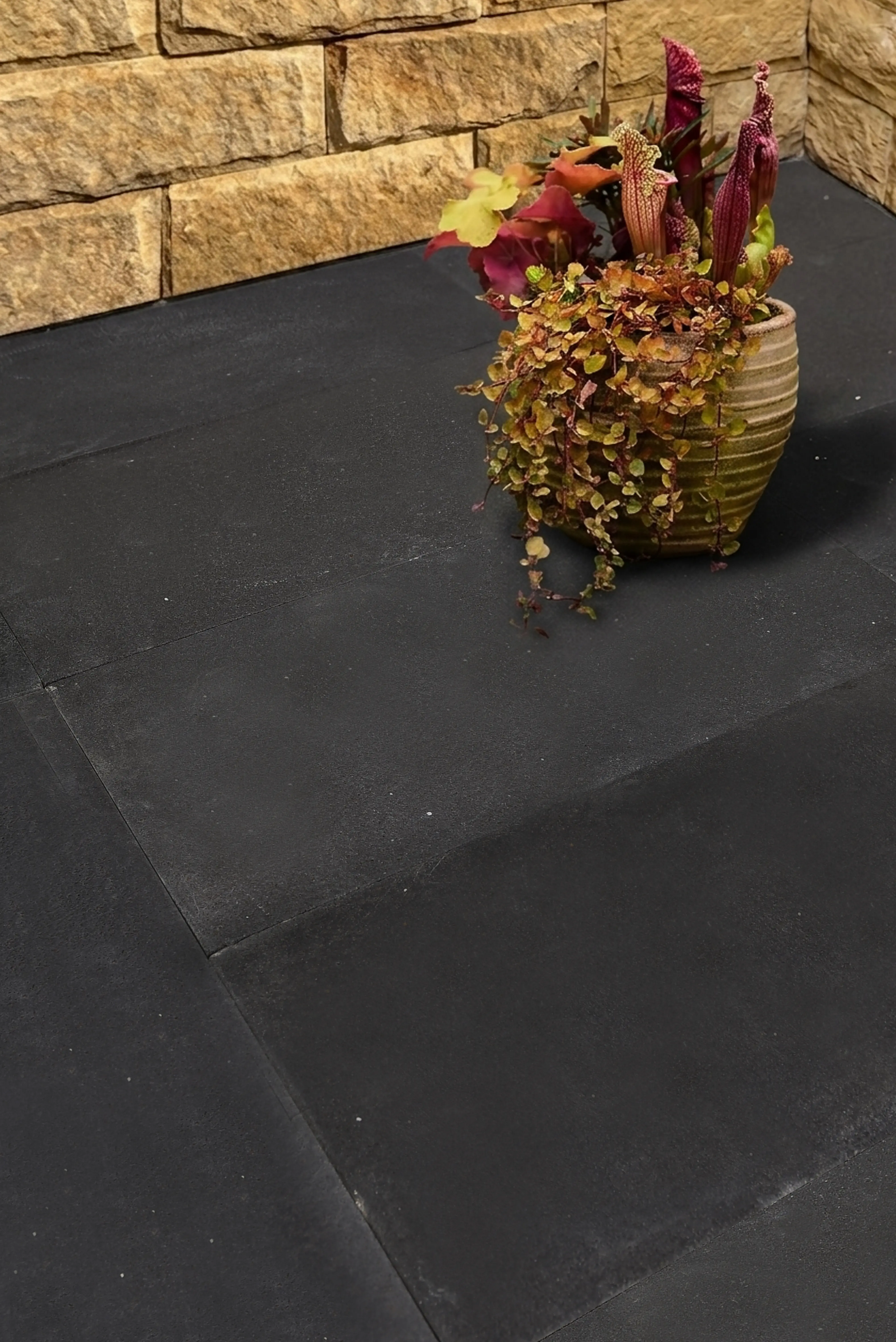
Format and Dimension Comparison
Dimensional consistency is where blue stone pavers earn or lose their specification value. Here’s what you need to evaluate across formats before placing an order.
Nominal Thicknesses and What They Handle
Standard nominal thicknesses run from 1 inch to 2.5 inches, but the structural significance of each tier is what your specification actually needs to address.
- 1-inch nominal: suitable for pedestrian walkways and low-traffic patios set on a minimum 4-inch compacted aggregate base — not appropriate for vehicular loads
- 1.5-inch nominal: the general-purpose standard for residential patios, pool decks, and garden paths with occasional vehicular access — handles point loads from patio furniture and light foot traffic without flex cracking
- 2-inch nominal: required for driveways, commercial plaza applications, and any setting where vehicle overrun is possible — compressive strength in this range typically exceeds 10,000 PSI for quality quarried material
- 2.5-inch nominal: specified for heavy commercial use, loading dock surrounds, or installations where the subgrade is marginal and you can’t guarantee consistent bearing pressure
One detail that surprises a lot of buyers: nominal thickness in natural stone describes a target, not a guarantee. Cleft-finished blue stone pavers carry a tolerance band of plus or minus 3/16 inch, which means your base preparation needs to accommodate height variation through a screeded setting bed rather than a rigid mortar joint.
Size Formats and Laying Patterns
Square and rectangular formats dominate the residential market, with 12×12, 16×16, 18×18, 12×24, and 24×24 being the most commonly stocked sizes. Irregular flagging is also available for informal garden settings, though you’ll pay a premium for larger irregular pieces that offer genuine size variation without excessive waste at the cutting stage.
- Modular formats (12×12 through 24×24): straightforward to lay, tight grout line tolerances, easy to combine in running bond or stacked patterns
- Mixed-size patterns (e.g., 12×12, 12×24, 24×24 combined): create visual interest but require pre-sorting at the delivery stage — don’t let this wait until the pallets are on site
- Irregular flagging: natural and informal, excellent for garden walkways and planting-integrated designs, but labor-intensive to fit and typically generates 8–15% waste
According to USGS sandstone and bluestone dimension stone classification, sandstone-derived bluestone represents a meaningful share of domestic dimension stone production, which keeps domestic format options reasonably standardized — a practical advantage when you’re matching to existing work or coordinating with a modular deck system.
Sourcing and Quality Benchmarks
Domestic quarries in the northeastern United States produce the majority of classic grey-blue sandstone bluestone. Selected quarries from the Middle East supply basalt-type bluestone at competitive price points, and that material often carries more consistent coloration than domestically quarried sandstone. The trade-off is absorption rate — basalt from Middle East quarries typically absorbs less than 1% by weight, making it more resistant to staining but also less forgiving of rapid thermal cycles in freeze-thaw regions where absorbed moisture is part of the failure mechanism.
At Citadel Stone, we evaluate incoming material at the warehouse against calibration standards for thickness tolerance, surface consistency, and color banding before it moves into available inventory. That warehouse check is what keeps your delivery matched to the sample you approved — a step that gets skipped more often than it should in the broader supply chain. You can review Citadel Stone bluestone paving options to see the full range of finishes and formats currently in stock.
Integration with Landscape Design Styles
The grey-blue tonal range of bluestone is one of the most architecturally versatile palettes in natural stone — it reads cool and formal in minimalist settings, and it softens into something more organic against loose planting schemes. Understanding how finish and format interact with your overall design direction saves you from a material that performs well but looks wrong in context.
Modern minimalist landscapes typically favor large-format sawn bluestone in 24×24 or 24×48 formats with tight grout lines and a consistent honed or thermal finish. The material’s natural blue-grey cooler tones complement steel, concrete, and dark timber elements without competing — a combination that works particularly well in contemporary residential projects where the hardscape is meant to recede and let planting lead.
Traditional and colonial garden styles call for a different approach. Here, irregular flagging or tumbled-edge cut pieces with cleft finish read as more historically appropriate. The surface variation and natural color banding in cleft bluestone align with the informality of boxwood-edged beds, brick detailing, and formal symmetry — materials that suggest longevity without looking engineered.
- Desert xeriscaping applications: thermal-finish bluestone works well here, as the lighter surface tone reduces radiant heat load and the material’s density resists the compressive cycling associated with extreme temperature differentials in arid climates
- Tropical and lush planting schemes: cleft-finish formats pair naturally with layered greenery, the surface texture collects atmospheric moisture and develops a patina that integrates with planting rather than contrasting sharply
- Coastal and open-water settings: sawn or thermal finish with aggressive sealing — salt aerosol penetration into open-pore surfaces accelerates deterioration, so finish selection and sealing schedule matter more here than in inland settings
Your pool surround specification deserves particular attention when bluestone is in the mix. The material’s natural cooling properties and non-reflective surface make it a genuine functional asset in hot, dry climates, not just an aesthetic one. Cleft or thermal finish keeps wet-zone COF values in a safe range, and the material’s thermal mass means the surface temperature stays measurably lower than dense granite or dark basalt in peak afternoon sun.
Base Preparation and Installation Variables
The specification work that determines whether your blue stone pavers last 10 years or 30 happens below the surface, not on top of it. Base preparation is where most installation failures originate, and the details are worth getting precise.
Aggregate Base Depth and Compaction
Your base depth requirement is governed by two variables: the application load and the native soil bearing capacity. A typical residential patio on stable, well-draining soil requires a minimum 4-inch compacted aggregate base. Driveways and areas subject to vehicle loads need a minimum 6-inch compacted base, and on expansive clay soils you should be looking at 8 inches before you start thinking about the setting bed.
- Compaction target: 95% Proctor density minimum — anything below this leaves residual settlement risk that telegraphs directly to the stone surface as lippage within the first two winters
- Aggregate gradation: use a clean, angular crushed stone (3/4-inch minus) for base layers — rounded river gravel provides inadequate interlock and allows lateral displacement under load
- Setting bed: 1-inch screeded sand or a dry-pack mortar bed for mortared installations — the setting bed compensates for the thickness tolerance variation inherent in natural stone
Expansion joint spacing is an area where written specifications and field practice diverge significantly. Generic guidelines suggest 20-foot intervals, but for blue stone pavers in climates with a 60°F or greater seasonal temperature swing, 12–15-foot intervals are more defensible. The material’s thermal expansion coefficient is approximately 5.5 × 10⁻⁶ per °F — at 60°F differential across a 20-foot run, the cumulative movement is enough to cause joint creep that eventually buckles the field.
Mortar Versus Sand-Set Installations
Sand-set installations are faster to execute and easier to repair — individual pavers can be lifted and reset without disturbing adjacent material. Mortar-set installations deliver a more rigid, uniform surface with tighter joints, but they require more precise base preparation and leave less tolerance for subgrade movement.
- Sand-set: best for residential patios, garden paths, and pool surround applications where long-term access for utility work is a consideration
- Mortar-set: required for wall-mounted applications, step treads, and any installation where the stone is cantilevered or subject to edge loading — no exceptions
- Hybrid approach: mortar setting bed with sand-filled joints — captures the leveling precision of mortar while keeping joints flexible enough to accommodate seasonal movement
Sealing and Maintenance Schedule
Natural Stone Institute guidance on paving durability confirms that consistent maintenance is the single largest predictor of long-term performance — more than initial material quality in many documented cases. For natural stone paving durability standards, the maintenance protocol starts at installation and runs on a predictable cycle.
Your first seal should go down within 30 days of installation completion — before the first season of use introduces organic staining from leaves, mulch, or pool chemicals. Use a penetrating impregnating sealer rated for the specific stone type. Film-forming sealers on cleft-finish material tend to peel at the high points of the surface texture within 18–24 months, which creates a maintenance problem worse than no sealing at all.
- Impregnating sealer: penetrates below the surface, leaves no visible film, breathable — the correct choice for exterior blue stone pavers in any climate
- Reapplication interval: every 2–3 years for high-traffic areas, every 3–5 years for low-traffic applications — test annually with a water bead test; when water no longer beads, reseal
- Cleaning protocol: pH-neutral stone cleaner only — acidic cleaners, including vinegar solutions, etch the calcium carbonate components present in some sandstone-type bluestone and permanently dull the surface finish
- Efflorescence management: white salt bloom that appears in the first 6–12 months is normal as soluble salts migrate through the setting bed — address with a dry brush first, then a dilute efflorescence remover if necessary; do not acid-wash as a first response
Ordering, Logistics, and Lead Times
Getting blue stone pavers to site on time requires understanding the supply chain realities that affect scheduling. Domestic material from northeastern quarries typically moves in 2–4 weeks from order confirmation to warehouse availability. Imported basalt-type bluestone from Middle East quarries runs on a 6–10 week container cycle, which means project timelines that don’t account for import lead time end up driving substitutions at the worst possible moment.
Citadel Stone maintains domestic warehouse inventory in both cleft and thermal finishes, which typically brings lead times down to 1–2 weeks for in-stock formats and thicknesses. Your truck access conditions matter at this stage — standard pallet deliveries on a flatbed require a forklift or a truck with a liftgate, and tight residential driveways sometimes need a smaller delivery vehicle that adds a day or two to the schedule. Flag any access restrictions when you place your order so the logistics team can plan accordingly.
- Pallet weights: a full pallet of 2-inch bluestone typically runs 2,200–2,800 lbs depending on format — verify your site access point can handle this before the truck arrives
- Quantity calculation: add 10% to your measured area for cut waste on straight runs, 15% for diagonal patterns or irregular areas with multiple angle cuts
- Split deliveries: if your project phases over multiple weeks, confirm that your warehouse order can be held for staggered delivery — not all suppliers accommodate staged releases on a single purchase order
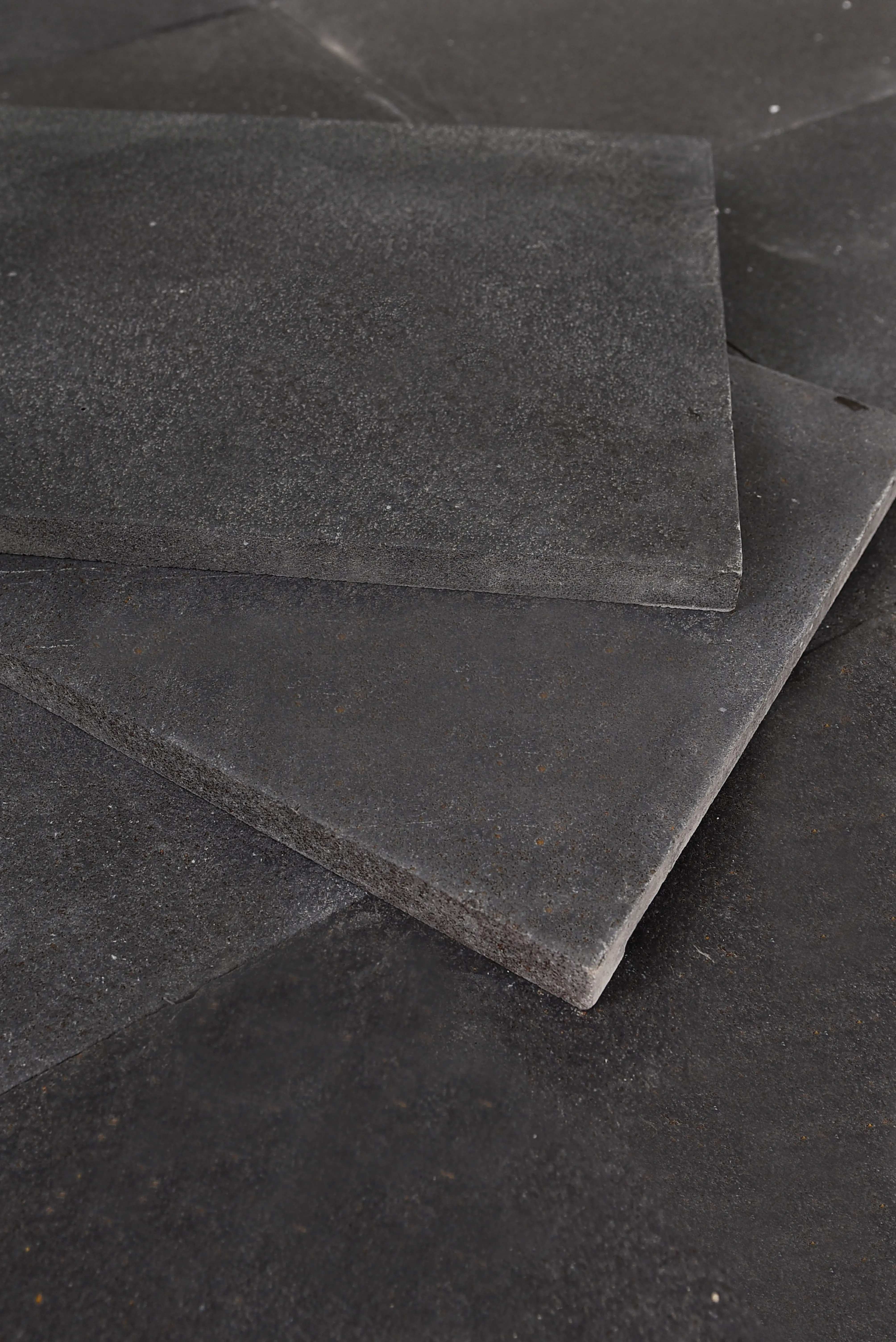
Getting Your Blue Stone Paver Specification Right
The decisions that define a successful installation — finish selection, format, thickness, base depth, and sealing protocol — are interconnected in ways that make piecemeal specification risky. Getting finish wrong affects slip resistance. Getting thickness wrong affects structural performance. Getting the base wrong affects both. Blue stone pavers are forgiving in appearance and genuinely durable when everything upstream is correct, but the material doesn’t self-correct poor specification choices the way some engineered products do. As you finalize your project specification, it’s worth reviewing grade and quality selection alongside finish and format — the bluestone grade selection guide covers the quality tiers and how to match them to your project’s performance requirements.
Pavers from Citadel Stone ship on standard pallets, with blue stone pavers for sale in both cleft and thermal finishes.
Related reading: blue stone steps for sale · thermal bluestone climate performance · Natural Bluestone Problems & Fixes: What Buyers Should Know.