

What the Thermal Finish Actually Does to Performance
Thermal bluestone climate performance starts with a detail most specifiers gloss over — the flame-texturing process fundamentally changes the stone’s surface microstructure, not just its slip resistance. The high-heat flame treatment causes micro-fracturing of the crystalline surface layer, which closes off the uppermost pore network and creates a denser, less absorbent skin than you get with natural cleft or sawn finishes. That distinction matters enormously when designing around pools and patios where water infiltration cycles are relentless.
The practical result is a surface absorption rate that typically runs 20–35% lower than equivalent natural cleft bluestone slabs from the same quarry block. You’ll notice this difference most during the first two years of a new installation, before any sealant has been applied — the thermally treated surface resists staining and subsurface moisture migration far more effectively from day one. Plan your maintenance schedule around that baseline rather than treating all bluestone finishes as equivalent.
Surface Temperature and Heat Load Around Pools
Thermal bluestone climate performance in high-heat conditions is directly tied to the stone’s density and color depth. Blue-grey bluestone sits at a mid-range solar reflectance index — it reflects less heat than white limestone but substantially more than dark basalt or black granite. On a 95°F afternoon with direct sun, surface temperatures on thermally finished bluestone pavers typically run roughly 20–28°F cooler than an equivalent black granite pool surround. That gap narrows in humid conditions where convective cooling is suppressed, so factor in relative humidity ranges when writing the performance spec.
Here’s what often gets missed in pool deck specifications: the orientation of the slab relative to the pool edge changes your heat load calculation significantly. Slabs positioned at the water’s edge benefit from evaporative cooling during peak sun hours — enough to drop surface temps by an additional 8–12°F compared to slabs set back 10 feet or more. Your layout plan should work with that gradient rather than ignoring it.
According to Natural Stone Institute stone paving durability data, denser stone varieties with lower absorption coefficients consistently outperform higher-porosity alternatives in outdoor thermal cycling environments — a performance characteristic that thermally finished bluestone delivers reliably.
Freeze-Thaw Performance: What Field Testing Reveals
The thermal finish gives bluestone a meaningful advantage in freeze-thaw regions, and the mechanism is straightforward once you understand stone physics. Water expands approximately 9% when it transitions to ice. In a high-porosity stone, that expansion happens inside the pore network and exerts tensile stress on the surrounding mineral matrix. The thermally treated surface’s tighter pore structure limits how much water the stone can absorb in the first place — which is why thermal bluestone climate performance holds up better over extended winter cycling than natural cleft alternatives.
- Thermal finish reduces effective water absorption depth to roughly the top 2–4mm of the slab
- Natural cleft bluestone can absorb moisture to 8–12mm depth, increasing freeze-thaw spall risk substantially
- Compressive strength of dense bluestone typically exceeds 15,000 PSI, providing sufficient freeze-thaw resistance when absorption is managed
- In regions with more than 50 freeze-thaw cycles per year, the absorption differential between finishes becomes a structural specification decision, not just an aesthetic one
- Sealant reapplication every 2–3 years in freeze-thaw climates extends the thermal finish advantage by maintaining that reduced absorption profile over time
The Britannica reference on bluestone geological classification confirms that the dense mineralogical composition typical of quality bluestone is a primary factor in its freeze-thaw resilience — the thermal finish amplifies that inherent strength rather than creating it from scratch.
Slab Thickness, Load Requirements, and Code Compliance
Structural specification for thermal bluestone paver installations around pools and patios isn’t optional territory — building codes in many jurisdictions carry explicit requirements for stone paver thickness, base depth, and edge restraint that directly affect your material selection. Most residential patio applications call for a minimum 1.25-inch (30mm) slab, but pool surrounds in jurisdictions that follow IBC-derived residential codes often require 1.5-inch (38mm) minimum thickness to account for point load scenarios from furniture, equipment, and concentrated foot traffic at ladder entries.
Frost line depth is where the code conversation gets critical for pool surrounds specifically. In freeze-thaw regions, base construction must typically extend below the local frost line — which ranges from 6 inches in mild climates to 48+ inches in colder northern areas. Your compacted aggregate base depth isn’t just a drainage calculation; it’s a code compliance item that determines whether your installation can move with the ground without fracturing slab joints or cracking stone. Thermal bluestone climate performance in freeze-thaw zones is only as good as the base preparation beneath it.
- Minimum base depth: 6–8 inches of compacted crushed aggregate for residential patio applications (more in frost-sensitive soils)
- Edge restraint systems must be specified to prevent lateral migration — plastic restraint profiles are standard for residential, steel angle for commercial pool surrounds
- Seismic zones (particularly Zone 3 and 4) may require additional mortar-set specifications rather than dry-set base systems
- Check local amendments to IBC Section 1809 for frost-depth base requirements in your jurisdiction before finalising the spec
- Joint spacing should be calculated at 1/8 inch per foot of thermal expansion for dense bluestone — tighter than standard patio guidelines suggest
Drainage Geometry: Where Most Pool Deck Specs Fall Short
Drainage design is where thermal bluestone climate performance either holds or fails over the long term. The standard 1/8-inch-per-foot slope recommendation toward pool edges is a minimum floor, not a target. At Citadel Stone, we recommend targeting 1/4-inch-per-foot slope for pool surrounds specifically, because standing water on thermally finished bluestone — even for short durations — accelerates the breakdown of any penetrating sealant applied.
The geometry gets complicated when dealing with multi-level patio designs or irregularly shaped pools. Drainage flow paths need to be modeled before slabs are set, not corrected afterward. A common field error is prioritising aesthetic joint patterns over drainage slope continuity — you end up with low points that hold 3–4mm of water after rain events, which is enough to cause long-term surface degradation even on thermally treated stone. Installation drawings should include flow arrows and slope percentages at every transition point.
Browse our thermal bluestone paver range to review available slab thicknesses and formats that suit both residential and commercial pool surround specifications.
Slip Resistance Performance in Wet Pool Environments
The thermal finish produces an angular micro-texture that holds grip when wet; specify it against the ANSI A326.3 wet DCOF threshold (0.42). That performance is consistent across the bluestone’s service life in ways that sawn or polished finishes simply aren’t. Polished stone loses measurable slip resistance as it wears; the thermally treated micro-texture is self-reinforcing because the underlying mineral structure is the source of grip, not a surface coating.
- Pool surround applications: specify the ANSI A326.3 wet DCOF threshold (0.42)
- Bare feet on wet thermally finished bluestone feel secure because the surface texture is angular at a micro-scale, not smooth
- Avoid wax-based or film-forming sealers on pool deck bluestone — they can reduce wet slip resistance below the specified threshold
- Penetrating silane-siloxane sealers preserve the thermal finish grip profile while reducing absorption
- Re-test slip resistance after any chemical cleaning treatment — aggressive acid washing can alter the surface texture profile
Chemical Resistance and Pool Water Exposure
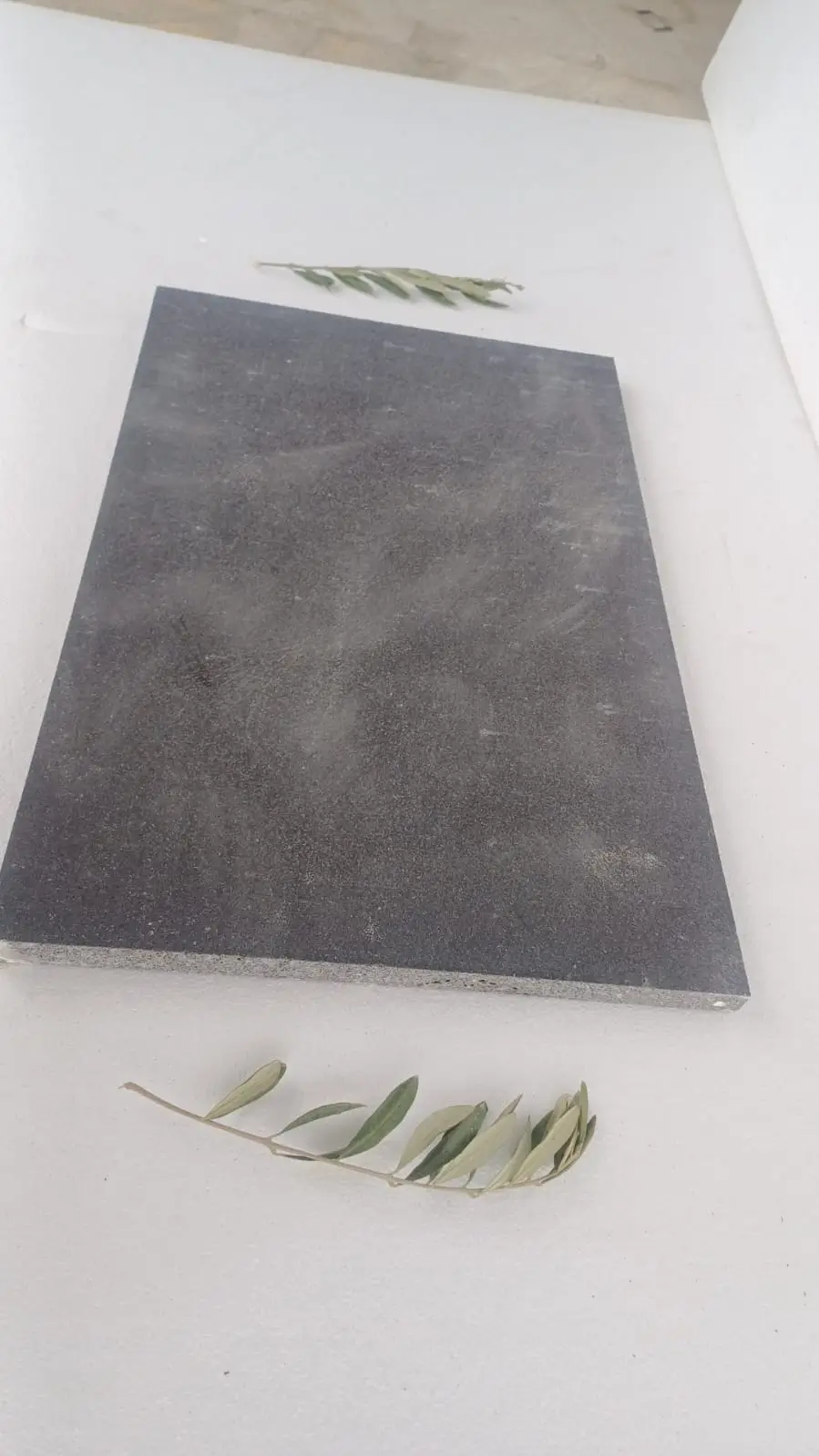
Bluestone is a siliceous stone — its mineral composition is primarily silica-based rather than calcium carbonate — and that classification matters enormously in pool environments. Calcium carbonate stones like limestone and travertine are vulnerable to acid etching from pool chemicals and pH fluctuations. Thermal bluestone climate performance around chemically treated pools is fundamentally more stable because the siliceous mineral base resists acid dissolution at standard pool chemistry pH ranges (7.2–7.8).
Chlorine splash, saltwater pool systems, and pH drift below 7.0 during shock treatments won’t etch or pit properly specified thermal bluestone in the way they attack softer stones. Your maintenance specification should still include monthly pH checks of pool water and visual inspection of grout or joint sand — because joint materials degrade faster than the stone itself and compromised joints create water infiltration pathways that undermine the thermal finish’s absorption advantage. According to USGS dimension stone production data, siliceous stones represent the most durable category for outdoor applications with chemical exposure — a classification that covers quality thermal bluestone from Middle East quarries and domestic sources alike.
Sourcing, Warehouse Availability, and Project Planning
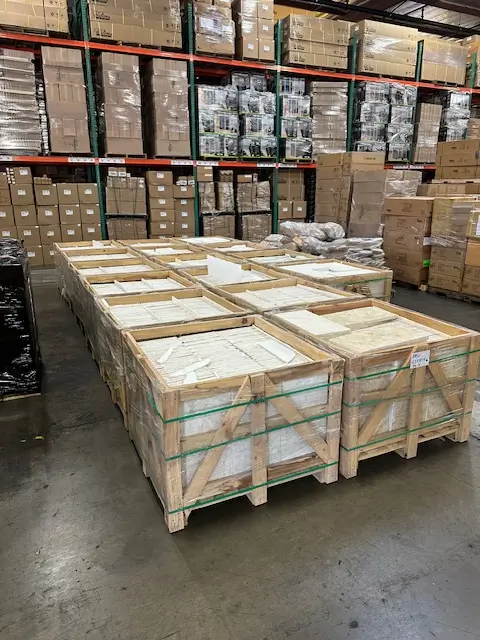
Thermal bluestone climate performance depends on consistent mineralogical quality, and consistency comes from disciplined sourcing. Citadel Stone selects thermal bluestone from vetted quarries — including Middle East quarries known for dense, low-absorption material — and every batch is inspected for color banding, absorption variance, and surface texture uniformity before it reaches our warehouse. That warehouse quality check matters more than most buyers realise, because thermally finished slabs from inconsistent quarry extraction show measurable variation in surface texture and density across a single pallet.
Project planning should account for realistic truck delivery lead times rather than optimistic estimates. Warehouse stock of standard thermal bluestone paver formats — 12×24, 16×24, and 24×24 inch slabs — typically ships within 5–7 business days from our warehouse to most areas. Custom-cut formats or large commercial volumes add 2–3 weeks to that window. Locking in your warehouse allocation when base preparation begins, not when it’s complete, is the safest project management approach. Truck scheduling around pool deck pours and base compaction timelines requires coordination that last-minute orders don’t accommodate well.
Getting Thermal Bluestone Specification Right
Getting thermal bluestone climate performance right across pool and patio applications comes down to a chain of decisions that build on each other — finish type, slab thickness, base depth, drainage geometry, joint material, and sealer selection all interact. Specifying the thermal finish gives you a head start on absorption control, freeze-thaw resilience, and wet-surface grip, but those advantages only compound when the structural and drainage fundamentals are sound. If your project spans a high-UV region, a freeze-thaw zone, or a pool environment with aggressive chemical exposure, the thermal finish specification pays for itself in reduced maintenance cycles and longer replacement intervals. For projects exploring DIY production or alternative formats, custom paver casting options offer a different dimension of hardscape planning worth reviewing alongside your thermal bluestone pavers. In freeze-thaw climates, thermal bluestone supplied by Citadel Stone is generally chosen for its reduced surface porosity compared to natural cleft alternatives.
Related reading: thermal bluestone price guide · choosing bluestone steps guide.