What Marble Does That Other Materials Can’t
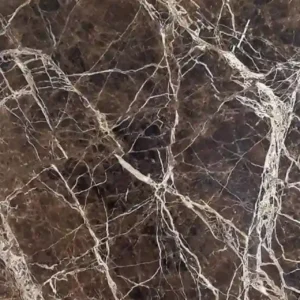
Marble stone design ideas succeed or fail based on a decision most designers make too late — selecting the vein movement before the layout, not after. The direction and scale of veining determines everything from how a slab layout reads across a kitchen island to whether a bathroom wall feels cohesive or chaotic. You’re not just choosing a material; you’re choosing a visual rhythm that will define the space for decades.
Marble’s crystalline calcium carbonate structure gives it a translucency that no engineered surface replicates convincingly. Light enters the surface and scatters through the crystal lattice, creating that characteristic depth. That property also means finish selection carries real consequence — a honed finish scatters light evenly and conceals micro-scratches, while a polished finish amplifies vein contrast but reads every etch from acidic contact within weeks of installation.
Kitchen Applications Where Marble Earns Its Place
Your kitchen countertop is the highest-risk surface in any marble installation, and understanding that risk upfront separates beautiful long-term results from expensive regret. Marble scores between 3 and 4 on the Mohs hardness scale — softer than granite and quartzite — which means citric acid from lemons, wine, and vinegar etches the calcite matrix in under 60 seconds on an unprotected polished surface. That’s not a scare statistic; it’s a specification reality you factor into the finish choice from day one.
The practical resolution is a honed or leathered finish for countertops, which converts those inevitable acid contacts from visible etches into near-invisible matte dulling. Calacatta and Statuario marbles, sourced from Italian quarries and select quarries from the Middle East, carry the bold, wide-vein movement that reads dramatically across large kitchen islands. For perimeter counters, a smaller-vein Carrara or Volakas reads quieter and keeps the eye moving toward the focal island rather than competing with it.
- Specify a minimum 1.25-inch (3 cm) thickness for kitchen countertops — thinner slabs flex under point loads at unsupported spans and risk hairline fracture along natural fissures
- Penetrating impregnator sealers at 15% silicone concentration outperform topical coatings for countertop protection — reapply annually in high-use kitchens
- Undermount sink cutouts require radius corners of at least 3/8 inch to redistribute stress and prevent corner cracking over time
- Backsplash slabs set in a running-bond offset of one-third rather than half create a subtler rhythm that doesn’t compete with countertop veining
Marble stone design ideas for kitchens also extend to flooring, where 24×24-inch slabs in a straight lay with 1/16-inch grout joints create the seamless, low-visual-noise floor that lets cabinetry and countertops lead. Rectified tiles cut to within 0.02 inches of nominal size make that tight joint achievable without lippage.
Bathroom Design Where Marble Performs at Its Best
Bathrooms represent the environment where marble stone design ideas deliver their highest return — lower acid exposure than kitchens combined with controlled humidity cycles that don’t stress the material the way outdoor thermal swings do. Your shower enclosure is where the investment in full slab coverage rather than tile pays its greatest visual dividend. A continuous slab wall in a walk-in shower reads as architecture, not surface treatment.
According to Natural Stone Institute marble grades and technical specifications, marble grades range from A through D, with Grade A representing the most uniform structure and the lowest void and fissure content. For wet wall applications — shower surrounds, steam enclosures, soaking tub decks — specify Grade A or B only. Grade C and D material contains natural voids and fissures that absorb moisture behind the surface and eventually cause delamination from the setting bed.
- Shower floor marble should be 3/8-inch-thick mosaic or 12×12 maximum — larger formats over wet mortar beds develop hollow spots that crack under foot traffic
- Specify an anti-fracture membrane beneath any floor marble in wet areas — it decouples the stone from substrate movement and prevents grout joint cracking
- Vanity tops benefit from 2 cm thickness when the overhang is under 6 inches; extend to 3 cm for waterfall edges or overhangs beyond 8 inches
- Tub surrounds set in full-coverage thinset using a non-sag large-format tile mortar eliminate the hollow voids that trap moisture and harbor mold
The marble specification decisions that matter most in bathrooms aren’t aesthetic — they’re structural. Moisture migration behind improperly set marble is the leading cause of shower system failure, typically showing up between years 3 and 7 as grout cracking and eventual tile pop-off.
Vein Matching and Layout Planning
Your slab layout drawing is as important as your material selection — and most installers won’t produce one unless you ask for it explicitly. Vein matching across seams requires book-matching consecutive slabs from the same block, which means you need to confirm slab inventory before finalizing your countertop or wall layout. You can browse our marble slab gallery to review available book-matched pairs and full slab vein patterns before committing to a specification.
Book-matching works by opening two consecutive slabs like pages of a book, creating a mirrored vein pattern across the seam. For a kitchen island, this produces a butterfly effect where veins radiate from the center seam outward. For a feature wall, it creates a dramatic symmetrical pattern that reads as intentional design rather than random material. The key specification detail is that both slabs must come from the same sequential block position — quarry order matters, and warehouse inventory that separates slabs by batch breaks the continuity.
- Always request slab photos with sequential block numbers confirmed before approving a book-match layout
- Seam placement on countertops should land away from the sink cutout by at least 4 inches — seams near cutouts concentrate stress at the most vulnerable point
- For large feature walls, develop a numbered slab layout drawing that the installer follows on-site — verbal direction produces inconsistent results
- Vein direction for floor marble should be specified as parallel or perpendicular to the primary sight line — diagonal vein runs create visual tension that reads as disorganized in most residential layouts
Outdoor Marble Applications and Water Management
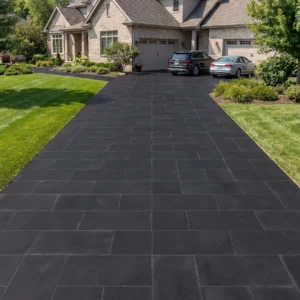
Outdoor marble stone design ideas require a different specification framework than interior work — primarily because water behavior becomes the dominant performance variable rather than acid contact or wear. Marble’s absorption rate of 0.2% to 0.4% by weight keeps it relatively low compared to limestone, but outdoor installation in regions with heavy seasonal rainfall, monsoon cycles, or freeze-thaw exposure demands that drainage geometry be designed before material thickness is specified.
The base preparation for outdoor marble terraces in high-rainfall climates needs a minimum 2% cross-slope to a drainage channel, with a compacted aggregate base of at least 4 inches over native soil. In freeze-thaw regions, that aggregate depth increases to 6 inches minimum, and the setting bed transitions to a dry-pack mortar system that allows sub-surface drainage without trapping moisture against the stone underside. Standing water under outdoor marble — even for 48-hour periods after heavy rainfall — accelerates the calcium carbonate leaching process that eventually pits and roughens the surface.
According to ASTM C503 marble building stone specification, outdoor marble must meet minimum flexural strength of 7.0 MPa and maximum absorption of 0.20% — values you should verify against quarry certification documents before approving a slab shipment for exterior use. Quarry variation within marble is significant enough that a certification specific to the lot, not just the variety, gives you meaningful data.
- Specify honed or flamed finishes for outdoor marble — polished finishes become slip hazards in wet conditions and degrade faster under UV and thermal cycling
- Expansion joints every 10 to 12 feet in outdoor marble installations prevent buckling during summer thermal expansion — use silicone sealant, not grout, in these joints
- In drought-cycle climates, seasonal moisture swings cause sub-base movement that transfers to the stone through rigid mortar beds — a semi-flexible epoxy adhesive performs better than traditional thinset in these conditions
- Roof terraces and balconies require a waterproof membrane beneath the setting bed regardless of marble’s low absorption — the concern is structural waterproofing of the substrate, not the stone
Color Selection and Vein Character by Variety
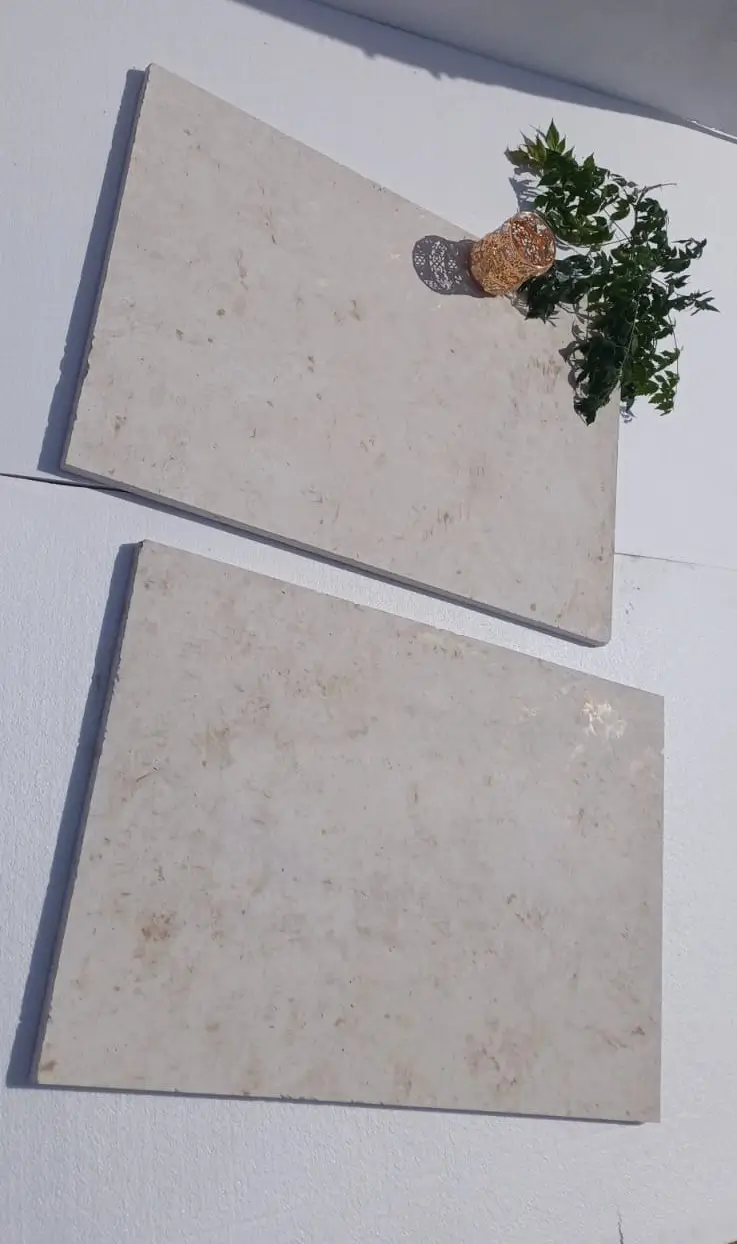
The marble variety you select sets the tonal foundation for every finish material in the space around it, so color decisions need to happen before cabinetry, hardware, or tile selections are finalized. Calacatta Gold carries warm cream tones with bold gold-veined movement — it pushes toward warm-toned hardware and matte brass fixtures. Statuario reads bright white with sharp grey veining and pairs naturally with cool-toned cabinetry and polished chrome. Nero Marquina, a dense black marble with white veining, is technically among the hardest marble varieties and holds up better to daily use than most white options.
Marble sourced from select quarries from the Middle East — particularly varieties with linear grey movement on a white ground — has become prominent in contemporary interior specifications for its consistency across large slab sizes. Consistency matters when you’re matching multiple slabs across a continuous wall or an island with a waterfall edge, because tonal variation between slabs from different blocks breaks the visual continuity that defines the design intent. At Citadel Stone, we inspect each slab batch at the warehouse before it ships, checking vein character and background tone against approved sample standards to catch batch variation before it reaches your project.
- Request a minimum 12×12-inch sample that includes the vein character — 4×4-inch chips don’t capture the scale of movement that defines the material’s visual impact
- Evaluate samples under the same light source as the installation space — marble reads significantly differently under warm incandescent versus cool LED lighting
- White marble varieties with heavy natural fissuring (common in some Italian stocks) may require epoxy filling prior to fabrication — confirm this with your fabricator before slab approval
Marble for Feature Walls and Architectural Details
Feature walls in living rooms, primary bedroom headboard walls, and fireplace surrounds represent the design applications where marble stone design ideas operate at their highest visual impact — and where the specification details that most designers overlook cause the biggest installation failures. A full-height feature wall in 3/4-inch slabs requires mechanical anchoring to the wall substrate, not adhesive bonding alone. At 6.6 pounds per square foot for 3/4-inch marble, a 9-foot-tall wall panel carries significant dead load that adhesive systems can’t safely support long-term without supplemental mechanical fasteners.
Fireplace surround marble requires heat-specific specification. Marble within 12 inches of a firebox opening experiences surface temperatures that can reach 250°F during use. Thermal cycling at that intensity causes micro-cracking in finer-grained varieties over time. Specify a coarser-crystalline marble — Botticino or similar medium-grained varieties — for fireplace surrounds rather than tight-grained Carrara, which is more susceptible to thermal fracture along natural grain planes.
As your specification develops across different stone applications in your project, related technical decisions for other natural stone elements can inform your overall approach. For a broader look at how stone performs under stress and common specification failures, granite and marble problem diagnostics covers the repair and remediation side of the specification equation.
Sourcing, Logistics, and Lead-Time Planning
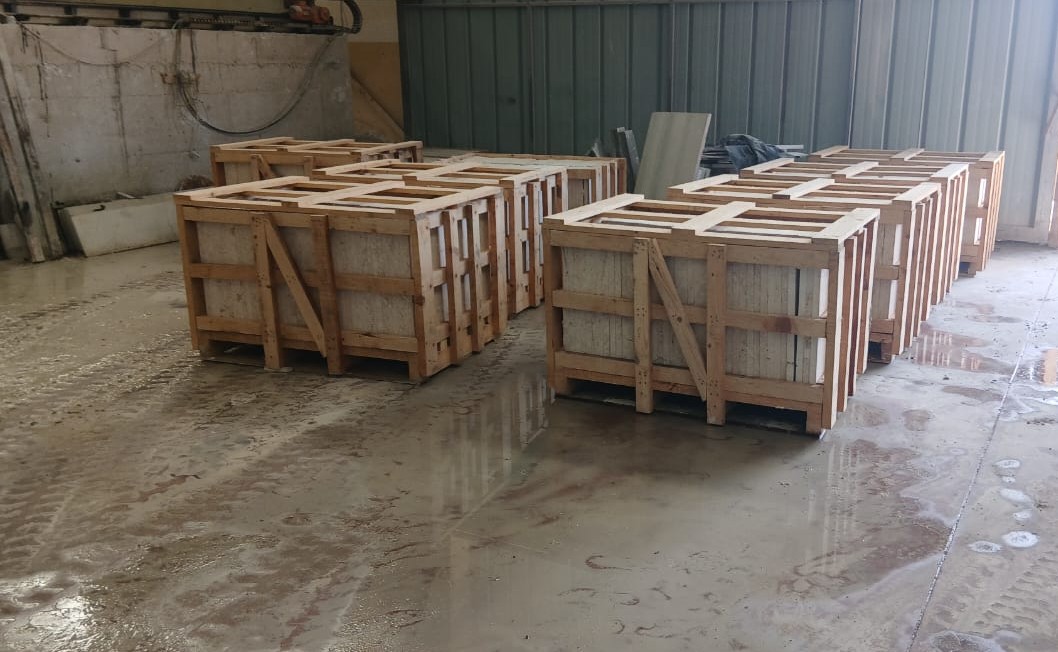
Your project timeline depends on understanding where marble sits in the supply chain before you commit to an installation date. Import cycle times for marble from Italian quarries or select quarries from the Middle East typically run 10 to 14 weeks from order confirmation to domestic warehouse arrival. If your project timeline doesn’t accommodate that window, you need to be working from existing domestic inventory — and confirming that the available warehouse stock includes the slab count and sequential block numbers your layout requires.
Fabrication lead time after slab arrival adds another 2 to 4 weeks for templating, cutting, and edge profiling on countertops and complex shapes. Truck delivery scheduling for large-format slabs requires confirming site access width and crane or boom truck availability if the installation is above ground-floor level. Citadel Stone maintains warehouse inventory of high-demand marble varieties that reduces import wait times significantly for projects that can work within available stock — your project coordinator can confirm lot availability and sequential block status before your design is finalized.
- Order a minimum 10% overage on slab quantity to account for cutting waste, layout adjustments, and future repair matching
- Confirm that the fabricator has seen the actual slabs before templating — fabricating from sample approvals without reviewing the specific slabs produces mismatched results
- Schedule truck delivery for slab material on a day when the installation crew is on-site to inspect for shipping damage before the driver leaves
- Store slabs vertically in A-frame racks at the warehouse or on-site — horizontal stacking causes stress fractures along natural fissure planes in thinner material
According to marble geological formation and characteristics, the metamorphic recrystallization process that creates marble’s distinctive crystal structure also introduces directional weaknesses along original bedding planes — a geological reality that affects both quarrying yield and fabrication planning for complex shapes.
What Matters Most
Marble stone design ideas translate into lasting results when the specification decisions — finish, thickness, grade, vein matching, drainage, and setting system — are made with the same attention as the aesthetic choices. The material’s beauty is the easy part; the field performance is what separates installations that photograph well at year one from ones that still look right at year twenty. Treating marble as the high-performance natural material it is — specific in its requirements, unforgiving of shortcuts, and genuinely extraordinary when everything is done correctly — is what defines durable, beautiful results. As your specification develops, build your slab selection, layout drawings, and base preparation details in parallel rather than sequentially — the decisions inform each other in ways that late-stage changes can’t fully recover. Bookmatched marble panels from Citadel Stone create mirrored veining across walls, a striking detail for feature backsplashes and vanities.
Related reading: granite marble · stone manufacturing process · Marble Manufacturers vs Fabricators: The Real Difference.