What the Tumbling Process Actually Changes
The comparison of tumbled marble vs travertine tile trips up a lot of specifiers because both materials look weathered and rustic at first glance — but the tumbling process interacts with each stone’s internal structure in completely different ways. Marble is a metamorphic rock with interlocking crystalline grains and minimal porosity, so tumbling softens edges and creates micro-fractures along grain boundaries without opening the stone up. Travertine, on the other hand, already carries a network of natural voids and pores from its sedimentary formation, which means tumbling amplifies surface texture far more dramatically and can open existing voids that need filling before installation.
That distinction matters in ways that go well beyond aesthetics. Your sealer choice, grout joint width, adhesive type, and long-term maintenance schedule all shift depending on which material you’re specifying. Getting this comparison right at the start saves you from discovering mid-project that tumbled marble vs travertine tile doesn’t behave the same way on the trowel — or under the sealer.
Material Composition and Structure
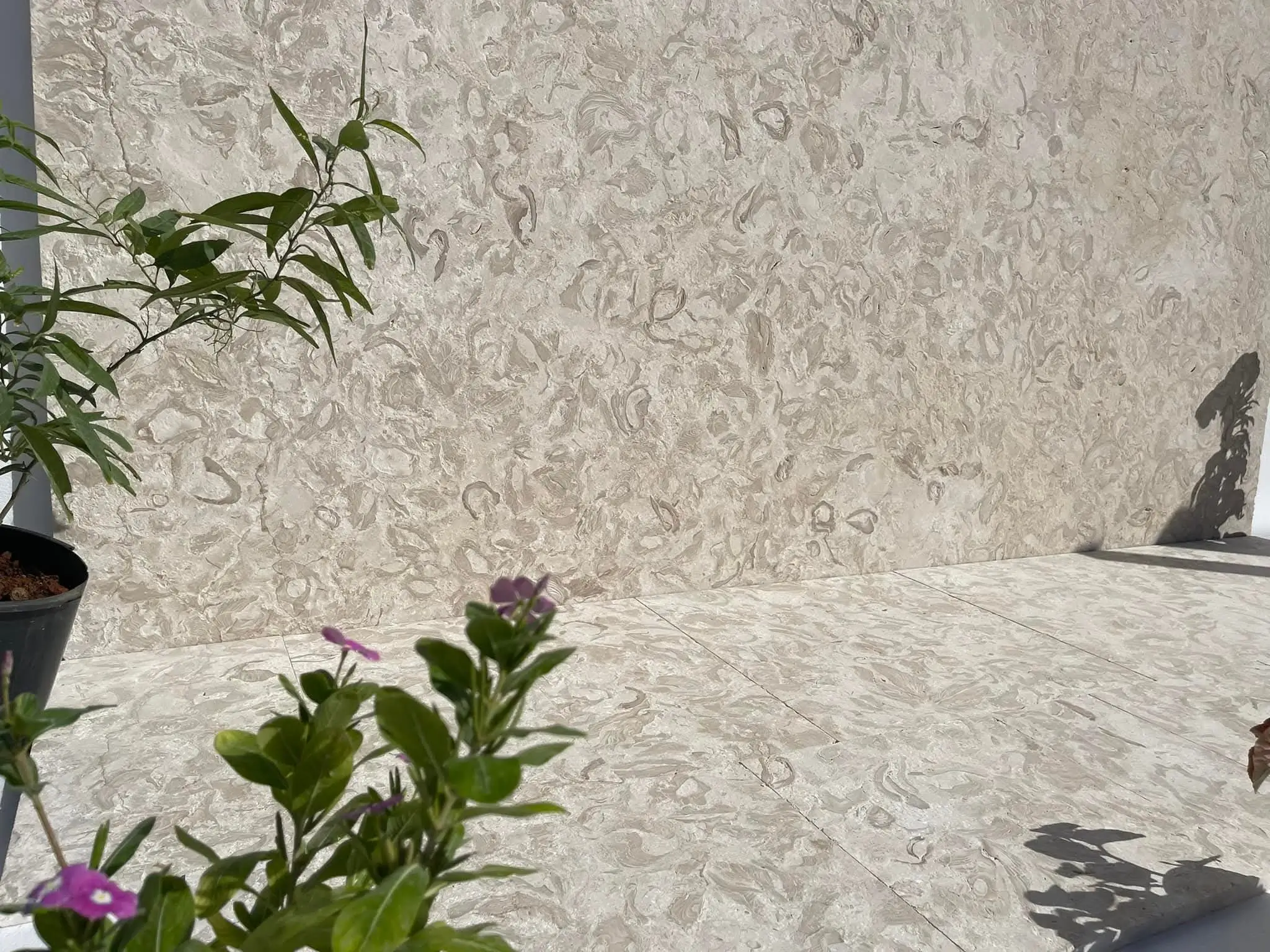
Marble forms through metamorphism — limestone subjected to intense heat and pressure recrystallizes into interlocking calcite or dolomite grains. The result is a dense, low-porosity stone with water absorption typically between 0.2% and 0.5% by weight under ASTM C99 testing. Travertine is a sedimentary limestone deposited by mineral springs, and its defining feature is a system of natural cavities and open channels left behind as gas escapes during formation. Unfilled travertine can carry voids up to 3–4mm across, while filled travertine has those cavities pressure-filled with grout or resin before finishing.
The structural differences show up clearly in compressive strength testing. Dense marble commonly tests between 12,000 and 18,000 PSI, making it one of the harder natural stone options available nationally. Travertine typically lands in the 7,000–12,000 PSI range — still well above code minimums for floor tile, but noticeably softer under point loading from furniture legs or high-heel impact. According to Natural Stone Institute travertine properties and outdoor suitability, travertine’s open-pore architecture and absorption characteristics require specific attention to sealer selection and joint grouting to maintain long-term performance in demanding applications.
- Marble: interlocked crystalline calcite, low porosity (0.2–0.5% absorption)
- Travertine: layered sedimentary calcite, moderate porosity (1.5–4.0% absorption depending on fill status)
- Both react to acidic cleaners — neither is acid-resistant
- Travertine void structure requires filled material for most interior floor applications
- Marble’s density makes it heavier per square foot — factor this into your subfloor load calculations
How Tumbling Affects Each Material Differently
Tumbling puts raw-cut tiles into a rotating drum with abrasive media, rounding edges, softening corners, and creating a naturally aged surface texture. With marble, the process creates a lightly pitted, chalky surface where the crystalline structure breaks along grain boundaries. The edges round smoothly, and the overall look mimics stone worn by centuries of foot traffic. A tumbled marble tile 4×4 piece typically finishes with edge rounding of 3–5mm and a surface relief of 1–2mm — consistent enough for tight grout joints in the 3/16-inch to 1/4-inch range.
Travertine responds more aggressively to tumbling. Because the stone already has voids and softer calcium bands alternating with denser material, the abrasive media works unevenly — removing softer material faster and leaving harder ridges raised slightly above the surface. The result is more pronounced texture variation, greater edge movement, and grout joints that typically need to be wider: 3/8 inch to 1/2 inch is a realistic target for tumbled travertine, and attempting to close those down without precision tile selection leads to lippage problems during installation. Layout planning needs to account for this from day one, not as an afterthought during setting.
- Tumbled marble: consistent, even surface relief — predictable grout joint width
- Tumbled travertine: variable relief driven by void placement — joints need more tolerance
- Both finishes benefit from a penetrating sealer applied before grouting to prevent grout hazing in surface texture
- Tumbled stone tile of either type should be back-buttered during installation to ensure full adhesive contact across the irregular underside
- Edge rounding on tumbled travertine is often more pronounced — verify tile-by-tile consistency when specifying tight patterns
Appearance, Color, and Design Applications
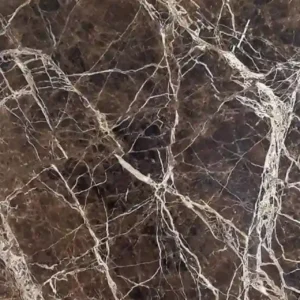
Tumbled marble tends toward cooler, more consistent color ranges. White Carrara-style marble reads as creamy white with soft grey veining; tumbled Emperador runs deep walnut with caramel streaks. The crystalline structure of marble means veining is sharp-edged at the microscopic level, even when the surface is softened by tumbling. The result is a refined, aged look that reads as classical European — think old-world villa floors, Mediterranean courtyards, and traditional bathroom designs where the material has genuine historical precedent.
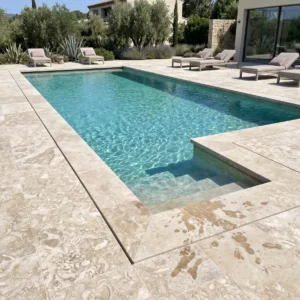
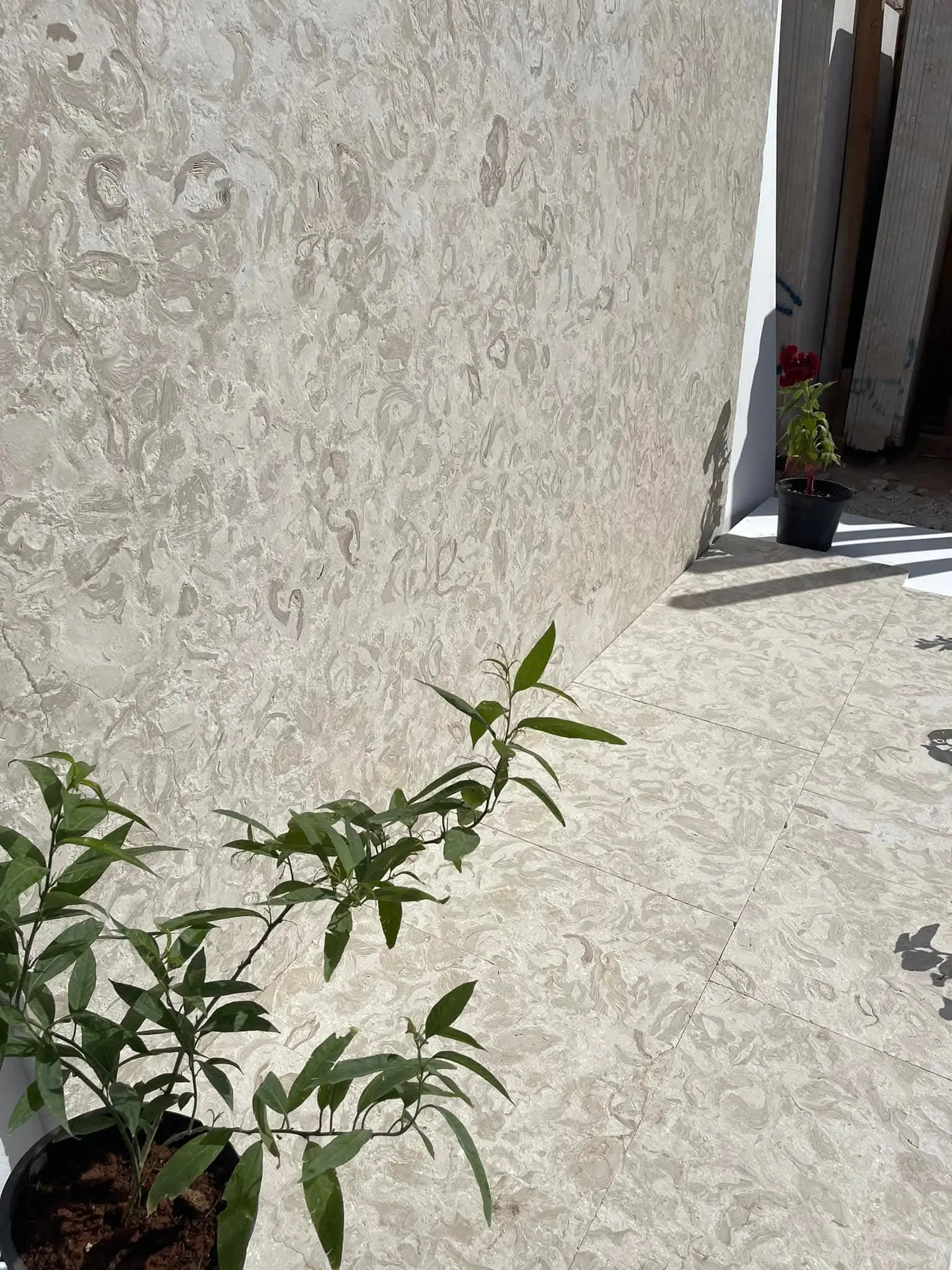
Travertine comes in a warmer palette — ivory, walnut, classic, and gold tones dominate the market. The layered banding of travertine gives it a flowing, organic quality that marble’s recrystallized structure can’t replicate. In a tumbled finish, those bands become tactile as well as visual. Travertine also tends to be more consistent across a large installation because the natural patterning distributes randomly rather than concentrating in dramatic veining. If your project calls for a Tuscan farmhouse, rustic Mediterranean, or desert-inspired aesthetic, tumbled travertine delivers that character more convincingly. For projects that need a more formal or polished period look — even in a rustic finish — tumbled marble tends to read with more elegance.
Water, Drainage, and Moisture Performance Outdoors
Here’s where the tumbled marble vs travertine tile decision gets genuinely consequential for outdoor use. Travertine’s higher absorption rate — often 1.5 to 3 times that of comparable marble — means water management and drainage design must be part of your specification from the base up. In regions with heavy rain seasons or monsoon precipitation cycles, travertine installed without proper slope and drainage infrastructure will hold moisture long enough to promote efflorescence, biological growth, and in freeze-thaw regions, internal spalling where water expands inside the voids.
The practical drainage target for outdoor tumbled stone tile of either type is a minimum 1.5% slope away from structures — but for travertine in high-precipitation environments, move that to 2% and verify it’s maintained across the full installed area, not just at the edges. Marble’s lower porosity gives it a slight advantage in wet climates because water runs off the surface faster and penetrates less deeply before evaporating. That said, tumbled marble’s micro-fractured surface texture from the tumbling process creates more absorption pathways than honed or polished marble, so it’s not entirely immune to moisture management concerns. Both materials need a quality penetrating sealer — a siloxane or silicone-based formula rather than a topical coating — reapplied on a 2- to 3-year cycle depending on exposure. According to ASTM C1527 travertine dimension stone standard specifications, dimensional compliance and absorption thresholds for travertine are tested under controlled conditions, and outdoor applications should always account for site-specific drainage variables that laboratory testing doesn’t replicate.
- Minimum outdoor slope: 1.5% for marble, 2% for travertine in wet climates
- Drainage substrate: crushed aggregate base with positive fall toward drains prevents sub-surface water retention
- Grout joint sealant should be reapplied wherever joints are exposed to standing water cycles
- Travertine in filled form performs better than unfilled in high-moisture environments — fewer void entry points for water ingress
- Marble’s denser structure slows water penetration but still requires sealing at all tumbled surface micro-fractures
For smaller-format tile work in water-adjacent applications, Small Travertine Tiles from Citadel Stone’s range are sorted for consistent fill depth and void closure — a critical quality check when you’re relying on tight grout joints to manage moisture at the surface layer.
Installation Requirements and Substrate Preparation
Substrate prep protocol differs between these two materials in ways that catch installers off guard. Marble’s weight density — typically 160–170 lbs per cubic foot — means your subfloor deflection tolerance needs to meet or exceed L/360. Any flex in the subfloor translates directly into cracked tiles with a crystalline stone that doesn’t absorb movement the way softer materials do. Travertine at roughly 140–155 lbs per cubic foot is marginally lighter, but its softer matrix means it’s actually more sensitive to point load stress than its weight suggests.
The adhesive mortar bed also needs adjustment. For tumbled travertine, a polymer-modified medium-bed mortar handles the irregular underside geometry better than a standard thinset, and back-buttering every tile is essential. For tumbled marble, coverage targets remain the same — 95% for wet areas, 80% for dry interior floors per TCNA guidelines — but marble’s non-porous underside means the mortar needs to be the bonding agent entirely, since there’s no mechanical absorption into the tile to assist adhesion. Check your warehouse delivery schedule carefully before setting dates because both materials need 24 hours of acclimation in the installation environment before laying begins, and cold warehouse delivery followed by immediate installation in a warm space causes dimensional changes that show up in joint consistency.
According to Tile Council of North America natural stone tile installation standards, large-format and tumbled stone installations specifically require expanded coverage verification and movement joint placement at 20–25 foot intervals in interior applications — a step that’s often skipped in residential projects and almost always regretted.
Slip Resistance and Safety Ratings
The tumbled finish improves slip resistance on both materials compared to their honed or polished equivalents — but the degree of improvement differs. Tumbled marble typically achieves a DCOF (Dynamic Coefficient of Friction) in the 0.55–0.65 range, which clears the 0.42 minimum threshold for interior wet areas and performs adequately for covered exterior use. Tumbled travertine, with its more aggressive surface relief and deeper texture variation, presents a coarser, more open face — finish, not stone type, is what governs traction, particularly around pool surrounds and outdoor shower areas.
The practical implication is that tumbled travertine gives you more safety margin in barefoot wet-area applications. Tumbled marble’s slightly smoother texture from its denser crystalline structure provides less grip under standing water, which becomes relevant in bathroom floors, pool decks, and any exterior surface exposed to rainfall. Testing a wet sample yourself before specifying tells you a great deal: drag your thumb across the surface under moderate pressure — tumbled travertine resists movement noticeably more than tumbled marble does. That tactile difference is exactly what clients will experience underfoot for the lifetime of the installation.
- Tumbled marble: softer, more closed tumbled face — wet DCOF test report on request
- Tumbled travertine: coarser, more open tumbled relief — wet DCOF test report on request (preferred for pool surrounds)
- Neither finish should be used in polished form for wet floor areas
- Regular sealing maintains surface texture — heavy topical coatings can reduce slip resistance by filling texture detail
- Annual inspection of grout joint integrity maintains drainage pathways critical to surface safety
Maintenance, Sealing, and Long-Term Care
Sealing protocols split clearly between these two materials, and getting this wrong is the most common reason tumbled stone tile installations deteriorate faster than they should. Marble needs a penetrating impregnating sealer applied to a clean, dry surface — ideally two coats with a 20-minute dwell time between coats — because you’re working against a low-porosity surface that can only absorb so much product per application. A quality silicone-based impregnating sealer on marble will protect for 3–5 years in interior applications before the bead test (water droplets no longer bead on the surface) tells you it’s time to reapply.
Travertine demands more attention. Its higher absorption rate means it drinks sealer more readily on the first application — sometimes a third coat is warranted on particularly absorbent material. The critical step that most homeowners miss is sealing the grout joints separately with a joint-specific product after the tile sealer has cured. On tumbled travertine especially, the texture at grout joints creates micro-channels where moisture and staining agents concentrate. Reapplication cycles for outdoor travertine in wet climates realistically run every 2 years, not the 5-year intervals that product marketing sometimes suggests. Both materials are vulnerable to acid etching — citrus, wine, and harsh cleaning products will dull the surface permanently if they’re not neutralized immediately. At Citadel Stone, we recommend pH-neutral stone cleaners exclusively for routine maintenance on both marble and travertine, regardless of finish.
Sourcing, Sizing, and Project Planning
The tumbled marble tile 4×4 format remains the most widely stocked size for marble across most national distributors because it’s the format that best shows the tumbled aesthetic without the lippage challenges that come with larger formats and irregular tumbled edges. You’ll also find 6×6 and 12×12 tumbled marble, but quality control on edge consistency gets harder to maintain as tile size increases in the tumbling process. For travertine, the 4×4 and 6×6 formats are common, and the 12×12 tumbled travertine is widely available — travertine’s softer matrix actually tumbles more predictably at larger formats than marble does.
Citadel Stone carries both materials sourced from quarries in Turkey, Italy, and selected quarries from the Middle East, with warehouse inventory maintained to support national project delivery. Lead times for standard stocked sizes typically run 5–10 business days from order confirmation — significantly faster than the 6–8 week import cycle you’d face ordering direct from overseas. For large commercial projects, verify warehouse availability at least 4 weeks before your installation start date, because both tumbled marble and tumbled travertine in consistent lot batches can move quickly during peak construction seasons. Ordering from a single lot matters more than most clients realize — tumbling batches can produce slight color and texture variation between production runs, and mismatched lots become visible in finished installations.
- Order 10–12% overage for tumbled tile to account for cutting waste and irregular edge pieces
- Request samples from the specific warehouse lot you’ll be purchasing — not showroom display samples
- Verify fill status on travertine (filled vs. unfilled) before ordering — this cannot be changed after delivery
- For large installations, request a hold on matched lot inventory while your project timeline is confirmed
- Truck delivery scheduling for palletized stone should account for site access — narrow gates or limited turning radius can require smaller delivery vehicles and affect lead times
Tumbled Marble vs Travertine Tile: Making the Right Call
The tumbled marble vs travertine tile decision ultimately comes down to three things: the application environment, the aesthetic register of the project, and how much ongoing maintenance your client is realistically prepared to commit to. Tumbled marble delivers refined elegance with lower porosity and more predictable installation behavior — it’s the specification for formal interior spaces, feature walls, and covered outdoor areas where aesthetic precision matters. Tumbled travertine brings warmer, more organic character with better wet-area slip resistance and broader outdoor versatility, but demands more attention to drainage design, sealing frequency, and grout joint width tolerance.
For projects in regions with heavy seasonal rainfall, monsoon exposure, or elevated precipitation patterns, travertine’s base preparation requirements deserve serious attention — a properly drained aggregate substrate is not optional, it’s the difference between a 15-year and a 30-year installation. Both materials reward specification discipline and suffer from shortcuts. Understanding how stone goes from quarry block to finished tumbled tile informs better decisions across the entire project — the stone fabrication and finishing process covers how surface treatment decisions at the production stage directly affect what you’re working with on site. Both materials in the Citadel Stone collection are selected for consistent tumbling depth, which directly affects grout joint width and sealer absorption on small-format installs.