A four-season island, not a one-season one
Bermuda sits out in the North Atlantic off the US East Coast, and it gets four genuine seasons rather than one long warm one. Summer is humid and bright, winter is cool and properly damp, and the swing between them is why a floor picked from a mainland showroom can disappoint in one season while working perfectly well in the other. A floor here has to feel right in August and again in February, which is a harder brief than it first sounds, and it is the reason so much general writing about stone floors reads oddly once you are standing in a Paget sitting room in January.
Why a stone floor reads cool underfoot
Dense limestone moves heat away from skin faster than timber or vinyl, so a bare foot loses warmth into the slab below rather than resting on a surface that has already warmed to room temperature. That is the whole of the effect, and it is worth saying plainly instead of dressing it up as something more exotic. Thickness and bedding matter as much as the stone itself, because a tile bonded tight to a screed behaves as part of the mass underneath it, while a tile sitting over voids is cut off from the very thing that does the work.
Tone, light and the rooms it suits
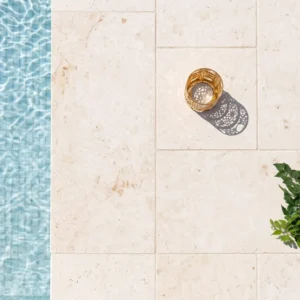
Reflectance is the second half of comfort. Pale stone pushes daylight deeper into a room, which usually means less artificial light through the middle of the day, but it also means glare where glazing faces the sun with nothing shading it. Work through the room before anyone picks a tile:
- Which way the main glazing faces, and what shades it at midsummer
- How much floor sits under permanent furniture and is never really seen
- Whether the room is used barefoot, in shoes, or both across a day
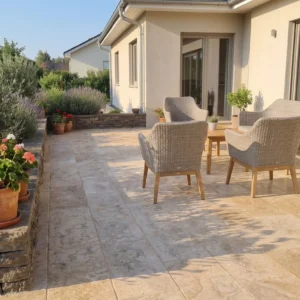
- Whether a terrace will be read through the glass in the same view
- What the walls and joinery already do with the light they get
The winter half of the same specification
Cool damp months are the part that mainland writing about stone floors tends to skip. A floor that feels welcome in August will read cold in a February sitting room with no heat source, and that is not a fault in the stone; it is a decision to take deliberately rather than discover later. Where a warm floor is wanted year round, stone sits well over a heating layer, because the same mass that steadies a summer temperature will hold and spread a low heat input. Where no heating is planned, put the coolest floors in the rooms worked hardest through summer and soften the winter rooms with rugs, timber or a smaller tiled zone.
Humidity and what sits underneath
Wetting and drying here happens at moderate temperature across the whole year rather than through one continuous warm season, so a floor sees repeated slow moisture cycles instead of a single long dry spell. What that asks for is honest preparation rather than a special product. Buyers comparing stone flooring sized for Bermuda homes should raise absorption figures and bedding detail in the same conversation as size and tone, because the tile and the layer beneath it succeed or fail together.
- A full bed rather than dabs, so no voids sit trapping moisture
- Movement provision at perimeters and across long uninterrupted runs
- Adhesives and grouts rated for the moisture the room actually sees
- A documented absorption figure for the stone rather than a general description
Thickness conventions worth holding to
Depth follows what crosses the floor, not taste, and the conventions used across work on the island are simple enough to keep in your head:
- Around 2 cm for interior floors and covered areas
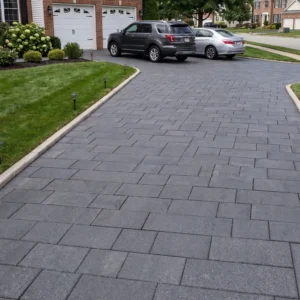
- Around 3 cm as the standard for exterior paving
- 5 cm and above wherever vehicles cross
- Consistent calibration through the lot, so the floor lays flat without packing
Sitting beside Bermuda’s own stone
Bermuda built itself from its own aeolianite limestone over centuries, and masons have long preferred the Town Hill Formation for its cohesiveness, while Rocky Bay and Belmont are described in the literature as extensively quarried for building stone. Much of that historic quarrying has wound down and the remaining fabric is protected; Khyber Pass in Warwick Parish is a disused building-stone quarry where lithified dunes roughly 120,000 years old stand exposed. Imported tile is not offered against any of that. The difference is one of product category: dimension-sawn, calibrated, finish-controlled floor tile with a documented absorption figure is a different article from the dressed block and roof slate the island built itself from.
Ordering around the sailing
The supply line into Hamilton runs from the US East Coast, and this is one of the few markets where a delivery date can be planned against a published rotation instead of a guess.
- Weekly sailings from the New Jersey ports on a passage of roughly two days
- A Florida service running several times a month across about 880 nautical miles
- Cargo commonly collectable at the start of the working week
- Duty on building materials and supplies at 10 percent since 1 July 2025, with no VAT
- Confirm the current sailing schedule with your freight agent before fixing dates
Anyone weighing stone sourcing for Bermuda parishes should plan the last mile too, because vehicle-size limits and narrow lanes mean smaller trucks and booked deliveries rather than a drop at the gate. Decide the tile, the bedding and the sailing together and a Bermuda floor stops being a gamble.