The Test That Decides a Curacao Terrace
Long before anyone opens a datasheet, a terrace here gets judged by someone stepping onto it at two in the afternoon with nothing on their feet. Under a very high sun, on an island where the dry stretch runs from roughly January into September, that moment is not a small detail. Surface temperature governs whether a deck gets used at midday or written off until five, and the two levers you genuinely control are the tone of the stone and the texture of its face. Everything else in the specification, from absorption to unit depth, is answering a different question. Heat comfort deserves to be decided deliberately rather than inherited from whatever the sample board happened to hold.
Why Tone Changes What You Feel
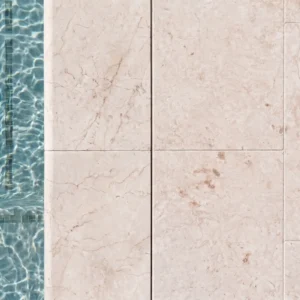
A pale surface returns more of the sun’s energy than a dark one and stores less of it in the top few millimeters of the unit. That is physics rather than marketing, and it is the reason light-toned stone feels different underfoot in hot climates. The effect is real without being unlimited: shade, air movement, thermal mass, wetting and the hour of the day all push the result around. Treat tone as the biggest single lever available, not as a guarantee. It also helps to think in zones rather than in one decision: the strip of deck between a door and a pool gets crossed at speed by bare feet, while a shaded dining area is occupied for hours by people in shoes.
Glare Is a Separate Problem From Heat
Brightness and temperature are two different complaints, and on this island glare has its own paper trail. The record includes an order from the governor in 1817 against painting houses white, on the grounds that the glare was damaging to the eye. The answer today is not to abandon pale stone. It is to break the reflection with texture, keep polished faces out of open sun, and think about where the eye rests when someone steps out of a shaded room at noon. limestone units cut for Curacao terraces can be ordered in faces that scatter light instead of throwing it back.
Finish Does as Much Work as Tone
Two units cut from the same block can read completely differently in the same sun, purely because of how their faces were worked.
- A honed face reads calm indoors but can throw light hard on an open terrace
- Brushed and bush-hammered faces scatter reflection and keep bite when wet
- Flamed surfaces give an open texture that breaks glare and sheds water quickly
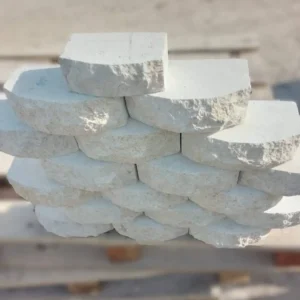
- Tumbled edges soften a pale field visually and sit comfortably beside older fabric
- Polished faces belong indoors here, since blown grit will dull them outside
Shade, Layout and the Hours That Matter
Heat comfort is a layout question as much as a materials question, and the layout decisions are far cheaper to change on paper than on site.
- Map where shade actually falls between eleven and four, not at the hour you happen to visit
- Keep the palest, most-walked routes where structure or planting gives cover
- Allow the trade winds to reach the deck, because moving air changes perceived comfort
- Use a slightly deeper tone on secondary paths that carry shoes rather than bare feet
- Plan a rinse point, since a wetted pale surface cools quickly and dries fast in this climate
The dry stretch here runs for most of the year, so a deck spends far more days in hard sun than under cloud. That skews the value of every shading decision upward and makes a pergola, an overhang or a run of planting worth more to the finished space than an upgrade in material.
Where a Pale Field Is the Wrong Answer
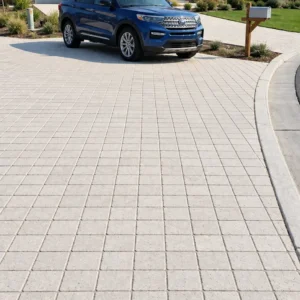
Pale stone is not a universal answer, and pretending otherwise makes for an awkward second year. On a drive apron taking turning vehicles, tire scuff and oil show more readily against a light field, and the maintenance conversation gets harder. Under heavy planting that drops debris, a light surface stains visibly between cleanings. On a windward boundary that takes constant blown grit, abrasion patterns appear sooner on a pale face than on a dark one. None of that rules pale stone out. It argues for zoning a property and letting each area take the tone its use deserves, which is also how you avoid paying terrace money for a service yard.
Check a Piece in Your Own Sun
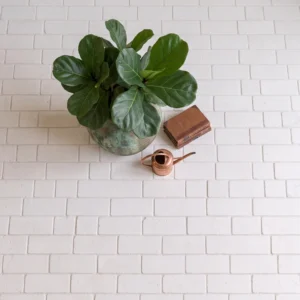
Nothing on a screen settles a heat question. Get a physical sample, put it where the deck will go, and check it through a real afternoon rather than a photograph. If the project needs the lightest end of the range, paler white limestone paving units are worth comparing directly against a mid-tone piece on the same day, in the same spot, at the same hour.
- Lay both samples flat in full sun by mid-morning and leave them alone
- Touch them barefoot at two in the afternoon, not at breakfast
- Look at the glare from a seated position, which is where people will actually be
- Wet one piece and check how fast it dries and how it grips while damp
- Repeat once in shade, because half a terrace usually lives there
Pick the tone for the hour the terrace is hardest to use, and the rest of the year takes care of itself.