The Barefoot Test
Nobody walks a Provo pool deck in shoes. That single fact decides more about paving here than any product sheet, because a surface that measures beautifully and cooks at two in the afternoon is a surface guests hop across and then avoid. Sun angle in the Turks and Caicos Islands is high, cloud cover is thin for much of the year, and the reflected light off white sand adds a second dose of heat that inland projects never deal with.
Tone is the first lever you have. It is not the only one, but it is the cheapest and the most reliable.
Why Tone Changes the Temperature
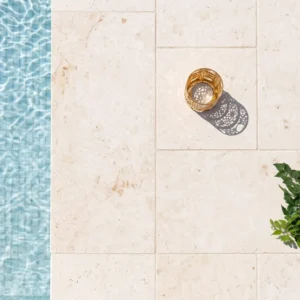
A pale surface sends more of the sunlight straight back out instead of converting it to heat in the top few millimeters of stone. A dark surface does the opposite and keeps storing warmth well past the hottest part of the day.
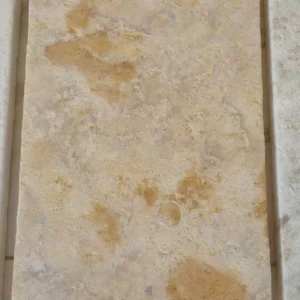
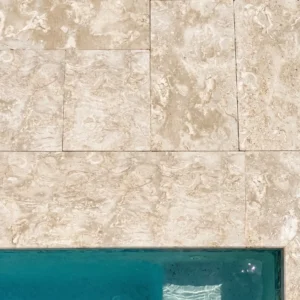
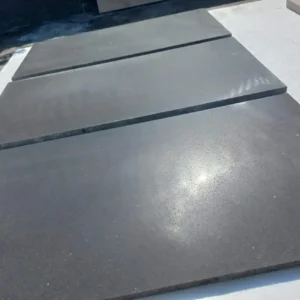
- Light creams, bone whites and soft grays run noticeably cooler than charcoal or near-black stone.
- Thermal mass means a dark deck stays warm into the evening, long after the sun has dropped.
- Reflected glare from sand and water raises the effective load beyond what a shaded test suggests.
- Pale stone also hides the dried salt bloom that darker surfaces show as a white haze.
- Tone varies within a single deposit, so judge the range you are actually buying.
Finish Changes the Feel Underfoot
Two units cut from the same block can feel different underfoot depending on how the face is worked. A honed face reads smooth and slightly cooler to the touch; a brushed or bush-hammered face breaks the surface into micro-relief, which spreads contact and shortens the moment a foot spends on any single high point. That texture also holds a thin film of water after a swim, and evaporation does real cooling work.
Around a pool the tension is obvious. Deep texture helps with grip and heat but collects sunscreen and grit; a smoother face cleans easily but bites harder in full sun. Most villa decks land on a moderately textured face, with the smoother finish saved for covered loggias and interior rooms. The barefoot-friendly limestone paving formats we hold are set out by finish so the two decisions can be made together.
Where the Heat Actually Bites
Heat is not uniform across a property, and treating it as a single problem wastes money. Map the zones first, then spend the budget where bare feet actually land.
- The strip from pool edge to the first shade structure is the hardest zone on almost every project.
- Driveways and service yards are walked in shoes, so tone there can follow dirt tolerance instead.
- Courtyards enclosed by walls trap warm air but escape direct sun for much of the day.
- Beach-facing terraces catch reflected light off pale sand as well as direct overhead sun.
- Steps and thresholds are gripped and stood on, so treat them as their own small zone.
Shade, Water and Layout
The surface is one part of the answer. Layout does the rest, and it costs nothing at design stage.
- Put pergolas, sail shades or planting over the routes people take most, not over the corners.
- Keep an unbroken shaded path from the door to the water so nobody has to sprint.
- Let the deck run slightly damp near the pool edge; a wet pale surface is dramatically cooler.
- Use a narrow band of a different, cooler material at thresholds and step nosings.
Glare Is the Other Half
Pale stone solves heat and can create glare, which is why finish and tone have to be chosen as a pair. A highly reflective, closed surface next to bright water is uncomfortable to look at and washes out the color of everything around it. A textured or lightly brushed face scatters that light instead of bouncing it, so the deck reads soft rather than dazzling. Compare finish choices that alter glare before you settle on a tone, because the same stone can look calm or harsh depending on the face.
Testing a Sample in Island Sun
No specification substitutes for a small sample sitting on the actual site at the actual hour. Order hand samples early, and test them properly.
- Lay the samples in the open at midday, not in the shade of a truck or a wall.
- Leave them at least an hour so they reach a steady temperature rather than a starting one.
- Stand on each with a bare foot, then wet one and stand on it again.
- Look at each from the direction people will approach from, checking glare as well as heat.
- Keep the winning sample on site as the reference for the delivered batch.
Keeping It Cool After Handover
A deck that starts cool can drift warmer. Sunscreen residue, biological film and sealer build-up all darken a pale surface over a few seasons, and a darker surface runs hotter. Regular fresh-water rinsing keeps salt and sunscreen from setting in, and a light-handed approach to sealers preserves both the tone and the texture that were paid for in the first place.
Where a sealer is genuinely needed for stain resistance, choose one that stays matte and penetrates rather than one that films over the face. The heat you designed out at specification stage is easy to reintroduce with a glossy coat applied by a well-meaning maintenance contractor. Pick the tone for the middle of a July afternoon, not for the photograph taken at sunset.