What Marble Remnants Actually Are — and Why the Size Matters More Than You Think
A marble remnants buyers guide that skips dimensional planning is missing the most important variable: whether the remnant’s usable field area aligns with your project’s cut plan before you ever discuss color. Remnants are the pieces left over after a full slab has been fabricated for a countertop or cladding job, typically ranging from 10 to 40 square feet of net usable surface. The challenge isn’t finding a beautiful piece; it’s mapping that fixed geometry onto a real project scope without gaps or waste overruns that eliminate the cost advantage entirely.
Marble remnants for small projects are genuinely useful — a bathroom vanity top, a fireplace surround, a feature wall niche, a set of custom thresholds — but only when you commit to measuring first. Skipping the layout template step is the single most common reason buyers return a remnant or, worse, end up with a visible seam in a location that was supposed to be seamless.
Grading Remnants by Quality: What the Yard Isn’t Always Telling You
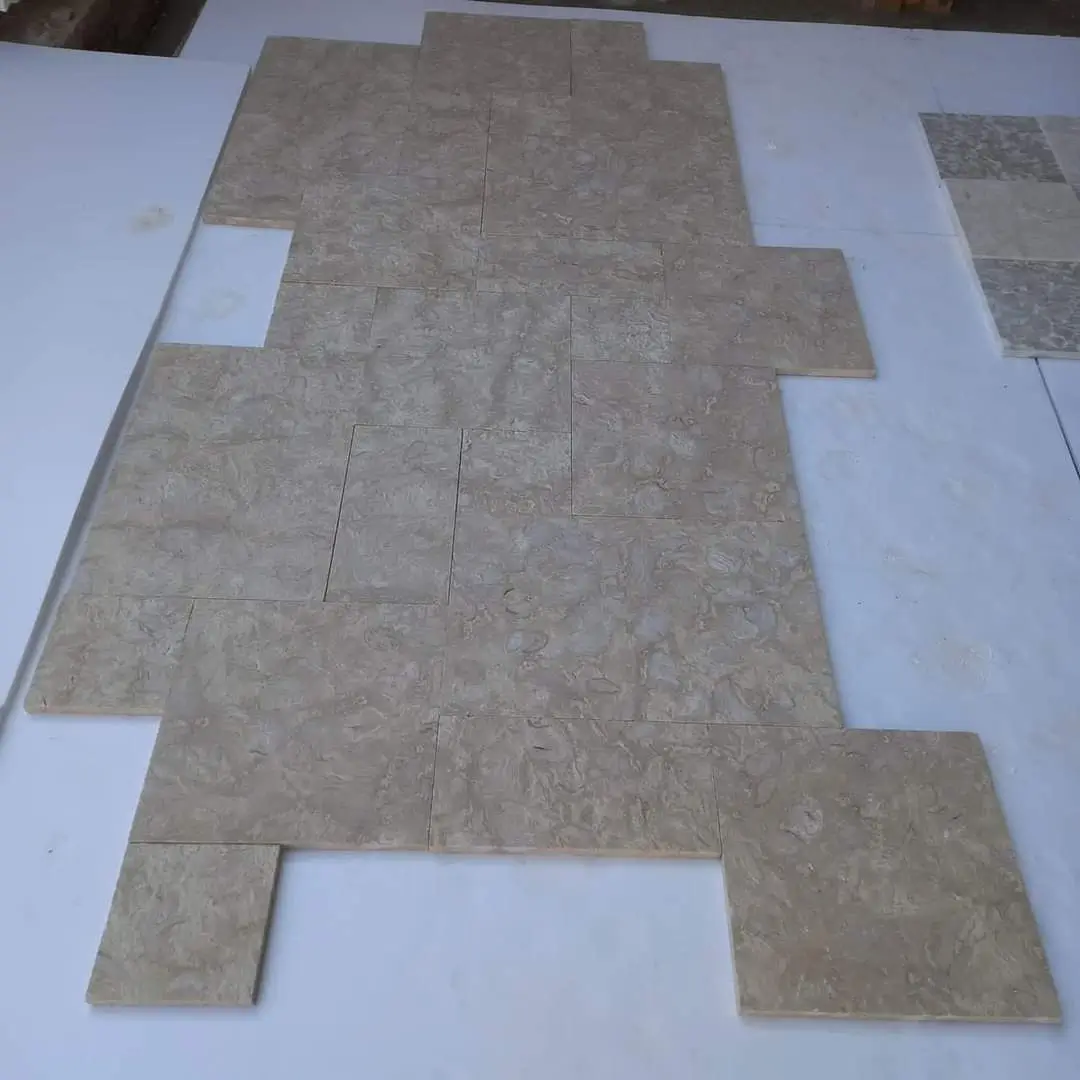
Remnant quality breaks down across four variables that most yard staff won’t volunteer unless you ask: thickness consistency, edge condition, surface finish integrity, and vein continuity from the parent slab. Thickness matters because remnants cut from different positions on the same slab can vary by 1–3mm depending on the fabricator’s saw calibration. That variation sounds minor, but it translates directly to uneven reveal lines on undermount sinks and inconsistent grout joints on tile installations.
- Thickness tolerance: Check all four corners with a caliper — acceptable variation for a countertop remnant is ±1.5mm; anything beyond that requires back-grinding before install
- Edge condition: Factory-cut edges are clean and usable; hand-broke remnant edges need profiling work, which adds labor cost to your budget
- Surface finish: Polished remnants lose their reflectance at surface scratches deeper than 0.2mm — run your fingernail across the surface; if it catches, the finish needs restoration
- Vein continuity: A remnant cut from the center of a slab often carries the most dramatic veining; end-of-slab pieces tend toward less movement and flatter tonal fields
According to Natural Stone Institute marble grades and technical specifications, marble is graded A through D based on natural fissures, veining complexity, and structural soundness — Grade A is the most uniform and consistent, while Grade D carries the most character but requires the most fabrication care. Remnants can come from any grade, and the grade isn’t always disclosed at the point of sale. When evaluating stone mill manufacturers and fabricator yards as potential remnant sources, asking for the grade documentation upfront separates reliable suppliers from those moving ungraded stock.
Measuring Your Project Before You Shop — Not After
Here’s what most first-time remnant buyers get wrong: they find the stone they love, then go home to measure. That sequence works fine for full slabs where you can order to size, but remnant dimensions are fixed the moment they leave the fabricator. Your measurement sequence needs to happen in advance, ideally with a cut diagram showing every piece your project requires — field area, edge treatments, any cutouts for sinks or fixtures — with a 10% overage factored in for blade kerfs and breakage risk on natural stone.
For marble remnants destined for small projects, the practical minimum usable area for most vanity applications is around 12–15 square feet after cutouts. Kitchen island ends, wine bar tops, and floating shelves typically fall in the 6–10 square foot range and are ideal candidates for remnant sourcing. The math that trips buyers up is confusing the remnant’s total square footage with its net usable area — a 30-square-foot remnant with a jagged break edge on one side and a fabricator’s cut notch on another might yield only 21 usable square feet once trim losses are accounted for.
Matching Marble Species to Remnant Applications
Not every marble species performs equally when specified as a remnant rather than a full slab installation. Whether buyers are comparing granite marble blends, calcite-dominant marbles, or silica-rich alternatives, the species decision plays out differently at the remnant scale because you’re working with what exists, not what you’d ideally order from scratch.
- Calacatta and Statuario: Dense, calcite-based, high absorption (0.2–0.5% by weight) — ideal for vanity tops and decorative applications where moisture exposure is controlled
- Carrara: Lower density than Calacatta, more forgiving on fabrication — good candidate for thresholds and fireplace surrounds where thermal cycling is moderate
- Nero Marquina: Black marble with high silica content, lower absorption, harder surface — performs well in wet applications but requires diamond-blade cutting to avoid edge chipping
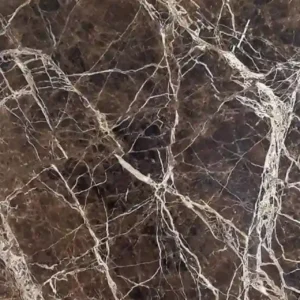
- Emperador: A breccia-style marble with natural fracture lines that can telegraph through thin remnant cuts — specify minimum 3/4-inch thickness for structural integrity
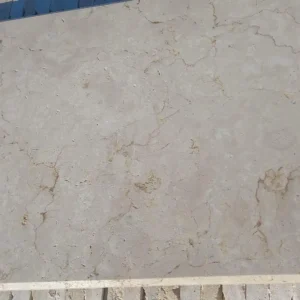
- Middle East quarries supply a range of beige and cream marbles that appear frequently in remnant yards; these tend toward mid-range density and benefit from penetrating sealer application before any wet-zone use
The species question matters most when mixing remnants across a project — two pieces from different marble families can look similar in the yard under fluorescent lighting but read completely differently under daylight. Always evaluate remnant matches under natural light or a daylight-spectrum lamp before committing to a multi-piece project.
Water Management Considerations for Remnant Stone Placement
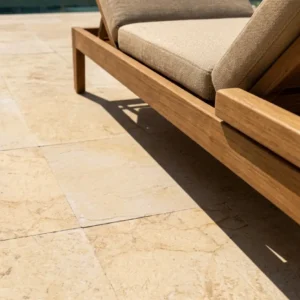
Where you’re installing marble remnants affects how you specify the substrate and sealer, and water behavior in your environment is a real variable. In regions that see heavy rainfall seasons, monsoon cycles, or hurricane-driven moisture intrusion, marble used in semi-outdoor applications — covered patios, transitional indoor-outdoor thresholds, mudroom flooring — needs substrate preparation that accounts for hydrostatic pressure and vapor transmission from below.
Marble’s absorption rate — typically 0.15–0.5% depending on species — means it will absorb moisture from below if the substrate isn’t properly isolated. In climates with pronounced wet and dry cycles, repeated absorption and drying causes efflorescence and can degrade the mortar bond over time. For any remnant application that might see moisture from below, a crack isolation membrane rated to handle vapor transmission (such as an uncoupling mat rated at 0.3 perms or lower) should be part of your substrate spec.
Drainage geometry matters too. Remnant marble installed on an exterior-adjacent slab needs a minimum 1/8-inch-per-foot slope toward a drain or away from the structure. Flat installation on a level substrate in a high-rainfall zone creates pooling conditions that accelerate staining and compromise surface finish over time — the detail that separates a 15-year installation from a 7-year one.
How Remnant Pricing Works — and Where the Savings Actually Come From
Remnant marble is typically priced at 30–60% below the cost of a full slab of equivalent quality, but that discount doesn’t always account for the additional fabrication costs that remnant work introduces. Standard slab fabrication runs on optimized CNC programs built for predictable geometry; remnant cuts often require hand-programming or manual setups because the piece shape is irregular. That custom setup charge can run $150–$400 depending on complexity, and it’s worth factoring into your comparison math before deciding the remnant is the obvious bargain.
- Remnant cost per square foot: typically $8–$35 depending on species and grade — compare to $25–$85 for equivalent full-slab material
- Fabrication uplift for irregular shapes: add $150–$400 for custom CNC setup on non-standard remnant geometries
- Edge profiling: eased, beveled, and ogee profiles add $12–$25 per linear foot regardless of whether you’re using remnant or full slab material
- Sealing: budget $0.50–$1.50 per square foot for initial penetrating sealer application — most remnants are sold unsealed
The genuine savings zone for remnant buyers is in small-format, high-material-cost applications. A Calacatta vanity top that would cost $2,200 from a full slab can often be sourced from a remnant for $600–$900 in material cost, with fabrication bringing the total to $1,100–$1,400 — still a meaningful saving. Browse our leftover marble slab stock for current remnant availability, because warehouse inventory turns over quickly and the best pieces don’t stay listed long.
Sealing Remnants: What the Instructions Don’t Cover
Remnant marble has almost always been through at least one stage of fabrication before it reaches you, which means the surface has been cut, polished, and possibly handled extensively. That process opens pores and can introduce micro-contamination from cutting fluid or polishing compound. Your sealing protocol for a remnant needs to start with a thorough solvent wipe-down — isopropyl alcohol at 70% concentration — before any penetrating sealer goes on, because sealer applied over a contaminated surface bonds to the contaminant instead of the stone.
According to ASTM C503 marble building stone specification, marble used in architectural applications must meet specific absorption thresholds that directly affect how well a penetrating sealer performs. Low-absorption Grade A marbles (below 0.2% by weight) may only require one sealer application every 3–5 years under normal interior use; higher-absorption pieces closer to 0.5% will benefit from annual reapplication in wet zones like shower surrounds or kitchen countertops.
- Apply penetrating sealer after the solvent wipe, while the stone is completely dry — any residual moisture creates a vapor barrier that prevents sealer penetration
- Apply two thin coats rather than one heavy coat — 10-minute wait between applications allows the first layer to penetrate before flooding the surface again
- Wipe off all excess sealer within 5–8 minutes of each application — sealer left on the surface hazes and requires buffing compound to remove
- Test sealer effectiveness annually by dropping a tablespoon of water on the surface — if it beads, you’re sealed; if it darkens the stone within 4 minutes, reseal immediately
Sourcing Remnants from Reliable Supply Chains
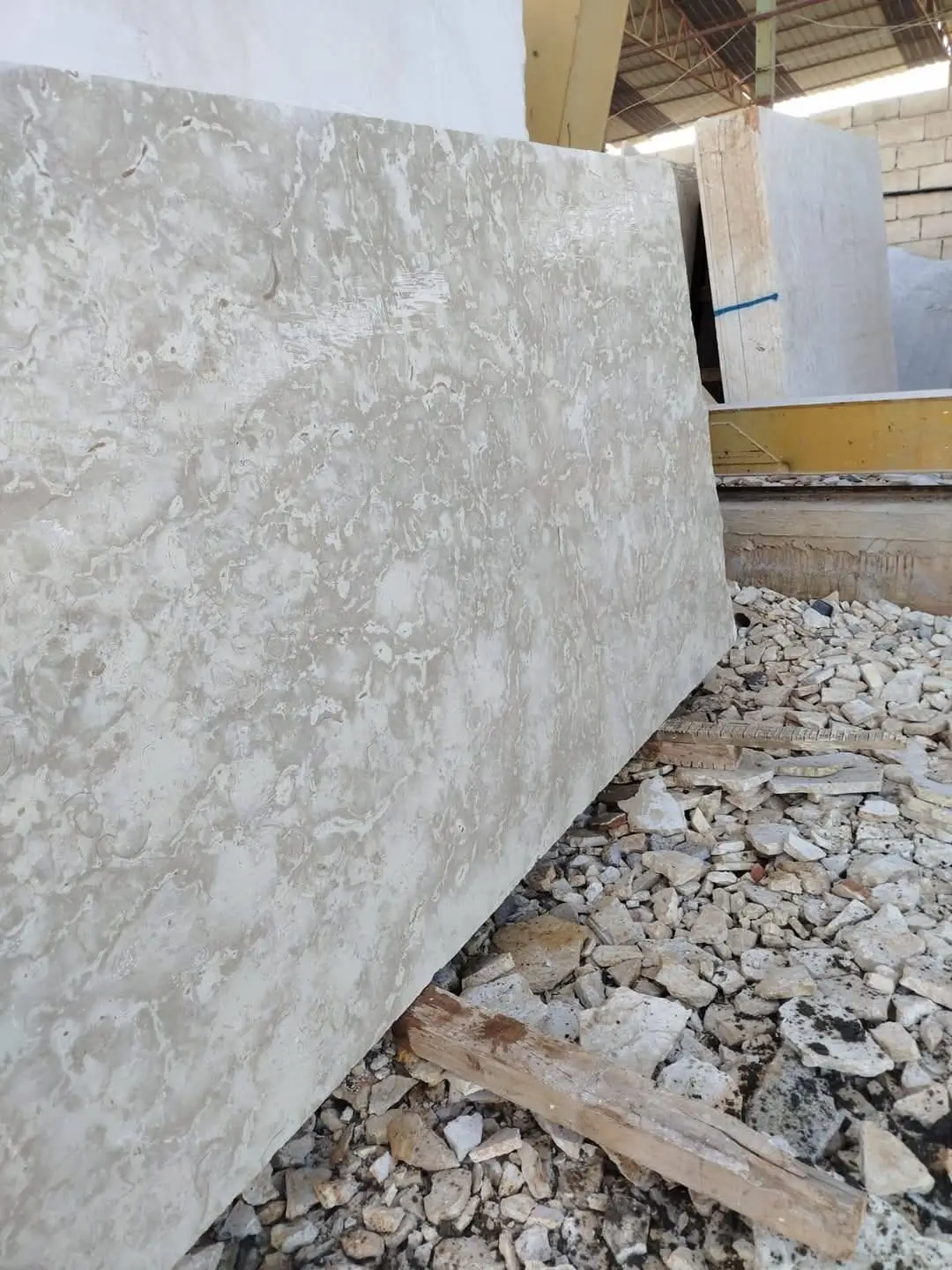
The remnant market has two tiers that buyers often don’t distinguish: fabricator-sourced remnants, which come directly from shops after a production run, and yard-stockpiled remnants, which have been stored for varying periods and may have edge damage, moisture exposure, or finish degradation. Fabricator-sourced pieces are almost always fresher and more dimensionally predictable because they come off a known slab with documented thickness and grade. Yard-stockpiled remnants require more careful inspection because the provenance chain is longer. Reputable stone mill manufacturers maintain lot traceability records that allow buyers to verify grade and quarry origin — asking for this documentation before purchase is standard practice at the professional level.
At Citadel Stone, we source marble directly from quarry operations including selected quarries from the Middle East and Mediterranean origins, which means our warehouse team can trace remnant material back to the original slab lot. That traceability matters when matching remnants for a multi-piece installation — knowing that two pieces came from the same quarry run significantly improves the odds of a compatible vein pattern and tonal match, even when they’re from different parent slabs.
Citadel Stone ships nationwide, and our warehouse fulfillment team can coordinate truck delivery for larger remnant lots or multi-piece orders. For buyers sourcing remotely, we provide detailed measurement sheets and high-resolution photographs taken under consistent lighting conditions — the same documentation protocol our team uses for quality verification when material arrives from the quarry.
Common Mistakes Buyers Make With Marble Remnants
The geological formation characteristics of marble explain why the stone behaves differently at cut edges than it does across the polished face — calcite crystals cleave along specific planes, which is why marble chips and spalls at edges under impact while the face remains intact. Buyers who don’t account for this often specify remnants for high-traffic edge applications like stair nosings or countertop corners and then find edge chipping within months of installation.
- Skipping the layout template: always cut a cardboard template of your project before visiting a remnant yard — it lets you physically overlay the template on the remnant to verify fit
- Ignoring edge condition: a remnant with a ragged break edge on one side has reduced usable dimensions on that side — measure to the clean edge, not the outer break
- Assuming color matching across lots: marble remnants from different parent slabs will not match precisely — design around variation rather than expecting uniformity
- Underestimating lead time: remnant fabrication can take 2–4 weeks depending on shop backlog — don’t assume remnant means faster delivery than a full slab order
- Overlooking thickness for structural spans: marble remnants used as floating shelves or cantilevered elements need minimum 1.25-inch thickness for spans over 18 inches; thinner remnants will deflect and eventually fracture at the support point
Parting Guidance for Every Marble Remnants Buyer
The decision tree for this marble remnants buyers guide ultimately comes down to two questions asked in sequence: does this piece fit my project geometry exactly as it is, and does its quality grade match the performance requirements of my application? If you answer yes to both, you’ve found genuine value. If either answer is uncertain, the cost savings won’t survive the fabrication adjustments and potential installation failures that follow.
Your investment in a remnant is protected by the same installation discipline that protects any natural stone project — correct substrate preparation, proper sealing before first use, and realistic expectations about the material’s behavior in wet or thermally variable environments. As you finalize your stone project, related applications across natural stone work can inform your broader specification approach — granite polishing methods and timing covers surface management techniques that translate across granite marble and calcite-based stone alike. Buyers shopping remnants through Citadel Stone should measure their project dimensions precisely beforehand, since remnant sizes are fixed and cannot be supplemented with additional cuts from the same lot.
Related reading: How to Choose Granite Installers: A Practical Guide · What Do Granite Fabricators Do? A Full Breakdown.