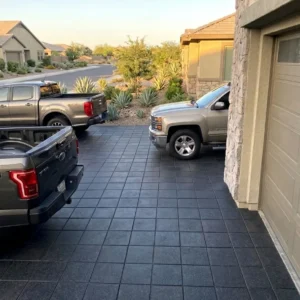
Before tourism, Costa Rica’s fortune was coffee – the golden bean that built the national theater, the railways and the highland towns – and the industry left the landscape a signature surface: the drying patio, the great flat court where each harvest lay turning in the sun. The beneficios’ patios, the estate houses beside them and the highland towns the trade built are now renovation country – boutique hotels, event estates, family quintas – and their stone craft carries two centuries of working heritage into its next life. This guide walks coffee country with proper respect for the ground.
The Patio Inheritance
The drying patio is functional architecture at its purest: vast, flat, graded to shed the afternoon rain and drain the washing channels, built to take rakes, boots and cartwheels across every harvest since. Surviving patios anchor their estates’ renovations the way plazas anchor towns – event floors, wedding courts, the boutique hotel’s unforgettable terrace – and the renovation ethic is continuation: levels and falls preserved, worn surfaces repaired in kind where the fabric allows, and new stone joining at honest, visible junctions where the old has gone. The patio’s scale cannot be built today at its original price; inheriting one is the estate’s luck, and treating it as heritage is the estate’s duty.
The Beneficio Register
Around the patios stand the working buildings – receiving tanks, milling halls, warehouses – in the trade’s robust masonry and timber, and their adaptive reuse follows the island-tested rules:
- New floors meet old walls with visible, honest joints – each era legible.
- Services thread under new paving rather than chasing through historic fabric.
- Working textures stay working: the register is industrial heritage, not villa polish.
- Every intervention documents as removable in principle – the building keeps its own story.
The Estate House Renovation
The coffee estate house – deep verandas, high ceilings, gardens grown magnificent over a century – is highland renovation at its most rewarding, and the stone brief mirrors the vernacular’s division: structure and timber above, mineral ground below. Veranda floors renew in pale stone at the historic level, garden paths re-lay along the walked lines, courtyard floors host the outdoor life the climate invites year-round, and the whole ground layer runs one family so a house renovated across years reads as one intention. another island’s coffee-patio legacy walks the same inheritance in Puerto Rico’s hills, and the two traditions rhyme beautifully.
The Highland Working Climate
Coffee altitude is the valley’s eternal spring with a working edge – mornings brilliant for drying, afternoons delivering the rain the crop needs, nights genuinely cool – and outdoor surfaces work the same schedule the harvest did: falls that shed the daily rain without argument, textures that hold boots and event heels alike, and stone floors that bank the morning sun for the cool evenings. It is the country’s most forgiving serious climate, and its surfaces age with the grace the estates’ photographs promise.
The Tourism Turn
Coffee country’s economy has added hospitality to harvest: estate tours, cañada-side tastings, wedding venues on the patios, boutique lodging in the old buildings. The visitor infrastructure runs the working-heritage register – paths at tour-group width, tasting terraces at hospitality grade, event courts with the services buried and the sightlines clean – and the specification keeps faith with the setting: pale honest stone, industrial detailing softened rather than disguized, and nothing that would embarrass the patio it borrows its atmosphere from.
The Farms Still Working
Much of coffee country still farms, and estates that host visitors while harvesting run both briefs at once: working yards at agricultural grade – washdown floors, truck aprons, receiving areas that hose clean – and guest surfaces at hospitality standard, with the circulation between them planned so neither embarrasses the other. The dual specification is the district’s particular craft, and stone serves both sides from one family: textured working floors and honed visitor terraces, cut from the same batch, aging at the same dignified rate.
The Towns the Bean Built
The coffee towns – Atenas, Naranjo, Sarchí’s craft-famous streets, the Tarrazú villages – keep the trade’s civic legacy: proper plazas, substantial churches, main streets built in the boom decades. Renovation here is town-fabric work – courtyard houses opening to visitors, plaza-side premises upgrading thresholds, the paint-and-stone pact keeping facades bright above honest ground floors – and the small-town manners apply in their highland edition: local crews, festival calendars respected, and the plaza’s dignity treated as the shared asset it has been since the first harvest paid for it.
Heritage That Still Pays
Coffee country’s advantage is heritage that still works: patios that host what they once dried, buildings that earn their keep, towns whose bones the boom built well. The renovation craft is keeping the work visible while the comfort arrives – and the wider principle, that working heritage stays working, is mapped in working heritage kept working for a far older inheritance. Respect the patio, continue the craft, and coffee country’s stone keeps doing what it has always done: turning the highland sun into value, one season at a time.
The Harvest Light
Coffee country’s year peaks in the harvest months – November through February, the dry-season light gilding the hillsides, pickers moving through the rows and the working patios earning their name – and the estates’ hospitality calendar peaks with it.
- Tour routes run at capacity: paths, tasting terraces and patio edges absorbing the season’s traffic.
- Event bookings cluster in the harvest’s golden light; the patio courts host their densest calendar.
- Working and visitor circulations hold their separation under pressure – the dual specification’s annual exam.
- The maintenance rhythm inverts: surfaces reset nightly through the peak, and the deep care waits for the green season’s quiet.
The harvest light is the district’s marketing department – every photograph taken between November and February sells the region for the year – and the estates whose stone photographs clean through the peak bank the bookings that carry the quiet months. The patios dried coffee for two centuries under exactly this light; hosting the harvest’s admirers is simply their newest crop.
The drying patio was the original brief
Coffee taught these highlands what a working hard surface has to do long before anyone was specifying terraces. A drying patio needed to be flat enough to rake, hard enough to take a barrow all season, smooth enough not to damage the crop, drained so an afternoon shower did not ruin a day of work, and cleanable back to bare surface every single time. That is a demanding brief, and it is very close to the one a modern courtyard, farm shop or agrotourism terrace still carries.
- Falls generous enough to clear a sudden shower quickly
- Surfaces that sweep and wash back to bare stone
- Joints tight enough to rake across without catching
- Hard standing rated for barrows, carts and small vehicles
- No sharp arrises where product or people move constantly
Wet processing means a wet floor
Anywhere a beneficio operates, water and pulp cross the ground in volume, and the floor is hosed after every use. That combination of slope, water and organic residue is a friction problem before it is a hygiene one. The work behind frictional testing of natural stone walking surfaces sets out the ANSI A326.3 wet method and a benchmark dynamic coefficient of friction of at least 0.42 for level interior floors expected to be walked on wet. A working wash-down area sits beyond that reference.
- Wet values requested on the exact finish supplied
- Extra grip margin on any sloping working area
- Drainage sized for hoses rather than only for rain
- Textures that clean quickly, since residue changes friction fast
Two standards on one property
These estates now receive visitors as well as harvests, and the route a guest takes to a tasting room is not the route a crate takes to a dryer. Separating them early is far cheaper than repairing the consequences of one surface trying to do both jobs.
- Visitor routes detailed for comfort, shade and legibility
- Working routes detailed for load, spillage and daily washing
- Clear thresholds where the two meet
- One material family shared across both so repairs stay simple
Choosing coffee country stone that earns its keep
The material argument follows the setting. The Natural Stone Institute overview of limestone and travertine shows how far density and absorption range within one name, and on a working highland estate the right choice is whatever cleans back, drains fast and can be repaired by the people already on the farm.
- Low absorption anywhere pulp, oil or coffee residue reaches
- Formats a single worker can lift and reset
- One source across the property so replacements always match
- Spare stock stored dry in the estate buildings
Our Costa Rica stone supply guide sets out the formats, finishes and lead times that suit this country. The old patios solved this problem first, and they are still the best brief available.