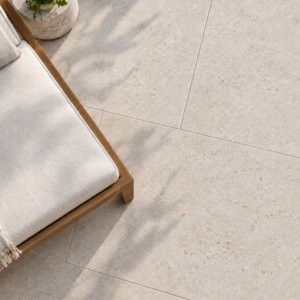
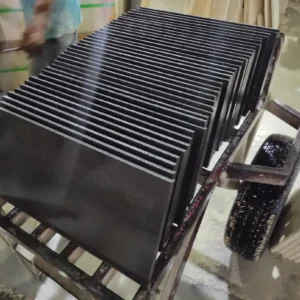
Black granite landscape rock delivers compressive strength exceeding 19,000 PSI — a performance threshold that separates it from most sedimentary alternatives and makes it the material of choice for high-load, high-visibility exterior applications. This black granite landscape rock guide walks you through the specification variables that determine whether your installation performs for 30 years or starts showing stress fractures and base migration inside a decade: material grades, sizing logic, base engineering, terrain considerations, and the ordering details that actually matter at project scale. What most buyers overlook when sourcing black granite landscape rock isn’t the aesthetic (that’s obvious from the first sample), but the technical decisions below the surface that lock in long-term performance.
What Makes Black Granite Different from Other Landscape Stone
Granite’s igneous origin gives it a crystalline interlocking structure that sedimentary stones simply can’t replicate. You’re working with a material that formed under intense pressure and heat — which means it arrives at your site already conditioned to handle mechanical stress, freeze-thaw cycling, and UV exposure without the surface degradation you see in softer alternatives. The dark coloration comes primarily from high concentrations of hornblende and biotite minerals, and that mineral density is directly tied to the material’s abrasion resistance.
Black granite landscape stone sits in a different performance class than limestone or sandstone for high-traffic applications. Its water absorption rate typically falls below 0.4%, compared to 3–12% for travertine and limestone. That low absorption matters enormously in exterior settings where freeze-thaw cycling occurs — water that can’t penetrate the stone can’t expand inside it and fracture the crystal matrix. According to Natural Stone Institute granite durability and application specifications, granite consistently outperforms other natural stone categories in abrasion resistance and load-bearing capacity for exterior paving and landscape applications.
Black granite landscape stone also holds its finish longer than lighter-colored alternatives. Honed and flamed surfaces maintain their texture profile across decades of weathering, which means your specification decisions at the outset lock in both the visual and functional outcome for the long term.

Granite Grades and Material Selection for Landscape Use
Not all black granite landscape rock reaching the market is equivalent, and the grade distinctions matter far more in landscape applications than in interior settings. Exterior environments expose material to mechanical loading, moisture cycling, and UV radiation simultaneously — conditions that reveal quality differences that interior use masks entirely.
- Commercial-grade black granite: consistent crystal structure, tight tolerances (±1/16″ on thickness), suitable for high-traffic paving, edging, and feature beds
- Standard landscape grade: acceptable for decorative mulch replacement, accent borders, and low-traffic pathways — minor surface variation is acceptable here
- Crushed and angular aggregate: used for drainage layers, decomposed granite alternatives, and permeable base construction — grading consistency is critical for drainage performance
- Tumbled river-finish granite: rounded edges, suitable for naturalistic settings and water features, lower structural capacity than sawn material
- Quarry-split slab: irregular but structurally sound, used in dry-stack applications and retaining features where rustic aesthetics are intentional
Your selection should start with application load, not aesthetics. A decorative bed border has entirely different requirements than a primary driveway edging that receives wheel-over loads. Specifying commercial grade where standard suffices wastes budget; specifying standard grade where commercial is needed creates a maintenance liability within a few seasons.
At Citadel Stone, we inspect incoming shipments against dimensional tolerances and surface quality standards before material enters warehouse inventory — a step that filters out the inconsistent material that creates installation problems downstream.
Sizing and Format Options for Black Granite Landscape Rock
The sizing conversation is where most buyers lose specification precision. Black granite landscape rock is available in a broader size and format range than most other landscape stones, which creates genuine flexibility — but also genuine risk if you’re not matching format to function.
- 3/8″ minus crushed: compacts tightly, used as a stabilized surface material or base layer — excellent drainage when kept above 1/4″ nominal
- 3/4″ to 1″ aggregate: the workhorse size for decorative mulch replacement, weed suppression beds, and drainage swales
- 1″ to 2″ cobble: strong visual impact, used in accent zones, dry river beds, and around water features
- 2″ to 4″ cobble: substantial weight per unit, excellent for erosion control on slopes and retaining areas
- 4″ to 6″ boulders: anchoring material for naturalistic designs, feature focal points, and slope stabilization
- Sawn slab formats (12×12, 16×16, 24×24): for pathway paving, stepping stone applications, and formal border edging
Crushed versus rounded finish is a separate decision from size. Black crushed granite landscape material provides angular faces that interlock under load — critical when you need a surface that won’t shift under foot traffic or light vehicle loads. Rounded cobble, by contrast, stays mobile unless set in mortar or contained by solid edging, which makes it better suited to contained decorative zones than to open-area groundcover.
Verify your sizing needs against your truck access and material placement logistics before ordering. Bulk material delivered by truck to a staging area still needs to be wheelbarrowed or blown into final position — and a 2-ton granite boulder feature requires equipment coordination that a standard landscape truck delivery doesn’t include by default.
Terrain, Slope, and Drainage: Where the Real Specification Work Happens
Elevation changes and site terrain are the most underspecified variable in black granite landscape installations, and they’re also where the most expensive post-installation failures originate. Flat sites are relatively forgiving — drainage flows predictably and base preparation is straightforward. The moment you introduce grade changes, the engineering complexity multiplies.
On slopes steeper than 5%, crushed granite aggregate will migrate downhill over time unless you introduce containment structures at regular intervals. The angular particle shape of black crushed granite landscape material provides better resistance to migration than rounded alternatives, but it’s not a substitute for proper grade management. Calculate your slope ratio and specify containment edging at intervals no greater than 8–10 feet on grades between 5% and 15%.
- Grades below 3%: standard base preparation applies, minimum 2% cross-slope for drainage
- Grades 3–8%: install containment edging every 8–10 feet across the slope, increase base compaction to 95% Proctor density
- Grades 8–15%: engineer tiered containment systems, consider mortar-set slab material over loose aggregate, verify subsoil stability before base preparation begins
- Grades above 15%: consult a geotechnical professional — erosion forces and hydrostatic pressure require engineered solutions beyond standard landscape specification
Drainage design on sloped sites requires accounting for surface water velocity, not just volume. Fast-moving water across a granite aggregate bed will sort particles by size and wash fines to the low end of the installation — a process called hydraulic grading that creates thin spots and voids at the upslope edge and compacted fines at the downslope edge. Installing a perforated drain at the base of each containment tier redirects subsurface water before it builds hydrostatic pressure against your edging system. According to USGS granite production and construction use statistics, granite’s density and low absorption make it one of the most durable dimension stone categories for exterior applications subject to hydrological stress — but proper drainage design is still a prerequisite for long-term performance.
Low-lying sites present the opposite challenge. Flat or depressed areas with high water tables require a raised base profile and positive drainage slope to prevent saturation of the substrate beneath your granite installation. Saturated fine-grained subsoils lose bearing capacity and allow the base layer to shift — which you’ll see first as uneven surface profile and later as edge displacement.
Base Preparation Standards That Determine Long-Term Performance
The base is where 80% of installation longevity is determined. Your granite material can be flawless and still fail inside five years if the base underneath it doesn’t meet engineering requirements. Here’s what the specification needs to cover, section by section.
Subgrade preparation starts with removing organic material to a minimum depth of 6 inches below finished grade. Organic material compresses unevenly over time — leaving it under a granite installation creates the differential settlement that produces surface waves and edge separation. After excavation, compact the native subgrade to 90% Proctor density minimum before placing any base material.
- Subgrade: native soil compacted to 90% Proctor — verify with a plate compactor and visual inspection for soft spots
- Geotextile fabric: install over compacted subgrade to prevent subsoil migration into the aggregate base
- Aggregate base: 4–6 inches of compacted crushed stone (¾” minus), compacted in 2-inch lifts to 95% Proctor
- Bedding layer (for slab formats): 1 inch of coarse sand or granite fines, screeded level — do not compact this layer before setting stone
- Edge restraints: continuous rigid edging secured with spikes at 12-inch intervals — this is non-negotiable for loose aggregate applications
For loose black granite landscape rock applications (decorative beds, groundcover), the base depth can be reduced to 3–4 inches of compacted aggregate, but the geotextile layer remains mandatory. Skipping the fabric produces weed pressure within the first growing season and allows granite fines to migrate into native soil, thinning your surface coverage.
Explore our black granite landscape stone options to match your base preparation plan with the right material format and sizing for your specific application.
Surface Finishes, Traction, and Application Matching
Black granite landscape stone arrives in multiple surface finishes, and each finish produces meaningfully different performance characteristics in outdoor settings. This isn’t an aesthetic-only decision — finish selection directly affects slip resistance, maintenance requirements, and heat management at the surface.
- Flamed finish: high surface relief, excellent traction even when wet, ideal for pathway slabs and stepping stones — the thermal treatment opens the crystal surface and increases porosity slightly
- Honed finish: smooth but not polished, moderate traction, suitable for formal borders and contained decorative applications — avoid for wet zones without anti-slip treatment
- Sawn finish: raw cut face with saw marks, intermediate traction, most common for bulk slab applications and structural edging
- Bush-hammered: mechanically textured surface, high traction, used where maximum grip is required regardless of aesthetic impact
- Natural split/quarry face: irregular relief with high traction, used in retaining applications and naturalistic feature walls
The ASTM C615 granite dimension stone quality standards provide the technical framework for evaluating surface finish consistency and dimensional tolerance in structural granite applications — worth referencing when your project requires formal quality documentation.
For loose aggregate formats, surface finish is less relevant than particle shape and gradation consistency. What you’re managing in that context is compaction behavior and drainage performance, not traction at a specific surface.
Maintenance Requirements and Realistic Longevity Expectations
Black granite landscape rock is one of the lowest-maintenance natural stone categories, but “low maintenance” doesn’t mean “no maintenance.” Understanding what the material actually needs — and what it doesn’t — keeps your installation performing at specification without unnecessary intervention.
Sealed slab formats benefit from a penetrating sealer application at installation and every 5–7 years afterward, depending on traffic and UV exposure. Penetrating sealers don’t change the surface texture or appearance — they reduce moisture ingress without forming a surface film that can peel or cloud. Avoid applying topical sealers to flamed or bush-hammered granite; the surface relief traps the coating unevenly and produces a blotchy result that’s difficult to reverse.
- Annual maintenance: clear debris accumulation from joints and low points — organic matter trapping moisture against granite accelerates biological growth
- Biological growth: lichen and moss establish in shaded, moist zones — a diluted sodium hypochlorite solution (1:10 ratio) removes growth without damaging the stone surface
- Joint sand replenishment: polymeric joint sand in slab applications needs top-up every 3–5 years as rainfall and compaction reduce fill volume
- Loose aggregate: rake and re-level annually, particularly after heavy rainfall events on sloped sites
- Edge restraint inspection: check annually for displacement, re-spike any sections that have shifted more than ¼ inch from original position
Realistic longevity for a properly installed black granite landscape installation is 25–40 years for slab formats and 15–20 years for loose aggregate before significant replenishment or re-grading is required. Those ranges assume correct base preparation — installations with inadequate base depth or missing geotextile fabric compress that timeline substantially.
Ordering Logistics and Project Planning That Avoids Costly Delays
Material logistics planning is a dimension of black granite landscape rock specification that project managers underestimate until they’re two weeks into an installation schedule with no stone on site. Getting this right requires understanding how material moves from warehouse to truck to project, and what variables affect that chain.
Calculate your coverage requirements using a standard depth-to-coverage formula: a 1-ton pallet of 1″–2″ granite cobble covers approximately 60–80 square feet at a 2-inch installed depth. Crushed aggregate covers more area per ton at the same depth — approximately 90–110 square feet — because the finer gradation packs more tightly. Order 10–15% above your calculated need to account for waste, edge trimming, and the inevitable low-spot fill-in that every installation requires.
- Verify warehouse stock levels before finalizing your project schedule — seasonal demand spikes can push lead times from standard 1–2 weeks to 3–4 weeks during spring installation season
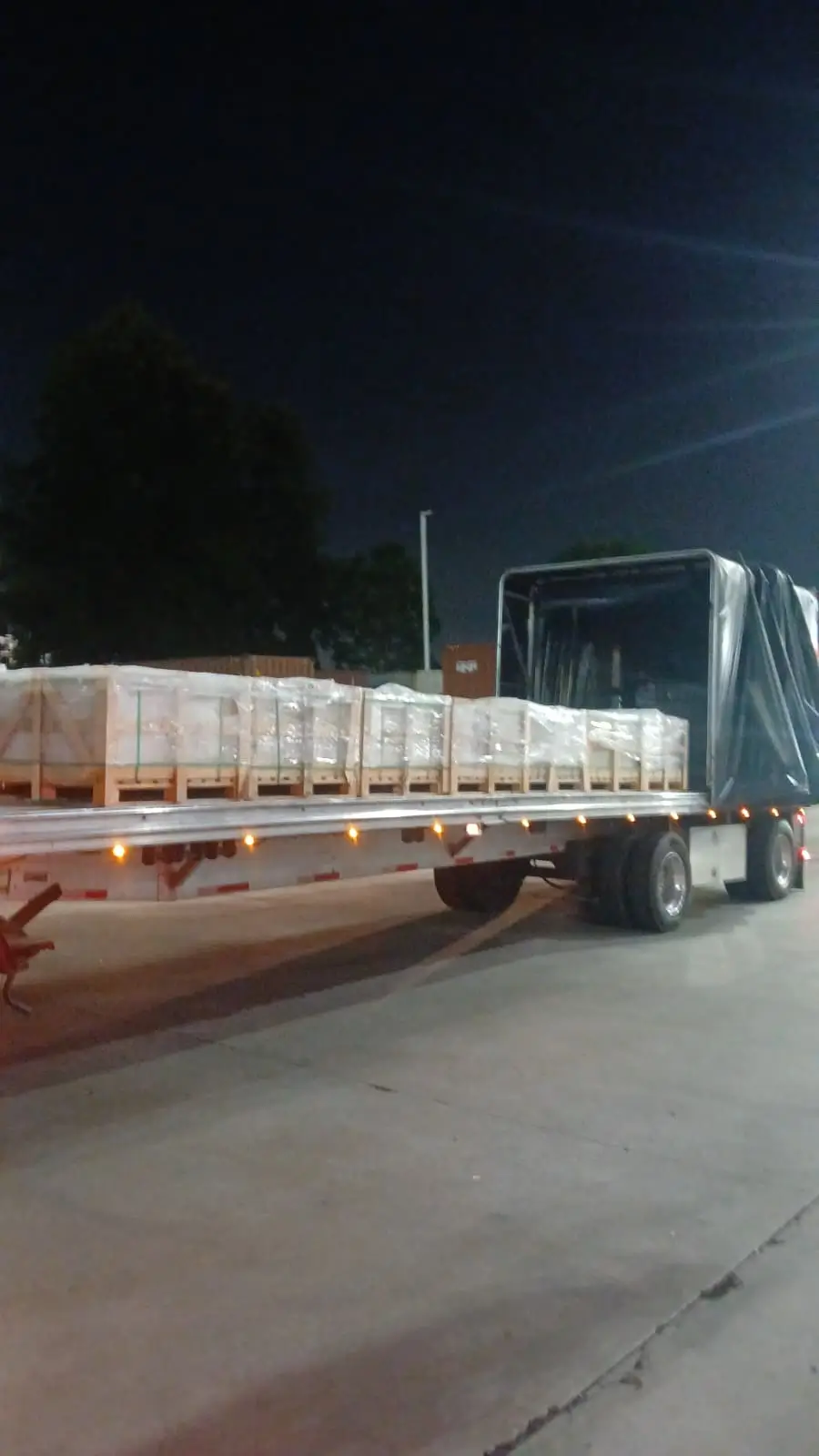
- Confirm your truck access dimensions before scheduling delivery — bulk granite shipments typically arrive on flatbed trucks requiring 12-foot clearance height and adequate turning radius
- Establish your material staging area before the truck arrives — rescheduling a delivery because your staging area wasn’t cleared adds cost and delays your installation start
- For phased projects, coordinate warehouse holds on material batches from the same quarry run — granite coloration varies between quarry pulls, and mixing batches in a single visible installation creates tonal inconsistency
Citadel Stone ships nationwide from warehouse inventory, which typically keeps lead times to 1–2 weeks for standard-format black granite landscape materials — significantly shorter than the 6–8 week import cycle that direct-import orders require. For large-volume projects, contact our technical team early in the design phase to confirm batch availability and coordinate phased delivery scheduling.
Common Specification Mistakes and How to Avoid Them
Years of reviewing granite landscape installations that underperform reveal a consistent set of avoidable mistakes. None of them are complex — they’re the kind of decisions that look reasonable at specification time but compound into real problems during the first or second season.
- Specifying decorative grade material for structural edging applications — decorative grade lacks the dimensional consistency and structural integrity that load-bearing edge restraint requires
- Omitting geotextile fabric to save cost — this is the single highest-impact budget cut you can make, and it reliably creates weed breakthrough and base contamination within 18 months
- Installing loose aggregate on slopes above 5% without containment — gravity plus rainfall will redistribute your material investment to the low end of the site
- Underestimating depth requirements for loose aggregate — 2 inches looks substantial at installation but compresses and displaces to reveal substrate within one season; 3–4 inches is the minimum for durable coverage
- Ordering all material from one truck delivery without verifying site access — a 20-ton delivery staged at a street curb 300 feet from the installation zone changes your labor budget significantly
- Ignoring thermal mass effects in south-facing beds — black granite absorbs and retains heat; plant selection in adjacent zones should account for elevated soil temperatures along the stone border
The mistakes above aren’t rare edge cases — they’re the recurring issues that come up in project troubleshooting conversations. Addressing them at the specification stage costs nothing; correcting them after installation is expensive, disruptive, and sometimes requires complete removal and reinstallation.
Getting Black Granite Landscape Rock Specifications Right
A black granite landscape rock guide is only useful if it moves you past the obvious — and the obvious is that this material looks excellent and lasts a long time. What actually determines project success is the stack of decisions below the surface: base depth, base compaction, drainage geometry, terrain management, material grade selection, and logistics coordination. Get those right, and you’re delivering an installation that will outlast most of the built environment around it. Get them wrong, and no amount of material quality compensates.
Your specification should treat the base as the primary investment and the granite as the visible expression of that investment. Order from a supplier who can confirm warehouse stock consistency across your full project volume, confirm your truck access requirements well before delivery day, and plan your containment strategy before you finalize your material format selection. As you finalize your hardscape plan, you may also find value in exploring front yard decomposed granite design as a complementary application that pairs naturally with black granite landscape rock in both aesthetic and material terms. Because dark granite absorbs more radiant heat in sunny exposures, Citadel Stone recommends pairing black granite beds with lighter border stone to manage surface temperatures.
Related reading: landscape decomposed granite fines · crushed granite landscape rock · backyard decomposed granite design ideas.