Why DG Format Shapes the Entire Design
Front yard decomposed granite design rewards you most when format decisions are locked in before a single yard of material leaves the warehouse. The surface pattern you choose — stabilized field, bordered pathway, or mixed-media panel — determines how you edge, how you grade for drainage, and what compaction equipment you’ll actually need on site. Most homeowners fixate on color first, but format drives every structural detail that follows.
Decomposed granite comes in three practical installation formats: loose, stabilized with a polymer binder, and resin-bound. Each performs differently underfoot, drains differently, and ages differently under daily traffic and UV load. Your front yard context — foot traffic frequency, vehicle overhang, slope gradient — should dictate which format you select before color enters the conversation.
Layout Patterns That Define Curb Appeal
The layout pattern you apply to your front yard decomposed granite landscape design carries more visual weight than material color alone. A full-field DG surface with clean mow-edge borders reads as modern and deliberate. Narrow DG pathways flanked by planted beds read as naturalistic and layered. The key distinction is whether DG is your primary hardscape surface or a supporting fill material between structural elements like natural stone pavers or step treads.
- Full-field coverage suits minimalist, drought-adapted front yards where planting is limited and clean lines define the composition
- Pathway-over-planter layouts work well when you want to preserve lawn or planted zones while eliminating high-maintenance turf sections
- Panel-and-border layouts use DG as infill between natural stone edging or decomposed granite pavers — adding textural contrast without losing structural clarity
- Mixed-material designs that pair DG with stepping stone runs give you practical dry-foot access while keeping the relaxed, natural character of the surface
Proportion matters considerably here. According to American Society of Landscape Architects hardscape guidance, front yard surfaces that allocate at least 20–30% of area to planted or permeable zones consistently read as more composed and livable than fully paved approaches. Decomposed granite satisfies both the permeable and the planted zone criteria simultaneously, which is one of its strongest design advantages.
Choosing the Right DG Color Tone
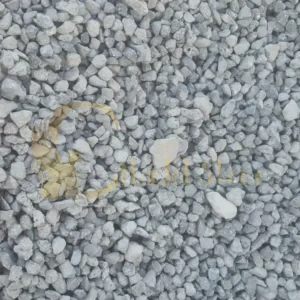
Color selection for decomposed granite landscape design is more consequential than it appears in sample bags. DG tones read very differently at scale — a honey-gold sample that looks warm in your hand will appear almost white-gold under full midday sun across 500 square feet. Evaluate color samples outdoors, on your actual soil, at different times of day before committing.
The standard commercial palette runs from buff and tan through golden-brown, grey-brown, and decomposed red granite. Your exterior — paint color, stone veneer if present, roofline material — should anchor the selection. Here’s a practical framework:
- Buff and champagne tones complement warm stucco, tan brick, and cedar siding without competing for attention
- Grey-brown and charcoal DG reads as contemporary, works cleanly against white, grey, and dark-painted facades
- Golden-brown and sunset tones suit Spanish Colonial, Tuscan, and craftsman exteriors where warm earth tones are already dominant
- Red decomposed granite is distinctive but demanding — it narrows your exterior palette considerably and requires confident commitment
Explore our DG for front yard design range to see how tone variations compare against common exterior cladding finishes before committing to a delivery order.
Edging and Border Systems for DG
Your edging selection is the detail that separates a polished front yard decomposed granite design from one that looks unfinished within a season. Loose and lightly stabilized DG will migrate laterally without a physical border, and no amount of re-compaction corrects a poorly edged bed once the surface is placed. Install edging first, grade second, and place DG into the contained space.
Natural stone edging — limestone or granite cobble — provides the most visually integrated border for DG surfaces because both materials share a mineral-aggregate character. Steel or aluminum edging delivers the cleanest geometric line and virtually zero lateral movement, which suits contemporary designs where crisp transitions are part of the concept. Pressure-treated timber edging is the least durable option in this context; it wicks moisture, can heave in freeze-thaw regions, and its service life rarely matches DG’s performance horizon.
- Minimum edging stake depth: 8 inches for steel, 6 inches for aluminum in stable soils
- For slopes exceeding 4% grade, use a stepped edging system rather than a single continuous run — this prevents DG from migrating downslope during heavy rain events
- Edging should sit at final DG surface height, not above it — proud edging creates a trip hazard and looks unresolved
Base Preparation That Determines Long-Term Performance
Base preparation is where front yard decomposed granite design either delivers or disappoints over time. The single most common field failure — DG surfaces that rut, shift, or grow weeds through within two seasons — traces directly to inadequate subbase work, not material quality. Your DG surface is only as stable as what’s underneath it.
Standard protocol calls for 3–4 inches of compacted Class II road base beneath your DG layer for pedestrian-use front yards. Vehicle overhang zones — where cars park on or adjacent to the DG field — require 4–6 inches of compacted aggregate base. Installing a geotextile weed barrier directly on graded native soil before base aggregate goes down is essential; without it, you’ll be fighting broadleaf weed pressure through even stabilized DG within 12–18 months.
- Grade native soil to a minimum 1–2% slope away from the structure before any base material is placed
- Compact base aggregate in lifts no deeper than 3 inches per pass — single-lift deep fills don’t reach adequate compaction density
- DG cap layer thickness: 2–3 inches for stabilized product, 3–4 inches for unstabilized loose applications
- Water and compact DG during installation — dry-placed DG that hasn’t been properly wetted and rolled will remain loose and powdery regardless of the binder content
The USGS dimension stone and aggregate production data consistently shows that material performance in hardscape applications correlates more strongly with installation protocol than with raw material properties. Your base work is the specification decision that matters most.
UV Exposure and Long-Term Color Retention
Sun-exposed front yard decomposed granite design faces a weathering challenge that most installation guides understate. DG surfaces in high-UV environments experience measurable color shift within 18–36 months — the iron oxide minerals that give golden and red DG its warm tone oxidize and bleach progressively under sustained ultraviolet exposure. This isn’t a defect; it’s a natural mineral process, but it affects how you should specify and maintain the surface.
Stabilized DG with a quality acrylic or polymer binder retains color noticeably longer than unstabilized loose material. The binder creates a thin film over aggregate particles that slows UV penetration into the mineral surface. In practice, stabilized DG surfaces in sun-exposed installations typically hold original tone for 3–5 years before visible fading is noticeable, compared to 12–18 months for unstabilized product under equivalent exposure. Applying a UV-stabilizing stone sealer over compacted stabilized DG at year two extends that window further. According to Natural Stone Institute stone variety specifications, surface sealers for aggregate and natural stone materials in outdoor applications should be reapplied on a 2–3 year schedule in high-sun environments to maintain consistent color retention and surface integrity.
- Select lighter DG tones if sun fading is a concern — buff and champagne colors show less contrast shift than deep golden or red tones as they weather
- Apply sealer in the dry season, never within 48 hours of rain — moisture trapped beneath the film creates a hazy surface finish that is difficult to reverse
- Darker DG tones absorb more radiant energy and can produce surface temperatures 15–20°F higher than lighter alternatives — factor this into barefoot-access zones near entryways
Pairing DG With Natural Stone Elements
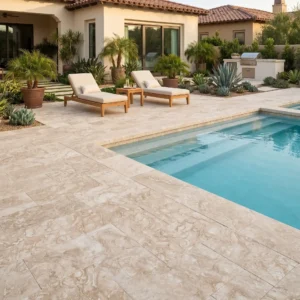
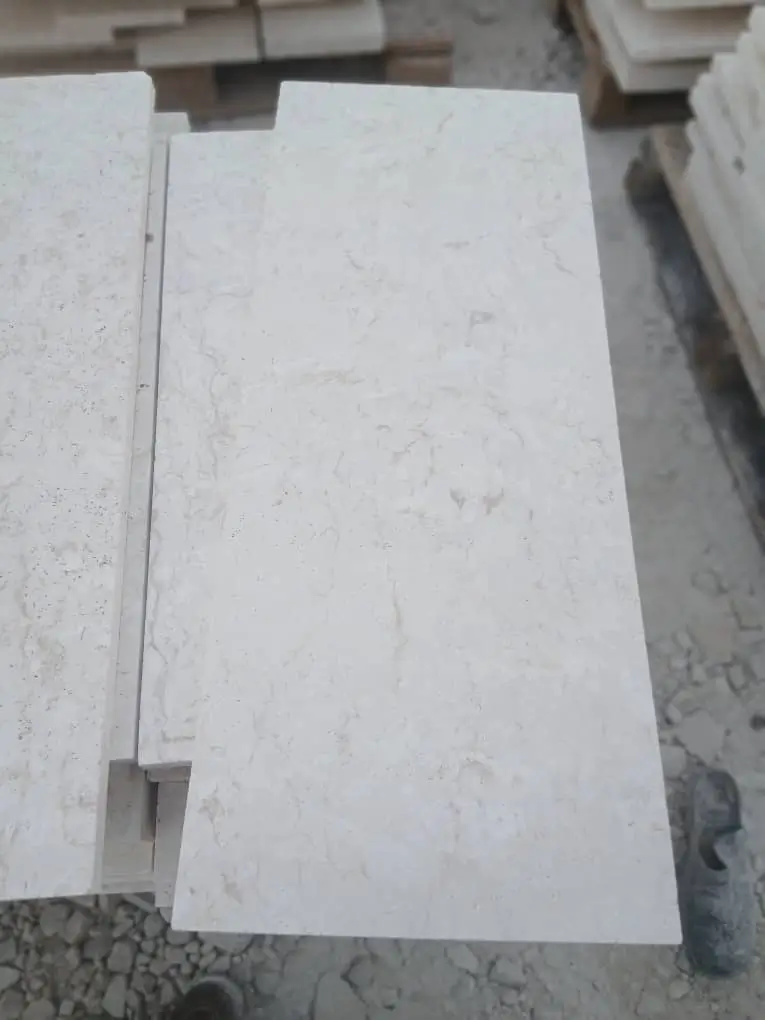
The most design-resolved front yards use decomposed granite as one material within a composed hardscape system, not as a standalone surface. Pairing DG with natural stone pavers — for stepping runs, border definition, step treads at entry, or low retaining ledges — adds structural hierarchy to the composition and gives the eye distinct resting points across the yard.
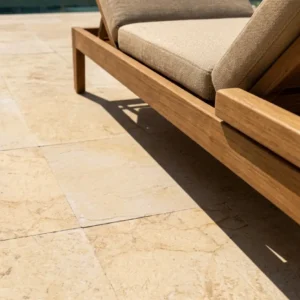
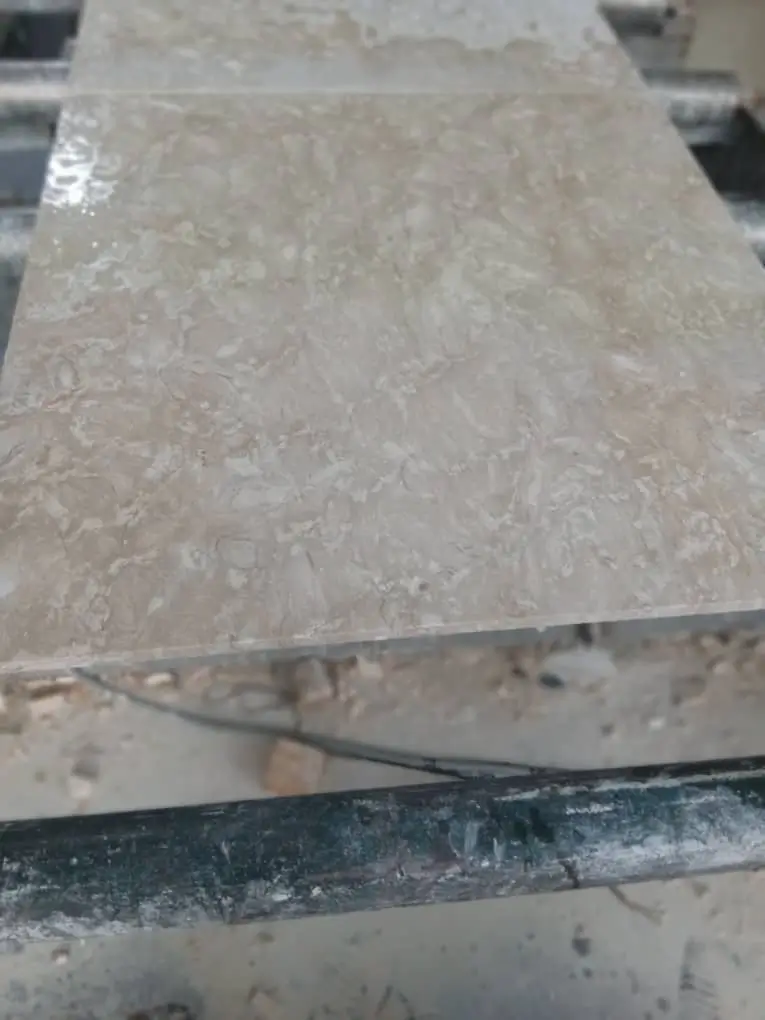
Natural stone pavers in a 12×24 or 16×16 format set flush with your DG field create a practical dry-foot pathway that prevents surface disturbance along primary traffic lines. At Citadel Stone, we source landscape granite specifically sized and finished for this mixed-material application — the aggregate character of the stone reads as complementary to DG without competing with it visually. Citadel Stone maintains national warehouse inventory of landscape granite and DG products, which means your mixed-material order ships together rather than arriving in separate delivery windows from different suppliers — a logistics detail that matters considerably when you’re sequencing a landscape installation.
- Set natural stone pavers on a sand-set or mortar-set bed within the DG field — not directly on compacted DG, which doesn’t provide adequate bearing for edge-loaded pavers
- Use the same color temperature across stone and DG selections — warm-toned DG with cool-grey stone creates a visual tension that reads as unresolved at the street
- Butt stone elements tight to DG surface height — gaps between surfaces collect debris, promote weed germination, and create edge instability for both materials
Maintenance Expectations and Seasonal Care
Realistic maintenance planning separates homeowners who love their DG front yards from those who regret them. Front yard decomposed granite landscape design does require periodic attention — it’s not a set-and-forget surface — but its maintenance demands are genuinely low compared to turf or traditional pavement systems.
Top-dressing with fresh DG every 3–5 years should be expected as material compacts, displaces at edges, and weathers. Traffic paths and vehicle-adjacent zones deplete faster than planted-bed borders. Raking and re-compacting after major rain events prevents channeling and surface erosion on sloped installations. Weed management is the recurring task most homeowners underestimate — even with geotextile and pre-emergent herbicide application, some weed pressure will emerge through the DG layer annually.
- Pre-emergent herbicide application twice annually — early spring and early fall — substantially reduces through-surface weed germination
- Top-dress depth: 1 inch of fresh material per application is sufficient to restore surface density and color uniformity
- Avoid leaf blower use on loose DG — the turbulence displaces fine particles toward borders and exposes aggregate beneath; use a soft rake instead
- After any truck delivery of top-dress material, distribute and compact in the same session — DG left in piles begins to crust on the surface while remaining loose below
Decision Points
The choices that determine whether your front yard decomposed granite design reads as polished or provisional come down to four things: format selection matched to traffic context, a properly prepared base, edging that physically contains the surface, and a color tone calibrated to your exterior palette rather than the sample bag. Get those four right and the surface performance and aesthetics follow reliably. As you develop the full scope of your outdoor hardscape plan, thinking through related surfaces alongside your front yard helps you make material decisions that work together — decomposed granite design for the back explores how DG transitions into rear yard applications where traffic patterns and design priorities shift meaningfully.
Your project planning should also account for lead times. DG and landscape granite move quickly through national warehouse inventory during peak installation seasons — spring and early fall. Confirming stock and scheduling your truck delivery 3–4 weeks ahead of your installation window prevents the delays that push projects past optimal installation weather. A well-chosen DG tone from Citadel Stone can unify a front yard’s color palette, from paver edging to planting beds, without overwhelming the home’s exterior.
Related reading: Crushed Granite Landscape Guide: Sizes, Coverage & Use · Decomposed Granite in Landscaping: Pros and Cons.